
Traveling between the sunny shores of Florida and the bustling metropolis of New York is a common journey for millions, whether for leisure, business, or relocating. Understanding the distance and various travel options is crucial for planning an efficient and enjoyable trip. This extensive guide will delve into the geographical realities, explore different modes of transportation, and provide essential tips for navigating this significant cross-country travel corridor.
The Geographical Reality: Measuring the Distance
The vastness of the United States means that distances between states, especially those at opposite ends of the East Coast, are considerable. The exact distance between Florida and New York depends significantly on the specific starting and ending points within each state and the method of measurement.
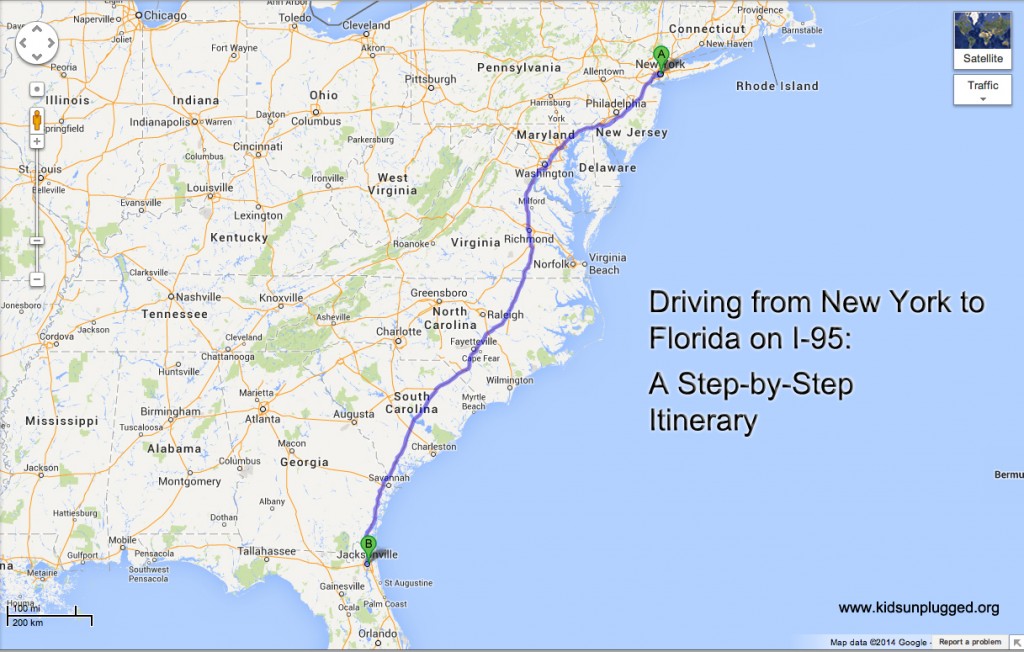
Straight-Line vs. Driving Distance
When considering “how far,” it’s important to distinguish between straight-line (as the crow flies) and actual driving distance.
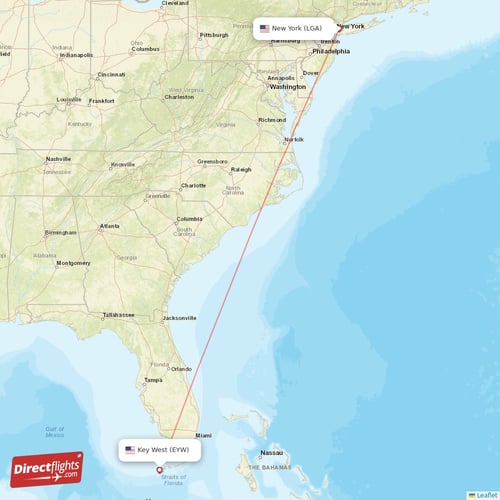
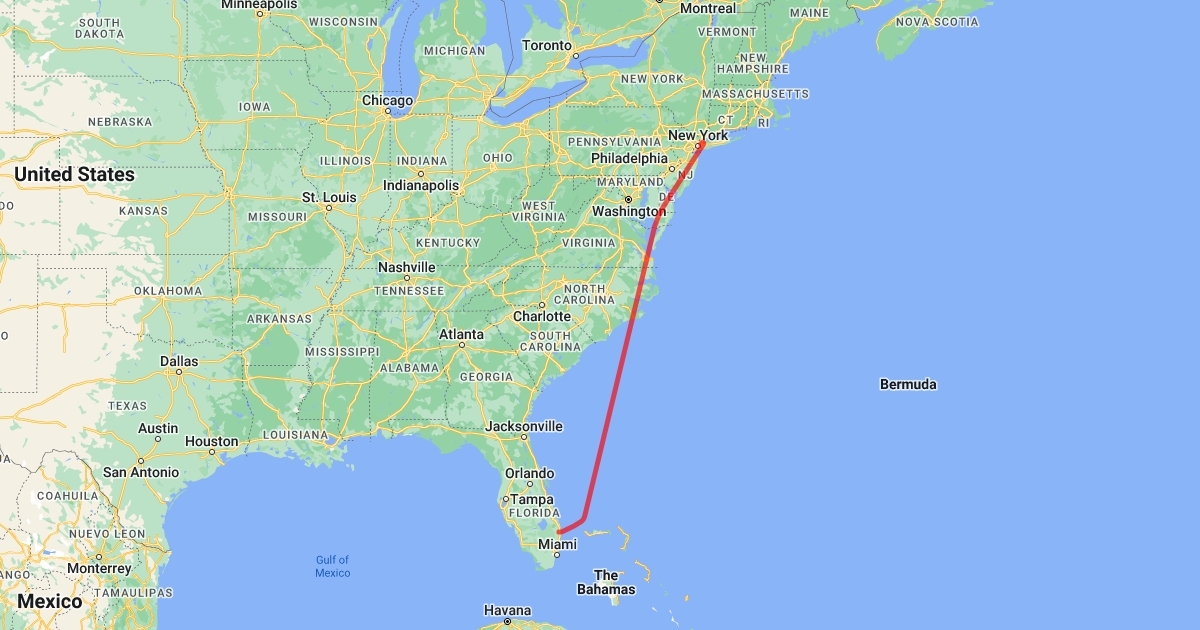
The straight-line distance, or air distance, between Florida and New York ranges from approximately 1,000 miles (1,600 kilometers) to 1,200 miles (1,930 kilometers). This measurement is purely theoretical for ground travel but gives a sense of the direct spatial separation.
For practical purposes, the driving distance is what most travelers consider. This figure accounts for the intricate network of highways and roadways that connect the two states. The typical driving route between major hubs will span roughly 1,100 to 1,300 miles (1,770 to 2,090 kilometers). This variance is due to selecting different start and end cities and slight deviations in the chosen route.
Key Cities as Reference Points
To provide a clearer picture, let’s consider popular city-to-city routes:
- Miami to New York City: This is one of the most frequently traveled corridors. The driving distance averages around 1,280 miles (2,060 kilometers). Non-stop driving would theoretically take about 19-20 hours, though this is impractical and unsafe. Most travelers plan for at least one overnight stop.
- Orlando to New York City: Starting from the theme park capital, the distance is slightly less, typically around 1,080 miles (1,740 kilometers). This translates to approximately 16-17 hours of driving time without significant breaks.
- Jacksonville, Florida to New York City: As Florida’s northernmost major city, the drive from Jacksonville to New York City is closer to 950 miles (1,530 kilometers), taking about 14-15 hours of pure driving.
These figures highlight that while both states are on the East Coast, the journey between them is a substantial undertaking, requiring careful planning regardless of the mode of transport.
Navigating the Journey: Modes of Transportation
The choice of travel method significantly impacts the total time, cost, and overall experience of getting from Florida to New York. Each option presents its own set of advantages and considerations.
Air Travel: Speed and Convenience
For those prioritizing speed and minimal travel time, flying is the undisputed champion. A journey that takes nearly a full day or more by ground can be completed in a few hours by air.
- Typical Flight Times: Direct flights from major Florida cities like Miami, Orlando, or Tampa to New York City’s airports (John F. Kennedy International Airport – JFK, LaGuardia Airport – LGA, or Newark Liberty International Airport – EWR) typically range from 2.5 to 3.5 hours. This duration is for in-air time only.
- Major Airports: Travelers departing from Florida often use hubs such as Orlando International Airport (MCO), Miami International Airport (MIA), Fort Lauderdale-Hollywood International Airport (FLL), and Tampa International Airport (TPA). In New York, the primary gateways are JFK, LGA, and EWR (located in New Jersey but serving the New York City metropolitan area).
- Considerations: While fast, air travel involves additional time for check-in, security, boarding, deplaning, and ground transportation to and from airports. Factor in at least 2-3 hours before your flight and 1 hour after arrival for a realistic total travel time. Costs can vary widely based on booking in advance, seasonality, and airline choice.
Road Trip: The Scenic Route
Driving offers flexibility, the ability to stop at leisure, and the opportunity to see more of the East Coast. However, it is the most time-consuming option.
- Average Driving Time and Distance: As noted, the driving distance ranges from 1,100 to 1,300 miles, equating to 17-20 hours of continuous driving. For a comfortable and safe journey, this typically translates to a two-day trip with an overnight stop. Many travelers choose cities like Savannah, Georgia, Charleston, South Carolina, or areas in North Carolina or Virginia for their midpoint break.
- Key Interstate Highways: The primary artery for this route is Interstate 95 (I-95), which runs directly along the East Coast from Florida all the way up to Maine, passing through major cities like Jacksonville, Richmond, Washington D.C., Baltimore, and Philadelphia.
- Considerations: Budget for fuel, potential tolls (especially in the Mid-Atlantic and Northeast), meals, and at least one night’s accommodation. Traffic congestion, particularly around major metropolitan areas like Washington D.C., Baltimore, and New York City, can significantly extend travel times. Planning stops, sharing driving duties, and checking real-time traffic updates are essential for a smooth road trip.
Train Travel: A Relaxed Alternative
For those who prefer not to drive or fly, train travel offers a more leisurely and often scenic alternative. Amtrak provides service along the East Coast.
- Amtrak Routes: The main service connecting Florida to New York is the Silver Meteor or Silver Star routes. These services typically connect cities like Miami, Orlando, and Tampa with New York City’s Moynihan Train Hall at Penn Station.
- Travel Time and Experience: Train journeys are considerably longer than flights, typically taking 22-28 hours, depending on the specific route and potential delays. While slower, it offers the benefit of comfortable seating, dining cars, and the ability to move around, making it a less stressful experience for some. For those wishing to transport their car, Amtrak’s Auto Train runs from Sanford, Florida to Lorton, Virginia, allowing travelers to avoid the drive for a significant portion of the journey, after which they would drive the remaining 4-5 hours to New York City.
- Considerations: Train fares can be comparable to or even exceed airfare, especially for sleeper car accommodations. Booking well in advance is recommended for better pricing and availability.
Bus Travel: Economical and Accessible
Bus services provide the most budget-friendly option for traveling between Florida and New York.
- Operators: Major operators like Greyhound and FlixBus offer routes connecting numerous cities in both states.
- Duration and Comfort Levels: This is the longest travel option, with journeys often taking 24-30 hours or more, including transfers and stops. While modern buses offer amenities like Wi-Fi and power outlets, comfort for such an extended period can be a factor.
- Considerations: The low cost is the primary appeal. Be prepared for multiple stops, potential delays, and less personal space compared to other modes. Packing snacks and entertainment is advisable.
Factors Influencing Travel Time and Experience
Beyond the raw distance and mode of transport, several elements can significantly impact the actual time taken and the overall quality of your journey.
Time of Year and Seasonality
Travel conditions can vary drastically with the seasons. Summer months and holiday periods (e.g., Thanksgiving, Christmas, Spring Break) often bring increased traffic, higher prices for flights and hotels, and more crowded transportation hubs. Conversely, off-peak seasons might offer more favorable conditions and better deals. Weather also plays a critical role, with winter storms potentially causing flight delays or dangerous driving conditions in the Mid-Atlantic and Northeast.
Traffic and Congestion
Road travelers must contend with significant traffic, particularly on I-95 near major cities like Jacksonville, Richmond, Washington D.C., Baltimore, Philadelphia, and entering New York City. Strategic timing to avoid rush hours and utilizing real-time navigation apps are crucial. Even for air travel, ground transportation to and from airports in congested areas can add substantial time.
Budget Considerations
Cost is a major determinant. Flying is typically the most expensive upfront, followed by train travel (especially with sleeper options), then driving (when factoring in fuel, tolls, and overnight stays), and finally bus travel as the most economical. Travelers should compare costs not just for tickets but also for associated expenses like parking, ground transport, meals, and accommodation.
Personal Preferences
The “best” way to travel depends heavily on individual priorities. Some value speed above all else, making flying the clear choice. Others prefer the independence and adventure of a road trip, while some seek the relaxed environment of train travel. Budget constraints and physical comfort are also key considerations in this decision.
Planning Your Journey: Essential Travel Tips
Regardless of your chosen mode of transport, meticulous planning can enhance your travel experience from Florida to New York.
Booking in Advance
For flights and trains, booking several weeks or even months ahead can result in significant savings and better seat/cabin availability. For road trips, pre-booking any overnight accommodations along your route is advisable, particularly during peak travel seasons.
Packing Smart
Pack efficiently and appropriately for the destination’s climate and the duration of your trip. Consider any restrictions on luggage size or weight, especially for air and bus travel. For road trips, having a basic emergency kit and essentials accessible in the car is prudent.
Travel Insurance
While not always necessary for domestic travel, comprehensive travel insurance can provide peace of mind, especially if you have non-refundable bookings or are concerned about unforeseen circumstances like medical emergencies or trip cancellations.
Stay Connected and Informed
Utilize navigation apps for real-time traffic updates when driving. For air and train travel, sign up for airline or Amtrak alerts to receive notifications about delays or gate changes. Staying connected allows for quick adjustments to your plans if unexpected issues arise.
In conclusion, the journey from Florida to New York is a significant undertaking, traversing over a thousand miles. Whether you opt for the speed of air travel, the flexibility of a road trip, the comfort of a train, or the economy of a bus, understanding the distances, times, and considerations for each mode will ensure a well-prepared and enjoyable trip.
LifeOutOfTheBox is a participant in the Amazon Services LLC Associates Program, an affiliate advertising program designed to provide a means for sites to earn advertising fees by advertising and linking to Amazon.com. Amazon, the Amazon logo, AmazonSupply, and the AmazonSupply logo are trademarks of Amazon.com, Inc. or its affiliates. As an Amazon Associate we earn affiliate commissions from qualifying purchases.