
The journey between the sunny beaches of Florida and the diverse landscapes of North Carolina is a popular route for vacationers, business travelers, and those relocating within the southeastern United States. From Florida’s vibrant cities like Miami and theme parks in Orlando to North Carolina’s Appalachian mountains and historic cities such as Charlotte and Raleigh, the distance and travel time are key considerations. The exact specifics heavily depend on your starting point and destination, as well as your chosen mode of transportation.
Understanding the Geographic Span
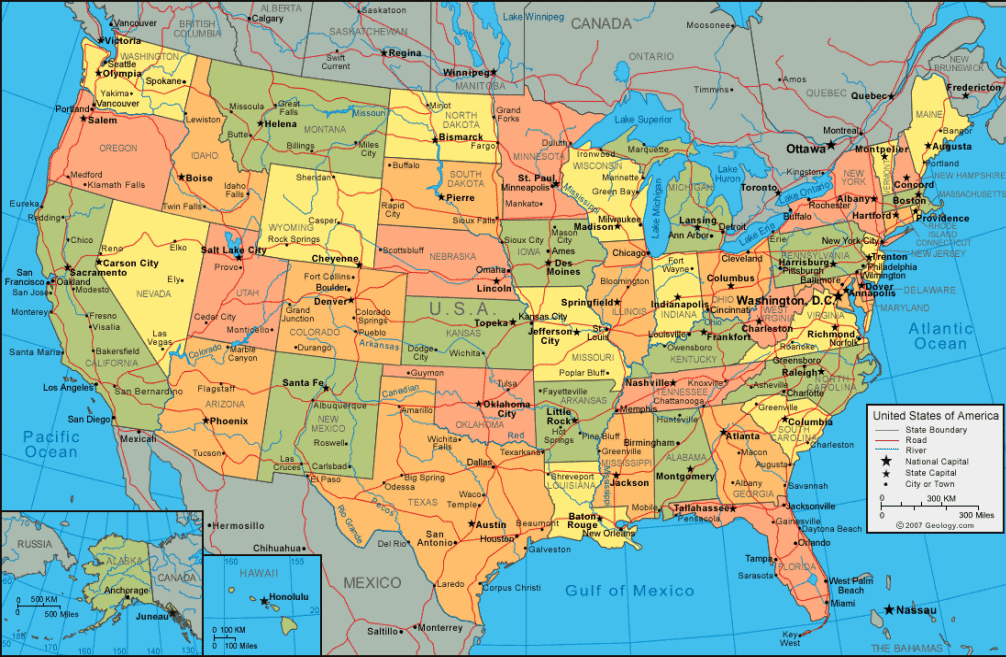
Florida and North Carolina do not share a direct border, necessitating travel through Georgia and South Carolina. This means even the shortest journey involves crossing at least two additional state lines. For example, a trip from Jacksonville, one of Florida’s northernmost major cities, to Charlotte in North Carolina spans approximately 400-450 miles, typically taking around 6-7 hours of continuous driving.
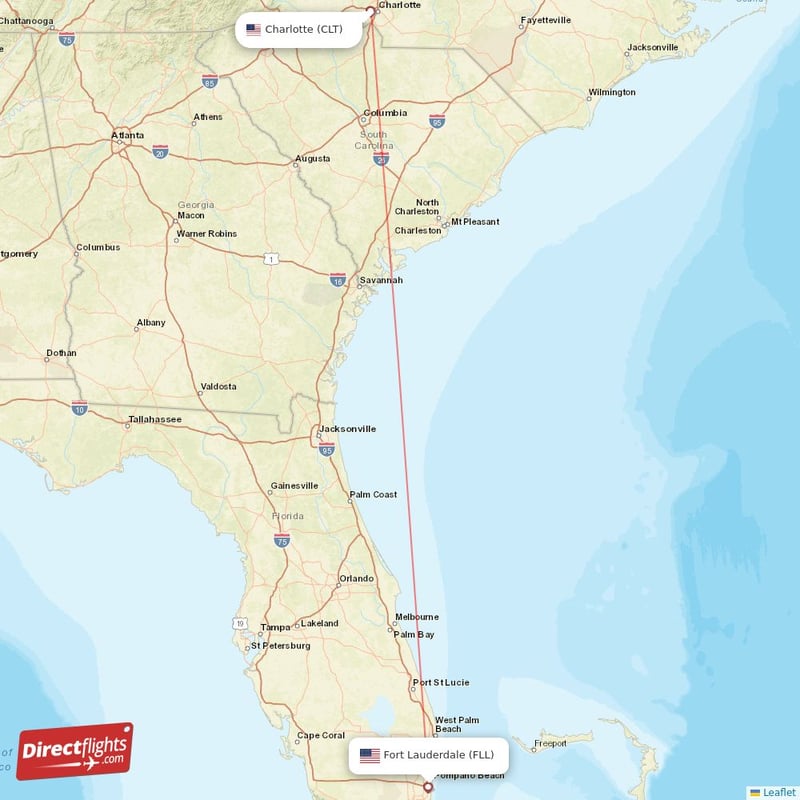
Conversely, a journey originating in South Florida, such as Miami, to the western Blue Ridge Mountains of North Carolina, like Asheville, could exceed 800 miles, requiring 12-14 hours or more behind the wheel. The considerable length of the Florida peninsula and North Carolina’s expanse from mountains to the Atlantic Ocean coastline account for this wide range. Therefore, average estimates for travel between the two states typically fall between 400 and 850 miles, translating to driving times of 6 to 14 hours. This variability is critical for determining whether an overnight stop is necessary.
Mapping Your Journey: Key Routes and Travel Times
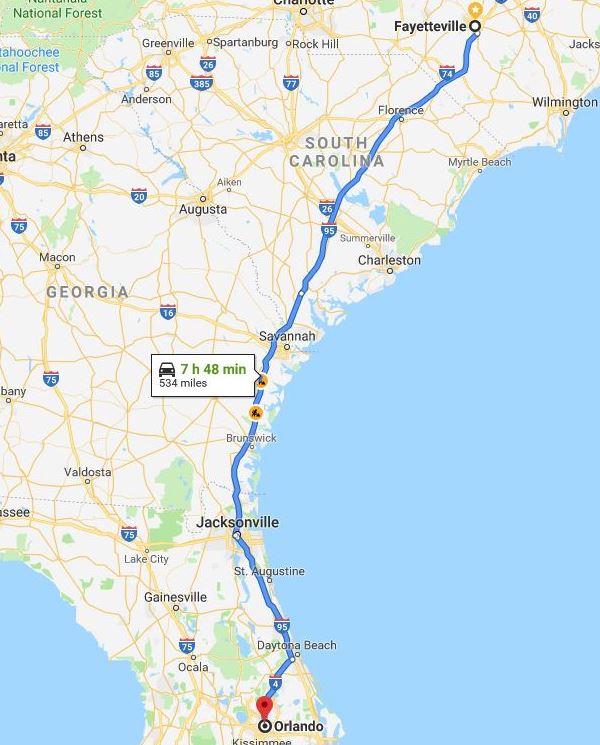
For most drivers traveling between Florida and North Carolina, Interstate 95 serves as the primary and most direct highway.
The I-95 Corridor
Travelers typically merge onto I-95 North from various points in Florida. This interstate then carries them through Georgia, passing near Savannah, and subsequently through South Carolina, often near Charleston or Myrtle Beach if taking slight detours. Upon reaching North Carolina, I-95 continues to the eastern part of the state. For destinations such as Raleigh or Charlotte, drivers will typically transition to other interstates like I-40 or I-77.
- Orlando to Raleigh: Approximately 580 miles, 9-10 hours driving, primarily via I-95 North and I-40 West.
- Miami to Charlotte: Around 700-750 miles, 11-12 hours driving, typically following I-95 North, then I-26 West and I-77 North through South Carolina into Charlotte.
- Tallahassee to Asheville: Roughly 550 miles, 9-10 hours driving, often involving I-10 East, I-75 North, then I-85 North or US-23 into North Carolina’s mountainous region.
Traffic congestion near major metropolitan areas like Jacksonville, Savannah, Charleston, Raleigh, and Charlotte, especially during peak hours or holidays, can significantly prolong travel times. Real-time navigation apps are essential for up-to-date conditions.
Scenic Alternatives
For travelers with extra time, coastal routes like US-17 offer a picturesque journey. This option allows for stops at historic cities such as St. Augustine in Florida, Savannah in Georgia, and Charleston or Myrtle Beach in South Carolina, before reaching North Carolina’s coastal destinations like Wilmington or the Outer Banks. While longer, these routes transform a direct drive into a richer, multi-destination experience.
Beyond the Wheel: Other Modes of Transport
While driving remains popular, alternatives offer different advantages, particularly for speed or comfort.
Flying
Air travel provides the quickest means to bridge the distance. Major airports in Florida include Orlando International Airport (MCO), Miami International Airport (MIA), and Jacksonville International Airport (JAX). In North Carolina, key hubs are Charlotte Douglas International Airport (CLT) and Raleigh-Durham International Airport (RDU).
Direct flights between cities like Orlando and Charlotte typically last 1.5 to 2 hours. However, accounting for airport check-in, security, and ground transportation, total door-to-door travel time typically ranges from 4-6 hours. This makes flying the most efficient choice for direct travel between major urban centers.
Train Travel
Amtrak offers train services, such as the Silver Meteor and Silver Star routes, connecting Florida cities like Miami, Orlando, Tampa, and Jacksonville to North Carolina destinations like Raleigh and Charlotte. Train journeys are considerably longer, often spanning 16-24 hours or more. While slower, Amtrak provides a relaxing, scenic alternative to driving, removing the stresses of traffic and offering a unique travel experience.
Bus Services
Bus companies like Greyhound operate routes between the two states, offering the most budget-friendly option. However, bus travel is also the longest in duration, frequently involving multiple stops and transfers. An Orlando to Charlotte bus trip could take 15-20 hours. This mode suits budget-conscious travelers with flexible schedules.
Making the Most of Your Trip: Essential Stops and Considerations
Effective planning significantly enhances any trip between Florida and North Carolina. For road travelers, strategic stopovers are crucial for comfort and safety.
Strategic Stopovers
For drives exceeding 10 hours, an overnight stop is highly advisable. Ideal halfway points are often found in Georgia or South Carolina.
- Savannah, Georgia: A charming city just over the Florida border, known for its historic district, squares, and architecture, offering excellent dining and lodging.
- Charleston, South Carolina: Further north, this historic city boasts a vibrant culinary scene, waterfront views, and rich historical sites.
- Myrtle Beach, South Carolina: Offers beaches, golf, and family attractions for those willing to take a slight detour from I-95.
These stops break up the journey and can add significant value to the travel experience.
Seasonal Considerations
The time of year dictates driving conditions and traffic.
- Summer: Expect high temperatures and increased traffic, especially near tourist hotspots.
- Spring and Fall: Generally offer pleasant weather and fewer crowds. North Carolina’s Blue Ridge Mountains are particularly stunning during fall foliage season.
- Winter: While Florida remains warm, western North Carolina can experience snow and ice. Always check weather forecasts for your route along the East Coast.
Vehicle Preparedness and Packing
Before any road trip, ensure your vehicle is in optimal condition: check tires, fluids, and brakes. An emergency kit with a first-aid kit, jumper cables, and basic tools is advisable. For long drives, snacks, water, and entertainment are essential, particularly with children. Don’t forget device chargers.
From the sun-drenched shores of Florida to the bustling cities or serene mountains of North Carolina, understanding the “how far” is merely the first step. With proper planning, your journey can become an enjoyable part of your travel narrative through the diverse southeastern United States.
LifeOutOfTheBox is a participant in the Amazon Services LLC Associates Program, an affiliate advertising program designed to provide a means for sites to earn advertising fees by advertising and linking to Amazon.com. Amazon, the Amazon logo, AmazonSupply, and the AmazonSupply logo are trademarks of Amazon.com, Inc. or its affiliates. As an Amazon Associate we earn affiliate commissions from qualifying purchases.