
Navigating the intricate transportation network between two of South Florida’s most significant air travel hubs, Fort Lauderdale-Hollywood International Airport (FLL) and Miami International Airport (MIA), is a common consideration for many travelers. Understanding the distance and the various transit options available is crucial for seamless travel, whether you’re connecting flights, heading to a cruise in Port Everglades or PortMiami, or simply seeking to explore the diverse attractions of both Fort Lauderdale and Miami. This guide aims to provide a comprehensive overview of the distances, travel times, and the most efficient ways to traverse the roughly 25-30 miles that separate these two vital gateways.
Understanding the Geographical Context
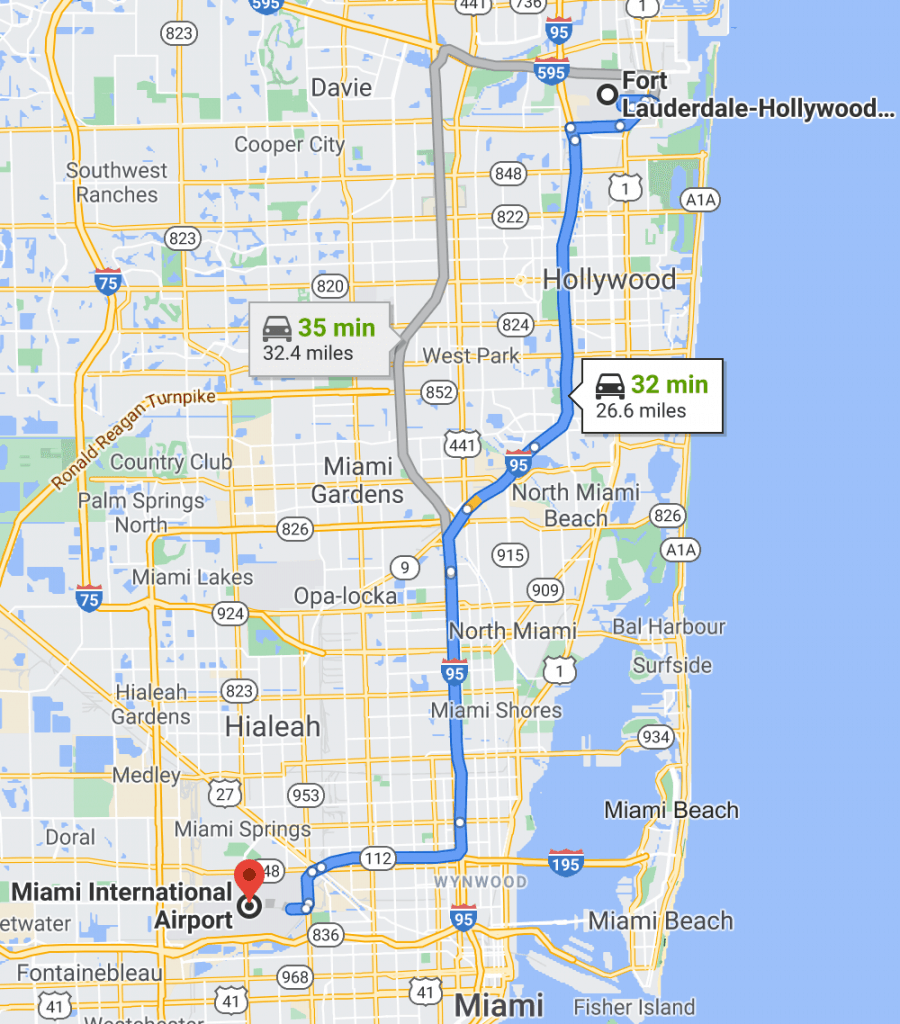
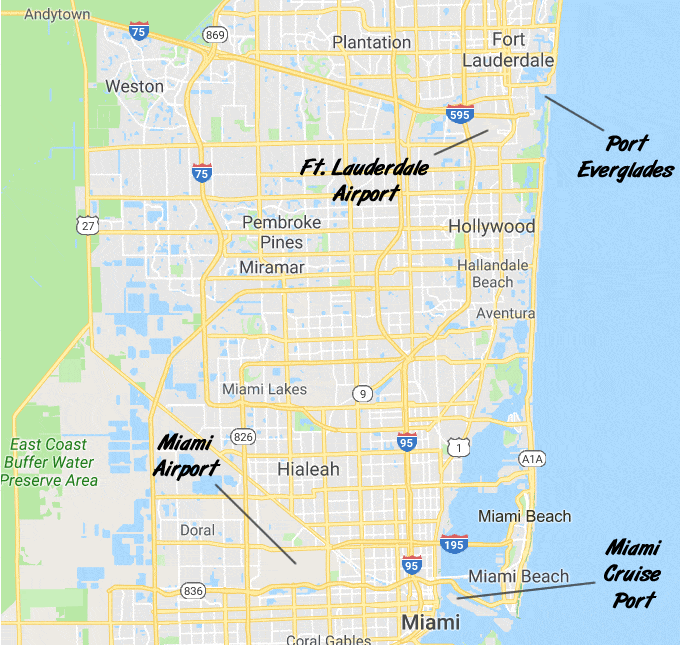
The metropolitan areas of Miami-Dade County and Broward County are adjacent, with Fort Lauderdale situated north of Miami. The exact distance between Fort Lauderdale-Hollywood International Airport and Miami International Airport can vary slightly depending on the specific starting and ending points within each airport’s complex, as well as the chosen route. However, the general consensus places the driving distance between the two airports at approximately 25 to 30 miles.
Factors Influencing Travel Time
While the physical distance is relatively short, the time it takes to travel between FLL and MIA is heavily influenced by several key factors:
- Traffic Conditions: South Florida is notorious for its traffic, especially during peak hours. The I-95 corridor, a primary artery connecting the two cities, can experience significant congestion. Travelers should always factor in potential delays caused by rush hour, accidents, or ongoing road construction.
- Mode of Transportation: The chosen method of transport will significantly impact travel time. Options range from private cars and ride-sharing services to public transportation, each with its own advantages and disadvantages in terms of speed, cost, and convenience.
- Time of Day: As mentioned, the time of day is critical. Traveling during the early morning or late evening, outside of typical commuting hours, will generally result in a quicker journey. Weekend traffic patterns can also differ from weekday commutes.
- Specific Route: While most routes will utilize major highways, minor variations in navigation can lead to slight differences in mileage and estimated travel time.
Distance Metrics
- Driving Distance: Approximately 25-30 miles (40-48 kilometers).
- Estimated Driving Time (without traffic): Typically ranges from 30 to 45 minutes.
- Estimated Driving Time (with moderate traffic): Can extend to 60-90 minutes.
- Estimated Driving Time (with heavy traffic): Can exceed 90 minutes, sometimes even reaching two hours during severe congestion.
Transportation Options Between the Airports
Given the proximity and the importance of both airports, a variety of transportation methods are available to facilitate travel between them. Each option offers a different balance of cost, convenience, and speed, catering to diverse traveler needs.
Ride-Sharing Services (Uber/Lyft)
Ride-sharing platforms like Uber and Lyft are incredibly popular and convenient options for traveling between FLL and MIA.
- Convenience: Drivers are readily available, and the booking process is straightforward via smartphone apps. Pick-up and drop-off points are clearly designated at both airports.
- Cost: Prices can fluctuate based on demand, time of day, and surge pricing. Generally, it’s a mid-range option, often more affordable than traditional taxis but pricier than public transport. Expect costs to range from $40 to $70, depending on the factors mentioned.
- Time: Travel time is directly subject to traffic conditions, as discussed earlier. This is typically the fastest door-to-door option when traffic is favorable.
- Service Areas: These services operate extensively throughout Miami-Dade County and Broward County, providing reliable transit between the two airports.
Taxi Services
Traditional taxi services are also a viable option, offering a similar level of convenience to ride-sharing but often at a slightly higher price point.
- Availability: Taxi stands are located at designated areas outside each airport terminal.
- Cost: Metered fares will apply, and it’s advisable to confirm the estimated cost with the driver before commencing the journey. Costs are generally comparable to or slightly higher than ride-sharing services.
- Time: Similar to ride-sharing, travel time is dictated by traffic conditions.
- Benefits: Taxis can be a good choice for travelers who prefer a more traditional service or are not comfortable using app-based platforms.
Rental Cars
Renting a car provides maximum flexibility, especially if you plan to explore more of South Florida beyond the immediate airport vicinities.
- Flexibility: You can depart and arrive at your own schedule and use the vehicle for onward travel.
- Cost: Rental costs vary significantly based on the car type, rental duration, and company. Additionally, consider the costs of fuel, potential parking fees, and any airport surcharges.
- Time: Similar to private vehicles, travel time is dependent on traffic.
- Logistics: Rental car facilities are typically located near each airport, with shuttle services usually available to transport passengers between terminals and the rental lots. This adds a small amount of time to the overall journey. Travelers should book in advance, especially during peak tourist seasons.
Private Car Services and Limousines
For a more luxurious and predictable experience, private car services and limousines are available.
- Comfort and Luxury: These services offer a high level of comfort, privacy, and often professional chauffeurs.
- Cost: This is generally the most expensive option, with prices varying based on the vehicle type and service duration.
- Time: While the travel time itself is subject to traffic, the pre-arranged nature of the service can reduce overall stress and waiting time.
- Booking: Advance booking is essential for these services.
Public Transportation (Tri-Rail)
For budget-conscious travelers or those who prefer to avoid road traffic, the Tri-Rail offers a unique public transportation solution.
- The Process: This commuter train system connects Broward County and Miami-Dade County. To use it between airports, you would typically:
- Take a shuttle from FLL to the Fort Lauderdale Airport Station (which is often conveniently located near the airport).
- Board the Tri-Rail southbound to the Metrorail Transfer Station in Hialeah.
- Transfer to the Miami-Dade Metrorail southbound.
- Exit at the Earlington Heights Station, which serves Miami International Airport. A dedicated shuttle or bus connects this station directly to the airport terminals.
- Cost: This is usually the most economical option, with fares for the Tri-Rail and Metrorail being very reasonable.
- Time: While the most affordable, this is generally the slowest option. The combined travel time, including shuttle transfers, waiting, and train journeys, can easily take 2 to 3 hours, depending on schedules and connections.
- Considerations: This option is best suited for travelers with ample time, those who are not carrying excessive luggage, and individuals who enjoy experiencing local transit. It bypasses road traffic entirely, offering a predictable travel time once you are on the train.
Airport Shuttles
Shared-ride airport shuttle services operate between the two airports and various points in the surrounding areas.
- Booking: These services typically require advance booking.
- Cost: Prices are generally moderate, falling between public transport and individual ride-sharing.
- Time: Travel time is subject to traffic and the number of stops the shuttle makes to pick up or drop off other passengers. It’s usually slower than a direct ride-share but faster than using the full public transit route.
- Convenience: Shuttles offer door-to-door or near-door service, providing a good balance of cost and convenience for groups or families.
Planning Your Journey: Tips for a Smooth Transition
Whether you are connecting flights or heading to your final destination, planning is key to a stress-free journey between FLL and MIA.
Pre-Trip Preparations
- Check Traffic Apps: Before departing, always check real-time traffic conditions on apps like Google Maps or Waze. This will help you decide on the best departure time and route.
- Book in Advance: If opting for ride-sharing, private car services, or shuttle services, booking in advance can sometimes secure better rates and ensure availability, especially during busy periods.
- Confirm Luggage Needs: Consider the amount of luggage you are carrying when choosing a transportation method. Public transport can be challenging with multiple large suitcases.
- Know Your Departure/Arrival Zones: Familiarize yourself with the pick-up and drop-off zones at both airports to avoid confusion and delays.
Connecting Flights
If you have a connecting flight, allow ample buffer time.
- Minimum Connection Times: Airlines usually have minimum connection times, but these are often optimistic.
- Ground Transportation Time: Add the estimated travel time between airports, plus extra for potential traffic delays and the time needed to re-check luggage or go through security at the second airport. A minimum of 4-5 hours is often recommended for a cross-airport connection, depending on the airlines and terminals involved.
- Baggage Transfer: Be aware that if you are flying with different airlines, your bags may not be automatically transferred. You might need to collect them at FLL and re-check them at MIA, which adds significant time.
Exploring the Region
The proximity of these two airports also makes them excellent starting points for exploring the broader South Florida region, from the beaches of Fort Lauderdale to the vibrant nightlife of Miami. Understanding the travel dynamics between the airports is the first step in crafting your perfect South Florida itinerary.
Destination Focus
- Fort Lauderdale: Known for its beautiful beaches, the intercostal waterways with its luxury yachts, and a thriving arts and culture scene. Las Olas Boulevard offers upscale shopping and dining, while the Fort Lauderdale Swap Shop provides a unique market experience.
- Miami: A global hub for art, fashion, culture, and cuisine. Explore the Art Deco Historic District in South Beach, soak in the vibrant Latin American influences in Little Havana, or enjoy the upscale boutiques and dining in Brickell.
By carefully considering the distances, available transportation options, and crucial planning tips, travelers can effectively manage their journeys between Fort Lauderdale-Hollywood International Airport and Miami International Airport, ensuring a smooth and enjoyable start or continuation of their South Florida adventures.
LifeOutOfTheBox is a participant in the Amazon Services LLC Associates Program, an affiliate advertising program designed to provide a means for sites to earn advertising fees by advertising and linking to Amazon.com. Amazon, the Amazon logo, AmazonSupply, and the AmazonSupply logo are trademarks of Amazon.com, Inc. or its affiliates. As an Amazon Associate we earn affiliate commissions from qualifying purchases.