
Navigating the journey between two of South Florida’s most vibrant hubs, Fort Lauderdale-Hollywood International Airport (FLL) and the bustling metropolis of Miami, is a common concern for many travelers. Whether you’re arriving in Florida and heading south to explore the Art Deco wonders of South Beach, or departing from the Sunshine State after soaking up the sun, understanding the distance and transportation options is key to a smooth travel experience. This guide breaks down the travel time and considerations for making the trip between FLL and various points within the expansive Miami area.
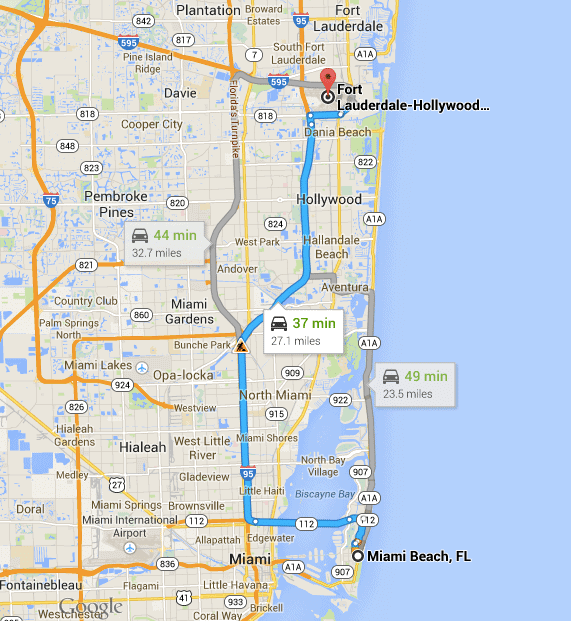
Understanding the Distance and Travel Time
The geographical proximity between Fort Lauderdale and Miami is relatively close, but the actual travel time can vary significantly based on your chosen mode of transport and, crucially, the infamous South Florida traffic.
Direct Distance and Key Zones
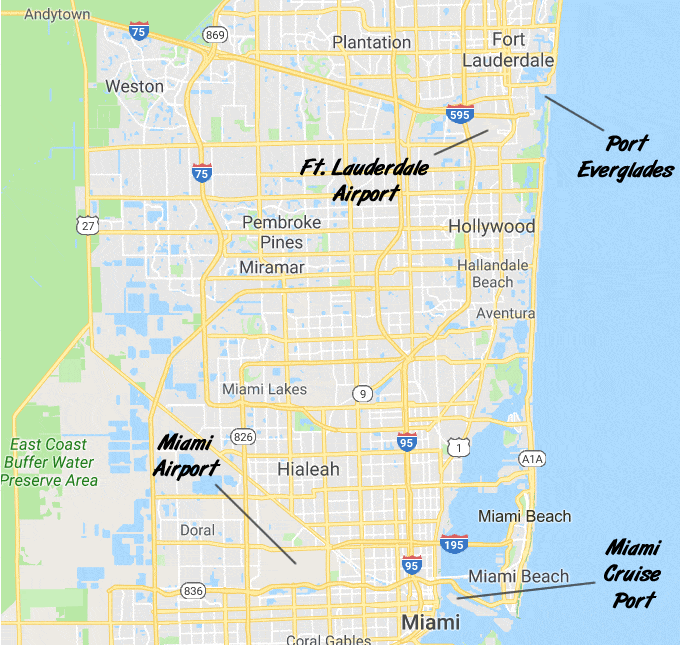
The direct driving distance between Fort Lauderdale-Hollywood International Airport and downtown Miami is approximately 30 miles. However, Miami is a sprawling metropolitan area, and the “distance” to Miami often depends on your specific destination within the city.
- Downtown Miami and Brickell: For those heading to the financial district or the heart of the city, expect a journey of around 30-35 miles.
- Miami Beach (South Beach): Reaching the iconic shores of South Beach involves traversing across the causeway, adding a few miles and potential delays. The distance is typically around 35-40 miles.
- Aventura and Northern Miami-Dade: If your destination lies in the northern parts of the county, like Aventura, the distance might be slightly shorter, around 20-25 miles.
- Miami International Airport (MIA): It’s also worth noting the distance to Miami International Airport (MIA) if you have connecting flights. This is roughly 25-30 miles from FLL.
Factors Influencing Travel Time
- Traffic: This is the single biggest variable. South Florida is notorious for its traffic congestion, especially during peak hours (morning and evening commutes), weekends, and around major events. A 30-mile trip that might take 30-40 minutes in ideal conditions could easily stretch to 60-90 minutes or more during heavy traffic.
- Time of Day: Traveling very early in the morning or late at night will generally result in faster travel times. Midday can also be manageable, but rush hour is best avoided if possible.
- Day of the Week: Weekends, particularly Friday evenings and Sunday afternoons, can see increased traffic as locals and tourists move between destinations.
- Route: While I-95 is the most direct highway, other routes like the Florida’s Turnpike or even surface streets can be viable depending on your exact destination and real-time traffic conditions.
Transportation Options from Fort Lauderdale Airport to Miami
Fortunately, travelers have a range of transportation choices to get from Fort Lauderdale-Hollywood International Airport to Miami, each with its own advantages and cost implications.
Ride-Sharing Services (Uber/Lyft)
Ride-sharing services are a popular and convenient option for many travelers. Designated pick-up zones are clearly marked at FLL.
- Pros: Door-to-door service, on-demand availability, easy booking through smartphone apps, various vehicle options (standard, XL, premium).
- Cons: Prices can surge significantly during peak demand, especially around flight arrivals and departures, or during major events. Can be more expensive than other options for solo travelers.
- Estimated Cost: Typically ranges from $40 to $80+, depending on the service level, demand, and your specific destination in Miami.
- Estimated Travel Time: 30-75 minutes, heavily dependent on traffic and your exact destination.
Taxis
Traditional taxi services are readily available at FLL. Look for the official taxi stands outside the terminals.
- Pros: Available on demand, licensed and regulated drivers, direct service.
- Cons: Generally more expensive than ride-sharing services, especially for longer distances. Metered fares can accumulate quickly.
- Estimated Cost: Similar to or slightly higher than ride-sharing, likely in the $50-$90+ range.
- Estimated Travel Time: 30-75 minutes, subject to traffic.
Rental Cars
If you plan on exploring more of South Florida during your stay, renting a car directly from FLL offers flexibility. Major rental car companies have operations at the airport.
- Pros: Ultimate freedom and flexibility for exploring Miami and surrounding areas at your own pace. Convenient for day trips to places like the Everglades National Park or Palm Beach.
- Cons: Rental costs, insurance, fuel, and parking fees in Miami can add up. Navigating Miami traffic and parking can be stressful.
- Estimated Cost: Varies widely based on vehicle type, rental duration, and company, but expect $50+ per day for a basic car, plus fuel and parking.
- Estimated Travel Time: 30-75 minutes, depending on traffic.
Airport Shuttles and Private Transfers
Several companies offer shared shuttle services or pre-booked private transfers from FLL to Miami.
- Pros: Can be a cost-effective option, especially for solo travelers or couples, compared to taxis or ride-sharing for certain destinations. Private transfers offer a more personalized and direct experience.
- Cons: Shared shuttles may make multiple stops, increasing travel time. Schedules might not always align perfectly with flight arrivals.
- Estimated Cost: Shared shuttles can range from $20-$40 per person. Private transfers will be more expensive, often starting at $80-$100+.
- Estimated Travel Time: 45-90 minutes for shared shuttles, 30-75 minutes for private transfers.
Public Transportation (Tri-Rail and Metrorail)
For budget-conscious travelers and those who don’t mind a bit of extra time and transfers, public transportation is an option.
-
Tri-Rail: This commuter train connects Palm Beach, Broward, and Miami-Dade counties. To reach Miami from FLL using Tri-Rail:
- Take the free FLL Airport Shuttle Bus (Route 1) to the Tri-Rail station located off the airport grounds.
- Board the Tri-Rail train southbound towards Miami.
- Exit the Tri-Rail at the Metrorail transfer station (e.g., Earlington Heights).
- Transfer to the Miami Metrorail to reach your final destination within the city.
-
Pros: Most affordable option, avoids traffic congestion on highways.
-
Cons: Time-consuming, requires multiple transfers, can be challenging with a lot of luggage, and may not reach all parts of Miami directly. The service ends in the late evening.
-
Estimated Cost: Very economical, typically under $10 for the entire journey.
-
Estimated Travel Time: 1.5 – 2.5 hours, depending on transfers and waiting times.

Choosing the Best Option for Your Trip
The ideal transportation choice depends on your priorities: budget, time, convenience, and the number of people traveling.
- For Speed and Convenience (Solo or Couple): Ride-sharing services (Uber/Lyft) or a taxi offer the most direct and convenient door-to-door service. Book in advance if you have a tight connection or prefer to know your fare upfront.
- For Budget Travelers: The Tri-Rail and Metrorail combination is the most economical, though it requires the most time and effort.
- For Families or Groups: Ride-sharing services (consider an XL option), a pre-booked private transfer, or a rental car might be more cost-effective and convenient than multiple individual taxi fares or relying on public transport with luggage and children.
- For Extended Exploration: A rental car is indispensable if you plan to visit attractions outside the immediate city center of Miami or take day trips to nearby areas like Everglades National Park or Boca Raton.
Regardless of your choice, always factor in ample buffer time for potential traffic delays. Understanding the distance and the various ways to bridge the gap between Fort Lauderdale-Hollywood International Airport and the vibrant city of Miami will ensure your arrival is as smooth and stress-free as possible, allowing you to begin enjoying everything South Florida has to offer.
LifeOutOfTheBox is a participant in the Amazon Services LLC Associates Program, an affiliate advertising program designed to provide a means for sites to earn advertising fees by advertising and linking to Amazon.com. Amazon, the Amazon logo, AmazonSupply, and the AmazonSupply logo are trademarks of Amazon.com, Inc. or its affiliates. As an Amazon Associate we earn affiliate commissions from qualifying purchases.