
Unveiling the Geographic Isolation of the Aloha State
Hawaii, an archipelago of volcanic islands nestled in the heart of the Pacific Ocean, represents one of the most geographically isolated population centers on Earth. This unique positioning is often a primary consideration for travelers dreaming of its pristine beaches, lush landscapes, and vibrant culture. The question “How far is Hawaii from mainland?” isn’t merely a query about nautical miles; it’s an inquiry into the very essence of planning a journey to a distinct paradise, understanding the commitment required, and appreciating the remote beauty that defines this United States state. The distance shapes everything from flight times and travel costs to the very feeling of escape and exclusivity that Hawaii offers its visitors.
Defining “Mainland” in the Context of Hawaii
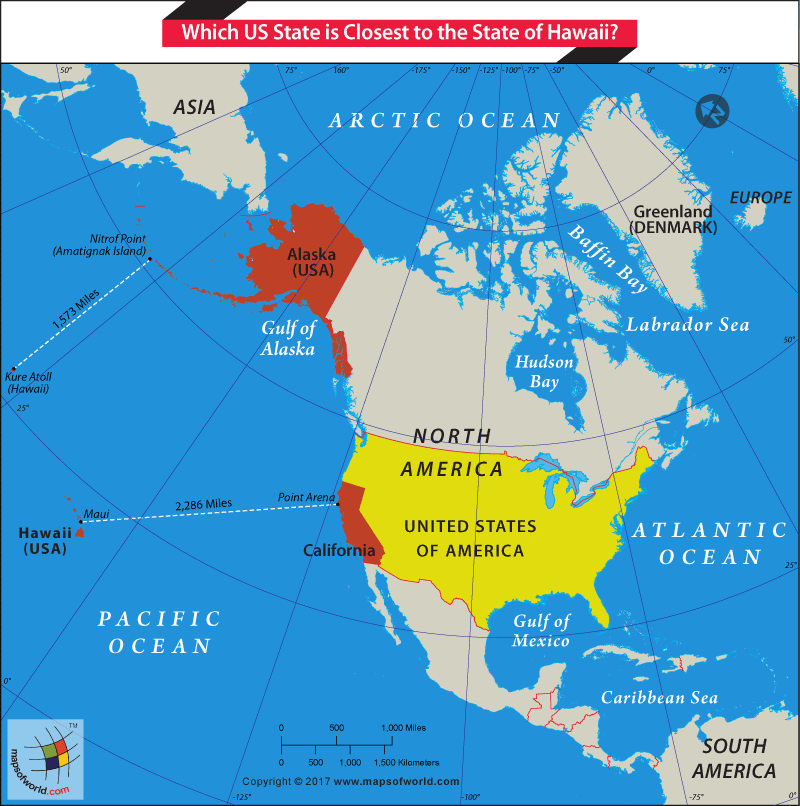
When discussing the distance to Hawaii, the term “mainland” almost universally refers to the contiguous United States, also known as the Continental United States. More specifically, it often defaults to the West Coast states of California, Oregon, and Washington, as these are the primary departure points for most trans-Pacific flights to the islands. While other mainland masses, such as North America in general (including Canada and Mexico) or even distant Asia, are technically “mainlands,” the practical context for tourism and travel planning invariably centers on the western edge of the American continent. This distinction is crucial because the proximity to these western states significantly influences the travel experience, dictating the most common routes and expected journey durations. Understanding this geographical baseline is the first step in demystifying the journey to the Aloha State.
The Vast Expanse of the Pacific Ocean
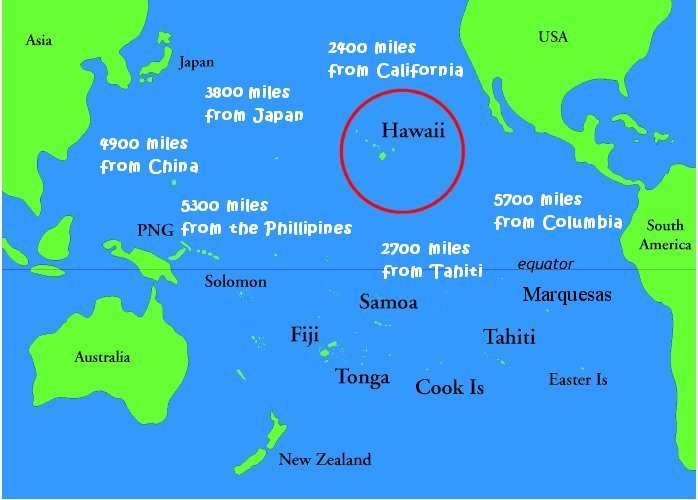
The sheer immensity of the Pacific Ocean is the primary factor contributing to Hawaii’s isolation. As the largest and deepest ocean on Earth, its vastness ensures that a trip to Hawaii is a true trans-oceanic voyage. Unlike Caribbean destinations accessible with shorter flights from the East Coast or European destinations from the United States that cross the narrower Atlantic, reaching Hawaii involves traversing thousands of miles of open water. This geographic reality isn’t a deterrent but rather an integral part of Hawaii’s mystique and allure. It means that the islands have developed a unique ecosystem and culture, shielded by distance from much of the external world. For travelers, it translates into a flight that is long enough to feel like a significant journey, yet short enough to be a popular vacation choice for millions annually. This isolation protects its pristine nature and contributes to the profound sense of detachment and relaxation visitors experience upon arrival.
Pinpointing the Distance: Key Figures and Departure Points
Accurately quantifying the distance to Hawaii requires considering specific departure and arrival points, as the archipelago spans hundreds of miles itself, and mainland cities vary in their longitude. However, general figures provide an excellent benchmark for travelers planning their journey. The distances are typically measured from major West Coast cities to Honolulu on Oahu, which hosts the state’s largest airport, Daniel K. Inouye International Airport (HNL), and serves as the primary gateway to the islands.
From the West Coast of the United States
The majority of travelers to Hawaii embark from the West Coast of the United States. Here are some approximate distances in nautical miles (nm) and statute miles (sm), which are often more familiar to the general public, along with kilometers (km):
- From Los Angeles, California (LAX): Approximately 2,280 nm (2,620 sm or 4,217 km) to Honolulu. Los Angeles International Airport (LAX) is one of the busiest hubs for flights to Hawaii.
- From San Francisco, California (SFO): Approximately 2,210 nm (2,540 sm or 4,088 km) to Honolulu. San Francisco International Airport (SFO) also serves as a major gateway.
- From Seattle, Washington (SEA): Approximately 2,300 nm (2,647 sm or 4,260 km) to Honolulu. Travelers from the Pacific Northwest often depart from Seattle-Tacoma International Airport (SEA).
These figures highlight that regardless of the specific departure city on the West Coast, the journey across the Pacific Ocean is consistently in the range of 2,500 to 2,650 statute miles. This substantial distance underpins the long flight times characteristic of a Hawaii vacation.
Distance from Other North American Hubs
While the West Coast is the most common point of embarkation, flights to Hawaii also originate from other parts of North America, albeit with longer distances and flight times.
- From Vancouver, Canada: Approximately 2,340 nm (2,690 sm or 4,330 km) to Honolulu. This makes Vancouver a popular choice for Canadian travelers.
- From Chicago, Illinois: Roughly 3,600 nm (4,140 sm or 6,660 km) to Honolulu. Flights from the Midwest are significantly longer, often involving a layover on the West Coast.
- From New York City, New York: Approximately 4,300 nm (4,950 sm or 7,966 km) to Honolulu. This represents one of the longest domestic flights within the United States.
These figures underscore that while Hawaii is a part of the United States, its geographic position makes it a truly distant destination, especially for those traveling from the central or eastern regions of the continent.
Why the Specific Island Matters
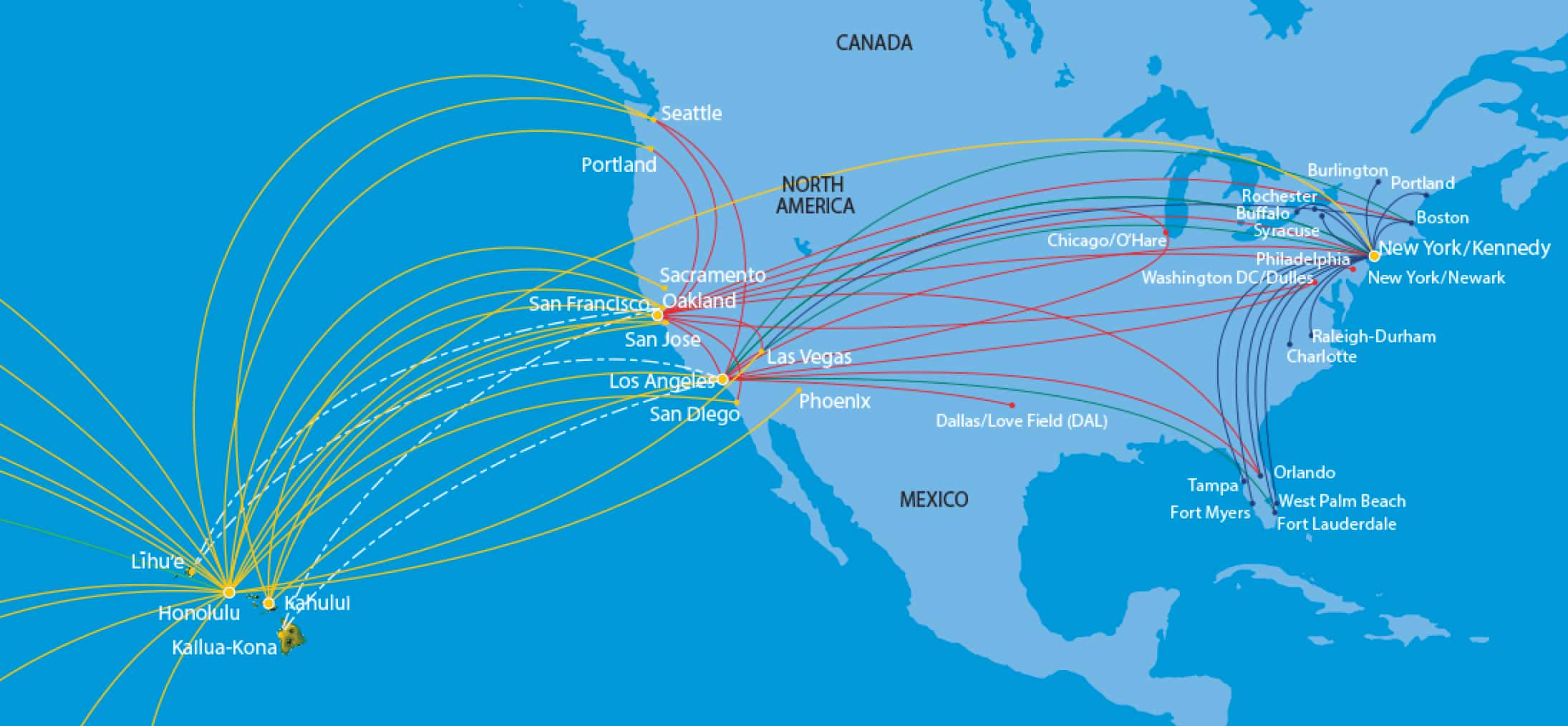
It’s important to remember that Hawaii is an archipelago, not a single landmass. While Honolulu on Oahu is the primary entry point, visitors often travel to other islands like Maui, Kauai, or the Big Island (also known as Hawaii Island). The flight to these outer islands from the mainland might be slightly longer or shorter than to Oahu, but more importantly, it often requires an additional inter-island flight from Honolulu. For example, Maui’s Kahului Airport is a common direct destination, but destinations like Kona or Hilo on the Big Island, or Lihue on Kauai, might involve an extra leg. This multi-leg journey adds to the overall travel time and can impact the perception of distance, necessitating careful planning for island-hopping itineraries.
The Journey: Flight Times and Travel Logistics
Knowing the precise distance is one thing; understanding what that translates to in terms of actual travel time and logistics is another. The duration of the flight is arguably more important for travelers than the exact mileage, influencing everything from packing decisions to coping with jet lag.
Average Flight Durations
From the West Coast of the United States, direct flights to Honolulu typically range from 5.5 to 6.5 hours.
- From Los Angeles or San Francisco: Expect roughly 5 hours and 30 minutes to 6 hours in the air.
- From Seattle: The flight tends to be slightly longer, around 6 hours to 6 hours and 30 minutes.
These durations are for non-stop flights and can vary based on aircraft type, headwinds/tailwinds (flights returning to the mainland are often shorter due to prevailing winds), and specific flight paths. For travelers departing from the Midwest or East Coast, a connecting flight is usually necessary, adding several hours to the total journey. A trip from Chicago or New York City could easily extend to 10-12 hours or more, including layover time. These extended travel times necessitate careful planning regarding comfort, entertainment, and meal arrangements during the flight.
Planning for Time Zones and Jet Lag
The vast distance across the Pacific Ocean also means crossing multiple time zones. Hawaii observes Hawaii Standard Time (HST), which does not utilize daylight saving time.
- During standard time, Hawaii is 2 hours behind the Pacific Time Zone (PST), 3 hours behind Mountain Time Zone (MST), 4 hours behind Central Time Zone (CST), and 5 hours behind the Eastern Time Zone (EST).
- When daylight saving time is in effect on the mainland (March to November), these differences increase by one hour. For example, Hawaii is 3 hours behind Pacific Daylight Time (PDT).
This significant time difference, particularly for travelers from the East Coast, can lead to noticeable jet lag upon arrival. Strategies for mitigating jet lag, such as adjusting sleep schedules before departure, staying hydrated, and exposing oneself to natural light upon arrival, become essential components of travel planning for a Hawaii vacation.
Non-Stop vs. Connecting Flights
For many, especially those departing from the West Coast, non-stop flights are readily available and highly recommended. They minimize total travel time, reduce the risk of missed connections, and offer a more seamless start to the vacation. Major airlines like Hawaiian Airlines, United Airlines, Delta Air Lines, American Airlines, and Southwest Airlines all offer direct services from various mainland cities. However, for travelers from regions without direct service or those seeking more budget-friendly options, connecting flights through a West Coast hub are common. While potentially longer, these flights can sometimes offer cost savings. The decision between non-stop and connecting should weigh comfort, convenience, and budget, with the understanding that even a non-stop journey to Hawaii is a substantial commitment of time.
More Than Just Miles: The Implications for Travel
The considerable distance between Hawaii and the mainland is not just a numerical fact; it profoundly influences the entire travel experience, from the perceived value of the destination to the practicalities of budgeting and planning.
Exclusivity and the Island Experience
The geographical isolation of Hawaii contributes significantly to its allure as an exclusive and exotic destination. Unlike closer, more easily accessible locales, reaching Hawaii feels like an achievement, a true escape. This sense of exclusivity is part of what makes a Hawaii vacation so coveted. Travelers understand that they are journeying to a place unlike anywhere else in the United States, a vibrant blend of Polynesian culture, American heritage, and unparalleled natural beauty, all preserved by its oceanic distance. The effort invested in reaching the islands enhances the appreciation for their unique environment and the distinct “Aloha Spirit” found there. It fosters a feeling of being genuinely ‘away from it all,’ promoting a deeper sense of relaxation and immersion in the island lifestyle.
Travel Costs and Budgeting Considerations
The distance inevitably impacts the cost of travel to Hawaii. Airfare, being the primary expense for most travelers, reflects the long-haul nature of the journey. While competitive pricing is often available, especially during off-peak seasons or with advanced booking, flights to Hawaii typically command higher prices than shorter domestic routes. Furthermore, the reliance on imports for most goods means that everyday expenses, including food, groceries, and souvenirs, can be higher on the islands. Travelers should factor these elevated costs into their overall budget planning. Understanding the distance helps set realistic financial expectations for a Hawaii trip, encouraging thorough research into packages, deals, and strategies for saving money on flights and on-island expenses.
Environmental Impact of Long-Haul Travel
With increased awareness of climate change and sustainable tourism, the environmental impact of long-haul flights to destinations like Hawaii is also a consideration for many travelers. Air travel contributes to carbon emissions, and longer distances mean a larger carbon footprint. While the desire to experience Hawaii’s beauty is strong, responsible travelers often seek ways to mitigate their environmental impact. This can include choosing airlines with more fuel-efficient fleets, opting for direct flights to reduce take-off and landing emissions, or offsetting carbon emissions through various programs. The distance serves as a reminder for visitors to engage in mindful and sustainable tourism practices once they arrive, helping to preserve the delicate ecosystems and natural wonders that make Hawaii such a precious destination.
Embracing the Distance: Why Hawaii Remains a Premier Destination
Despite the significant distance, Hawaii consistently ranks as one of the world’s most desired travel destinations. Its remoteness is not a barrier but rather an intrinsic part of its charm and identity, contributing to a truly unforgettable travel experience.
The Allure of a Remote Paradise
The distance reinforces Hawaii’s image as a truly exotic and secluded paradise. It signifies a journey to a place far removed from the everyday, where the rhythm of life slows down, and natural wonders abound. From the towering volcanoes of the Big Island to the vibrant coral reefs of Maui, the iconic surf breaks of Oahu’s North Shore, and the dramatic cliffs of Kauai’s Na Pali Coast, each island offers a distinct slice of heaven. The long flight melts away the moment one breathes in the fragrant air, feels the warm sun, and hears the gentle lapping of waves. This physical separation has allowed Hawaii to cultivate a distinct cultural identity and preserve its breathtaking natural environments, making the journey worthwhile for those seeking an unparalleled escape.
Preparing for a Trans-Pacific Adventure
For travelers, preparing for a trip to Hawaii means more than just packing swimwear. It involves understanding the logistics of a longer journey:
- Booking in Advance: Especially for flights, to secure better prices and preferred times.
- Packing Smart: Considering the duration of the flight and the items needed for comfort (neck pillows, entertainment, snacks).
- Jet Lag Management: Planning for a relaxed first day to acclimate to the time change.
- Inter-island Travel: If planning to visit multiple islands, booking these domestic flights in conjunction with international ones.
- Researching On-Island Activities: To make the most of the precious time spent in this remote paradise.
The distance to Hawaii is a fundamental aspect of its identity as a travel destination. It’s a journey that takes commitment and planning, but one that promises unparalleled rewards. The miles melt away with the anticipation of stunning landscapes, warm hospitality, and the profound tranquility that only such a beautiful and distant archipelago can offer. Understanding “how far” is the first step in appreciating the depth of the travel experience that awaits in the Aloha State.
LifeOutOfTheBox is a participant in the Amazon Services LLC Associates Program, an affiliate advertising program designed to provide a means for sites to earn advertising fees by advertising and linking to Amazon.com. Amazon, the Amazon logo, AmazonSupply, and the AmazonSupply logo are trademarks of Amazon.com, Inc. or its affiliates. As an Amazon Associate we earn affiliate commissions from qualifying purchases.