
The transition from the neon-soaked skyline of Las Vegas to the ethereal crimson spires of Sedona is one of the most visually stunning journeys in the United States. While Nevada offers world-class entertainment and high-energy nightlife, Arizona provides a spiritual and geological sanctuary that feels worlds apart. Understanding the logistics of this trip—specifically the distance, time, and the treasures found along the way—is essential for any traveler looking to experience the best of the American Southwest.
The Distance and Primary Driving Routes
When calculating how far Las Vegas is from Sedona, the answer depends slightly on your chosen path, but the standard driving distance is approximately 280 miles. For most travelers, this translates to a drive time of four and a half to five hours, assuming minimal traffic and short stops. The journey takes you across the state line into the heart of the Mojave Desert before ascending into the high desert plateaus of Arizona.

The Fast Track: US-93 to I-40
The most common and efficient route begins by heading south out of Las Vegas toward Henderson. From there, you will take US Highway 93 South. This stretch of road is a well-maintained corridor that carries you over the Colorado River. After crossing into Arizona, the highway continues through the desert toward Kingman, where you will merge onto Interstate 40 East. This interstate drive is the backbone of the trip, leading you toward Flagstaff before you make the final descent into the red rocks.
The Scenic Descent: Oak Creek Canyon
While you can reach Sedona by taking Interstate 17 South from Flagstaff, seasoned travelers often recommend taking State Route 89A. This route takes you through Oak Creek Canyon, a breathtaking gorge often cited as one of the most scenic drives in America. The road hairpins down the Mogollon Rim, dropping thousands of feet in elevation as the lush ponderosa pines of the Coconino National Forest give way to the towering sandstone formations of Sedona.
Iconic Landmarks and Pit Stops Along the Way
A road trip from Las Vegas to Sedona is not just about the destination; it is about the historical and natural landmarks that punctuate the drive. Because the route traverses some of the most famous landscapes in the west, there are several opportunities to turn a five-hour drive into a full day of exploration.
Engineering Marvels: Hoover Dam
Just 45 minutes outside of Las Vegas, you will encounter the Hoover Dam. This colossal structure, an icon of 20th-century engineering, holds back the waters of Lake Mead. While you can drive across the Mike O’Callaghan-Pat Tillman Memorial Bridge for a quick view, it is worth exiting the highway to walk the pedestrian path on the bridge. From this vantage point, you have an unobstructed view of the dam and the deep blue waters of the Colorado River below.
Nostalgia on Route 66
Once you reach Kingman, you have the chance to step back in time. Kingman is often called the “Heart of Historic Route 66.” If time permits, a slight detour onto the old Mother Road allows you to visit the Hackberry General Store, a treasure trove of vintage memorabilia. Further east, the town of Seligman offers a colorful array of retro diners and motels that served as the inspiration for the movie “Cars.” These stops provide a charming contrast to the modern luxury of the Wynn Las Vegas or Caesars Palace you may have left behind.
High Altitude Highlights in Williams and Flagstaff
As the elevation rises, you will arrive in Williams, known as the gateway to the Grand Canyon National Park. For those traveling with family, a stop at Bearizona Wildlife Park offers a drive-thru safari experience where you can see black bears and wolves in a natural setting. Continuing toward Flagstaff, the landscape transforms into a high-alpine environment. Flagstaff itself is a vibrant college town home to the Lowell Observatory, where the planet Pluto was discovered.
Navigating Seasonal Weather and Driving Conditions
The journey from Las Vegas to Sedona involves significant changes in altitude, which means travelers must be prepared for a variety of weather conditions. The starting point in Nevada sits at about 2,000 feet, while Flagstaff sits at nearly 7,000 feet before dropping back down to Sedona at 4,300 feet.
Summer Heat and Winter Snow
During the summer months, the drive through the Mojave Desert can see temperatures exceeding 110 degrees Fahrenheit. It is imperative to ensure your vehicle’s cooling system and tires are in top condition. Conversely, winter travelers may be surprised to find heavy snow in Flagstaff and on the Mogollon Rim. Interstate 40 can occasionally experience closures during severe winter storms. Always check the Arizona Department of Transportation updates before heading out during the colder months.
Managing the Descent
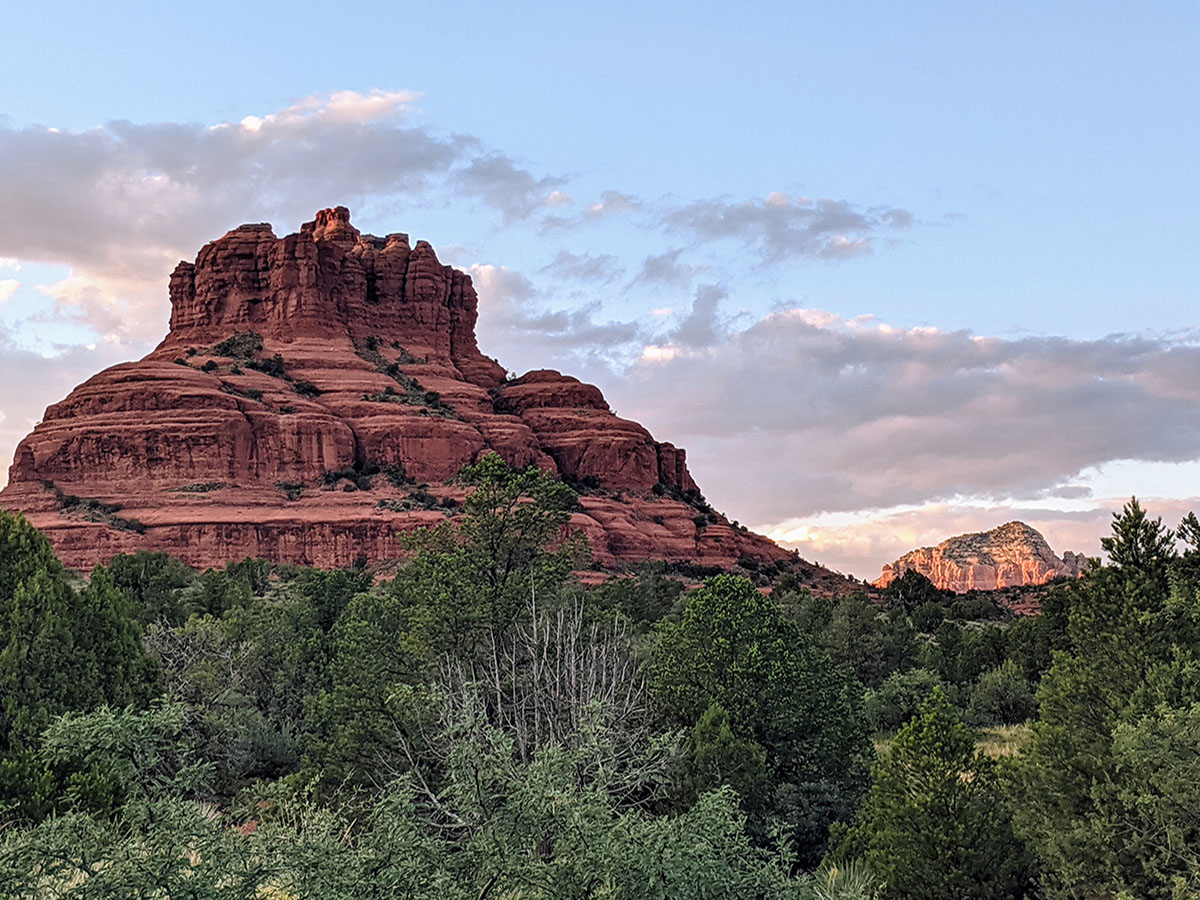
The final leg of the trip via Oak Creek Canyon is steep and winding. If you are driving a large RV or towing a trailer, you may find this route challenging. In such cases, taking Interstate 17 South from Flagstaff to State Route 179—the Red Rock Scenic Byway—is a much wider and safer alternative. This entrance into Sedona provides the iconic first glimpse of Bell Rock and Courthouse Butte.
Exploring the Majesty of Sedona upon Arrival
Once the 280-mile journey is complete, the rewards of Sedona are immediately apparent. The town is world-renowned for its “vortexes,” areas of concentrated energy that are said to facilitate healing and meditation. Whether you believe in the metaphysical or simply appreciate natural beauty, the landscape is undeniable.
Hiking and Nature
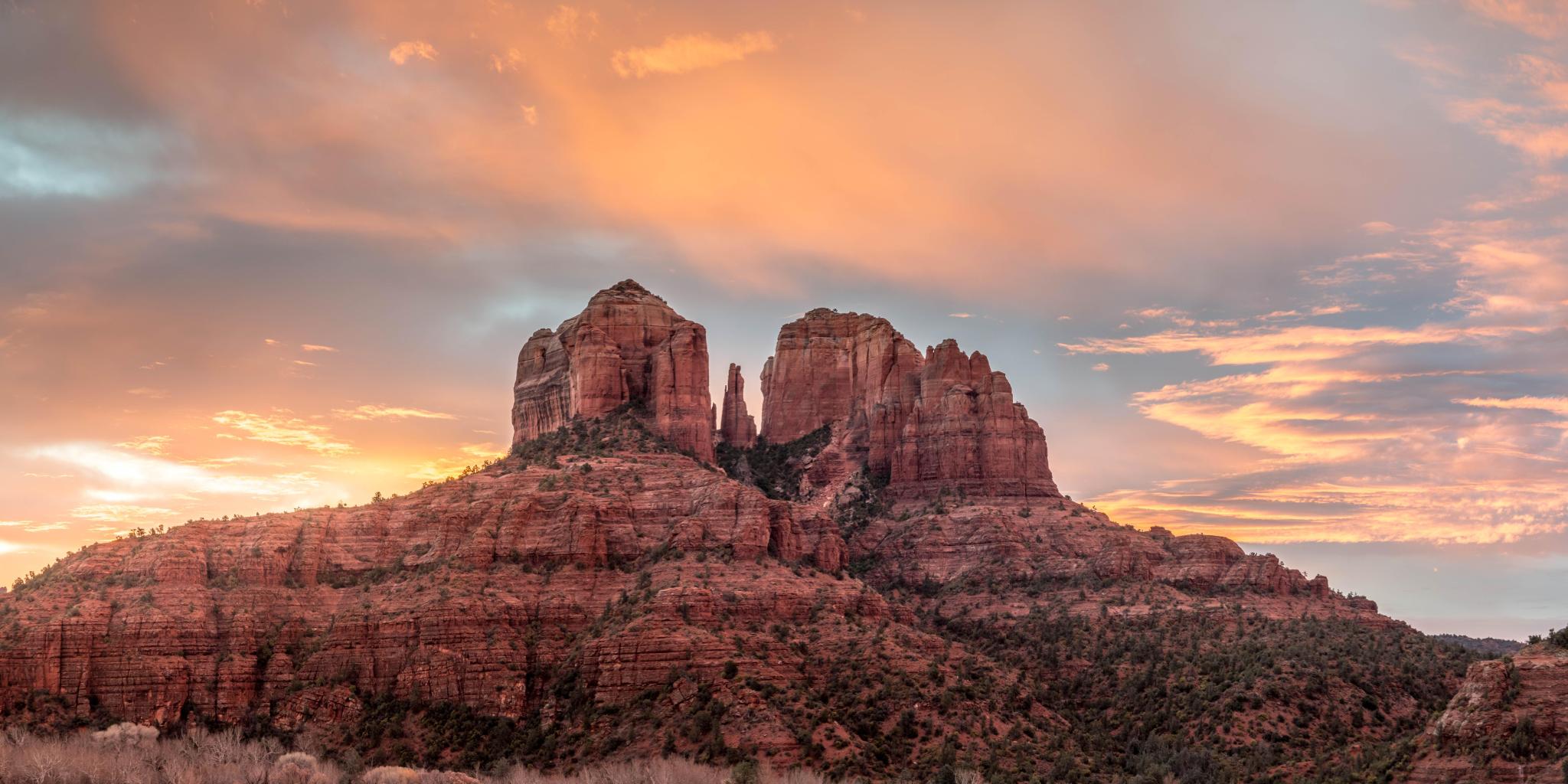
Red Rock State Park is an excellent starting point for understanding the local ecology. For those seeking more adventurous hikes, Cathedral Rock offers a steep climb with a rewarding panoramic view of the valley. If you prefer a water-based adventure, Slide Rock State Park in Oak Creek Canyon features a natural water slide carved into the creek bed, though it is most popular during the warm summer months.
Architecture and Art
Beyond the trails, Sedona is home to architectural wonders like the Chapel of the Holy Cross. Built directly into the red rocks, this chapel offers a moment of quiet reflection and incredible views of the surrounding formations. For art enthusiasts, the Tlaquepaque Arts and Shopping Village provides a beautiful setting modeled after a traditional Mexican village, filled with galleries, craft shops, and upscale dining.
Luxury and Relaxation
After the long drive from Las Vegas, many travelers seek out the luxury resorts that Sedona is famous for. Properties like Enchantment Resort or L’Auberge de Sedona offer world-class spas and dining that rival the best on the Las Vegas Strip. These sanctuaries allow you to unwind and fully immerse yourself in the desert silence, a stark and refreshing contrast to the “City of Lights.”
In summary, while the distance from Las Vegas to Sedona is relatively short for a cross-state road trip, the diversity of the experience is immense. From the desert flats of Nevada and the engineering of the Hoover Dam to the pine forests of Flagstaff and the red spires of Arizona, this journey is a quintessential American travel experience. Proper planning regarding your route and stops will ensure that the journey is just as memorable as the destination.
LifeOutOfTheBox is a participant in the Amazon Services LLC Associates Program, an affiliate advertising program designed to provide a means for sites to earn advertising fees by advertising and linking to Amazon.com. Amazon, the Amazon logo, AmazonSupply, and the AmazonSupply logo are trademarks of Amazon.com, Inc. or its affiliates. As an Amazon Associate we earn affiliate commissions from qualifying purchases.