
The allure of New Orleans and the vibrant energy of Dallas, Tx are two powerful draws for travelers across the United States. While seemingly distinct in their cultural landscapes and geographical settings, these two major Texan and Louisianan hubs are closer than many might imagine, making a road trip between them a popular and rewarding choice. Understanding the distance and the various travel options available is crucial for planning an efficient and enjoyable journey. This comprehensive guide will explore the intricacies of the distance between these two iconic cities, offering insights into driving times, alternative transportation, and what to expect along the way.
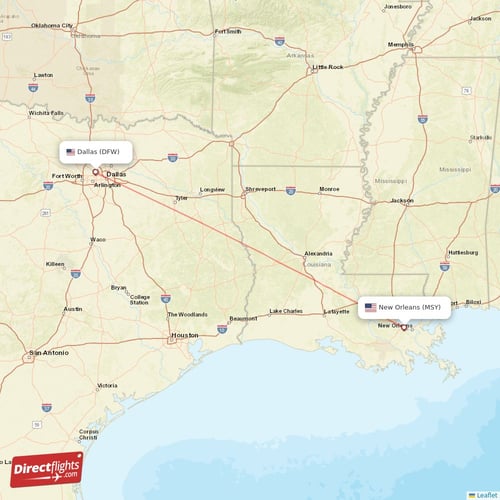
The Direct Driving Distance and Estimated Time
The most straightforward way to understand the distance between New Orleans and Dallas, Tx is by car. The most common and direct route typically spans approximately 500 to 515 miles, depending on the specific starting and ending points within each city and the exact roads taken. This mileage translates to an estimated driving time of around 7.5 to 8.5 hours, assuming no significant delays.
Factors Influencing Travel Time
It is essential to acknowledge that this driving time is an estimation and can be influenced by several factors.
Traffic Conditions
Both New Orleans and Dallas, Tx are bustling metropolitan areas. Entering or exiting these cities, especially during peak hours (morning and evening commutes, weekends, or holidays), can add considerable time to your journey. Similarly, the stretch of Interstate 20 that connects these two cities can experience its own traffic slowdowns, particularly around smaller towns or construction zones.
Road Construction and Detours
Highway maintenance and construction projects are a constant reality on major interstates. Unforeseen closures or detours can significantly impact your travel time. It is always advisable to check real-time traffic updates from sources like Google Maps or Waze before and during your trip.
Stops for Rest and Refueling
The estimated driving time rarely accounts for necessary stops. To drive safely and comfortably, drivers will need to factor in time for breaks, meals, and refueling. A 7.5 to 8.5-hour drive will realistically extend to at least 9 to 10 hours when these essential stops are included.
Speed Limits and Driving Habits
Adhering to posted speed limits and personal driving habits will also influence the total duration. While exceeding speed limits might seem like a way to save time, it carries risks and is generally not recommended for long-distance travel.
Alternative Transportation Options
While driving is a popular choice, there are other viable transportation methods for traveling between New Orleans and Dallas, Tx, each offering a different experience and potentially varying travel times.
Flying: The Fastest Route
For those prioritizing speed, flying is the most efficient option.
Direct Flights and Airports
Both Dallas/Fort Worth International Airport (DFW) and Dallas Love Field Airport (DAL) serve the Dallas metropolitan area, while Louis Armstrong New Orleans International Airport (MSY) is the primary airport for New Orleans. Numerous airlines offer direct flights between these cities, with flight durations typically ranging from 1 hour and 15 minutes to 1 hour and 30 minutes.
Total Travel Time Considerations
It’s important to remember that the total travel time when flying includes much more than just the flight itself. You must account for travel to and from the airports, check-in procedures, security screening, boarding time, and baggage claim. Therefore, while the flight is short, the entire door-to-door travel time might be comparable to a portion of a driving day, often in the range of 4 to 6 hours depending on your proximity to the airports and efficiency of the transit.
Bus Travel: A Budget-Friendly Choice
For travelers on a tighter budget, bus services offer an economical way to journey between New Orleans and Dallas, Tx.
Major Bus Carriers and Routes
Companies like Greyhound operate regular routes connecting these two cities. The travel time by bus is significantly longer than driving or flying, typically ranging from 10 to 12 hours, or even more, depending on the number of stops and layovers.
Comfort and Amenities
Bus travel has evolved, with many carriers offering amenities such as Wi-Fi, power outlets, and reclining seats. However, it remains a more time-consuming option and may require longer periods of sitting. It’s an excellent choice for those who are not pressed for time and wish to minimize travel costs.
Train Travel: A Scenic, Though Less Common, Option
While less common for this specific route compared to driving or flying, train travel between New Orleans and Dallas, Tx is technically possible, often involving a connection.
Amtrak Services and Connections

Amtrak, the national passenger rail service, does not offer a direct route between these two cities. Travelers would typically need to take a route from New Orleans towards Texas, which might involve a transfer in a city like Houston before reaching Dallas. This makes train travel a much longer endeavor, potentially spanning over 24 hours, and often more expensive than bus or even driving when factoring in all associated costs.
Advantages of Train Travel
Despite the longer travel time, train travel can offer a unique and scenic perspective of the American landscape. Passengers can move around more freely than on a plane or bus, and sleeping accommodations are often available for overnight journeys. However, for the New Orleans to Dallas route, it’s generally not the most practical or time-efficient choice.
Planning Your Journey: What to Expect on the Road
Embarking on a road trip from New Orleans to Dallas, Tx offers a chance to experience the diverse landscapes of the Gulf Coast and East Texas. The primary route is Interstate 20 (I-20) West, a major highway that traverses through Louisiana and into Texas.
The Route via I-20 West
The journey along I-20 West is predominantly through varied terrains, transitioning from the bayou country of Louisiana to the rolling plains of Texas.
Key Cities and Potential Stops
Along the I-20 corridor, you will pass through or near several notable towns and cities that could serve as convenient rest stops or even brief exploration points. These include:
- Shreveport, Louisiana: A significant city in northwest Louisiana, known for its casinos and cultural attractions. It’s roughly halfway through the Louisiana portion of the drive.
- Longview, Texas: An important East Texas city, offering various dining and lodging options.
- Tyler, Texas: Famous for its rose gardens and a pleasant stop for a break.
- Terrell, Texas: Located east of Dallas, it can be a good last stop before reaching the metropolitan area.
These cities provide ample opportunities for gas stations, restaurants, and rest areas, making the drive more manageable.
Road Conditions and Scenery
The road conditions on I-20 are generally good, being a well-maintained interstate highway. The scenery is varied; you’ll see lush greenery in Louisiana, transitioning to more open, sometimes arid landscapes as you enter Texas. Expect a mix of forests, agricultural land, and increasingly suburban sprawl as you approach Dallas.
Preparing for the Drive
Successful road trips require preparation. For the distance between New Orleans and Dallas, Tx, consider the following:
Vehicle Maintenance
Ensure your vehicle is in good working order. Check tires, brakes, fluids, and have a basic emergency kit. A pre-trip inspection can prevent unexpected breakdowns.
Packing Essentials
Pack snacks, water, a first-aid kit, phone chargers, and entertainment options (music, podcasts, audiobooks). If traveling with children, pack accordingly to keep them entertained.
Navigation Tools
Reliable GPS or navigation apps are indispensable. Download offline maps in case of spotty cellular service, especially in more rural stretches.
Lodging and Timing
Decide whether you plan to complete the drive in one go or break it up. If breaking it up, research hotels or motels in your chosen stopover city in advance. Consider the time of day you plan to arrive in Dallas to avoid the worst of the rush hour traffic.
Understanding the Distance in Miles and Kilometers
The distance between New Orleans and Dallas, Tx is consistently measured in miles for travelers in the United States. As mentioned, this is approximately 500 to 515 miles. To provide a global perspective, this distance can be converted into kilometers.
Conversion to Kilometers
For international travelers or those more accustomed to the metric system, the distance can be expressed in kilometers.
The Kilometer Equivalence
1 mile is equivalent to approximately 1.60934 kilometers. Therefore, the distance of approximately 500 to 515 miles translates to roughly 805 to 829 kilometers. This conversion helps provide a clearer understanding for a wider audience.

Implications for Planning
Whether you measure the journey in miles or kilometers, the fundamental aspect remains the same: it’s a substantial but manageable distance for a road trip. For car rentals, understanding these figures is crucial for estimating fuel costs and potential mileage charges if applicable. For airlines and bus companies, these distances inform the operational planning and scheduling of their routes. Regardless of the unit of measurement, the travel time will remain the most critical factor for most travelers planning their trip from the unique cultural hub of New Orleans to the dynamic metropolis of Dallas, Tx.
LifeOutOfTheBox is a participant in the Amazon Services LLC Associates Program, an affiliate advertising program designed to provide a means for sites to earn advertising fees by advertising and linking to Amazon.com. Amazon, the Amazon logo, AmazonSupply, and the AmazonSupply logo are trademarks of Amazon.com, Inc. or its affiliates. As an Amazon Associate we earn affiliate commissions from qualifying purchases.