
The question of how far is New Orleans to Houston, Texas is a common one for travelers planning a trip between these two vibrant southern hubs. While the distance might seem straightforward, understanding the nuances of travel time, preferred routes, and the factors influencing your journey can significantly enhance your planning experience. This guide will delve into the specifics of navigating the approximately 350-mile stretch between these iconic cities, offering insights for various travel styles.
The Direct Driving Route: Miles and Minutes
The most common and direct way to travel between New Orleans and Houston is by car. This journey predominantly follows Interstate 10 (I-10) West, a major highway that connects the Gulf Coast states.
Understanding the Mileage
The precise driving distance between New Orleans and Houston is approximately 350 miles. This figure can vary slightly depending on your exact starting point in New Orleans and your final destination in Houston. For instance, departing from the French Quarter in New Orleans and heading to downtown Houston will yield a slightly different mileage than starting in a suburban area of New Orleans and aiming for the Energy Corridor in Houston. However, for general planning purposes, 350 miles is a reliable estimate.
Estimating Travel Time
While the mileage is constant, the travel time is a dynamic figure influenced by several factors. The official estimated driving time for the 350-mile journey is typically around 5 to 5.5 hours without significant stops or traffic delays. However, this is an optimistic projection.
Factors Affecting Drive Time:
- Traffic: Both New Orleans and Houston are major metropolitan areas, and their outskirts can experience considerable traffic congestion, especially during peak commuting hours (morning and late afternoon/early evening on weekdays). Exiting New Orleans and entering Houston are particularly prone to delays.
- Construction: Road construction projects are common on major interstates and can lead to significant slowdowns and detours. It’s always advisable to check real-time traffic reports before and during your trip.
- Weather: The Gulf Coast is known for its unpredictable weather. Heavy rain, fog, or even tropical systems can dramatically reduce visibility and speed limits, increasing travel time.
- Stops: Most travelers will want to make at least one stop for fuel, food, or a restroom break. A 5-hour drive often translates to a 6-hour journey when factoring in these necessary pauses.
- Speed Limits: While the speed limit on I-10 can reach up to 75 mph in some stretches, actual travel speeds will be influenced by traffic flow and driver preferences.
Considering these variables, it’s prudent to budget at least 6 to 7 hours for the drive from New Orleans to Houston, especially if you’re aiming for a relaxed journey with a planned stop.
Alternative Travel Options: Beyond the Car
While driving is the most popular method, other transportation options can bridge the gap between New Orleans and Houston, offering different experiences and time considerations.
Flying: The Fastest (But Not Always) Route
The quickest way to travel between the two cities is by air. New Orleans is served by Louis Armstrong New Orleans International Airport (MSY), and Houston has two major airports: George Bush Intercontinental Airport (IAH) and William P. Hobby Airport (HOU).
Flight Duration and Logistics:
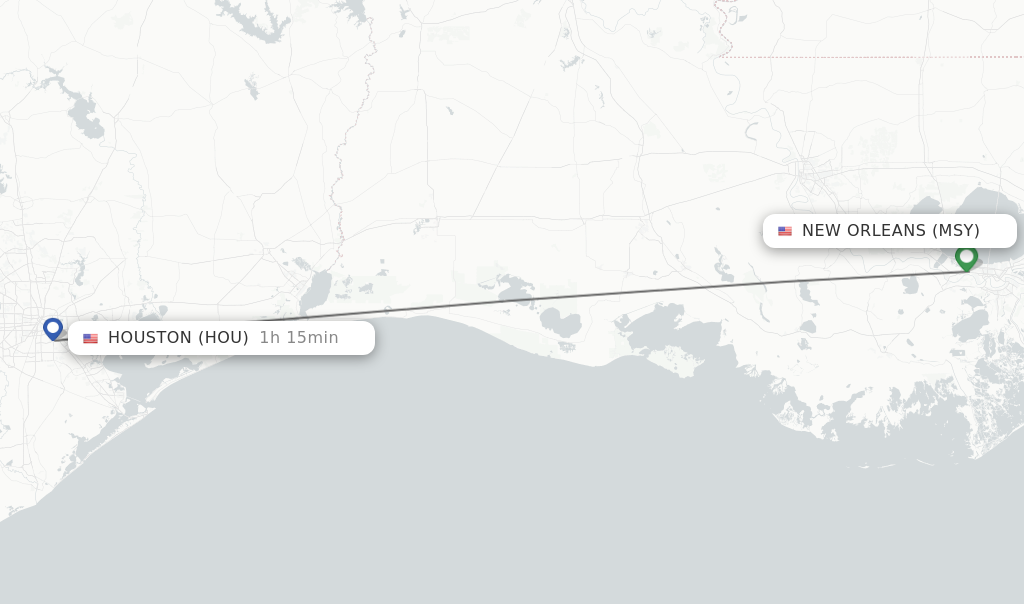
A direct flight between New Orleans and Houston is typically very short, often under an hour. However, the total travel time involves much more than just the flight itself.
- Airport Travel: You need to factor in travel time to and from the airports at both ends.
- Check-in and Security: Arriving at the airport at least two hours before a domestic flight is recommended to allow ample time for check-in, baggage drop, and security screening.
- Boarding and Deplaning: The time spent boarding the plane and then exiting after landing also adds to the overall duration.
- Baggage Claim: If you checked luggage, waiting for it to appear at baggage claim is another delay.
When all these elements are considered, the total door-to-door travel time for flying can easily rival or even exceed the driving time, especially for those living or traveling from areas close to I-10. Nevertheless, for travelers prioritizing speed over the journey itself, flying remains a viable option.
Bus and Train Services: A More Relaxed Pace
For those who prefer not to drive or fly, bus and train services offer a more leisurely way to travel between New Orleans and Houston.
Bus Travel:
Several bus companies operate routes between the two cities, offering an economical choice. The journey typically takes around 6 to 8 hours, depending on the number of stops and traffic conditions. Companies like Greyhound and Megabus are common providers. Bus stations are usually located conveniently within each city, making them accessible for many travelers.
Train Travel:
Amtrak offers a train service that connects New Orleans to Houston. The Amtrak route, however, is not as direct as the highway. The journey often involves a connection or a longer travel time, typically ranging from 8 to 10 hours or even more, depending on the specific service and route. While it might not be the fastest option, train travel provides a comfortable and scenic way to experience the landscape between the two states, with the ability to move around and enjoy amenities onboard.
Navigating the Route: Key Waypoints and Considerations
The journey along I-10 West from New Orleans to Houston passes through diverse landscapes and offers potential stops for those looking to break up the drive.
Crossing Louisiana: Beyond the Crescent City
As you depart New Orleans, you’ll traverse the flat, bayou-tinged landscapes of Louisiana. The initial stretch of I-10 West will take you through towns like Baton Rouge, the state capital.
Baton Rouge: A Potential Stopover
Baton Rouge is located roughly 80 miles west of New Orleans, making it a logical point for a brief stop or a more extended visit if you have extra time. Here, you can visit attractions such as the Old State Capitol or the LSU Rural Life Museum. This city offers a good opportunity for lunch or to refuel before continuing your journey into Texas.
Entering Texas: The Lone Star State Awaits
After passing through Louisiana, I-10 West leads you into Texas. The landscape begins to change, becoming more of a coastal plain as you approach Houston.
Beaumont and Port Arthur: Industrial Hubs
As you enter Texas, you’ll pass through cities like Beaumont and Port Arthur. These areas are known for their petrochemical industries and are important economic centers. While they may not be primary tourist destinations for many, they offer essential services like gas stations and restaurants.
The Final Approach to Houston:
The final miles into Houston can be the most challenging due to increasing traffic density. As you get closer to the city limits, be prepared for more vehicles and potentially slower speeds. Navigating the complex freeway system within Houston itself requires attention, especially if you are unfamiliar with the area. Major arteries like I-610 (the “Loop”) and U.S. Highway 59 (Eastex Freeway) are crucial for reaching different parts of the vast Houston metropolitan area.
Optimizing Your Travel Experience
Whether you choose to drive, fly, or take a bus or train, careful planning can ensure a smooth and enjoyable journey between New Orleans and Houston.
Pre-Trip Planning:
- Check Road Conditions: For drivers, using GPS apps like Google Maps or Waze to check real-time traffic and potential delays is essential.
- Book in Advance: If flying or taking a bus/train, booking your tickets in advance can often secure better prices and ensure availability.
- Pack Accordingly: Consider the weather forecast for both departure and arrival cities, as well as any potential weather along the route.
- Plan Your Stops: For road trips, identify potential rest stops, meal locations, or even brief sightseeing opportunities to break up the drive and make the journey more pleasant.
During the Journey:
- Stay Hydrated and Fueled: For drivers, regular breaks are crucial for maintaining alertness. Ensure you have plenty of water and snacks.
- Utilize Technology: GPS navigation systems are invaluable for staying on track and finding points of interest.
- Be Patient: Traffic, construction, and weather can cause unexpected delays. Maintaining a patient and flexible attitude will lead to a less stressful experience.
The distance between New Orleans and Houston, while significant, is easily manageable with the right preparation. By understanding the travel times, considering your preferred mode of transport, and being aware of the factors that can influence your journey, you can confidently plan your trip and arrive at your destination ready to explore all that Houston, Texas has to offer.
LifeOutOfTheBox is a participant in the Amazon Services LLC Associates Program, an affiliate advertising program designed to provide a means for sites to earn advertising fees by advertising and linking to Amazon.com. Amazon, the Amazon logo, AmazonSupply, and the AmazonSupply logo are trademarks of Amazon.com, Inc. or its affiliates. As an Amazon Associate we earn affiliate commissions from qualifying purchases.