
Spanning the vast expanse of the United States, the journey between New York City and Los Angeles represents one of the most iconic cross-country treks in modern travel. Whether you are a business traveler mapping out a coast-to-coast itinerary or an adventurer planning a transcontinental road trip, understanding the distance and the logistical realities of traversing the continent is essential. The distance between these two major cultural and economic hubs is approximately 2,450 to 2,800 miles depending on your mode of transport and the route chosen.
The Geography of Transcontinental Travel
The physical distance between the “Big Apple” on the Atlantic Ocean and the “City of Angels” on the Pacific Ocean is a journey that showcases the incredible topographical diversity of the North America continent. Crossing from the East Coast to the West Coast involves navigating through vastly different climate zones, mountain ranges, and time zones.
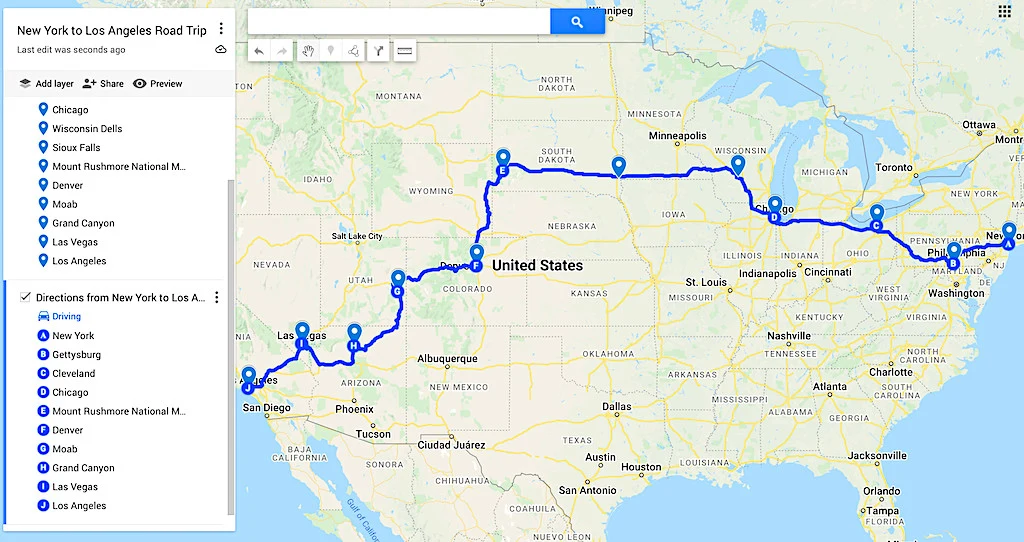
Great Circle Distance
When measured in a direct “as the crow flies” line—known as the Great Circle distance—the distance between New York City and Los Angeles is roughly 2,445 miles (3,935 kilometers). This is the distance typically utilized by aviation authorities to calculate flight paths and fuel consumption. Because of the curvature of the Earth, planes flying this route often arc slightly northward, passing over states like Pennsylvania, Ohio, Nebraska, and Nevada.
Driving Distance
If you choose to traverse the country by road, the distance increases significantly. The most direct driving route, primarily via Interstate 80 or a combination of Interstate 40 and Interstate 70, covers approximately 2,800 miles. Depending on specific detours, road construction, and the inclusion of scenic stops, most drivers find that the journey spans closer to 3,000 miles.
Air Travel: Efficiency Across the Clouds
For the vast majority of travelers, flying is the preferred method of transit between New York City and Los Angeles. With dozens of daily non-stop flights departing from hubs like John F Kennedy International Airport and Los Angeles International Airport, the journey has become a routine aspect of domestic transit.
Flight Duration
A non-stop flight from New York City to Los Angeles typically takes between 6 and 6.5 hours heading westbound. The return flight, heading eastbound, is usually faster—often between 5.5 and 6 hours—due to the influence of the jet stream, which acts as a powerful tailwind.
Connectivity Between Major Hubs
Travelers often choose between Newark Liberty International Airport in New Jersey or LaGuardia Airport depending on their proximity to Manhattan. On the west side, Burbank Airport provides a convenient alternative for those staying in Hollywood or the northern parts of the city, avoiding the intense traffic often associated with Los Angeles International Airport.
Road Trips and Overland Expeditions

Driving across the United States is considered a rite of passage for many. While the distance is daunting, the experience offers a unique perspective on the landscape that flying simply cannot provide.
The Iconic Routes
- The Southern Route: Many travelers opt to follow the path of the historic Route 66, which takes you through Chicago, St Louis, Oklahoma City, Amarillo, and Flagstaff. This route offers access to Grand Canyon National Park and the vibrant culture of New Mexico.
- The Northern Route: For those seeking cooler climates and mountain scenery, traveling through Chicago toward Salt Lake City and eventually San Francisco before heading south to Los Angeles provides a dramatic look at the Rocky Mountains.
Realistic Timelines
While a professional long-haul trucker might complete the trip in three days, the average tourist should budget at least five to seven days for a comfortable drive. This allows for necessary rest stops, visits to major landmarks, and the flexibility to navigate potential traffic delays in major metropolitan areas like Dallas or Denver.
Rail Travel: The Scenic Alternative
For travelers who prioritize comfort and the romanticism of the tracks, Amtrak offers a transcontinental rail experience. While there is no single train that runs directly from New York City to Los Angeles, passengers typically utilize the Lake Shore Limited to Chicago, and then transfer to the Southwest Chief to complete the journey to California.
The Experience of the Rails
This journey takes approximately 70 to 75 hours of travel time. It is a slow-paced excursion that takes passengers through the heart of the Midwest, the rolling plains of Kansas, and the dramatic deserts of Arizona. Unlike the efficiency of a jet, the train is about the journey itself, offering dining cars and observation decks that turn the transit into a curated travel experience.
Navigating Time Zones and Logistics
One of the most immediate impacts of the distance between New York City and Los Angeles is the three-hour time difference. New York City operates on Eastern Standard Time, while Los Angeles resides in the Pacific Standard Time zone.
Jet Lag and Scheduling
For business travelers, this time difference often dictates flight schedules. A morning flight leaving John F Kennedy International Airport will land in California around noon, theoretically allowing for a productive afternoon of meetings. However, the internal body clock adjustment—commonly known as jet lag—often requires a day of acclimation, especially when traveling eastward from Los Angeles to New York City, where the “lost” time can feel more disruptive.

Preparation Tips for Travelers
Regardless of the distance, successful travel between these two coasts requires preparation:
- Hydration: Air travel and long drives in arid western climates can lead to dehydration; prioritizing water intake is essential for physical comfort.
- Strategic Packing: Because the weather in New York City can vary wildly from the mild Mediterranean climate of Los Angeles, layering is the most effective packing strategy.
- Route Planning: For those driving, utilizing modern navigation tools to monitor real-time traffic in major cities like Las Vegas or Washington DC can save hours of idle time on the highway.
Ultimately, the distance between New York City and Los Angeles is a bridge between two distinct American cultures. Whether you view the 2,800-mile gap as an obstacle to be overcome in six hours by air or a landscape to be savored over a week of driving, the trip remains the ultimate symbol of American scale and ambition.
LifeOutOfTheBox is a participant in the Amazon Services LLC Associates Program, an affiliate advertising program designed to provide a means for sites to earn advertising fees by advertising and linking to Amazon.com. Amazon, the Amazon logo, AmazonSupply, and the AmazonSupply logo are trademarks of Amazon.com, Inc. or its affiliates. As an Amazon Associate we earn affiliate commissions from qualifying purchases.