
Planning a trip that combines the iconic urban energy of New York with the breathtaking natural wonder of Niagara Falls is a dream for many travelers. This ambitious itinerary bridges two dramatically different, yet equally captivating, American experiences. Understanding the distance between these two landmarks is the first step in crafting a seamless and memorable journey. The answer, however, isn’t as simple as a single number; it depends heavily on your chosen mode of transportation and your desired travel experience.
The Direct Route: Understanding the Mileage
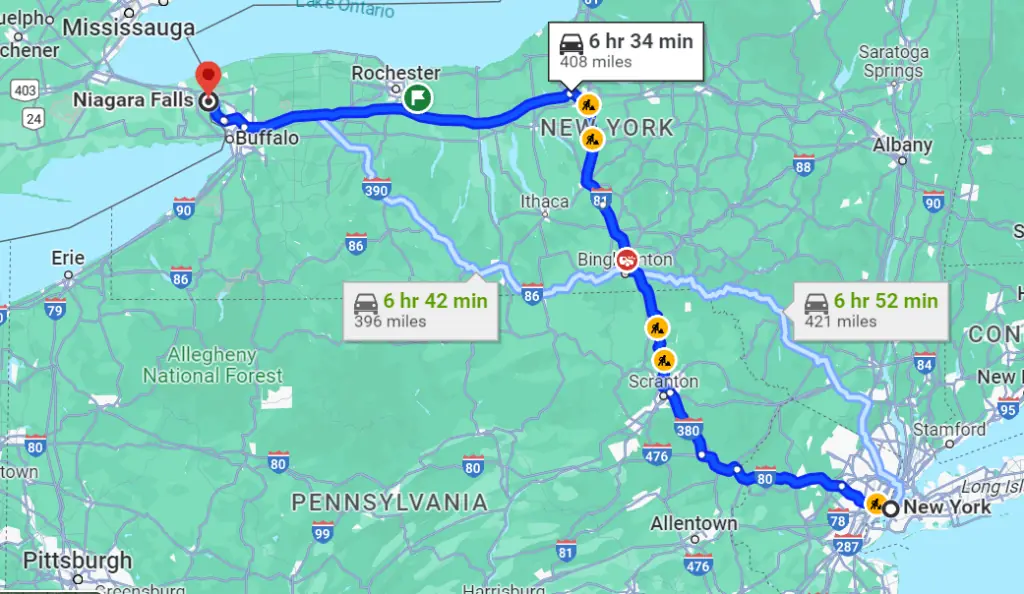
Geographically, New York City and Niagara Falls, New York, are separated by a considerable distance. The most direct driving route spans approximately 380 to 400 miles, depending on the specific highways taken. This translates to roughly a 6 to 7-hour drive under ideal conditions, without accounting for traffic, rest stops, or potential weather delays, especially during winter months when snow and ice can significantly impact travel times.

Factors Influencing Travel Time
- Traffic Congestion: Leaving the bustling metropolis of New York can often involve navigating through dense traffic. Similarly, approaching Niagara Falls can see increased local traffic, particularly during peak tourist seasons.
- Road Conditions and Construction: As with any extensive road trip, unexpected road work or seasonal maintenance can add to travel time. It’s always advisable to check local traffic reports before embarking on the journey.
- Weather: The northeastern United States experiences varied weather patterns. Heavy snowfall in winter can make driving hazardous and significantly extend travel times, while summer thunderstorms can also cause delays.
- Personal Pace: The 6 to 7-hour estimate is for a continuous drive. Most travelers will require stops for fuel, food, and to stretch their legs, adding at least an hour or two to the total journey.
Travel Options: Navigating the Distance
The considerable distance between New York and Niagara Falls makes choosing the right mode of transport crucial for a comfortable and efficient trip. Each option offers a distinct experience, catering to different preferences for speed, cost, and immersion.
Driving: The Classic Road Trip
Driving offers the ultimate flexibility. It allows you to set your own pace, stop at interesting points along the way, and have complete control over your itinerary. The route primarily follows Interstate 80 West (I-80 W) and then transitions to other interstates like I-90 West, eventually leading you towards Niagara Falls.
- Pros: Unparalleled freedom, ability to explore charming towns en route, convenience for carrying luggage and souvenirs.
- Cons: Can be tiring, subject to traffic and weather delays, requires navigating and parking in both cities.
- Recommended Stops: For those opting to drive, consider breaking up the journey with an overnight stay. Cities like Binghamton or Syracuse offer comfortable lodging options and local attractions, transforming a long drive into a multi-day exploration of New York State.
Flying: The Fastest Route
For travelers prioritizing speed, flying is the most efficient option. The nearest major airports to Niagara Falls are Buffalo Niagara International Airport (BUF) and, to a lesser extent, the Niagara Falls International Airport (IAG) on the US side, or John C. Munro Hamilton International Airport (YHM) and Toronto Pearson International Airport (YYZ) in Canada.
- Flight Duration: Direct flights from New York City’s airports (JFK, LGA, EWR) to Buffalo typically last around 1 hour and 15 minutes.
- Total Travel Time: While the flight is short, you must factor in travel to and from airports, security checks, boarding times, and baggage claim. This can add several hours to your journey.
- Ground Transportation: Upon arrival at Buffalo, you’ll need to arrange transportation to Niagara Falls, which is about a 30-40 minute drive. Rental cars, shuttle services, and taxis are readily available.
Train Travel: A Scenic Journey
Amtrak offers a rail service connecting New York to Buffalo. This option provides a more relaxed and scenic alternative to driving, allowing you to enjoy the changing landscapes of New York State.
- Route: The primary Amtrak route to Buffalo from New York is the Lakeshore Limited.
- Duration: The train journey is considerably longer than driving, typically taking between 8 to 10 hours, sometimes more, depending on the specific schedule and any potential delays.
- From Buffalo to Niagara Falls: Similar to flying, once you arrive at the Buffalo station, you will need to arrange local transport to Niagara Falls.
Bus Services: The Budget-Friendly Choice
Several bus companies, such as Greyhound and OurBus, operate routes from New York City to Niagara Falls, often with direct or one-stop services. This is generally the most economical option.
- Duration: Bus journeys are the longest, typically ranging from 7 to 10 hours, depending on the route, number of stops, and traffic conditions.
- Comfort and Amenities: Modern long-distance buses often offer Wi-Fi, power outlets, and reclining seats, making the journey more comfortable, though it still requires a significant time commitment.
Experiencing the Journey: Making the Most of the Distance
Whether you choose to drive, fly, take the train, or ride the bus, the journey between New York and Niagara Falls presents opportunities to enhance your overall travel experience.
The Road Trip Adventure
For those who embrace the open road, the drive offers a chance to explore the diverse landscapes of New York State. Consider incorporating a stop in the Finger Lakes region, renowned for its stunning natural beauty, numerous wineries, and charming towns like Ithaca or Skaneateles. This adds a delightful dimension to your trip, turning a simple transit into a multi-faceted adventure. You could also detour to visit historical sites or smaller, less-known natural attractions that dot the route, making the journey as memorable as the destination.
The Urban to Natural Transition
The transition from the urban intensity of New York to the raw power of Niagara Falls is a significant part of the allure. This shift in scenery and atmosphere is a key element of the travel experience. It highlights the vastness and diversity of the United States, offering a profound contrast that can be deeply impactful for any traveler. The journey itself becomes a narrative, moving from the man-made marvels of a global city to one of nature’s most awe-inspiring spectacles.
Planning Your Itinerary
When planning your trip, consider how much time you want to dedicate to each destination and the travel time between them. A common approach is to allocate at least two to three full days for Niagara Falls to fully appreciate its attractions, including boat tours like the Maid of the Mist, walks along the Niagara Gorge, and exploring the surrounding parks. This leaves ample time for travel and to enjoy the vibrant culture of New York. Balancing travel logistics with immersive experiences is the hallmark of a well-planned trip.
LifeOutOfTheBox is a participant in the Amazon Services LLC Associates Program, an affiliate advertising program designed to provide a means for sites to earn advertising fees by advertising and linking to Amazon.com. Amazon, the Amazon logo, AmazonSupply, and the AmazonSupply logo are trademarks of Amazon.com, Inc. or its affiliates. As an Amazon Associate we earn affiliate commissions from qualifying purchases.