
Embarking on a journey from the bustling metropolis of New York to the historic and vibrant city of Buffalo is a classic New York State adventure. This route, often traversed by those seeking a change of scenery, a taste of Western New York culture, or a visit to iconic natural wonders, covers a significant geographical expanse. Understanding the distance is the first step in planning your trip, whether you opt for the speed of air travel, the scenic route by car, or the more relaxed pace of a train. This exploration delves into the various ways to measure this journey, from mileage and driving times to the experiential distances that connect these two distinct urban landscapes within the Empire State.
The Direct Measurement: Distance and Driving
The most straightforward answer to “How far is New York to Buffalo?” lies in the physical miles separating these two major cities. Situated at opposite ends of the state, they offer a compelling cross-section of New York’s diverse geography and character.
Mileage Between the Cities
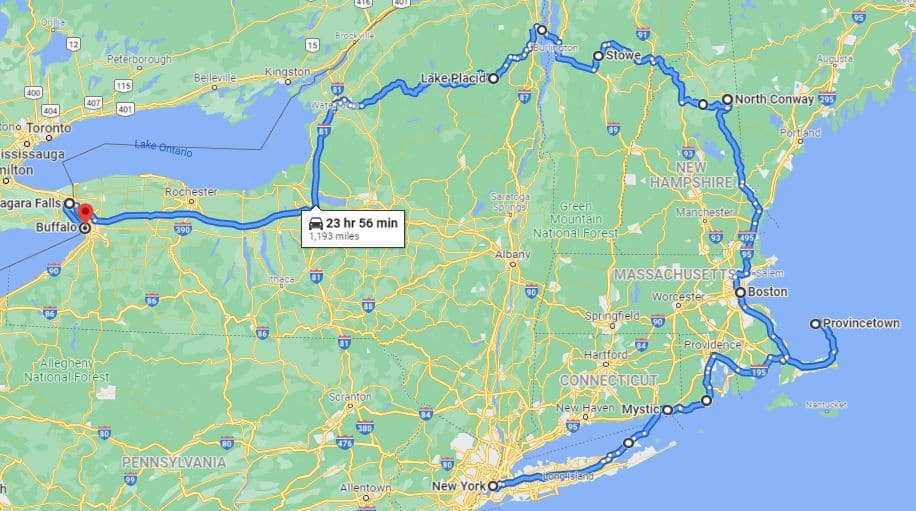
The driving distance between New York City and Buffalo is approximately 365 to 375 miles, depending on the specific starting point within New York City (e.g., Manhattan versus Queens) and the chosen route. This mileage places it firmly in the category of a substantial road trip, offering ample opportunity to experience the changing landscapes of New York State. The primary artery connecting these two destinations is Interstate 90 (I-90), a coast-to-coast superhighway that makes the journey relatively direct, albeit not always the most scenic.
Estimated Driving Times
The estimated driving time from New York to Buffalo typically ranges from 5.5 to 7 hours under ideal conditions. This figure, however, is a crucial point of consideration for any traveler. It does not account for:
- Traffic Congestion: New York City is notorious for its traffic, and starting your journey during peak hours can add significant time, especially as you navigate out of the metropolitan area.
- Road Construction: Throughout the warmer months, and sometimes beyond, construction projects can cause delays, particularly on major interstates like I-90.
- Weather Conditions: Winter in New York can bring snow and ice, severely impacting driving times and potentially making the journey hazardous. Heavy rain or fog can also slow down traffic.
- Stops and Breaks: The estimated times are usually for continuous driving. Most travelers will need to factor in stops for fuel, meals, and rest breaks, which can easily add 1-2 hours to the total travel duration.
Therefore, while the driving distance is a fixed number, the driving time is a variable that requires careful planning and flexibility. Many choose to break up the journey, perhaps with an overnight stay in the Central New York region, to make the drive more manageable.
Alternative Travel Options: Beyond the Car
For those who prefer not to drive the entire distance, or who are looking for more efficient or relaxing ways to travel, New York to Buffalo offers several viable alternatives, each with its own set of considerations regarding time and cost.
By Air: The Fastest Route
The quickest way to bridge the gap between New York and Buffalo is by plane. Several airlines operate frequent flights between the major airports serving these cities.
- Airports: Flights typically depart from airports in the New York City metropolitan area, such as John F. Kennedy International Airport (JFK), LaGuardia Airport (LGA), and Newark Liberty International Airport (EWR), and arrive at Buffalo Niagara International Airport (BUF).
- Flight Time: The actual flight duration is remarkably short, usually around 1 hour and 15 minutes to 1 hour and 30 minutes.
- Total Travel Time: However, it’s crucial to consider the total travel time, which includes:
- Travel to the airport.
- Airport security and check-in procedures.
- Boarding time.
- The flight itself.
- Deplaning and baggage claim.
- Travel from Buffalo Niagara International Airport (BUF) to your final destination in Buffalo.
When all is said and done, the total door-to-door travel time via air can often approach or even exceed the driving time, especially when factoring in the inconvenience of airport procedures and the time spent getting to and from the airports. Nonetheless, for those who prioritize minimizing time spent in transit itself, flying remains the most expedient option.
By Train: A Relaxed Journey
For a more scenic and relaxed travel experience, taking the train offers a compelling alternative. Amtrak operates services that connect New York with Buffalo, providing a comfortable way to journey across the state.
- Routes and Stations: The primary Amtrak route is the Empire Service, which travels between New York City Penn Station and Buffalo’s Exchange Street Station or Buffalo Depew Station.
- Travel Time: The train journey is significantly longer than driving or flying, typically taking between 8 to 10 hours. This extended travel time allows passengers to relax, work, or enjoy the passing scenery without the stress of driving or the rush of airport security.
- Advantages: The benefits of train travel include:
- Comfort and Space: Trains generally offer more legroom and the ability to move around than on an airplane.
- Scenery: The route passes through various towns and landscapes, offering glimpses of New York State beyond the interstate.
- Convenience: Stations are often located in city centers, reducing the need for lengthy transfers to and from airports.
- Productivity: Trains can be a good environment for catching up on work or simply enjoying a book.
While the train is the slowest of the primary travel methods, it offers a unique travel experience for those who value comfort and a less hurried pace.
Experiential Distance: Connecting the Cities
Beyond the quantifiable miles and hours, the journey from New York to Buffalo represents an “experiential distance”—a passage through distinct regional identities, economies, and cultures within the same state. This route can be seen as a microcosm of New York’s transformation from the dense, globalized energy of its eastern edge to the industrial heritage and natural beauty of its western frontier.
A Tale of Two Cities and the Landscape In-Between
The contrast between New York City and Buffalo is stark and compelling, highlighting the immense diversity of New York State.
- New York City: As the starting point, New York City is a global hub of finance, fashion, art, and culture. It’s a place of towering skyscrapers, constant activity, and a pace of life that is unparalleled. The drive or train journey begins by navigating this intense urban environment.
- Western New York and Buffalo: As you travel west, the landscape gradually opens up. The focus shifts from dense urbanity to more sprawling suburbs, then to agricultural lands and smaller towns. Buffalo itself, while a significant city, possesses a different character. It’s known for its stunning architecture, rich history of industry and immigration, proximity to natural wonders like Niagara Falls, and a strong sense of community. The “experiential distance” is the feeling of stepping back in time, or into a different pace of life, as you approach Buffalo.

Stops Along the Way: Exploring New York State
The journey between these two major cities is punctuated by numerous opportunities for exploration. The most direct route, I-90, passes through regions that hold historical and natural significance.
- Central New York: Cities like Syracuse and Utica offer a glimpse into New York’s past as industrial and transportation centers. The Finger Lakes region, though requiring a slight detour, is renowned for its wineries and picturesque lakes, offering a significant shift in scenery and atmosphere.
- Rochester: Further west, Rochester, the “Flower City,” is known for its historical ties to photography and optics, with institutions like the George Eastman Museum.
- Niagara Falls: A crucial geographical and tourist landmark, Niagara Falls is located just a short distance from Buffalo, making it an almost obligatory detour for anyone traveling to the region. The sheer power and beauty of the falls represent a natural marvel that bridges the experiential distance between the urban centers and the raw power of nature.
Understanding the distance from New York to Buffalo is more than just knowing the mileage. It’s about recognizing the varied modes of transport, the time commitment each entails, and the rich tapestry of landscapes and experiences that unfold across the Empire State. Whether you are driving, flying, or riding the rails, the journey itself is an integral part of the adventure.
LifeOutOfTheBox is a participant in the Amazon Services LLC Associates Program, an affiliate advertising program designed to provide a means for sites to earn advertising fees by advertising and linking to Amazon.com. Amazon, the Amazon logo, AmazonSupply, and the AmazonSupply logo are trademarks of Amazon.com, Inc. or its affiliates. As an Amazon Associate we earn affiliate commissions from qualifying purchases.