
Navigating the distance between two of the United States’ most iconic metropolises, New York City and Washington D.C., is a common consideration for travelers, business professionals, and history enthusiasts alike. This corridor, often referred to as the Northeast Corridor, is one of the busiest and most well-connected regions in the country. Understanding the nuances of this journey, from mileage to travel time, is crucial for efficient planning. Whether you’re considering a quick day trip, a weekend getaway, or the start of a longer exploration of the East Coast, grasping the fundamental distance and the various ways to traverse it will significantly enhance your experience. This guide delves into the geographical realities and practicalities of traveling between these two influential cities.

The Core Distance and Its Implications
At its heart, the question of “how far” is a matter of mileage, but in practice, it encompasses much more. The direct, straight-line distance, often called the “as the crow flies” distance, provides a baseline, but it’s the drivable and train routes that hold the most relevance for travelers.
Geographical Separation
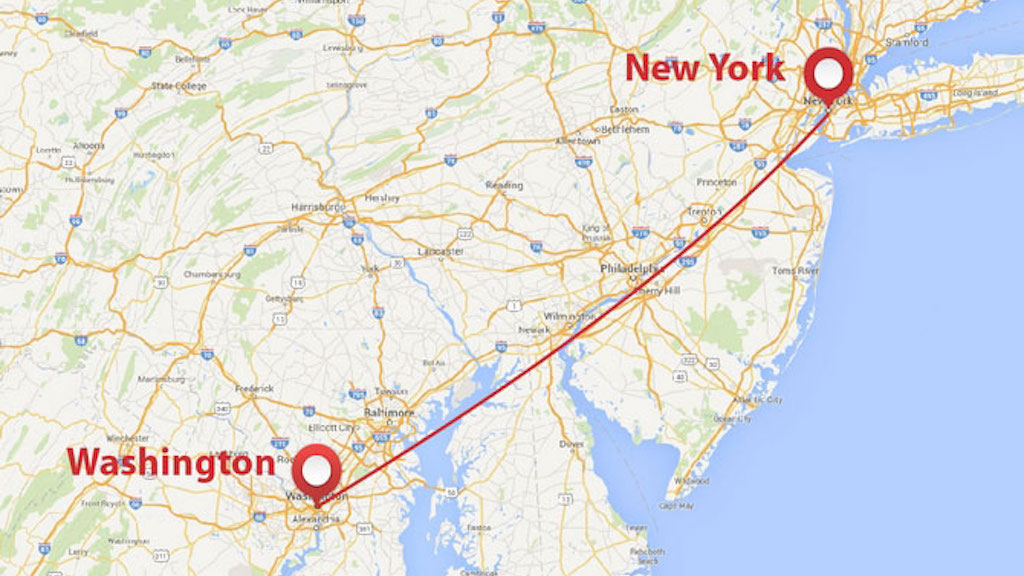
The approximate straight-line distance between the centers of New York City and Washington D.C. is about 200 miles (320 kilometers). This figure, however, is a simplification. Actual travel, whether by road or rail, involves traversing a network of highways, local roads, and railway lines that are not always direct. This difference between direct geographical distance and practical travel distance is a key factor in determining overall journey time.
Driving Distance and Time
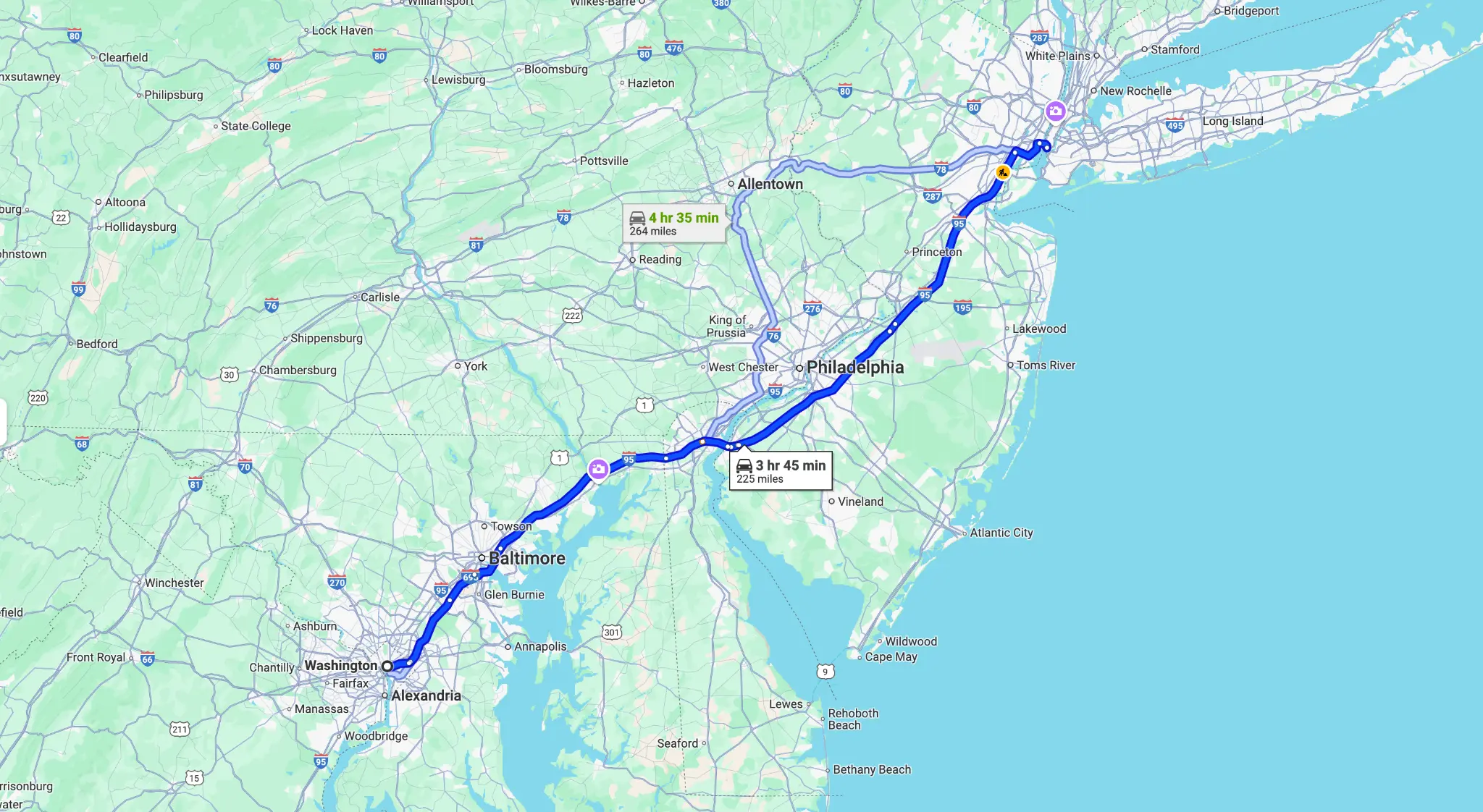
The most common way to travel between New York City and Washington D.C. for many is by car. The primary driving route typically follows Interstate 95 South (I-95 S).
I-95 South Route
The most direct and commonly used driving route spans approximately 225 to 240 miles (360 to 385 kilometers), depending on the specific starting and ending points within each city. This journey typically takes around 4 to 5 hours of pure driving time under ideal conditions.
Factors Affecting Drive Time
It’s imperative to acknowledge that “ideal conditions” are rare in this heavily trafficked corridor. Several factors can significantly extend this travel time:
- Traffic Congestion: Both New York City and Washington D.C., along with the areas in between like Philadelphia and Baltimore, are major metropolitan areas. Rush hour traffic, particularly during weekday mornings and evenings, can add several hours to the journey. Delays are particularly common on the approaches to tunnels and bridges, and in urban centers.
- Tolls: The I-95 corridor is dotted with numerous toll roads and bridges. Budgeting for these tolls is essential, and they can also contribute to delays at toll plazas, though many are now equipped with electronic toll collection systems like E-ZPass.
- Construction and Roadwork: Ongoing infrastructure projects can cause significant disruptions and detours.
- Weather: Inclement weather, such as snowstorms in winter or heavy rain and fog in other seasons, can dramatically slow down travel and, in severe cases, lead to road closures.
Therefore, while the driving distance is around 230 miles, it’s prudent to allocate at least 5 to 6 hours for the drive, and potentially much longer if traveling during peak times or adverse conditions.
Rail Travel: The Amtrak Experience
For many, the most efficient and often stress-free way to travel between New York City and Washington D.C. is by train, primarily through Amtrak. The rail distance is slightly different from the road distance, but the convenience factor often outweighs minor mileage discrepancies.
Amtrak Routes and Services
Amtrak operates multiple services along the Northeast Corridor, with the most popular being the Acela Express and the Northeast Regional.
- Acela Express: This is Amtrak’s high-speed rail service. The Acela is designed for faster travel between major cities, offering a premium experience. A journey from New York Penn Station to Washington Union Station typically takes approximately 2 hours and 45 minutes to 3 hours. This makes it the quickest option for many travelers.
- Northeast Regional: This service makes more stops than the Acela Express, resulting in a slightly longer travel time. The Northeast Regional typically takes between 3 hours and 3 hours and 30 minutes for the same route. It’s generally a more affordable option compared to the Acela.
Advantages of Rail Travel
The appeal of train travel on this route lies in several key advantages:
- Reduced Travel Time (Door-to-Door): While the pure Acela journey is around 3 hours, when factoring in the time to get to Penn Station and from Union Station to your final destination, it can often be comparable to, or even faster than, driving, especially when considering the potential for traffic delays.
- Comfort and Productivity: Train cars offer comfortable seating, ample legroom, and the ability to move around. Many trains provide Wi-Fi, power outlets, and dining car services, allowing passengers to work, relax, or dine during their journey.
- Avoidance of Traffic and Parking Hassles: Eliminating the stress of driving in congested areas and the challenge and expense of parking in major cities is a significant draw.
- Environmental Friendliness: Train travel is generally more environmentally friendly than individual car travel, making it an attractive option for eco-conscious travelers.
The Amtrak stations in both New York City and Washington D.C. are centrally located and well-connected to local public transportation networks, further enhancing the convenience of this mode of transport.
Factors Influencing Your Travel Choice
The decision on how to travel between New York City and Washington D.C. hinges on a variety of personal preferences and practical considerations. The fundamental distance is just one piece of the puzzle; your budget, time constraints, comfort needs, and desired travel experience all play a role.
Budget Considerations
The cost of traveling between these two cities can vary significantly depending on the chosen mode of transport and the booking timing.
- Driving: While seemingly cost-effective for groups, the expenses of driving include fuel, tolls, wear and tear on the vehicle, and potentially parking fees in Washington D.C.. For a solo traveler or a couple, the combined costs can sometimes exceed train fares, especially if factoring in the value of your time spent in traffic.
- Amtrak: Train tickets, particularly for the Acela Express, can be expensive if booked last minute. However, booking in advance, especially during off-peak times, can yield significant savings. The Northeast Regional is typically more budget-friendly. The cost of train tickets can range from $30 to over $200 one-way, depending on the service, class of travel, and booking time.
- Flights: While less common for this relatively short distance due to the time required for airport procedures, flights are an option. However, when factoring in travel to the airport, security checks, boarding, and travel from the destination airport, the total “door-to-door” time often exceeds that of the train. Flight prices can fluctuate wildly but are often comparable to or higher than Acela fares.
Time Efficiency
For travelers who prioritize minimizing travel time, the choice is often between the Amtrak Acela Express and driving during off-peak hours.
- The Acela’s swift 3-hour journey, combined with central station access, makes it a strong contender for the most time-efficient option for many.
- Driving during late nights or very early mornings, avoiding traffic bottlenecks, can sometimes rival train times, but this requires careful planning and often involves less desirable travel hours.
Comfort and Experience
The travel experience itself is a crucial consideration for many.
- Driving: Offers maximum flexibility and the ability to make spontaneous stops. However, it can be tiring and stressful due to traffic and navigation.
- Amtrak: Provides a more relaxed and comfortable journey. Passengers can work, read, or simply enjoy the scenery without the pressures of driving. The ability to walk around and access amenities like restrooms and dining cars enhances the overall experience.
- Flights: Offer speed over long distances but the experience is often confined to the airport and the aircraft cabin, with limited opportunities for engagement with the surroundings.
Alternative Travel Methods
Beyond driving and traditional rail, other options exist, though they are less common for this specific route.
- Bus Services: Companies like Megabus and Greyhound offer budget-friendly bus services between New York City and Washington D.C.. These journeys typically take longer, often 5 to 7 hours or more, due to more frequent stops and varying traffic conditions. They are an excellent option for budget-conscious travelers who are not time-sensitive.
- Ride-Sharing Services: Services like Uber and Lyft can be used for the entire journey, but this is typically prohibitively expensive and less practical than other options. They are more commonly used for shorter segments within the cities or for transfers to/from stations.
Planning Your Journey: Tips for a Smooth Transition
Regardless of the mode of transportation you choose, careful planning is key to ensuring a smooth and enjoyable transition between New York City and Washington D.C.. The nearly 230-mile journey, while not geographically vast, requires strategic consideration to maximize efficiency and minimize stress.
Booking in Advance
The golden rule for cost-effective and stress-free travel on this route is to book as far in advance as possible.
- Amtrak: Prices for both Acela Express and Northeast Regional services tend to be significantly lower when booked weeks or even months ahead. Last-minute bookings can result in substantially higher fares, especially for prime travel times. Look for special promotions and discounts that Amtrak occasionally offers.
- Driving: While not a booking per se, planning your departure and return times to avoid peak traffic hours in and around New York City, Philadelphia, Baltimore, and Washington D.C. is crucial. This often means traveling during the day on weekdays, or on weekend mornings/evenings.
- Buses: Similar to trains, bus tickets are often cheaper when purchased in advance.
Utilizing Navigation Tools
For drivers, robust navigation tools are indispensable.
- Real-Time Traffic Updates: Employ GPS apps like Google Maps or Waze that provide real-time traffic conditions, suggest alternative routes to bypass congestion, and estimate arrival times with accuracy. These tools can save significant time and frustration.
- Toll Information: Be aware of the toll roads on your chosen route. Many navigation apps can estimate toll costs, allowing you to budget accordingly. Consider purchasing an E-ZPass or similar transponder for easier toll payment and potential discounts.
Leveraging Public Transportation at Your Destinations
Once you arrive in either New York City or Washington D.C., understanding the local public transportation systems will greatly enhance your mobility.
- New York City: The New York City Subway system is extensive and an efficient way to navigate the city from Penn Station. Taxis and ride-sharing services are also readily available.
- Washington D.C.: The Washington Metropolitan Area Transit Authority (WMATA), which operates the Metrorail (subway) and Metrobus, is the primary public transit system. Union Station is a major hub for both Metrorail and bus services, connecting you to various parts of the city and surrounding areas.
Packing Smart
Whether you’re driving or taking the train, packing efficiently will contribute to a more comfortable journey.
- For Train Travelers: Consider a comfortable carry-on bag that you can manage easily. If you have larger luggage, Amtrak has checked baggage services at many stations. Bring entertainment, snacks, and anything you might need to stay comfortable during the trip.
- For Drivers: Ensure your vehicle is in good condition. Pack water, snacks, a first-aid kit, and a phone charger. Have a physical map as a backup in case of GPS failure or poor cell service.
By considering the distance, the various travel options, and implementing smart planning strategies, your journey between New York City and Washington D.C. can be a seamless and productive part of your travel experience.
LifeOutOfTheBox is a participant in the Amazon Services LLC Associates Program, an affiliate advertising program designed to provide a means for sites to earn advertising fees by advertising and linking to Amazon.com. Amazon, the Amazon logo, AmazonSupply, and the AmazonSupply logo are trademarks of Amazon.com, Inc. or its affiliates. As an Amazon Associate we earn affiliate commissions from qualifying purchases.