
The question “How Far Is Russia From Alaska?” evokes images of vast, untamed wilderness, geopolitical intrigue, and the very edge of the civilized world. While geographically distant in the minds of many, the astonishing reality is that Russia and Alaska are separated by a mere sliver of water, making them neighbors across one of the most unique maritime borders on Earth. This proximity, steeped in natural wonder and historical significance, offers a compelling narrative for travelers drawn to remote destinations and unique experiences.
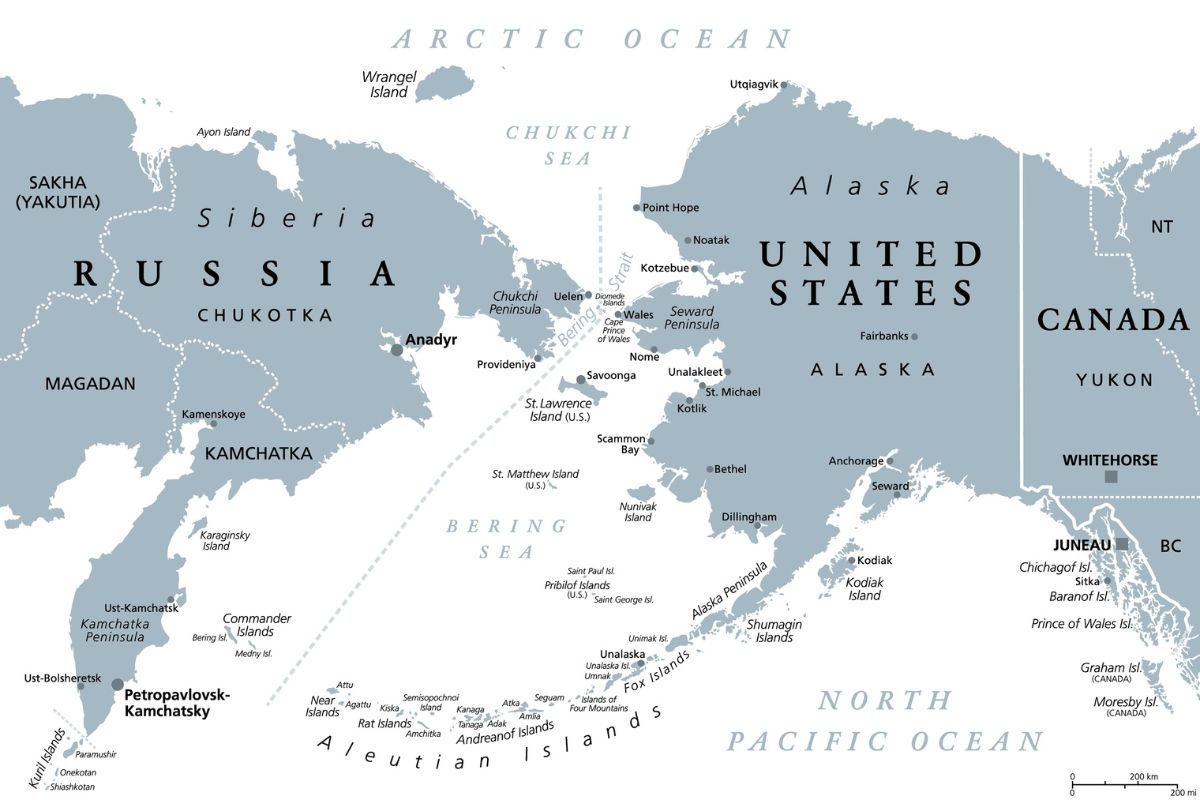
At its closest point, the distance between the two landmasses is a breathtakingly short 55 miles (88 kilometers) across the Bering Strait. However, the real marvel lies within this strait, where two tiny islands stand as sentinels, one American and one Russian, separated by an even smaller gap. This fascinating geographical arrangement, intertwined with ancient history and modern geopolitics, transforms a simple question of distance into an exploration of cultures, nature, and the spirit of adventure.

A Stone’s Throw Across the Bering Strait
The true heart of the Russia-Alaska proximity lies in the Diomede Islands. These two rocky outposts, seemingly isolated in the vast expanse of the Bering Strait, are the closest points between the two nations.
The Diomede Islands: Big and Little
The larger of the two, Big Diomede Island, belongs to Russia, while its smaller counterpart, Little Diomede Island, is part of the United States and Alaska. These islands are separated by a mere 2.4 miles (3.8 kilometers) of water. This narrow channel is not just a geographical boundary; it also hosts the International Date Line. This means that when it’s Monday morning on Little Diomede, it’s already Tuesday morning on Big Diomede. Locals aptly refer to them as “Tomorrowland” and “Yesterdayland,” a captivating concept for any traveler seeking truly unique landmarks and time-traveling experiences.
The Bering Strait itself connects the Chukchi Sea (part of the Arctic Ocean) to the north with the Bering Sea (part of the Pacific Ocean) to the south. Flanking the strait are the Chukchi Peninsula on the Russian side and the Seward Peninsula on the Alaskan side, both characterized by their stark beauty, unforgiving climate, and rich indigenous cultures.
The Legacy of the Bering Land Bridge and the Alaska Purchase
The proximity of Russia and Alaska isn’t just a modern curiosity; it’s a profound historical bridge. Thousands of years ago, during the Ice Ages, sea levels were significantly lower, exposing a vast landmass known as the Bering Land Bridge (or Beringia). This bridge served as a critical migration route for early humans, animals, and plants from Asia to North America, effectively populating the Americas. Exploring this ancient history through archaeological sites and indigenous narratives can be a deeply rewarding aspect of tourism in the region.
More recently, the historical ties between Russia and Alaska were formalized with the Alaska Purchase in 1867. For $7.2 million, the United States acquired Alaska from the Russian Empire, a transaction that fundamentally reshaped the geopolitical landscape of the Arctic. The sale ended Russia’s colonial presence in North America and marked the beginning of Alaska’s integration into the American fabric.
During the Cold War, this narrow strait became a heavily militarized border, famously dubbed the “Ice Curtain.” Civilian travel and communication between the Diomede Islands ceased, and the once fluid cultural exchange between indigenous communities on both sides was severely curtailed. The image of a solitary Alaskan fisherman gazing across to Russia captures the surreal reality of this close yet impassable frontier.
Navigating the “Ice Curtain”: Travel and Tourism in the Bering Strait Region
Despite its formidable reputation, the Bering Strait region is slowly opening up to adventurous travelers, offering unparalleled opportunities for exploration and cultural immersion. However, visiting this remote corner of the world requires meticulous planning and a spirit of resilience.
The Allure of Remote Exploration
For the truly intrepid, the Bering Strait represents the ultimate off-the-beaten-path destination. The region is a haven for wildlife, including various species of whales, walruses, seals, and a spectacular array of seabirds that nest on the towering cliffs of the Diomede Islands. Polar bears are also sighted, making wildlife viewing an awe-inspiring, if sometimes challenging, activity. The raw, untouched nature here is a landmark in itself, a testament to the planet’s enduring wilderness.
The indigenous people of Little Diomede Island, primarily Inupiat, have lived in harmony with this harsh environment for centuries. Their rich cultural traditions, subsistence lifestyle based on hunting and fishing, and intricate artwork offer a profound glimpse into human adaptation and resilience. Experiencing local culture in such a unique setting provides a perspective on life that few other travel experiences can match. While direct visits to Big Diomede Island are highly restricted, viewing it from its American counterpart offers a tangible sense of its presence and history.
Practicalities of an Arctic Adventure
Planning a trip to the Bering Strait region requires careful consideration of travel logistics and accommodation. The most common gateway to the American side of the strait is Nome, Alaska, a historic gold rush town accessible by plane from Anchorage or Fairbanks. From Nome, smaller charter or bush planes are the primary means of reaching Little Diomede Island, weather permitting, which is a significant caveat in this unpredictable climate. Another hub could be Kotzebue, offering similar flight connections and access to the region.
When it comes to accommodation, options are extremely limited and rustic. On Little Diomede Island itself, there are no traditional hotels or resorts. Visitors might find informal lodging arrangements within the village, offering a truly authentic, albeit basic, cultural immersion. In larger towns like Nome, simple hotels and guesthouses are available, offering essential amenities and a warm respite from the cold. Booking in advance is crucial, especially during peak summer months when expedition cruises pass through. Travelers interested in long-term stay options for research or extensive cultural immersion would need to make specialized arrangements.
Travelers should also be aware of the stringent permit requirements for visiting remote Alaskan native lands and for any potential ventures near the maritime border. Visa requirements for Russia are notoriously complex, making cross-border visits to Big Diomede virtually impossible for tourists. This maintains the “Ice Curtain” in a different form, reinforcing the unique character of Little Diomede’s position.
Experiencing the Edge of the World: A Unique Travel Lifestyle
Visiting the Bering Strait isn’t just a trip; it’s a profound journey that redefines one’s understanding of geography, history, and human connection. It embodies a particular travel lifestyle centered on discovery, challenge, and appreciation for the planet’s most remote corners.
Beyond Traditional Tourism: Expedition Cruises and Cultural Immersion
For many, the most accessible and comfortable way to experience the broader Bering Strait region is through luxury expedition cruises. These specialized vessels are designed to navigate the Arctic waters, offering comfortable accommodation with on-board suites and often gourmet food, while providing expert guides and opportunities for Zodiac landings, wildlife observation, and visits to coastal communities. Such cruises often sail close enough to the Diomede Islands for passengers to witness the incredible proximity of Russia and the United States and to see the International Date Line without having to deal with the logistical complexities of individual travel. They offer a blend of adventure and comfort, perfect for those seeking luxury travel in extreme environments.
These trips often emphasize educational travel, focusing on the ecology, geology, and history of the region, including the concept of Beringia and its importance to global migration patterns. Many operators are also committed to sustainable tourism and conservation efforts, ensuring that their impact on this fragile environment and its local culture is minimal.

Planning Your Journey to the Far North
To embark on a journey to the Far North and the Bering Strait, it’s advisable to engage with specialized tour operators who have extensive experience in Arctic travel. They can assist with permits, transportation, and ensuring safety in this challenging environment. Early booking is essential, especially for popular expedition cruises. Reading reviews and doing a thorough comparison of tour packages can help in selecting the right experience.
The best time to visit is typically during the summer months (June to September) when the ice has broken up, allowing for sea travel and wildlife viewing. Winter offers a dramatically different landscape, with the possibility of a frozen “ice bridge” between the Diomede Islands – a feat of nature that has sometimes been traversed by adventurous individuals, albeit illegally and extremely dangerously. Regardless of the season, comprehensive travel insurance is highly recommended for this remote and unpredictable region.
In conclusion, the question “How Far Is Russia From Alaska?” reveals a profound truth: they are incredibly close, separated by more than just miles, but by a line in time, a complex history, and a unique geographical marvel. The Bering Strait and its Diomede Islands offer a unique confluence of adventure, cultural discovery, and natural beauty. For those seeking a truly transformative travel experience, a journey to this remote edge of the world promises indelible memories and a refreshed perspective on our interconnected planet.
LifeOutOfTheBox is a participant in the Amazon Services LLC Associates Program, an affiliate advertising program designed to provide a means for sites to earn advertising fees by advertising and linking to Amazon.com. Amazon, the Amazon logo, AmazonSupply, and the AmazonSupply logo are trademarks of Amazon.com, Inc. or its affiliates. As an Amazon Associate we earn affiliate commissions from qualifying purchases.