
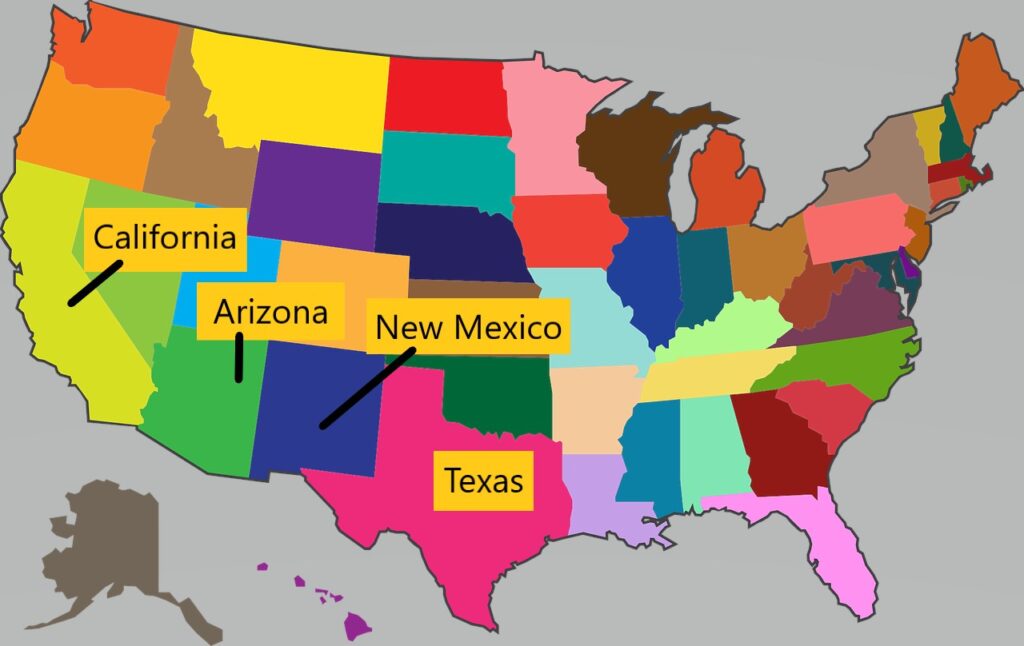
The vast expanse of the American Southwest presents travelers with journeys that are as diverse as the landscapes themselves. For those contemplating a trip from the Lone Star State to the Grand Canyon State, understanding the distance and the nuances of the routes is paramount. Texas, with its immense size and varied geography, shares a direct border with New Mexico, which then abuts Arizona. This means any road trip will inherently involve traversing the entire width of New Mexico. The journey is more than just miles; it’s an opportunity to experience dramatic shifts in scenery, culture, and climate, making the planning stage an integral part of the adventure.

The Geographic Span: Understanding the Distance and Key Connections
Pinpointing an exact distance between Texas and Arizona is complex, as both are large states with multiple potential starting and ending points. The distance can vary dramatically depending on whether one starts in East Texas, like Houston or Dallas, or in West Texas, such as El Paso. Similarly, the destination within Arizona – be it the urban sprawl of Phoenix, the desert charm of Tucson, or the natural wonders near the Grand Canyon National Park – will significantly alter the total mileage and travel time.
Direct vs. Drivable Distance
While the shortest as-the-crow-flies distance between the closest points of the two states might be relatively small (e.g., El Paso to the Arizona border is just over 200 miles), the practical driving distance is what truly matters for travelers. A journey from a major Texas city like Houston to a major Arizona city like Phoenix typically ranges from 1,000 to 1,200 miles. This translates to an estimated driving time of 15 to 20 hours, not including stops for fuel, food, rest, or sightseeing. For example:
- Houston to Phoenix: Approximately 1,180 miles, 17-18 hours driving.
- Dallas to Phoenix: Roughly 1,060 miles, 15-16 hours driving.
- San Antonio to Tucson: Around 850 miles, 12-13 hours driving.
- El Paso to Tucson: Approximately 310 miles, 4-5 hours driving.
These figures underscore the necessity of planning the journey as a multi-day event, especially for drivers originating from eastern or central Texas.
Key Entry/Exit Points and Corridors
The primary gateway for travel between Texas and Arizona is Interstate 10 (I-10). This major artery spans the southern U.S. and connects major cities like Houston, San Antonio, El Paso in Texas, and then continues through New Mexico (passing Las Cruces) before entering Arizona, where it serves Tucson and Phoenix. For those starting further north in Texas, routes like Interstate 20 (I-20) or Interstate 30 (I-30) will eventually merge with or connect to I-10 via other interstates such as Interstate 35 (I-35) or Interstate 45 (I-45) to head west.
Navigating the Routes: A Traveler’s Guide
The journey predominantly follows the I-10 corridor, offering a relatively straightforward path across the vast desert landscapes. While the route is generally well-maintained, understanding the specific characteristics of different segments can enhance the travel experience.
The Southern Route (I-10 Corridor)
The most common and efficient route from Texas to Arizona is via Interstate 10.
Starting from Eastern or Central Texas:
- From Houston/San Antonio: Head west on I-10. This segment crosses a diverse part of Texas, from humid pine forests to arid plains. As you approach El Paso, the landscape transforms into classic desert scenery.
- Through New Mexico: After El Paso, I-10 continues directly into New Mexico. The route through New Mexico is relatively short but scenic, passing through the Mesilla Valley near Las Cruces. Travelers may consider a detour to White Sands National Park before continuing westward.
- Entering Arizona: I-10 crosses into Arizona near San Simon, leading through towns like Willcox and Benson before reaching Tucson. From Tucson, I-10 continues northwest directly to Phoenix.
Factors Affecting Travel Time
While GPS provides an estimated driving time, several factors can influence the actual duration of your trip:
- Traffic: Major metropolitan areas like Houston, San Antonio, El Paso, Tucson, and especially Phoenix can experience significant traffic delays, particularly during peak hours. Planning to pass through these cities during off-peak times can save hours.
- Weather: The Southwest can experience extreme weather. Summers bring intense heat, which can stress vehicles and drivers, while monsoon season can lead to sudden, heavy rain and flash flooding. Winters are generally mild but can bring unexpected snow or ice at higher elevations, though this is less common on the main I-10 corridor. Dust storms are also a concern in desert areas.
- Stops: Crucially, the estimated driving times do not account for stops. For a journey of 15-20 hours, multiple stops for fuel, meals, stretching, and overnight stays are essential for safety and comfort. Budgeting an extra 3-4 hours per day for these breaks is a realistic approach.
- Road Construction: Road construction projects are common on major interstates and can lead to lane closures and delays. Checking real-time traffic updates before and during your journey is advisable.
Beyond the Drive: Alternative Travel Options
While a road trip offers unparalleled flexibility and the chance to explore at one’s own pace, it’s not the only way to travel between Texas and Arizona. Depending on budget, time constraints, and personal preference, other modes of transportation can be more suitable.

Flying: The Fastest Option
For those prioritizing speed, flying is undoubtedly the most efficient method. Major airports in Texas include Dallas/Fort Worth International Airport (DFW), George Bush Intercontinental Airport (IAH) in Houston, and Austin-Bergstrom International Airport (AUS). In Arizona, the primary hubs are Phoenix Sky Harbor International Airport (PHX) and Tucson International Airport (TUS).
Direct flights between cities like Dallas/Houston and Phoenix typically range from 2.5 to 3 hours. When factoring in travel to and from airports, security checks, and boarding, the total door-to-door travel time will usually be around 5-7 hours. Major airlines such as Southwest Airlines, American Airlines, and United Airlines offer frequent services on these routes. While generally more expensive than driving, flying saves significant time and wear on personal vehicles.
Bus and Train: Budget-Friendly and Scenic Alternatives
For budget-conscious travelers or those who prefer to avoid driving, bus and train services offer viable, albeit slower, options.
- Bus Services: Greyhound operates extensive routes across the U.S., including services connecting major Texas cities to Arizona. A bus journey from Houston to Phoenix could take upwards of 24-30 hours, often involving transfers. While slower, it’s typically the most economical choice.
- Train Services: Amtrak‘s “Sunset Limited” route connects San Antonio and Houston to destinations in Arizona, including Tucson and Maricopa (serving the Phoenix area). The train ride offers a unique, often scenic perspective of the landscape, though it is considerably slower than driving or flying, often taking over 20-24 hours from Texas to Arizona stops. It provides comfort with sleeping accommodations available for longer segments, making it a relaxing alternative for some travelers.
Essential Travel Tips for the Texas-Arizona Journey
Embarking on a long-distance journey through the Southwest requires thoughtful preparation to ensure a smooth and enjoyable experience.
Planning Your Stops
For a drive of this magnitude, strategic stops are crucial. Aim for an overnight stay if your journey is more than 8-10 hours. El Paso, Las Cruces (NM), and Tucson are excellent points for an overnight break, offering a variety of hotels, restaurants, and amenities. Even for shorter drives, regular breaks every 2-3 hours are recommended to combat fatigue. Utilize rest stops, gas stations, or small towns along I-10 for quick stretch breaks and refreshments.
What to Pack
The climate across Texas, New Mexico, and Arizona can vary significantly, even within the same season.
- Hydration: Water is paramount, especially during warmer months. Carry plenty of extra water for all passengers.
- Vehicle Preparedness: Ensure your vehicle is in top condition. Check tires, oil, and fluid levels. A basic emergency kit (jumper cables, flashlight, first-aid, extra water/snacks) is a must.
- Clothing: Pack layers. Daytime temperatures can be hot, but evenings, especially in the desert, can cool down rapidly.
- Navigation: While GPS is helpful, having a physical map as a backup is always wise, especially in areas with spotty cell service.
Road Trip Attractions Along the Way
The route itself offers a glimpse into the diverse beauty of the Southwest.
- West Texas: Consider exploring Big Bend National Park or Guadalupe Mountains National Park if you have extra time and are willing to detour. Closer to I-10, just before El Paso, are smaller towns with unique character.
- New Mexico: White Sands National Park is an iconic stop not far off I-10 near Las Cruces. Its gleaming white gypsum dunes offer a truly otherworldly experience.
- Eastern Arizona: As you enter Arizona, consider a detour to Chiricahua National Monument for its unique rock formations, or further north, Saguaro National Park around Tucson offers a chance to see the iconic Saguaro cactus up close. If heading towards Northern Arizona, the Petrified Forest National Park and the Painted Desert are remarkable natural attractions.
The Experience: What Awaits in Arizona
The destination, Arizona, justifies the journey with its stunning natural beauty and vibrant culture. Travelers arrive to a state renowned for its dramatic desert landscapes, iconic Saguaro cacti, and more sunny days than almost anywhere else in the U.S.
From Desert Landscapes to Urban Wonders
- Phoenix and Scottsdale: The state capital and its affluent neighbor offer a blend of outdoor activities, upscale dining, arts, and vibrant nightlife, all set against a backdrop of desert mountains.
- Tucson: Known for its rich Sonoran Desert ecology, Tucson is a UNESCO City of Gastronomy, boasting exceptional Mexican-inspired cuisine and numerous historic sites.
- Sedona: Further north, Sedona’s famous red rock formations and spiritual vortexes draw visitors seeking natural beauty and tranquility.
- Grand Canyon National Park: Arguably Arizona’s most famous landmark, the Grand Canyon National Park offers breathtaking vistas and unforgettable experiences for those willing to venture further north.
Whether by road or air, the journey from Texas to Arizona is a significant undertaking, but one that promises a wealth of experiences and memories for the well-prepared traveler.
LifeOutOfTheBox is a participant in the Amazon Services LLC Associates Program, an affiliate advertising program designed to provide a means for sites to earn advertising fees by advertising and linking to Amazon.com. Amazon, the Amazon logo, AmazonSupply, and the AmazonSupply logo are trademarks of Amazon.com, Inc. or its affiliates. As an Amazon Associate we earn affiliate commissions from qualifying purchases.