
The proximity of two major North American cities, Vancouver and Seattle, makes them ideal candidates for a seamless road trip or a convenient travel connection. Nestled on opposite sides of the U.S.-Canada border, these vibrant metropolises share a strong cultural and economic connection, often drawing visitors who wish to experience both. Understanding the distance between them is crucial for planning any itinerary, whether you’re considering a quick day trip, a weekend getaway, or a longer exploration of the Pacific Northwest. This guide delves into the various ways to traverse the miles between these two iconic cities, covering driving, flying, and even alternative scenic routes.
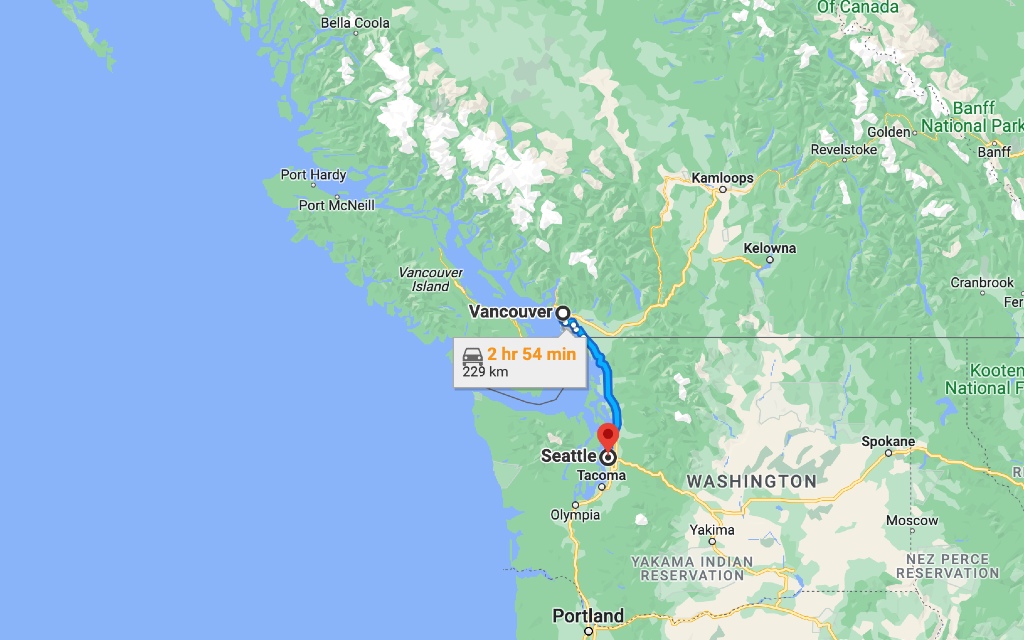
Driving Distances and Times
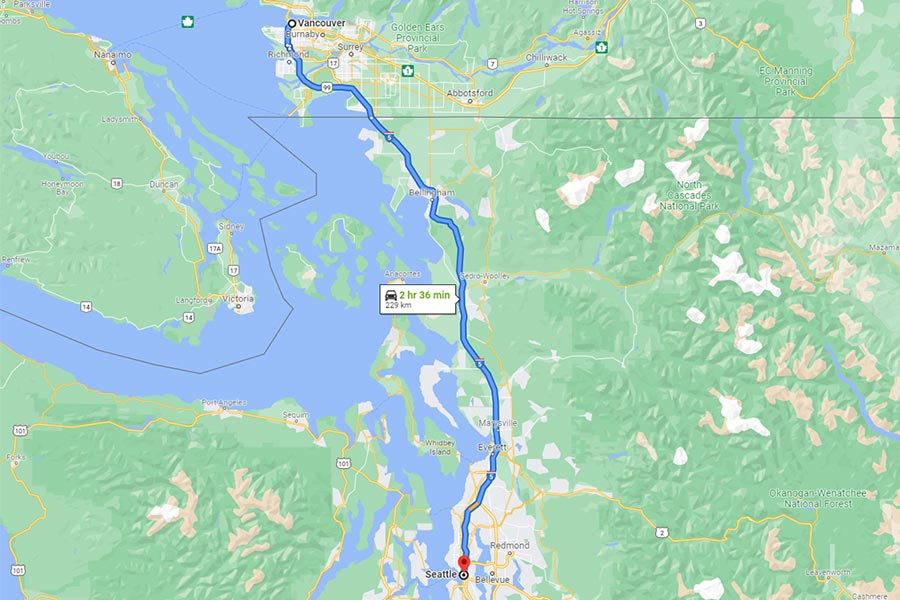
The most common and flexible method of travel between Vancouver and Seattle is by car. The primary route is straightforward, predominantly following Interstate 5 (I-5) South from Vancouver to Seattle, or I-5 North from Seattle to Vancouver.
The Direct Route: I-5 Corridor
The direct driving distance between downtown Vancouver, British Columbia, and downtown Seattle, Washington, is approximately 140 miles (225 kilometers).
The estimated driving time for this route, without factoring in traffic or border crossing delays, is typically around 2 hours and 30 minutes to 3 hours. However, this figure is highly variable. Several factors can significantly impact the actual travel duration:
- Border Crossing: The U.S.-Canada border crossing, whether at the Peace Arch or Pacific Highway crossings, can be a bottleneck. During peak travel times, holidays, or even on weekends, expect potential delays ranging from 30 minutes to well over an hour. It is advisable to check border wait times online or via border crossing apps before departing.
- Traffic: Both Vancouver and Seattle are major metropolitan areas with significant rush hour traffic. Driving through these cities during peak commuting hours (typically 6:00 AM to 9:00 AM and 4:00 PM to 7:00 PM on weekdays) can add substantial time to your journey.
- Construction and Road Conditions: Occasional road construction projects or unexpected weather events can also lead to detours or slower travel speeds.
When planning your drive, it’s prudent to add at least an hour to the base driving time to account for these potential variables. For example, a 3-hour drive could easily turn into 4 or more hours depending on the circumstances.
Alternative Driving Routes and Scenic Options
While I-5 is the most direct path, travelers seeking a more scenic experience might consider alternative routes. These often involve slightly longer distances and driving times but offer picturesque views of the Pacific Northwest landscape.
- Chuckanut Drive (Highway 11): For those approaching Seattle from the north, after crossing the border, one could take a detour off I-5 onto Highway 11, also known as Chuckanut Drive. This scenic byway winds along the coastline of the Puget Sound, offering stunning views of the water, islands, and forests. It is significantly slower than I-5, adding considerable time to the journey, but the vistas are a rewarding trade-off for those with ample time. This route typically rejoins I-5 south of Bellingham.
- Highway 20 (North Cascades Scenic Highway): This route is a more substantial detour and is not recommended for those simply looking to get from Vancouver to Seattle efficiently. However, it offers unparalleled natural beauty through the North Cascades National Park. It is a seasonal route, typically closed in winter due to snow, and would require a significant time commitment and a different starting point to integrate with a trip between the two cities.
Flying Between Vancouver and Seattle
For travelers prioritizing speed and efficiency, flying between Vancouver and Seattle is a viable option. Although it involves the time spent at airports, the actual flight time is minimal.
Flight Duration and Airport Logistics
The flight duration between Vancouver International Airport (YVR) and Seattle-Tacoma International Airport (SEA) is incredibly short, typically around 45 minutes to 1 hour. Several airlines operate frequent direct flights on this popular route.
However, it’s crucial to consider the total travel time when choosing to fly. This includes:
- Travel to the Airport: Getting to Vancouver International Airport from downtown Vancouver can take 30-60 minutes depending on traffic and your chosen mode of transport (e.g., Canada Line, taxi, rideshare). Similarly, reaching Seattle-Tacoma International Airport from downtown Seattle can take 20-40 minutes via the Link light rail or other options.
- Airport Check-in and Security: Arriving at the airport at least 1.5 to 2 hours before an international flight (which this often is, as you’re flying into a different country) is standard. This includes time for check-in, baggage drop, and security screening.
- Deplaning and Baggage Claim: Upon arrival, you’ll need to disembark, potentially go through customs and immigration if you haven’t pre-cleared, and collect any checked luggage. This can add another 30-60 minutes.
- Travel from the Airport: Once you’ve landed at Seattle-Tacoma International Airport, you’ll need to travel to your final destination in Seattle, which, as mentioned, takes approximately 20-40 minutes.
Considering all these factors, the total door-to-door travel time for flying can often be comparable to, or even longer than, driving, especially if border delays are minimal for the drive. However, for those who prefer to avoid driving or have tight schedules, flying remains a convenient choice, particularly if you are traveling light and can use online check-in.
Other Modes of Transportation
Beyond driving and flying, other transportation methods can connect Vancouver and Seattle, offering different experiences and levels of convenience.
Bus Services
Several intercity bus companies operate routes between Vancouver and Seattle. Companies like BoltBus (though availability may vary), FlixBus, and Amtrak Cascades (which also offers rail service) provide regular services.
- Travel Time: Bus journeys typically take between 3.5 to 5 hours, depending on the number of stops and border crossing efficiency.
- Cost-Effectiveness: Buses are often one of the most budget-friendly options for traveling between the two cities, making them a popular choice for students and budget-conscious travelers.
- Comfort and Amenities: Modern bus services often include Wi-Fi, power outlets, and comfortable seating, allowing passengers to relax, work, or enjoy the passing scenery. The experience can be quite comfortable, especially for longer journeys where driving might become tedious.
Train Travel
Amtrak Cascades offers a scenic and comfortable train service connecting Vancouver and Seattle. This route is particularly appealing for those who enjoy the journey as much as the destination.
- Travel Time: The train journey typically takes approximately 4 hours. While not as fast as flying, it often proves competitive with driving when considering the total travel time and the hassle of traffic and border queues.
- Scenery: The Amtrak Cascades route is renowned for its stunning views, particularly as it hugs the coastline of the Puget Sound for a significant portion of the journey. This offers a more relaxed and visually engaging experience than the interstate highway.
- Comfort and Amenities: Trains provide more legroom than airplanes or buses, with onboard dining cars, café cars, and the ability to walk around. Wi-Fi and power outlets are generally available, allowing for productivity or entertainment during the trip.
- Convenience: Stations in both Vancouver (Pacific Central Station) and Seattle (King Street Station) are centrally located, making them easily accessible via public transportation or short taxi rides.

Factors to Consider When Planning Your Trip
When deciding on the best way to travel between Vancouver and Seattle, several factors should influence your choice:
- Time Constraints: If time is of the essence, flying might seem like the obvious choice. However, remember to factor in all airport-related time. For a more relaxed journey where time is less critical, the train or even a scenic drive can be more enjoyable.
- Budget: Generally, bus services are the most economical, followed by driving (depending on fuel costs and potential parking fees in cities), then trains, and finally flights. Prices can fluctuate significantly based on booking in advance and the season.
- Luggage: If you are traveling with a lot of luggage, driving offers the most flexibility. Airlines have baggage restrictions and fees, and while buses and trains are more lenient, managing multiple large bags can still be a challenge.
- Travel Companions: Traveling with family, especially young children, might make driving more appealing due to the ability to stop whenever needed and control the environment. For solo travelers or couples, trains and buses can offer a more social or relaxing experience.
- Experience: Do you want to experience the journey, or are you simply focused on reaching your destination? The train offers a scenic and relaxing experience, while driving allows for spontaneous stops at attractions along the way, such as the charming town of Bellingham.
Ultimately, the distance between Vancouver and Seattle is not just measured in miles but also in the experience you wish to have. Whether you choose the efficiency of a flight, the freedom of the open road, the comfort of a train, or the affordability of a bus, both cities are easily accessible and offer a wealth of attractions and experiences that make the journey well worth it.
LifeOutOfTheBox is a participant in the Amazon Services LLC Associates Program, an affiliate advertising program designed to provide a means for sites to earn advertising fees by advertising and linking to Amazon.com. Amazon, the Amazon logo, AmazonSupply, and the AmazonSupply logo are trademarks of Amazon.com, Inc. or its affiliates. As an Amazon Associate we earn affiliate commissions from qualifying purchases.