
The question “How far is Los Angeles to New York?” is more than just a geographical inquiry; it’s an invitation to explore the vastness of the United States, a land of diverse landscapes, rich history, and vibrant cultures. Spanning approximately 2,800 miles (4,500 kilometers) across the continent, this transcontinental journey offers an unparalleled opportunity for adventure and discovery. Whether you’re seeking the iconic allure of Hollywood or the bustling energy of Times Square, understanding the distance and the myriad ways to traverse it is the first step in planning an unforgettable expedition.

The Vast Expanse: Understanding the Distance
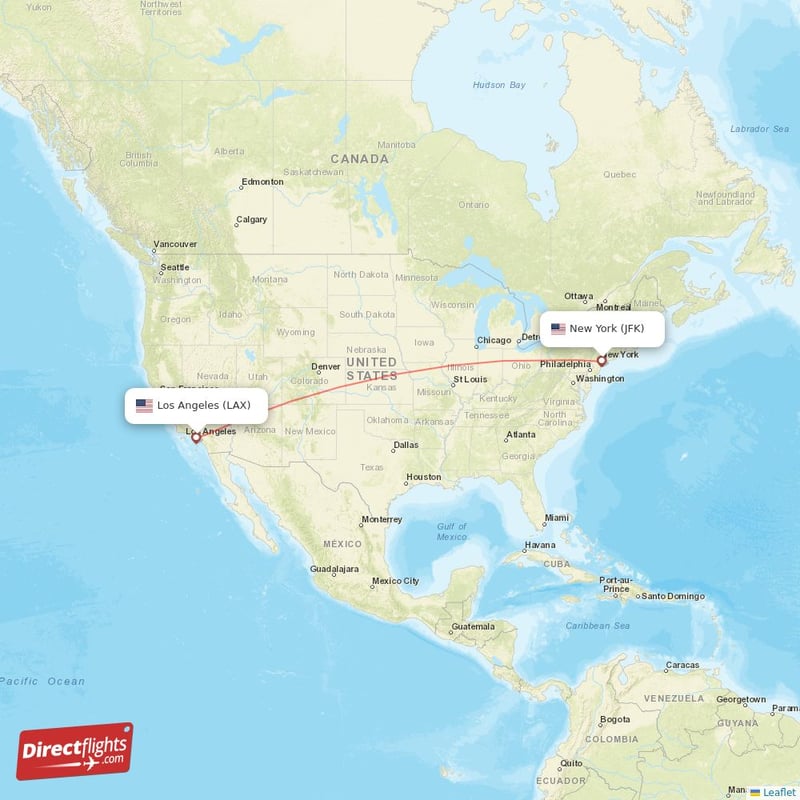
The direct, straight-line distance between Los Angeles, California, and New York City, New York, is roughly 2,445 miles (3,935 kilometers). However, this is the shortest possible route, often referred to as the “as the crow flies” distance. For practical travel, especially by road or rail, the actual mileage is significantly greater due to the necessity of following established routes, navigating terrain, and accounting for curves and detours.
Driving Distance and Time
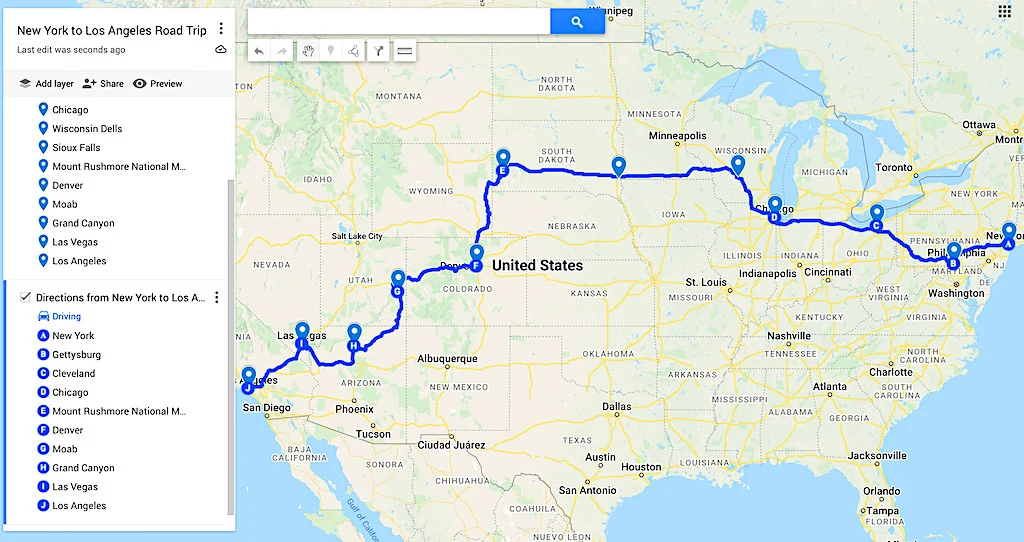
The most common route for a road trip between Los Angeles and New York typically spans around 2,800 to 3,000 miles, depending on the specific highways chosen. Driving this distance is a significant undertaking, often requiring at least 40 to 45 hours of continuous driving time. This translates to a minimum of 4 to 6 days of travel, assuming 8-10 hours of driving per day. This duration allows for brief stops for meals and rest, but it’s crucial to factor in longer breaks for sleep and exploration to make the journey enjoyable rather than exhausting.
Key interstate highways commonly used for this cross-country drive include:
- Interstate 40 (I-40): This route offers a southern passage through states like Arizona, New Mexico, Texas, Oklahoma, Arkansas, Tennessee, North Carolina, and Virginia before connecting to other highways heading north.
- Interstate 70 (I-70): A more central route, I-70 cuts through states like Utah, Colorado, Kansas, Missouri, Illinois, Indiana, Ohio, West Virginia, Pennsylvania, and New Jersey.
- Interstate 80 (I-80): This northern route traverses states such as Nevada, Utah, Wyoming, Nebraska, Iowa, Illinois, Indiana, Ohio, Pennsylvania, and New Jersey.
Each route presents a unique tapestry of American landscapes and potential attractions. The I-40, for instance, passes through the majestic landscapes of the Grand Canyon National Park area and the historic Route 66 stretches. I-70 offers breathtaking vistas of the Rocky Mountains in Colorado. I-80, while perhaps less scenic in parts, offers a more direct path through the heartland.
Flying: The Fastest Option
For those prioritizing speed, flying is unequivocally the most efficient method of traveling between Los Angeles and New York. Direct flights from major Los Angeles airports, such as Los Angeles International Airport (LAX), to New York airports, including John F. Kennedy International Airport (JFK) and LaGuardia Airport (LGA), typically take between 5 to 6 hours of flight time.
When accounting for travel to and from airports, check-in procedures, security screening, and potential delays, the total door-to-door time for a flight can range from 8 to 12 hours. This makes flying the clear winner for travelers with limited time or those who simply prefer to reach their destination as quickly as possible. Numerous airlines operate these routes, offering a wide range of flight options and price points to suit different budgets.
Train Travel: A Scenic Journey
Amtrak offers a unique and often overlooked way to experience the breadth of the American continent. Traveling by train from Los Angeles to New York is a journey that emphasizes the experience of travel itself, allowing passengers to witness the changing scenery at a relaxed pace. This route is not direct and typically involves one or more changes.
A common Amtrak route would involve taking the Southwest Chief from Los Angeles to Chicago, and then transferring to the Lake Shore Limited or Cardinal to reach New York. The total journey time by train can range from approximately 65 to 75 hours, or roughly 3 days. While significantly longer than flying, this option appeals to those who appreciate the romance of train travel, the opportunity to see the country unfold outside their window, and the comfort of spacious seating or private sleeper accommodations.
Planning Your Transcontinental Adventure
Embarking on a journey of nearly 3,000 miles requires careful planning, especially if you intend to make stops along the way. The distance between Los Angeles and New York presents a remarkable opportunity to craft a personalized itinerary, integrating diverse experiences into a single, epic trip.
Road Trip Itinerary Considerations
A cross-country road trip is more than just covering miles; it’s about the experiences gathered en route. Planning a road trip from Los Angeles to New York can be tailored to individual interests:
- The National Parks Explorer: Focus on routes that allow for detours to iconic national parks. This might include visiting Zion National Park and Bryce Canyon National Park in Utah, the Rocky Mountains in Colorado, or the Great Smoky Mountains National Park in Tennessee.
- The Historic Route 66 Enthusiast: Trace sections of the historic “Mother Road,” experiencing its classic diners, quirky roadside attractions, and vintage motels. This route will take you through many of the same states as the I-40.
- The Music and Culture Seeker: Plan stops in cities renowned for their cultural offerings, such as Nashville, Tennessee, for country music; New Orleans, Louisiana, for jazz and Creole cuisine; or Chicago, Illinois, for its vibrant arts scene and architecture.
- The Urban Explorer: Incorporate visits to major cities like Las Vegas, Nevada; Denver, Colorado; St. Louis, Missouri; or Philadelphia, Pennsylvania, to experience the unique character of each metropolis.
When planning a road trip, it’s essential to book accommodations in advance, particularly during peak travel seasons. Consider varying your lodging, from charming roadside motels to comfortable hotels and perhaps even unique Airbnb stays. A minimum of 7 to 10 days is recommended to truly savor the journey, allowing for at least 1-2 days of exploration in 2-3 significant stops between your departure and arrival cities.
The Appeal of the Train Journey
For a more leisurely and immersive experience, Amtrak offers a unique perspective on the American landscape. The train journey between Los Angeles and New York is an event in itself.
- Scenery: Passengers can witness the dramatic shift from the desert Southwest to the vast plains, the rolling hills of the Midwest, and finally the eastern seaboard, all from the comfort of their seat or private room.
- Comfort and Amenities: Amtrak trains offer spacious seating, dining car meals, and the option of private sleeper compartments for overnight travel, which often include meals.
- Sociability: Train travel provides opportunities to meet fellow travelers and enjoy a more relaxed pace, free from the stresses of driving or airport security.
While the extended travel time may not suit everyone, for those who wish to disconnect from the rush of modern life and truly see the United States unfold, the train remains a compelling and romantic option.
Maximizing Your Flight Experience
Even with the efficiency of air travel, planning can enhance the experience of flying from Los Angeles to New York.
- Airport Choice: Consider which New York area airport best suits your final destination within the city or region. JFK and Newark Liberty International Airport (EWR) are major international hubs, while LGA primarily handles domestic flights.
- Booking Strategies: Booking flights in advance, especially during holidays or peak seasons, can secure better fares. Flexibility with travel dates and times can also lead to significant savings.
- In-Flight Experience: For a longer flight, consider booking an aisle or window seat for personal comfort. Many airlines offer in-flight entertainment and Wi-Fi, allowing you to work or relax during the journey.
Navigating the Time Zones
As you traverse the continent from west to east, you will cross multiple time zones, a practical consideration for any journey between Los Angeles and New York.
- Pacific Time (PT): Los Angeles operates on Pacific Standard Time (PST) or Pacific Daylight Time (PDT), which is UTC-8 or UTC-7 respectively.
- Mountain Time (MT): Traveling eastward, you’ll enter Mountain Time (MST/MDT), UTC-7 or UTC-6.
- Central Time (CT): Further east is Central Time (CST/CDT), UTC-6 or UTC-5.
- Eastern Time (ET): New York operates on Eastern Time (EST/EDT), UTC-5 or UTC-4.
This means that when it is noon in Los Angeles, it is already 3 PM in New York. This time difference is important for scheduling flights, train departures, and any planned activities upon arrival. For a road trip, be mindful of this shift and how it affects your arrival times and the daylight hours available for driving or sightseeing.
The Unifying Thread: A Continental Divide Explored
The distance between Los Angeles and New York is not merely a number; it represents a profound geographical and cultural journey across the United States. Whether you choose the swift efficiency of a flight, the scenic narrative of a train, or the adventurous freedom of a road trip, this transcontinental passage offers an unparalleled opportunity to witness the diverse tapestry of American life, landscapes, and history. Each method of travel provides a distinct perspective on this vast nation, inviting exploration and discovery from the sun-drenched shores of California to the bustling metropolises of the East Coast. The answer to “How far is Los Angeles to New York?” is ultimately defined by the journey you choose to undertake.
LifeOutOfTheBox is a participant in the Amazon Services LLC Associates Program, an affiliate advertising program designed to provide a means for sites to earn advertising fees by advertising and linking to Amazon.com. Amazon, the Amazon logo, AmazonSupply, and the AmazonSupply logo are trademarks of Amazon.com, Inc. or its affiliates. As an Amazon Associate we earn affiliate commissions from qualifying purchases.