
Navigating the distance between New Jersey and New York is a common query for many travelers, commuters, and event-goers. While seemingly a short hop, the actual “far” can depend on numerous factors, including your specific starting point in New Jersey, your intended destination in New York, and, crucially, your chosen mode of transportation. This comprehensive guide will break down the distances and travel times, offering insights to help you plan your journey seamlessly.
Understanding the Geographic Proximity
New Jersey and New York share a significant border, particularly in the northeastern part of the Garden State, which directly abuts New York City. This proximity means that many areas of New Jersey are surprisingly close to the bustling metropolis. However, the sheer size of both states means that the distance can vary dramatically. For instance, traveling from the northern tip of New Jersey, such as in Fort Lee, to Manhattan in New York City can be a matter of just a few miles. Conversely, journeys from the southern reaches of New Jersey, like Cape May, to upstate New York can span hundreds of miles.
Key Border Crossings and Their Proximity
The most direct routes between New Jersey and New York involve crossing the Hudson River. Several major bridges and tunnels facilitate this passage, each serving different parts of the metropolitan area.
-
George Washington Bridge: This iconic structure connects Fort Lee, New Jersey, to Washington Heights in Manhattan. The distance from Fort Lee to the bridge entrance is minimal, making it a prime gateway for those in northern New Jersey heading to the upper west side of New York City. The driving distance to Midtown Manhattan is typically around 10-15 miles.
-
Lincoln Tunnel: This tunnel links Weehawken and Hoboken in New Jersey directly to Midtown Manhattan. The proximity to the heart of New York City makes it a popular choice for commuters and visitors alike. The distance from the New Jersey entrance of the tunnel to Times Square is approximately 4-6 miles.
-
Holland Tunnel: Connecting Jersey City in New Jersey to Lower Manhattan, the Holland Tunnel provides access to the downtown financial district and historic areas of New York City. The distance from Jersey City to the World Trade Center is roughly 5-7 miles.
-
Outerbridge Crossing and Goethals Bridge: These bridges connect Staten Island, a borough of New York City, to Perth Amboy and Elizabeth in New Jersey, respectively. While they are crossings between the two states, they are primarily routes to and from Staten Island rather than direct arteries into the core of Manhattan. The distances here are more variable depending on the specific points of departure and arrival on Staten Island.
Beyond the City: Reaching Upstate New York
It’s important to remember that New York is a vast state, and not all travel is concentrated on New York City. For those venturing further north into upstate New York, the distances naturally increase. For example, traveling from central New Jersey to Albany, the state capital, involves a drive of well over 150 miles, and reaching the beautiful Adirondack Mountains would significantly extend that journey.
Modes of Transportation and Their Impact on Distance and Time
The “how far” question is inextricably linked to “how long” and “how easily.” The choice of transportation profoundly impacts both the perceived and actual distance and, more importantly, the travel time.
Driving: Flexibility and Potential Delays
Driving offers the most flexibility, allowing you to depart from and arrive at virtually any point. However, it is also the mode most susceptible to traffic congestion, especially during peak commuting hours and around major New Jersey to New York City crossings.
-
Average Driving Distances:
- Northern New Jersey (e.g., Fort Lee) to Midtown Manhattan: 10-15 miles
- Central New Jersey (e.g., Newark) to Midtown Manhattan: 15-20 miles
- Northern New Jersey to White Plains, New York: 40-50 miles
- Southern New Jersey (e.g., Camden) to Albany, New York: 190-210 miles
-
Travel Times:
- The same 10-15 mile drive from Fort Lee to Midtown Manhattan can take anywhere from 20 minutes in ideal off-peak conditions to over an hour, or even more, during rush hour.
- Journeys to upstate New York will also see significant time variations due to traffic, road construction, and the need to navigate through more urban areas before reaching open highways.
Public Transportation: Predictability and Efficiency
For many, public transportation offers a more predictable and often more efficient way to bridge the gap between New Jersey and New York City. Commuter rail lines and bus services are well-established, providing direct links from various New Jersey towns to key transit hubs in New York.
-
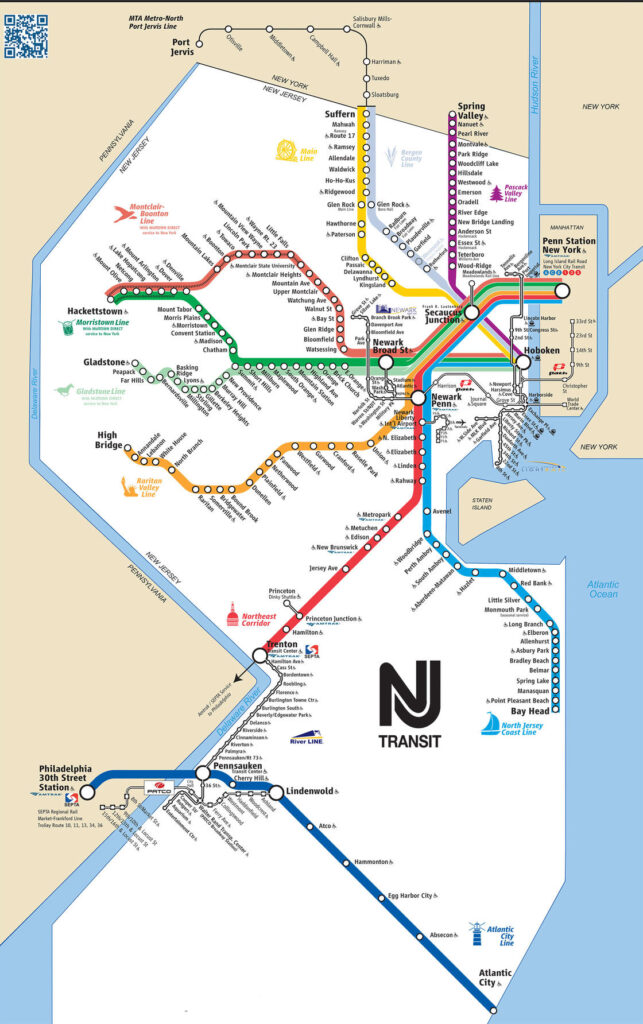
NJ Transit Rail: This is a primary option, with lines like the Northeast Corridor Line and the Morris & Essex Lines offering service from numerous New Jersey stations to New York Penn Station in Midtown Manhattan.
- From Newark, New Jersey: Approximately 20-25 minutes.
- From Trenton, New Jersey: Approximately 1 hour 20 minutes.
- From Hoboken, New Jersey (via PATH trains): A few minutes to Manhattan’s west side.
-
PATH Trains (Port Authority Trans-Hudson): These subway-like trains connect various points in New Jersey, including Hoboken, Jersey City, and Newark, directly to multiple stations in Manhattan, such as the World Trade Center and 33rd Street. Travel times are generally short, often under 30 minutes depending on the route.
- Intercity Buses: Numerous bus companies operate routes from various New Jersey locations to Port Authority Bus Terminal in Midtown Manhattan or other drop-off points. Travel times are comparable to driving but can be more predictable than driving oneself due to dedicated bus lanes in some areas.
Ferries: A Scenic and Increasingly Viable Option
The ferry service across the Hudson River has seen a significant resurgence, offering a pleasant and often faster alternative, especially when considering the time saved navigating traffic.
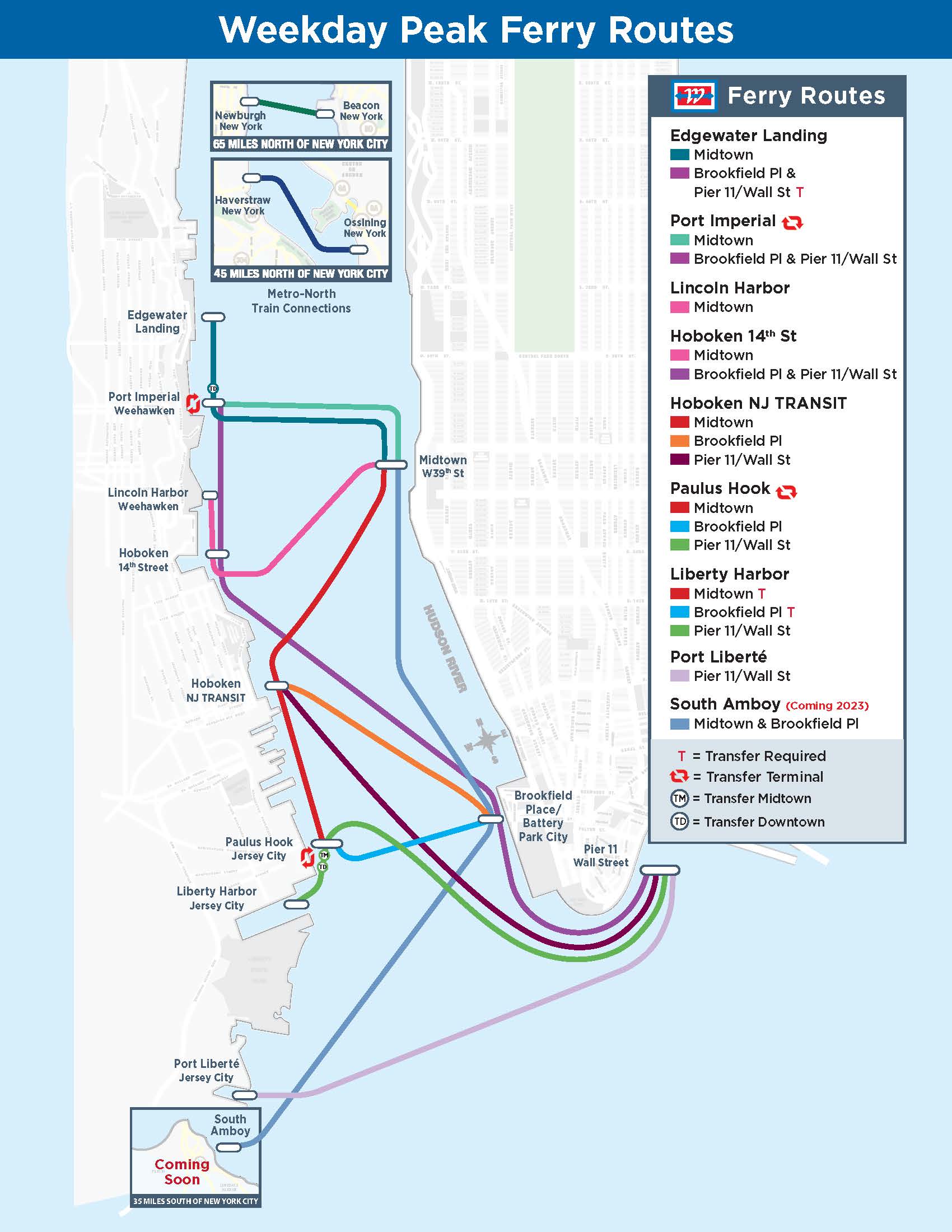
- NY Waterway and Liberty Water Ferry: These services connect ports in Hoboken, Weehawken, Jersey City, and even further down the New Jersey coast to various ferry terminals in Manhattan, such as the Midtown Ferry Terminal or Pier 11 at the Wall Street area.
- From Hoboken to Midtown Manhattan: Approximately 10-15 minutes.
- From Weehawken to West 39th Street Ferry Terminal: Approximately 8 minutes.
Strategic Planning for Your Journey
Understanding the distances and travel times is the first step. The next is to strategically plan your trip to minimize hassle and maximize your experience.
Choosing the Right Entry Point to New York City
Your destination within New York City should heavily influence your choice of crossing and departure point in New Jersey.
-
For Midtown and Upper Manhattan: The George Washington Bridge or the Lincoln Tunnel are your best bets. Commuter rail from stations near these crossings, such as those served by NJ Transit or PATH trains, will likely offer the most efficient arrival into Penn Station or the Port Authority.
-
For Lower Manhattan and the Financial District: The Holland Tunnel is the most direct automotive route. Alternatively, ferry services from Jersey City or Hoboken offer a less stressful commute directly to the downtown ferry terminals.
Considering Off-Peak Travel
If your schedule allows, traveling outside of peak commuting hours (typically 6:00 AM to 9:30 AM and 3:30 PM to 7:00 PM on weekdays) can dramatically reduce travel times, especially if you are driving. Bridges and tunnels are often much more manageable in the late morning, early afternoon, and after 7:00 PM.
Factor in Last-Mile Travel
Remember that the “distance” doesn’t end when you cross the state line or reach a major transit hub. Consider how you will get from your arrival point in New York to your final destination. This might involve subway rides, taxis, rideshares, or walking, all of which add time to your journey. Understanding the subway map of New York City can be invaluable for efficient travel.
Frequently Asked Questions About the New Jersey to New York Journey
The question “How far New Jersey to New York?” often sparks follow-up inquiries as people try to optimize their travel. Here are answers to some common concerns:
What is the shortest distance between New Jersey and New York?
The shortest distance is measured in mere miles across the Hudson River. For instance, the distance between Fort Lee, New Jersey, and the western edge of Washington Heights, Manhattan, is less than 2 miles as the crow flies, though the actual driving or ferry distance is slightly more due to infrastructure.
How long does it take to travel from New Jersey to New York City by train?
Travel time by train from New Jersey to New York City varies significantly based on the starting station. From nearby hubs like Newark or Jersey City, you can reach Manhattan in as little as 15-30 minutes via NJ Transit or PATH trains. Longer journeys from central or southern New Jersey can take over an hour.
Is driving or public transportation better for commuting from New Jersey to New York?
For daily commuting, public transportation is generally recommended due to its predictability and avoidance of traffic congestion. Driving can be more flexible for occasional trips or if your origin and destination are not well-served by transit, but the costs of tolls, parking, and the stress of traffic often outweigh the benefits for regular commutes.
In conclusion, the “distance” between New Jersey and New York is a dynamic measure influenced by geography, chosen route, and transportation method. Whether you’re seeking a quick dash across the river for a Broadway show, a daily commute for work, or a scenic drive to explore the vastness of upstate New York, careful planning and understanding these variables will ensure your journey is as smooth and efficient as possible.
LifeOutOfTheBox is a participant in the Amazon Services LLC Associates Program, an affiliate advertising program designed to provide a means for sites to earn advertising fees by advertising and linking to Amazon.com. Amazon, the Amazon logo, AmazonSupply, and the AmazonSupply logo are trademarks of Amazon.com, Inc. or its affiliates. As an Amazon Associate we earn affiliate commissions from qualifying purchases.