
The vast expanse of the United States offers an incredible tapestry of landscapes, cultures, and experiences, making travel across its breadth a common pursuit for both leisure and business. When considering a journey between the bustling metropolitan heartbeat of New York and the sun-drenched, diverse allure of Florida, one of the first and most crucial questions that arises for any traveler is: “How far is it, really?” This seemingly simple question unlocks a world of planning considerations, from choosing the right mode of transport to budgeting for time and expenses, and ultimately shaping the entire travel experience. Whether you’re escaping the New York City winter for Miami beaches or heading north from Orlando’s theme parks to experience the vibrant energy of the Empire State, understanding the distance and the implications of that distance is paramount. This guide aims to provide a comprehensive breakdown, offering insights into travel logistics, time estimations, and practical tips for making the journey as smooth and enjoyable as possible.
Unpacking the Geographic Reality: Distances and Key Hubs
While the question “How far is New York from Florida?” seems straightforward, the answer varies significantly depending on the specific starting and ending points within these large states. Both are vast and have multiple major cities that serve as primary travel hubs. Understanding these nuances is key to accurate trip planning.
Straight-Line vs. Driving Distances
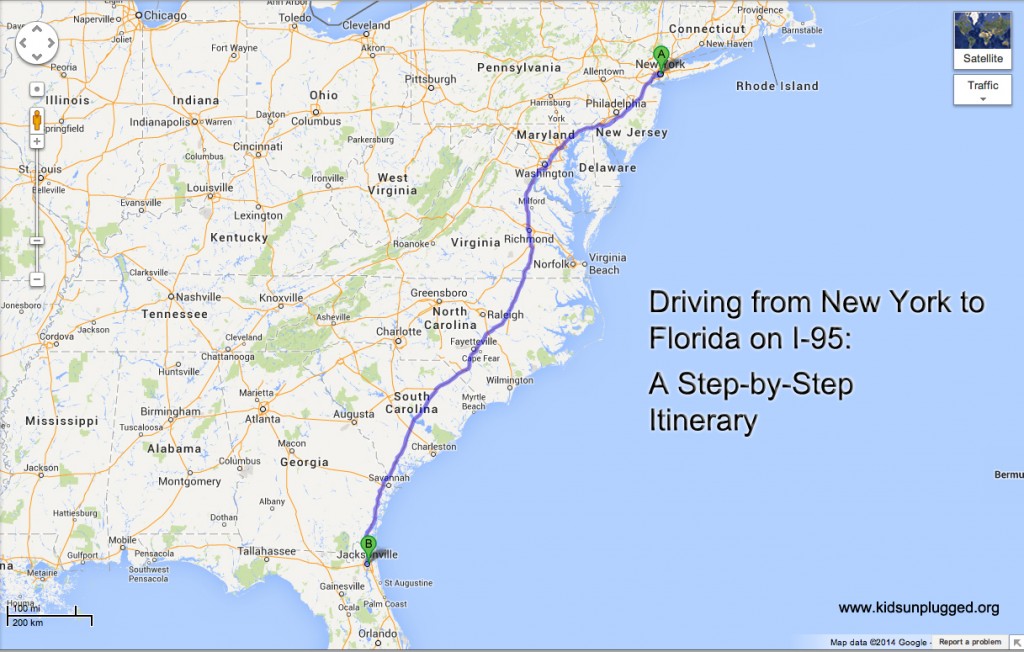
As the crow flies, the distance between the southernmost tip of New York (e.g., New York City) and the northernmost border of Florida (near Jacksonville) is approximately 850-900 miles (1,370-1,450 kilometers). However, very few travelers possess the ability to fly directly over mountains and bodies of water. For practical travel, especially by road, the distance increases due to the necessity of following established routes and highways.
The most common driving route between the two states primarily involves the Interstate 95 (I-95) corridor, which stretches along the East Coast of the United States. This highway provides a relatively direct path, connecting many major cities along the way.
Key City-to-City Examples
To provide a more concrete understanding, let’s look at some popular city pairings:
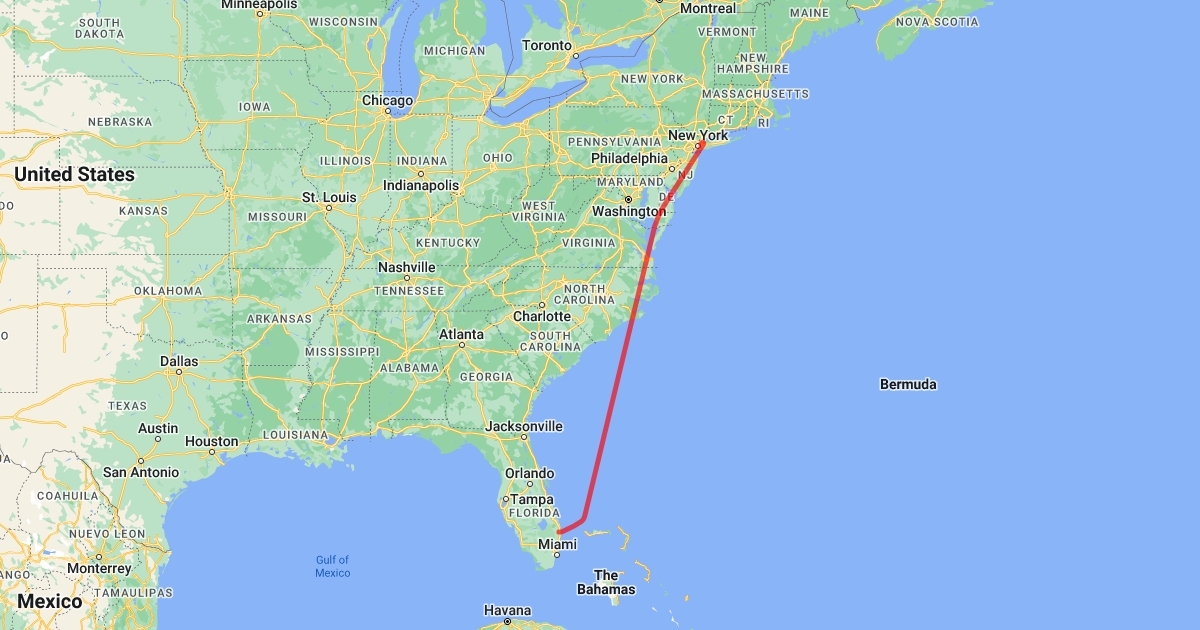
- New York City to Miami: This is perhaps the most popular route for travelers. The driving distance is approximately 1,280 to 1,300 miles (2,060 to 2,090 kilometers). By air, the direct flight distance is around 1,090 miles (1,755 kilometers).
- New York City to Orlando: A favorite for families heading to Walt Disney World Resort or Universal Orlando Resort. The driving distance is typically 1,070 to 1,090 miles (1,720 to 1,755 kilometers). Air travel covers about 950 miles (1,530 kilometers).
- Buffalo, New York to Jacksonville, Florida: For those starting further north in New York and heading to northern Florida, the distance is still substantial. Driving from Buffalo to Jacksonville would be approximately 980 to 1,000 miles (1,577 to 1,610 kilometers).
These examples highlight that while the overall distance is significant, the exact mileage depends on your specific itinerary.
Modes of Transportation: Navigating the Journey
With over a thousand miles separating many points in New York and Florida, choosing the right mode of transportation is critical. Each option offers a distinct balance of cost, speed, convenience, and experience.
By Air: The Fastest Link
Flying is undeniably the quickest way to bridge the distance between New York and Florida.
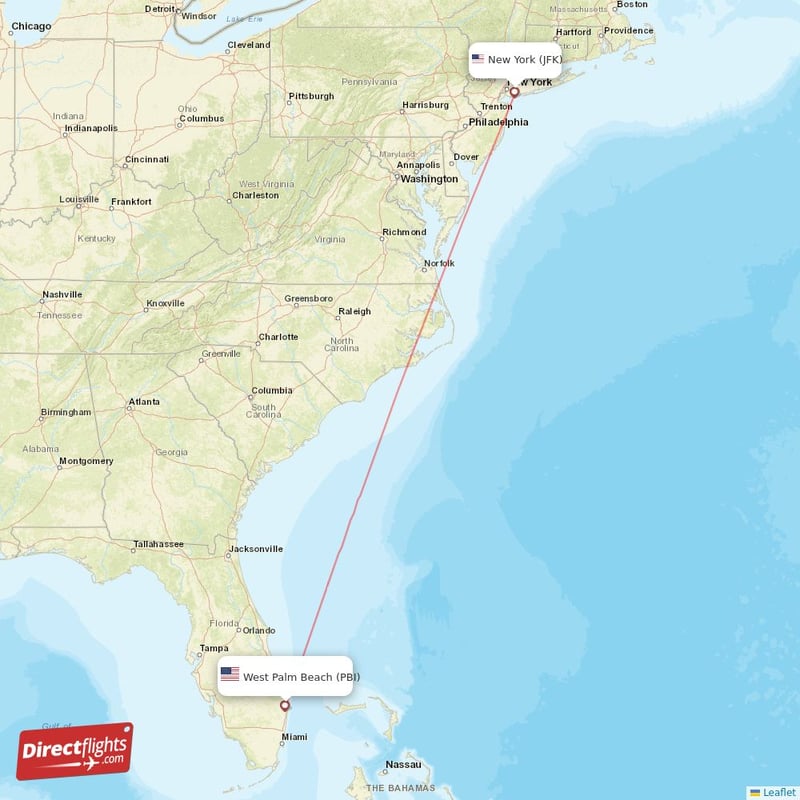
- Flight Duration: A direct flight from major New York airports like JFK, LaGuardia, or Newark Liberty International Airport to Florida hubs such as Miami International Airport (MIA), Orlando International Airport (MCO), or Fort Lauderdale-Hollywood International Airport typically ranges from 2.5 to 3.5 hours. This figure only accounts for time in the air.
- Total Travel Time: When considering airport security, boarding, taxiing, and travel to/from airports, the total door-to-door time can easily extend to 5-7 hours or more, depending on connections and ground transportation.
- Cost and Convenience: Air travel can be surprisingly affordable, especially with budget airlines, if booked in advance. However, prices fluctuate greatly with demand, season, and specific routes. The primary advantages are speed and avoiding the fatigue of long-distance driving.
By Road: The Classic American Road Trip
Driving offers flexibility, the ability to carry more luggage, and the freedom to explore at your own pace.
- Estimated Driving Time: From New York City to Miami, a non-stop drive would take approximately 18-20 hours. To Orlando, it’s closer to 15-17 hours. However, driving safely and comfortably requires significant breaks. Most travelers plan for a two-day journey, ideally with an overnight stop.
- Route and Stopovers: The primary route is I-95 South. Popular stopover cities include Richmond, Virginia; Fayetteville, North Carolina; Florence, South Carolina; Savannah, Georgia; or Jacksonville, Florida. These cities offer a chance to rest, refuel, and perhaps enjoy a meal or a brief sight-seeing detour, transforming the journey itself into part of the adventure.
- Costs: Fuel costs, potential tolls (especially in Delaware, Maryland, and Florida), and the expense of an overnight hotel stay contribute to the overall cost. For families or groups, driving can often be more economical than flying, especially when factoring in car rental and airport transfers at the destination.
By Rail: A Relaxed Alternative
Amtrak offers several services connecting the Northeast to Florida, providing a more leisurely and scenic travel experience.
- Train Services: Key routes include the Silver Meteor and Silver Star, which run between New York Penn Station and various Florida cities, including Orlando, Tampa, and Miami. The Auto Train is a unique option that transports both you and your vehicle from Lorton, Virginia (just south of Washington D.C.), to Sanford, Florida (near Orlando), alleviating the driving fatigue for a significant portion of the journey.
- Duration: A train journey from New York to central or southern Florida typically takes between 24 and 30 hours, making it the longest option but also one that allows for relaxation, dining, and even sleeping in private compartments.
- Experience and Cost: Train travel is often chosen for its comfort, the ability to move around, and the lack of stress associated with driving or airport procedures. While standard coach tickets can be competitive with flights, private rooms or sleeper cars significantly increase the cost, offering a more luxurious experience.
By Bus: The Budget-Friendly Option
Bus services like Greyhound provide the most economical way to travel between New York and Florida.
- Travel Time: Bus journeys are the longest, often taking 24-30+ hours, depending on transfers and stops.
- Comfort and Amenities: While modern buses offer more comfortable seating and amenities like Wi-Fi and power outlets, it is still a prolonged journey, and comfort levels may not suit everyone for such a long duration.
- Cost-Effectiveness: For budget-conscious travelers or those without access to a car, buses offer an accessible and low-cost solution, albeit at the expense of time and some comfort.
Planning Your Journey: Beyond the Miles
Beyond simply knowing the distance and choosing a transport method, successful travel planning involves several other considerations that can significantly impact your experience.
Timing Your Trip
The time of year profoundly affects travel between New York and Florida.
- Seasonal Impact: Winter months see a surge in southbound traffic and flights as New Yorkers seek warmer climates, leading to higher prices and more crowded routes. Conversely, northbound travel from Florida is busier in the spring and fall as “snowbirds” return north or families take spring break trips.
- Weather Conditions: Be mindful of potential winter weather (snow, ice) in the northern states if driving, and hurricane season (June to November) in Florida for all modes of travel. Checking forecasts and having flexible plans is always advisable.
Budgeting for Your Adventure
A comprehensive budget should account for more than just the primary travel cost.
- Hidden Costs: For drivers, tolls, fuel, and overnight accommodations add up. For flyers, baggage fees, airport parking/transfers, and potentially car rental at your destination are crucial. Train and bus travelers should factor in meals on board or during stops.
- Accommodation and Activities: Remember to budget for your stay in Florida – whether it’s a luxury resort in Palm Beach, a family-friendly hotel near Disney, or a boutique apartment in South Beach. Also consider the cost of activities, dining, and local transportation.
Maximizing the Experience
Regardless of how you choose to traverse the distance, there are ways to make the journey itself more enjoyable.
- Road Trip Essentials: If driving, prepare a playlist, pack snacks and drinks, bring entertainment for passengers, and plan interesting stops. Consider using navigation apps that alert you to traffic and points of interest.
- Flight Comfort: For flights, choose your seat wisely, bring a neck pillow and headphones, and download movies or books in advance.
- Train Luxuries: On trains, take advantage of the dining car, observe the changing scenery, and enjoy the ability to move freely.
- Digital Tools: Utilize travel apps for booking, navigating, finding local attractions, and managing your itinerary.
Conclusion
The journey from New York to Florida spans a considerable distance, typically ranging from 850 to 1,300 miles depending on your specific points of origin and destination. This significant mileage translates into diverse travel times and experiences, whether you opt for the swiftness of air travel, the freedom of a road trip, the relaxed pace of a train, or the economy of a bus. Each mode of transportation offers a unique perspective on the East Coast and caters to different travel priorities, budgets, and preferences.
Ultimately, the best way to answer “How far is New York from Florida?” isn’t just in miles, but in the time, cost, and personal experience you choose to invest. By carefully considering the geographic realities, available transport options, and key planning aspects, travelers can transform what seems like a daunting distance into an exciting and memorable adventure, connecting two of America’s most iconic states. Safe travels!
LifeOutOfTheBox is a participant in the Amazon Services LLC Associates Program, an affiliate advertising program designed to provide a means for sites to earn advertising fees by advertising and linking to Amazon.com. Amazon, the Amazon logo, AmazonSupply, and the AmazonSupply logo are trademarks of Amazon.com, Inc. or its affiliates. As an Amazon Associate we earn affiliate commissions from qualifying purchases.