
The question “How far is Russia to Alaska?” often conjures images of vast, icy expanses and the very edge of the world. While geographically distant in many minds, the reality of their proximity is astonishingly close, bridging two continents across one of the most unique waterways on Earth. This slender connection point is not merely a line on a map but a crucible of history, culture, and extreme natural beauty, offering unparalleled experiences for the intrepid traveler seeking destinations off the beaten path. Understanding this closeness reveals a world of potential travel, unique accommodations, and profound insights into natural and human history.
The Astonishing Proximity: A Geographic Overview
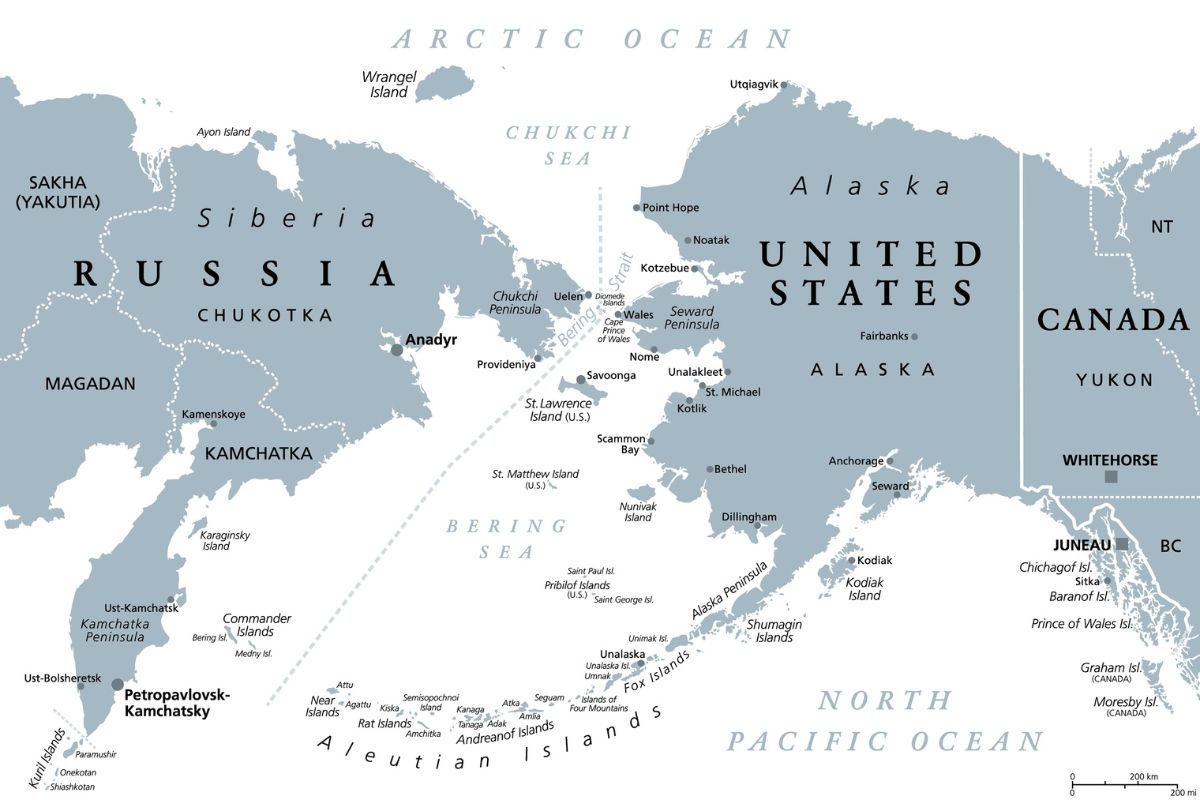
The true measure of distance between Russia and Alaska is best understood by looking at the Bering Strait, a narrow stretch of sea that separates the easternmost point of the Chukotka Autonomous Okrug in Russia from the Seward Peninsula in Alaska, United States. This incredible geographical feature is where Asia and North America almost touch, representing one of the planet’s most significant natural landmarks.
The Bering Strait: A Narrow Waterway
At its narrowest point, the Bering Strait is only about 82 kilometers (51 miles) wide. This comparatively small gap connects the Chukchi Sea, an arm of the Arctic Ocean, to the Bering Sea, which is part of the Pacific Ocean. The waters are relatively shallow, with an average depth of 30-50 meters (98-164 feet), hinting at the geological past when the landmasses were connected. From the Alaskan side, specifically from Cape Prince of Wales, on a clear day, one can literally see the shores of Russia across the water, a truly breathtaking sight that underscores the incredible closeness. Conversely, from Cape Dezhnev, Russia’s easternmost point, the Alaskan coastline is visible. This proximity makes the region a unique destination for travelers fascinated by extreme geography and the convergence of continents.

The Diomede Islands: Stepping Stones Across Time
Adding to this fascinating geography are the Diomede Islands, two small, rocky outposts situated almost perfectly in the middle of the Bering Strait. These islands act as natural stepping stones between the two continents. The larger island, known as Big Diomede (or Ratmanov Island), belongs to Russia, while the smaller one, Little Diomede (or Krusenstern Island), is part of the United States and home to the Alaskan Native village of Diomede.
What makes the Diomede Islands truly extraordinary is not just their physical proximity – they are only about 3.8 kilometers (2.4 miles) apart – but also their temporal separation. The International Date Line runs precisely between them. This means that Big Diomede is almost a full day ahead of Little Diomede. Standing on Little Diomede, you can look across a mere few miles of water and literally see “tomorrow” in Russia. This unique temporal and spatial juxtaposition offers an unparalleled experience for visitors, making it one of the most intriguing landmarks on the planet for those interested in travel, geography, and cultural exploration.
Geographical Significance and Continental Shelf
Beyond their surface features, the underwater geography of the Bering Strait holds immense significance. The strait sits atop a shallow continental shelf, a remnant of a much larger landmass that once connected Asia and North America. This historical connection, known as the Bering Land Bridge, played a crucial role in human migration and the distribution of flora and fauna across continents. For geologists and paleontologists, the region is a living laboratory, offering clues to ancient climates and ecosystems. For travelers, understanding this deep history enriches any visit, transforming a simple observation of distant shores into an appreciation of profound geological and biological forces.
A Bridge Between Continents: Historical and Cultural Connections
The narrow gap between Russia and Alaska belies a rich tapestry of shared history and vibrant cultural exchange that spans millennia. From prehistoric migrations to periods of colonial influence and the enduring presence of indigenous communities, this region has been a nexus of human stories.
The Bering Land Bridge: Ancient Migrations
The story of human presence in North America begins here. During the last Ice Age, massive glaciers locked up vast quantities of water, causing sea levels to drop significantly. This exposed the Bering Land Bridge, a wide expanse of tundra that connected present-day Siberia with Alaska. It was across this land bridge, now submerged beneath the Bering Strait, that the ancestors of today’s Native Americans migrated from Asia into the Americas. This epic journey of early humans represents one of the most significant migrations in history. Today, the Bering Land Bridge National Preserve on the Seward Peninsula in Alaska commemorates this incredible historical event, protecting the unique landscape and archaeological sites that bear witness to this ancient connection. Visiting this remote yet historically vital landmark offers a profound glimpse into humanity’s past and an experience few other destinations can provide.
Russian America and the Alaska Purchase
The more recent history of Alaska is indelibly linked to Russia. For over a century, Alaska was known as Russian America, established by Russian explorers and fur traders in the 18th century. Settlements like those on Kodiak Island and Sitka (the former capital of Russian America) were centers of trade and missionary activity. The distinctive onion domes of Orthodox churches still dot the Alaskan landscape, a visible reminder of this period. However, in 1867, citing financial difficulties and the logistical challenges of governing such a distant territory, Russia sold Alaska to the United States for $7.2 million – an event now famously known as the Alaska Purchase. This pivotal moment shifted geopolitical boundaries and created the unique “neighborly” relationship between these two powerful nations across a narrow strait. Exploring historical sites related to Russian America is a popular tourism activity, offering insights into a fascinating chapter of both American and Russian history.
Indigenous Cultures and Shared Heritage
Despite the political division, the indigenous peoples of the Bering Strait region share a deep cultural heritage that transcends modern borders. Communities such as the Yup’ik and Inupiat in Alaska have relatives and cultural ties with the Chukchi and Siberian Yupik people on the Russian side. For millennia, these groups have adapted to the harsh Arctic environment, developing unique languages, traditions, and subsistence practices centered around hunting marine mammals and caribou. Before the Cold War erected an impermeable barrier, these communities regularly interacted, traded, and even intermarried across the strait. While official cross-border travel for indigenous peoples became restricted, efforts have been made to rekindle some cultural exchanges. Experiencing the vibrant local culture in villages like Gambell on St. Lawrence Island or the tiny community on Little Diomede offers a profoundly authentic travel experience, providing a window into a lifestyle shaped by millennia of Arctic living. Such tourism emphasizes local culture, art, and traditional foods, supporting these resilient communities.

Navigating the Divide: Travel and Tourism Potential
While the proximity is striking, traveling between Russia and Alaska across the Bering Strait is far from a casual day trip. The region is remote, logistically challenging, and subject to complex geopolitical dynamics. However, for those seeking unparalleled adventure and unique travel experiences, this frontier offers incredible opportunities.
Expedition Cruises and Scientific Journeys
The most practical and popular way for tourists to experience the Bering Strait is through specialized expedition cruises. These vessels, often ice-strengthened, navigate the cold waters during the summer months when ice conditions permit. Reputable tour operators offer itineraries that explore both the Alaskan side, visiting remote villages and wildlife hotspots, and, when permits allow, the Russian Far East. Passengers on these voyages get to witness spectacular wildlife, including various species of whales, walruses, seals, and a plethora of seabirds. Some cruises may even attempt a landing on Big Diomede or Little Diomede, providing the rare chance to stand at the edge of the International Date Line. These cruises are typically luxury travel experiences, providing comfortable suites, expert guides, and a focus on educational content and responsible tourism. Companies like Quark Expeditions or Silversea Expeditions often feature such exotic destinations, ensuring a safe and enriching experience. Beyond tourism, the Bering Strait is a vital corridor for scientific research, attracting marine biologists, climatologists, and archaeologists. These scientific journeys occasionally offer citizen science opportunities, further broadening the scope of tourism.
Challenges and Restrictions for Cross-Border Travel
Direct, casual travel between Russia and Alaska is currently not possible due to strict border regulations and a lack of official crossing points. The “Ice Curtain” that descended during the Cold War has largely remained in place for ordinary citizens. While proposals for a Bering Strait tunnel or bridge have been floated over the years, they remain highly theoretical. Visas are required for both sides, and permits for visiting the highly restricted border regions are extremely difficult to obtain for individual travelers. This makes organized tours, particularly expedition cruises with pre-arranged permits, the only feasible option for experiencing both sides of the strait. The challenges include unpredictable weather, vast distances to major logistical hubs like Anchorage or Vladivostok, and limited infrastructure. Accommodations in the immediate vicinity of the strait are scarce; visitors to the Alaskan side might find rustic lodges in communities like Nome or Kotzebue, but true hotels with extensive amenities are non-existent.
Unique Travel Experiences and Accommodations
For those determined to explore the Alaskan side of the Bering Strait, unique travel experiences await. Visitors can fly into Nome, a historic gold rush town, and from there arrange local flights or charters to smaller villages. These trips often involve staying in local guesthouses or community-run accommodations, which offer a truly immersive experience into the local culture and lifestyle. Activities might include birdwatching, fishing, hiking, learning about local subsistence practices, or exploring historical sites. The emphasis here is on authentic, budget-friendly travel, focusing on interaction with local people rather than luxury. For a long-term stay, one might consider volunteering with local conservation efforts or cultural preservation projects, providing a deeper engagement with the region. Reviewing experiences from other travelers can offer valuable tips for planning such an adventurous journey, ensuring one is well-prepared for the challenging yet rewarding environment.
Beyond the Horizon: Lifestyle and Future Outlook
The unique geographical and geopolitical position of the Russia-Alaska border shapes not only travel opportunities but also the lifestyle of those who call this extreme environment home, and influences the future of global interactions.
An Adventurer’s Dream: Extreme Destinations
For the ultimate adventurer, the Bering Strait region is a dream destination. It appeals to those who seek out the planet’s most remote and challenging environments. This isn’t your typical beach holiday or city break; it’s a journey into true wilderness, where the forces of nature are paramount. Activities such as kayaking through icy waters, exploring ancient archaeological sites, or simply witnessing the raw power of the Arctic landscape offer unparalleled experiences. Lifestyle choices in this region lean heavily towards self-sufficiency, resilience, and a deep connection to the land and sea. Travelers pursuing this kind of lifestyle tourism are often interested in extreme sports, survival skills, and disconnecting from the modern world. The rewards are immense: breathtaking vistas, incredible wildlife encounters, and a profound sense of accomplishment. Hotels, in the traditional sense, are rare, with accommodations often being rustic cabins, remote lodges, or on-board expedition ships, focusing on functionality over luxury.
The Allure of the Arctic Wilderness
Beyond the immediate proximity of the continents, the broader Alaskan and Russian Arctic regions offer vast stretches of untouched wilderness. Destinations like Gates of the Arctic National Park in Alaska, or the remote reaches of Chukotka in Russia, are true last frontiers. These areas are characterized by incredible biodiversity, from migratory birds to polar bears, and dramatic landscapes of tundra, mountains, and ice. Tourism in these regions focuses heavily on nature, wildlife viewing, and experiencing the majestic beauty of the Arctic Circle. This lifestyle often involves eco-tourism, where visitors actively participate in preserving the environment and supporting local conservation efforts. Accommodations might include remote cabins or glamping setups, emphasizing minimal environmental impact. For those who embrace a lifestyle of exploration and appreciation for wild spaces, the Bering Strait region serves as a gateway to some of the most spectacular natural landmarks and untouched ecosystems remaining on Earth.
Geopolitical Dynamics and Environmental Concerns
The proximity of Russia and Alaska also places the Bering Strait at the forefront of geopolitical discussions and environmental concerns. As Arctic ice melts due to climate change, the Bering Strait is becoming an increasingly important shipping route, a potential “Arctic Silk Road.” This growing traffic brings both economic opportunities and significant environmental risks, including potential oil spills and disruption to marine life. The delicate balance of ecosystems and the traditional subsistence lifestyle of indigenous communities are directly impacted by these changes. Responsible tourism plays a crucial role here, raising awareness about these challenges and contributing to conservation efforts. Whether for history buffs, adventure seekers, or those passionate about environmental preservation, the unique dynamic between Russia and Alaska across this narrow strait offers a compelling narrative and a travel experience unlike any other. It is a place where history, geography, and the future converge, inviting a deeper understanding of our interconnected world.
LifeOutOfTheBox is a participant in the Amazon Services LLC Associates Program, an affiliate advertising program designed to provide a means for sites to earn advertising fees by advertising and linking to Amazon.com. Amazon, the Amazon logo, AmazonSupply, and the AmazonSupply logo are trademarks of Amazon.com, Inc. or its affiliates. As an Amazon Associate we earn affiliate commissions from qualifying purchases.