
Florida, the Sunshine State, is synonymous with warm weather, palm trees, and sandy beaches. The very idea of snow falling on its subtropical shores often elicits chuckles and disbelief. Yet, the Sunshine State is not entirely immune to the capricious whims of winter. While widespread, significant snowfall is exceptionally rare, localized and fleeting instances have been documented, primarily impacting the northernmost reaches of the state. Understanding how far south it actually snows in Florida requires a deep dive into meteorological history, geographical nuances, and the specific atmospheric conditions that can conspire to bring a dusting of white to the peninsula.

The Anatomy of a Florida Snow Event
Snow, by its very nature, requires a precise blend of atmospheric ingredients. For it to form and reach the ground as snow, the temperature profile from the cloud where it originates down to the surface must be at or below freezing (0°C or 32°F). This seemingly simple condition is the primary barrier to widespread snow in Florida.
Temperature Requirements
Florida’s coastal and southern regions typically boast average winter temperatures well above freezing, even at night. The ocean’s moderating influence keeps coastal areas from experiencing the prolonged deep freezes necessary for snow. However, during strong cold air outbreaks, which are infrequent but powerful, temperatures can plummet across the entire state.
These cold snaps are driven by the movement of a large mass of frigid air from Canada or the Arctic. When this air mass sweeps southward, it can bring with it temperatures cold enough for snow, particularly when accompanied by a low-pressure system that provides the necessary moisture.
Moisture Availability
Temperature alone isn’t enough. There needs to be sufficient moisture in the atmosphere for precipitation to form. Florida, being a peninsula surrounded by water, often has ample moisture. The challenge lies in having that moisture coincide with the rare occasions of sub-freezing temperatures reaching the surface. Coastal storms, known as “nor’easters” or their Gulf Coast counterparts, are the most likely culprits to bring this combination to Florida. These systems can draw moisture from the Gulf of Mexico and the Atlantic Ocean, feeding a storm that, under the right frigid conditions, can produce snow.
Upper-Air Dynamics
Beyond surface temperatures, the temperature of the atmosphere at various altitudes plays a critical role. For snow to form, the air must be below freezing in the cloud layer. Even if the surface is just above freezing, if the entire atmospheric column from the cloud base to the ground remains below freezing, snow can fall. Conversely, if the air is warm enough at higher altitudes, precipitation might begin as snow but melt into rain before reaching the ground.
Documented Snowfall in Florida: A Historical Perspective
While the image of snow-covered orange groves might be a far-fetched fantasy, there have been undeniable instances of snow impacting Florida. These events are not typically characterized by heavy accumulations but rather by light dustings or a brief flurry that melts upon contact with the ground.
The “Great Blizzard of 1977”
One of the most significant and widely remembered cold air outbreaks occurred in January 1977. This event brought freezing temperatures as far south as the Florida Keys, a region rarely touched by cold. While widespread, heavy snowfall was not the primary characteristic, flurries were reported in many areas. Some sources cite light snow or sleet falling as far south as the immediate vicinity of Miami, though accumulations were non-existent, and the event was more of a meteorological curiosity than a true winter storm. The cold was the dominant feature, with temperatures dropping into the 20s across much of North and Central Florida.
Other Notable Occurrences
Over the decades, other cold snaps have brought snow or sleet to northern Florida. The Panhandle region, with its proximity to colder continental air masses, is the most likely area to experience such phenomena.
- February 1978: Another significant cold wave brought freezing temperatures and some reports of snow to areas like Tallahassee and Jacksonville. Accumulations were minimal, often measured in fractions of an inch, and melted quickly.
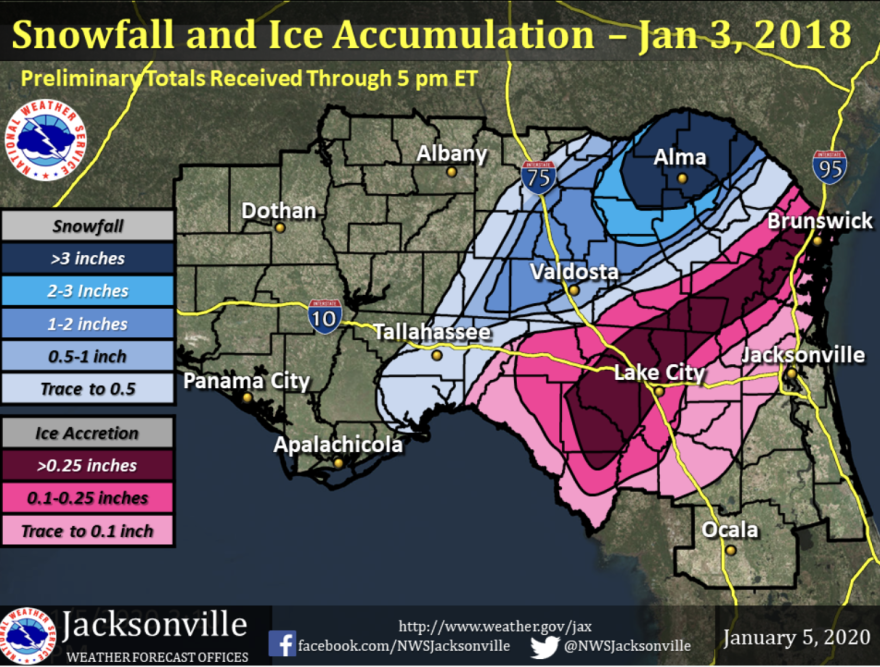
- December 2017: This event saw snow flurries reported in areas of North Florida, including parts of Gainesville and Jacksonville. While the accumulations were light, the event garnered significant media attention due to its rarity. Some residents in the Florida Panhandle, particularly around Pensacola, reported brief periods of light snow.
- January 2022: A cold snap brought frigid temperatures to much of the Eastern United States, and Florida was not entirely spared. While primarily characterized by cold, there were reports of light snow flurries in northern parts of the state, including areas near the Georgia border.
These events consistently point to a pattern: when snow does occur in Florida, it is confined to the northern half of the state, particularly the Panhandle and the northern Atlantic coast. The further south one travels, the less likely any frozen precipitation becomes.
Geographical Factors Influencing Snowfall Extent
Florida’s unique geography plays a crucial role in determining the southern limit of snowfall. The state’s elongated shape, stretching over 400 miles from north to south, means that conditions can vary dramatically from its northern border to its southern tip.
The Florida Panhandle
The Florida Panhandle, stretching along the Gulf of Mexico, is geographically the most susceptible to cold air intrusions from the north and west. Cities like Pensacola, Tallahassee, and Panama City are significantly closer to the continental climate of the Deep South and can experience colder temperatures and more frequent frosts than the peninsular regions. This is why most documented snow events in Florida originate and are most visible in this area.
North Florida and the Peninsula
As one moves south into the peninsular portion of the state, the influence of the Atlantic Ocean and the Gulf of Mexico becomes more pronounced. These large bodies of water have a moderating effect on temperature, keeping averages higher than they would be inland at the same latitude.
- Central Florida: Cities like Orlando and Tampa are far less likely to see snow. While they can experience freezing temperatures during a severe cold snap, the duration is often shorter, and the accompanying moisture for snow might be absent or arrive as rain.
- South Florida: The southernmost regions, including West Palm Beach, Fort Lauderdale, and Miami, are almost entirely insulated from snow. Average winter temperatures here rarely dip below the mid-50s Fahrenheit, making snowfall an almost unimaginable event. The warm Gulf Stream current offshore further contributes to keeping these areas balmy year-round.
Elevation
While Florida is known for its low elevation, subtle differences can matter. The Florida Panhandle and the northern parts of the peninsula have slightly higher elevations compared to the coastal plains of South Florida. While not a dramatic factor, even a few hundred feet of elevation can contribute to slightly colder temperatures, especially during stagnant high-pressure systems that allow cold air to pool.
The Modern Traveler’s Guide to Florida Snow
For the modern traveler planning a trip to Florida during the winter months, the chances of encountering snow are infinitesimally small, especially in the popular tourist destinations. However, for the intrepid explorer or the meteorology enthusiast, understanding these rare occurrences can add an interesting layer to a Florida winter experience.
Where to Potentially See Snow
If the prospect of witnessing a rare Florida snowfall excites you, your best bet is to head to:
- The Florida Panhandle: Focus on cities like Pensacola, Tallahassee, and areas near the Georgia state line. These are the most historically consistent locations for light snow.
- Northern Atlantic Coast: Cities such as Jacksonville and its surrounding areas might experience flurries during significant cold air outbreaks.
When to Look for Snow
- Mid-Winter Months: January and February are typically the coldest months in Florida and offer the highest probability for a cold enough air mass.
- Cold Air Outbreaks: Keep an eye on weather forecasts for strong cold fronts pushing south from the continent. These are the primary drivers of potential snowfall.
- Storm Systems: The confluence of a cold air mass and a developing storm system (often a Gulf Coast low or an Eastern Seaboard storm) is the ideal scenario for precipitation that could be snow.
What to Expect (and Not Expect)
It is crucial to manage expectations. Florida snow is not a winter wonderland scenario.
- Light Flurries or Dustings: The most common form of “snow” in Florida is light flurries that may accumulate for only a short period, if at all.
- Melting on Contact: Often, any snowflakes that fall will melt upon hitting warmer surfaces.
- Brief Duration: Snowfall events, if they occur, are typically very short-lived.
- Focus on the Cold: The more probable outcome of a significant winter weather event in Florida is not snow, but rather unseasonably cold temperatures, frost, and potentially icy conditions on roads in the northernmost regions.

Alternative Winter Experiences
While chasing snow in Florida is a niche pursuit, the state offers an abundance of wonderful winter travel experiences that do not involve frozen precipitation.
- Mild Temperatures for Outdoor Activities: Florida’s winter climate is ideal for enjoying the state’s numerous outdoor attractions, such as visiting theme parks like Walt Disney World Resort or Universal Orlando Resort, exploring the natural beauty of the Everglades National Park, or enjoying the beaches along the Gulf Coast.
- Festivals and Events: Many cities and towns across Florida host winter festivals, holiday celebrations, and sporting events, offering a vibrant cultural experience.
- Wildlife Viewing: Winter is an excellent time for wildlife viewing in Florida, with migratory birds flocking to various refuges and manatees seeking warmer waters in springs and coastal areas.
In conclusion, while the question “How far south is it snowing in Florida?” might conjure images of wintery landscapes, the reality is far more nuanced. Snowfall in Florida is a rare meteorological event, primarily confined to its northernmost regions. The Sunshine State’s charm lies in its warmth and sunshine, but for those fascinated by the extraordinary, understanding the conditions that can bring a fleeting touch of winter to its northern borders offers a unique glimpse into the diverse climate of the United States.
LifeOutOfTheBox is a participant in the Amazon Services LLC Associates Program, an affiliate advertising program designed to provide a means for sites to earn advertising fees by advertising and linking to Amazon.com. Amazon, the Amazon logo, AmazonSupply, and the AmazonSupply logo are trademarks of Amazon.com, Inc. or its affiliates. As an Amazon Associate we earn affiliate commissions from qualifying purchases.