
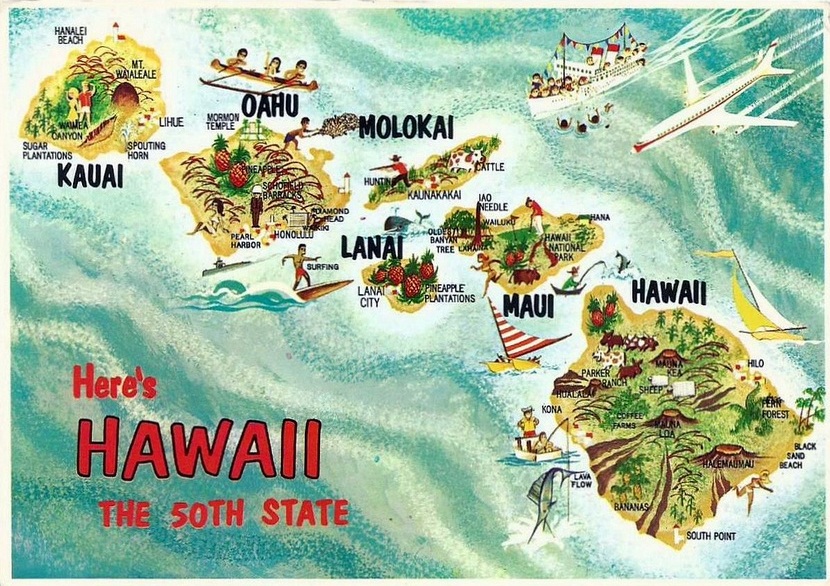
The story of Hawaii becoming the 50th United States state is a fascinating tapestry woven with threads of ancient Polynesian culture, powerful geopolitical ambition, and an evolving identity that continues to captivate visitors from across the globe. Today, Hawaii is synonymous with paradise – sun-drenched beaches, vibrant local culture, and unparalleled natural beauty that draws millions seeking unforgettable travel experiences. From the bustling streets of Honolulu to the serene landscapes of Maui or the rugged volcanic terrain of the Big Island (also known as Hawaii Island), each island offers unique attractions and a distinct sense of place. But beneath the surface of this idyllic image lies a rich, complex history that saw a sovereign kingdom transform into an American territory and eventually, a full-fledged state. Understanding this journey not only enriches one’s appreciation for these destinations but also provides invaluable context for its unique position in the world of tourism and lifestyle today.
Ancient Roots and the Arrival of Western Influence
Long before the arrival of European explorers, the Hawaiian Islands were settled by skilled navigators from Polynesia, arriving in canoes between 300 and 800 AD. These early inhabitants developed a sophisticated society, rich in oral tradition, intricate social structures, and a deep reverence for the land and sea. Their isolated existence allowed a unique culture to flourish, characterized by the aloha spirit, hula, surfing, and a sustainable approach to life that resonates deeply with modern ecotourism principles. The landscape itself, sculpted by volcanic activity and millennia of erosion, became sacred, with natural landmarks like Diamond Head on Oahu and the majestic peaks of Mauna Kea and Mauna Loa on the Big Island holding profound cultural significance.
The Unification of a Kingdom
The late 18th century marked a pivotal moment in Hawaiian history with the rise of King Kamehameha I. Through a series of strategic battles and alliances, he unified the warring chiefdoms of the islands, establishing the Kingdom of Hawaii by 1810. This period saw the strengthening of a unified Hawaiian identity and laid the groundwork for diplomatic relations with foreign powers. During his reign, and that of his successors, the kingdom began to interact more with the outside world, setting the stage for both opportunity and eventual conflict. Early European and American traders and missionaries began to arrive, drawn by the islands’ strategic location in the Pacific Ocean and the potential for commerce. These interactions, while initially beneficial, gradually introduced external influences that would irrevocably alter the course of the kingdom.
The arrival of Captain James Cook in 1778 is often cited as the moment Hawaii was “discovered” by the West, though Polynesians had thrived there for centuries. This encounter opened the door for subsequent waves of explorers, traders, and whalers, particularly from the United States and Great Britain. The introduction of foreign diseases, to which the native population had no immunity, led to a devastating decline in the indigenous population, dramatically altering the demographic landscape.
The Seeds of Change: Economic Growth and Political Intrigue
By the mid-19th century, Hawaii’s fertile volcanic soil proved ideal for cultivating cash crops, most notably sugarcane. This burgeoning agricultural industry attracted significant American business interests. Plantations grew rapidly, necessitating a large labor force, which led to the immigration of workers from China, Japan, Portugal, and the Philippines, creating the diverse multi-ethnic society that defines Hawaii today. The increasing economic ties to the United States also brought a corresponding increase in political influence. American residents, many of whom were descendants of missionaries or businessmen, began to exert pressure for greater control over the kingdom’s affairs.
The Overthrow of the Monarchy
The late 19th century was a period of intense political struggle. King Kalakaua, often called the “Merrie Monarch” for his efforts to revive traditional Hawaiian culture like hula, faced growing opposition from American and European businessmen who sought to limit the power of the monarchy and promote annexation by the United States. In 1887, a group of armed, non-native businessmen and residents forced Kalakaua to sign the infamous “Bayonet Constitution,” which significantly stripped the monarchy of its authority and disenfranchised many native Hawaiians. This moment is a stark reminder of how political landscapes can shift dramatically, impacting the very fabric of a nation and its lifestyle.
Upon Kalakaua’s death in 1891, his sister, Queen Lili’uokalani, ascended to the throne. A staunch nationalist, she immediately sought to restore the monarchy’s power and establish a new constitution that would protect the rights of her people. Her efforts, however, were met with fierce resistance from the pro-annexation faction. In 1893, with the support of United States Minister John L. Stevens and the landing of U.S. Marines from the USS Boston, the monarchy was overthrown. Queen Lili’uokalani was placed under house arrest at Iolani Palace, a stunning architectural landmark in Honolulu that now stands as a poignant symbol of her struggle and the kingdom’s end. This event led to the establishment of the provisional government, and later, the Republic of Hawaii.

The Path to Statehood: A Strategic Territory
Following the overthrow, the new Republic of Hawaii, largely controlled by American interests, immediately sought annexation by the United States. Initially, opposition in Washington D.C. from President Grover Cleveland, who believed the overthrow was an act of aggression, prevented immediate annexation. However, the geopolitical landscape shifted dramatically with the Spanish-American War in 1898. The strategic importance of Hawaii as a naval base and coaling station for ships en route to the Philippines became undeniable. President William McKinley, a proponent of expansionism, signed a joint resolution annexing Hawaii as a U.S. territory on July 7, 1898.
Hawaii as a U.S. Territory and World War II
For over 60 years, Hawaii functioned as a U.S. territory, its economy deeply intertwined with the mainland. The sugarcane and pineapple industries flourished, attracting more immigrants and further diversifying the cultural mosaic. During this period, Hawaii also cemented its reputation as a burgeoning travel destination. Early luxury hotels like the Moana Hotel and the Royal Hawaiian Hotel on Waikiki Beach began to cater to an exclusive clientele, setting the standard for the opulent resorts and accommodations that define Hawaii’s tourism industry today. These establishments offered not just a place to stay, but an entire experience, from grand ballrooms to beachfront access, laying the foundation for Hawaii as a premier destination for luxury travel.
The 20th century, particularly World War II, profoundly impacted Hawaii’s trajectory. The devastating attack on Pearl Harbor on December 7, 1941, catapulted the United States into the war and solidified Hawaii’s critical role as a military outpost in the Pacific. The islands became a central hub for military operations, leading to an influx of service personnel and further infrastructure development. This period also fostered a stronger sense of shared identity among the diverse residents, many of whom served bravely in the armed forces. The legacy of Pearl Harbor remains a powerful and somber landmark, drawing visitors seeking to understand this pivotal moment in global history.
The Push for Statehood and a New Era
Following World War II, the desire for full statehood in Hawaii intensified. Residents argued that they contributed equally to the nation, especially through their sacrifices in the war, and deserved the same representation and rights as citizens of other states. The argument against statehood often centered on Hawaii’s non-contiguous location, its unique multi-ethnic population, and concerns about potential economic impacts. However, proponents emphasized the democratic principles of self-determination and equal rights. This period saw robust political activism, community organizing, and persistent lobbying efforts in Washington D.C..
From Territory to the 50th State
The momentum for Hawaiian statehood grew throughout the 1950s. on March 12, 1959, the United States Congress passed the Hawaii Admission Act, which was then signed into law by President Dwight D. Eisenhower. Crucially, the Act mandated a plebiscite, or popular vote, for the residents of Hawaii to decide their own future. The results were overwhelmingly in favor of statehood, with over 94% of voters choosing to join the United States as a state rather than remain a territory or pursue independence. This resounding endorsement paved the way for the official declaration.
On August 21, 1959, Hawaii officially became the 50th state of the United States. This momentous event was met with widespread celebration across the islands and the mainland. Statehood brought with it increased political representation, greater economic opportunities, and a reinforced sense of belonging to the American fabric while still retaining its distinctive cultural heritage. The transition immediately spurred further development in infrastructure and tourism, cementing Hawaii’s place as a premier global destination. The post-statehood era saw an explosion in air travel, making the islands more accessible than ever before. This accessibility, combined with the continued investment in resorts and accommodations, transformed Hawaii into the iconic holiday spot it is today, offering everything from opulent suites at Grand Hyatt Kauai Resort & Spa to budget-friendly hotels across its islands.

The Enduring Legacy and Modern Hawaii
Today, the legacy of Hawaii’s journey to statehood is reflected in its unique blend of cultures, its economic vibrancy, and its continued appeal as a world-class destination. While the historical narrative is complex, marked by periods of both opportunity and profound challenge, the modern state of Hawaii stands as a testament to resilience and adaptation. For visitors, understanding this history deepens the appreciation of Hawaii’s present. From exploring the historical exhibits at Iolani Palace or the solemn memorial at Pearl Harbor to experiencing the contemporary aloha spirit through local culture, food, and activities, the islands offer much more than just beautiful scenery.
The tourism industry remains a cornerstone of the Hawaiian economy, constantly evolving to offer diverse experiences ranging from eco-tourism to luxury retreats. Whether you are booking a stay at a renowned resort on Waikiki like the Sheraton Waikiki or a boutique hotel on the quieter shores of Kauai, the narrative of Hawaii’s past is intrinsically linked to its present appeal. The efforts to preserve and celebrate Hawaiian language and traditions, alongside its modern identity as a part of the United States, continue to shape a truly unique place on Earth. As a premier travel destination, Hawaii invites all to explore its natural wonders, delve into its profound history, and immerse themselves in a lifestyle unlike any other. Its journey from a remote island kingdom to a bustling American state is a powerful reminder of how history shapes the destinations we cherish and the experiences we seek.
LifeOutOfTheBox is a participant in the Amazon Services LLC Associates Program, an affiliate advertising program designed to provide a means for sites to earn advertising fees by advertising and linking to Amazon.com. Amazon, the Amazon logo, AmazonSupply, and the AmazonSupply logo are trademarks of Amazon.com, Inc. or its affiliates. As an Amazon Associate we earn affiliate commissions from qualifying purchases.