
Texas, a state synonymous with vastness, beckons adventurers and road-trippers with its sprawling landscapes and diverse attractions. For those contemplating a journey across this iconic state, a fundamental question arises: “How long does it take to cross Texas?” The answer, however, is far from simple, intricately woven with factors such as the chosen route, mode of transportation, and the very definition of “crossing.” This exploration delves into the complexities of traversing the Lone Star State, offering insights for travelers looking to plan their ultimate Texan adventure.
Defining “Crossing Texas”: More Than Just Miles
The sheer size of Texas is its most defining characteristic, often leading to underestimation by first-time visitors. Spanning approximately 268,596 square miles, it is the second-largest state in the United States by both area and population. To “cross Texas” can mean several things, and understanding these nuances is key to accurate planning.

East to West: A Classic Traverse
The most common perception of crossing Texas involves traversing it from its eastern border to its western edge, or vice-versa. This typically implies traveling between major East Texas cities like Texarkana or Houston to West Texas destinations such as El Paso.
-
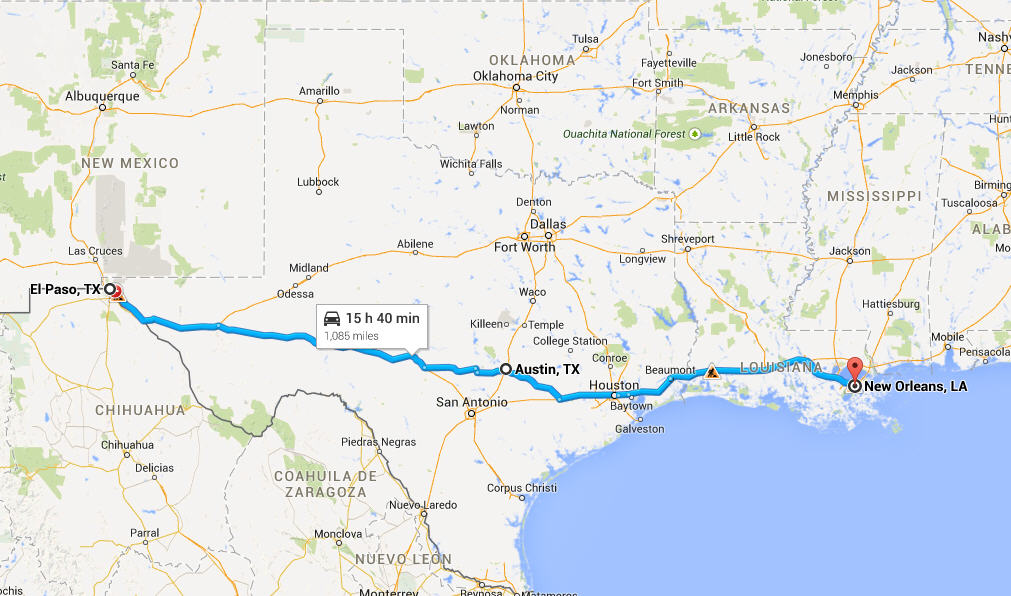
The Direct Route: A relatively direct route, focusing purely on covering the distance with minimal detours, might follow major interstate highways like Interstate 10 (I-10) for much of the journey. This interstate stretches for over 880 miles within Texas, connecting Beaumont in the east to El Paso in the west. Driving this stretch without significant stops and adhering to speed limits would realistically take 12 to 14 hours of continuous driving. However, this is a feat of endurance rather than an enjoyable travel experience.
-
The Scenic Route with Stops: For most travelers, a “crossing” implies more than just enduring endless miles. It involves experiencing the diverse landscapes, cultures, and attractions Texas has to offer. A more realistic and enjoyable East-West crossing might involve breaking the journey into multiple days. This allows for stops in notable cities and towns, experiencing local flavors, and appreciating the changing scenery.
- Day 1: East Texas Charm to Central Texas Hubs: Starting in the piney woods of East Texas, one might drive towards cities like Dallas or Austin. This segment could cover 300-400 miles and take 5-7 hours of driving, leaving ample time for exploring Dallas’s arts district or Austin’s live music scene.
- Day 2: Through the Heart of Texas: Continuing west from Austin or Dallas, the landscape begins to shift. A drive towards West Texas, perhaps targeting a city like San Antonio or a smaller town in the Hill Country, would cover another 200-300 miles. This day could involve exploring the historic missions of San Antonio or the picturesque wineries of the Texas Hill Country.
- Day 3: The Final Stretch to the Border: The final leg of an East-West crossing would take travelers through the more arid and rugged landscapes of West Texas towards El Paso. This segment is often the longest in terms of driving time per mile due to road conditions and potentially lower speed limits in some areas. Covering the remaining 400-500 miles could take another 7-9 hours of driving, concluding the cross-state journey.
Therefore, a comfortable and experiential East-to-West crossing of Texas, with overnight stays and time for exploration, typically takes 2 to 4 days.
North to South: A Different Perspective
Crossing Texas from North to South offers a distinct set of experiences, often involving a journey from the Red River bordering Oklahoma down to the Gulf Coast. This direction presents a transition from the plains and rolling hills of North Texas to the coastal plains and vibrant metropolises of South Texas.
-
The Interstate Path: Major north-south interstates in Texas include Interstate 45 (I-45), which connects Dallas to Galveston, and Interstate 35 (I-35), a vital artery running from the Oklahoma border through Dallas, Austin, and San Antonio, eventually reaching Laredo on the Mexican border. The distance between the northernmost point (e.g., Gainesville near the Oklahoma border) and the southernmost point (e.g., Brownsville) is roughly 700-800 miles.
-
Planning a North-South Journey: Similar to an East-West traverse, a direct North-South drive without stops would take approximately 10-12 hours. However, to truly experience this direction, consider these segments:
*   **Day 1: Northern Plains to the Metroplex:** Starting from the northern border, one might travel south towards the bustling metropolises of Dallas-Fort Worth. This segment could cover 200-300 miles, with time to explore the Stockyards National Historic District in Fort Worth or the museums of Dallas.
*   **Day 2: Through the Heart of Texas to the Coast:** Continuing south, the route could take travelers through the heart of Texas, encompassing Austin and San Antonio, before heading towards the Gulf Coast. This leg might involve 300-400 miles, allowing for exploration of the Texas State Capitol or the Alamo.
*   **Day 3: Coastal Wonders and Border Cities:** The final segment would lead to the subtropical climate of the Texas coast, perhaps exploring cities like Corpus Christi or venturing further south to the border city of Brownsville, home to the World Birding Center. This would involve another 200-300 miles, potentially taking 4-6 hours of driving, concluding the journey.
A well-paced North-South crossing of Texas, allowing for exploration and overnight stays, typically spans 2 to 3 days.
Factors Influencing Travel Time
Beyond the chosen direction, several other critical factors influence how long it takes to cross Texas:
Mode of Transportation
- Driving: This is the most common method for crossing Texas, offering flexibility and the ability to explore off-the-beaten-path destinations. As detailed above, driving times vary significantly based on the route and the desire for exploration.
- Flying: For those prioritizing speed and seeking to minimize travel time, flying is the most efficient option. Major airports like those in Houston (IAH, HOU), Dallas (DFW, DAL), Austin (AUS), San Antonio (SAT), and El Paso (ELP) offer inter-Texas flights. A direct flight between two major cities like Dallas and El Paso might take just under 2 hours. However, this method bypasses the actual experience of traversing the state’s landscapes and cultural nuances.
- Train: Amtrak offers some cross-state routes, notably the “Texas Eagle” which runs from Chicago to San Antonio and then onward to Los Angeles, passing through many Texas cities. A journey between, for example, Dallas and El Paso by train can take over 18 hours, making it a more leisurely but significantly longer option than driving. This mode is best suited for travelers who enjoy the journey itself and have ample time.
- Bus: Intercity bus services, such as Greyhound, also operate extensive networks across Texas. Similar to train travel, bus journeys are generally slower than driving and can take considerable time, with cross-state routes often spanning 12-20 hours depending on the origin and destination.
Road Conditions and Traffic
Texas is a vast state with a well-maintained highway system. However, traffic can be a significant factor, especially when passing through or near major metropolitan areas like the Dallas-Fort Worth Metroplex, Houston, Austin, and San Antonio. Rush hour traffic can add considerable time to a journey, turning a short drive into a much longer ordeal. Planning travel times to avoid peak commuting hours is advisable.
Speed Limits and Driving Habits
Texas generally has high speed limits on its interstates, often reaching 70-80 mph. However, adhering to these limits, accounting for construction zones, and the need for rest stops all factor into the actual travel time. Impulsive stops at roadside attractions or unexpected delays can also extend the duration.
The “Why” of Your Crossing
Ultimately, the question of “how long” is inextricably linked to “why” you are crossing Texas. Are you embarking on a cross-country road trip and simply need to pass through? Or are you planning a dedicated Texas road trip, eager to explore its unique cities, natural wonders, and cultural tapestry?
- Through-Travelers: If Texas is merely a passage on a longer journey, a direct drive from East to West or North to South can be accomplished in a single, albeit very long, day (12-14 hours of pure driving). However, this is generally not recommended for safety and enjoyment. Two days of focused driving with minimal stops is a more practical approach for those needing to cover ground swiftly.
- Explorers: For travelers aiming to experience the diverse offerings of Texas, a crossing is an opportunity for discovery. A week-long itinerary could allow for a thorough exploration of two to three major regions. Two weeks would permit a more comprehensive understanding of the state’s distinct geographies and cultures. A month or more would be ideal for truly immersing oneself in the Texan way of life.
Conclusion: Texas Time is Flexible Time
The answer to “How Long Does It Take To Cross Texas?” is not a single number but a spectrum of possibilities. A direct, no-frills drive can be completed in about 12-14 hours. However, to truly appreciate the grandeur and diversity of this immense state, allocating a minimum of 2-4 days for a one-way crossing is recommended, allowing for both transit and curated experiences. Whether you are aiming for efficiency or immersion, Texas rewards those who embrace its scale and allow ample time for discovery.
LifeOutOfTheBox is a participant in the Amazon Services LLC Associates Program, an affiliate advertising program designed to provide a means for sites to earn advertising fees by advertising and linking to Amazon.com. Amazon, the Amazon logo, AmazonSupply, and the AmazonSupply logo are trademarks of Amazon.com, Inc. or its affiliates. As an Amazon Associate we earn affiliate commissions from qualifying purchases.