
Embarking on a journey from the bustling metropolis of New York City to the serene shores of Hawaii is a quintessential American dream, promising an escape from urban rhythms to an idyllic paradise. However, bridging the vast expanse between the East Coast and the mid-Pacific requires a significant commitment of time in the air. For many eager travelers, the burning question isn’t just how to get there, but how long it will take. The answer isn’t a simple number, as flight duration can vary considerably based on whether you opt for a direct route or one with layovers, the specific airline, the destination island, and even atmospheric conditions. Understanding these variables is key to planning a seamless and enjoyable journey to the Aloha State.
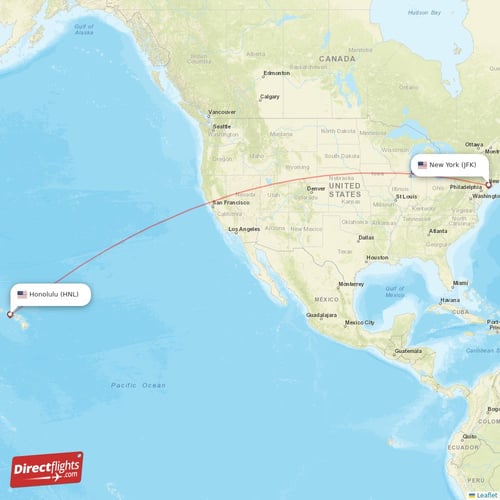
The geographic distance between New York City and Hawaii is roughly 4,900 miles (approximately 7,900 kilometers), making it one of the longest domestic flights in the United States. This substantial distance translates into a significant amount of time spent airborne, demanding thoughtful preparation and an understanding of the travel logistics involved. From navigating major airports like JFK Airport or Newark Liberty International Airport to finally landing at Daniel K. Inouye International Airport in Honolulu, the journey itself becomes an integral part of the adventure.
Direct vs. Connecting Flights: A Tale of Two Journeys
The most significant factor influencing your total travel time from New York City to Hawaii is whether you choose a direct flight or one with one or more connections. Each option presents its own set of advantages and considerations, impacting not only the duration but also the overall travel experience, cost, and convenience.
The Direct Flight Experience: Swift but Long
For those prioritizing speed and minimizing travel time, direct flights are undoubtedly the preferred option. Several major airlines offer non-stop service from the New York City area to Honolulu (Oahu), and occasionally to Maui or the Big Island. These flights typically depart from JFK Airport or Newark Liberty International Airport (EWR).
- Average Duration: A direct flight from New York City to Honolulu typically clocks in at around 10 to 11 hours. Flights to Maui (Kahului Airport) or the Big Island (Kona International Airport or Hilo International Airport) might be slightly longer, perhaps 11 to 12 hours, depending on the exact flight path.
- Airlines Offering Direct Service: Prominent carriers such as United Airlines and Hawaiian Airlines often operate these long-haul routes. While less frequent, Delta Air Lines also offers direct flights from time to time, especially during peak travel seasons.
- Pros: The primary benefit is obvious: you get to your destination faster. There’s no stress of navigating layovers, potential missed connections, or repeatedly boarding and deplaning. It’s a single, concentrated period of travel that, once completed, puts you directly in paradise.
- Cons: Direct flights are often more expensive due to their convenience and demand. The length of the flight can also be challenging for some travelers, especially those with young children or those who find it difficult to sit for extended periods. Jet lag can also feel more pronounced when crossing so many time zones in one go.
Navigating Connecting Flights: Flexibility and Potential Savings
Connecting flights, while adding to the overall travel time, are a popular choice for many reasons, including cost savings, greater schedule flexibility, and the opportunity to break up a very long journey. Most connecting flights will typically route through major West Coast hubs.
- Average Duration: The total travel time for a connecting flight can range anywhere from 12 to 18 hours or more, depending on the length of the layover(s) and the efficiency of the connection. A standard connecting flight with a reasonable layover usually falls in the 14-16 hour range.
- Common Layover Cities: Popular connection points on the West Coast include Los Angeles (LAX Airport), San Francisco (SFO Airport), and Seattle (SEA Airport). Other less common but possible connection cities further inland might include Phoenix, Denver, or even Chicago, though these will add more flight time before reaching the Pacific leg.
- The Two Legs of the Journey: Typically, a connecting flight involves an initial leg from New York City to a West Coast hub (roughly 5-6 hours), followed by a layover, and then the trans-Pacific leg from the West Coast to Hawaii (another 5-6 hours).
- Pros: Connecting flights often present more affordable ticket options. They also offer a chance to stretch your legs, grab a meal, or explore a new airport during a layover. This break can be particularly beneficial for families or those who prefer to divide the long travel time into more manageable segments.
- Cons: The main downside is the increased total travel time. There’s also the added potential for delays, missed connections, or lost luggage, which can turn a long journey into a stressful ordeal. Careful planning, including choosing flights with sufficient layover times (at least 2-3 hours), is essential.
Factors Influencing Flight Duration Beyond Direct vs. Connecting
While the presence or absence of layovers is the primary determinant of your total travel time, several other factors subtly, or sometimes dramatically, influence how long your flight from New York City to Hawaii will truly be. These elements range from the sophisticated technology of the aircraft to the unpredictable whims of nature.
Aircraft Type and Speed
Modern long-haul aircraft are designed for efficiency and comfort over vast distances. The specific model of plane can have a slight impact on flight duration.
- Advanced Aircraft: Airlines flying trans-Pacific routes often deploy wide-body jets like the Boeing 787 Dreamliner, Boeing 777, or Airbus A330 and A350. These aircraft are optimized for fuel efficiency and range, but also maintain relatively consistent cruising speeds.
- Marginal Differences: While newer planes might offer slightly faster cruising speeds or more direct routing due to extended range capabilities, the difference in flight time between different modern wide-body aircraft on the same route is usually only in the realm of minutes, not hours. However, their advanced capabilities often translate into a smoother, more comfortable ride, which can make a long flight feel less arduous.
The Role of Wind and Air Traffic
Invisible forces and complex logistical networks play a significant role in actual flight times.
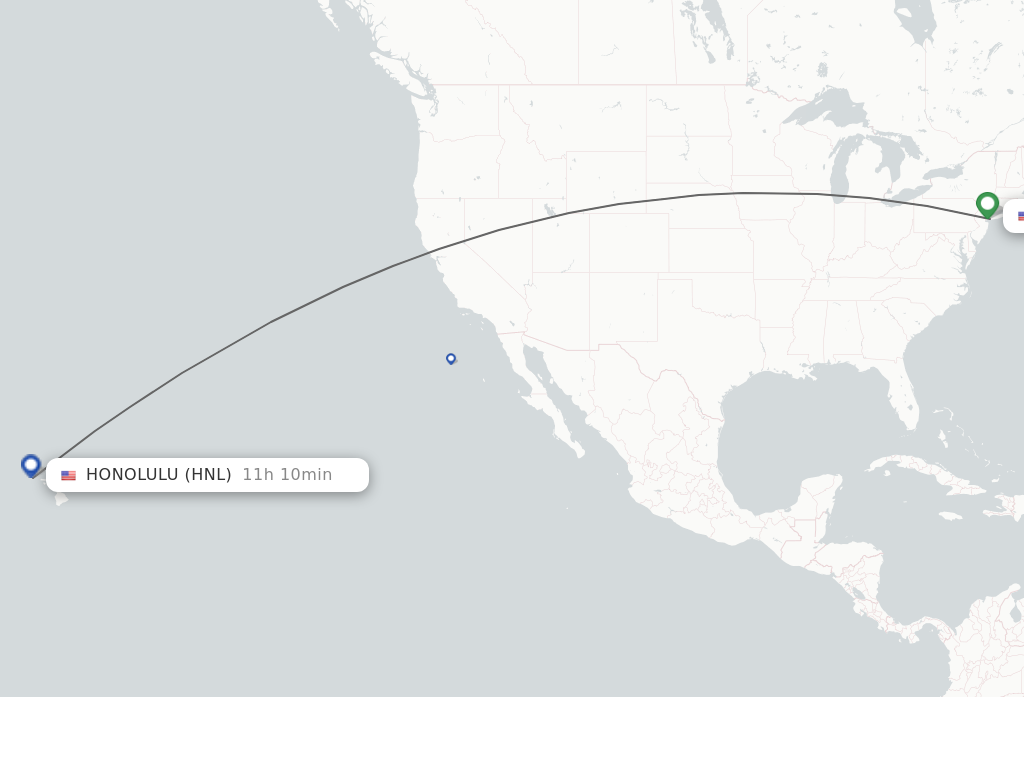
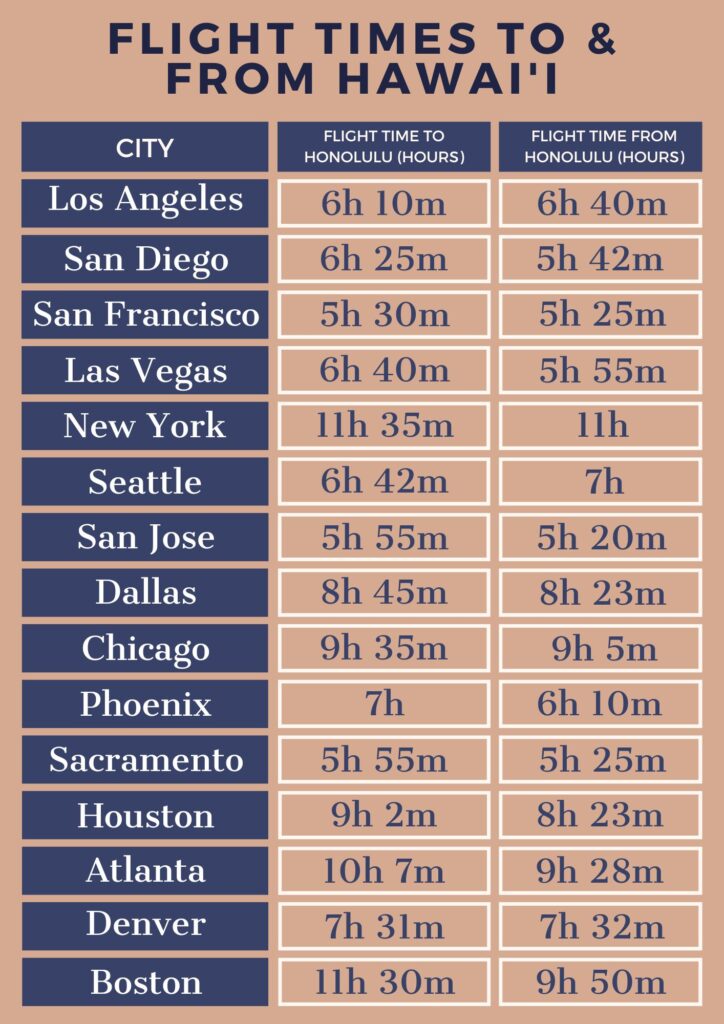
- Jet Stream: The prevailing winds, particularly the powerful jet stream, can have a notable impact on flight duration. Flights traveling westward from the East Coast to Hawaii are often flying against the jet stream, which can add 30 minutes to an hour (or sometimes even more) to the flight time. Conversely, eastbound flights (e.g., from Hawaii back to the mainland) can catch the jet stream, potentially shortening the flight by a similar margin. This phenomenon is why return flights often seem quicker.
- Air Traffic Control (ATC) and Route Optimization: Air traffic congestion, particularly around major hubs like JFK Airport, Newark Liberty International Airport, and Daniel K. Inouye International Airport, can lead to ground delays, holding patterns, or diversions from optimal flight paths. While airlines strive for direct routes, ATC might issue instructions for safety or efficiency, which can slightly alter flight paths and, consequently, flight duration.
Departure and Arrival Island Considerations
While Honolulu (Oahu) is the most common arrival point, direct flights to other islands, or inter-island connections, can add to your total journey.
- Direct to Neighbor Islands: Some direct flights from the East Coast might occasionally route to Kahului Airport on Maui or Kona International Airport on the Big Island. These direct flights will be marginally longer than those to Honolulu simply because of the slightly greater distance to reach these islands further west or south within the Hawaiian chain.
- Inter-Island Travel: If your ultimate destination is an island like Kauai or Molokai and you arrive in Honolulu first, you will need to factor in additional time for an inter-island flight. These short flights (typically 20-45 minutes) plus the transit time within the airport can add another 2-4 hours to your total journey from landing in Honolulu to reaching your final destination.
Making the Long Haul Comfortable: Tips for Your Flight
A flight from New York City to Hawaii is a significant journey, whether direct or with connections. Ensuring your comfort throughout this extended period is paramount to arriving in paradise refreshed and ready to enjoy your vacation. This aspect of travel directly relates to a positive lifestyle choice for a better travel experience.
Pre-Flight Preparation for a Smooth Journey
Thoughtful planning before you even step foot in the airport can significantly enhance your comfort.
- Choose Your Seat Wisely: If budget allows, consider upgrading to Premium Economy, Business, or First Class for more legroom and amenities. If staying in Economy, try to select an aisle seat for easier movement, or a window seat if you prefer leaning against the wall and don’t mind not getting up frequently. Exit row seats offer extra space but come with specific responsibilities. Booking in advance is crucial, especially for preferred seats.
- Pack Smartly for Your Carry-On: Your carry-on bag is your comfort arsenal. Include essentials like a neck pillow, eye mask, earplugs or noise-canceling headphones, a refillable water bottle, snacks, a good book or e-reader, and any personal medications. Don’t forget chargers for your electronic devices and a portable power bank.
- Dress in Layers: Airplane cabins can fluctuate in temperature. Wearing comfortable, loose clothing in layers allows you to adjust to changing conditions. Compression socks can also be a game-changer for long flights, helping to prevent swelling and improve circulation.
During the Flight: Staying Hydrated, Active, and Entertained
Once you’re airborne, it’s about managing your well-being.
- Stay Hydrated: The dry cabin air can quickly lead to dehydration. Drink plenty of water before, during, and after your flight. Limit caffeine and alcohol, as they can contribute to dehydration and disrupt sleep patterns.
- Move Around: To prevent stiffness and reduce the risk of deep vein thrombosis (DVT), get up and walk around the cabin every few hours if safe to do so. Perform simple stretches in your seat or while standing.
- Manage Entertainment and Sleep: Utilize the in-flight entertainment system, or bring your own loaded tablet or laptop. For sleep, create a conducive environment with your eye mask and earplugs. Try to adjust your sleep schedule to Hawaii’s time zone (typically 5-6 hours behind New York City during standard time) as soon as you board.
- Combat Jet Lag: Upon arrival, expose yourself to natural light, stay active, and try to stick to the local sleep schedule from day one. Avoid heavy meals close to bedtime.
Beyond the Flight: Planning Your Hawaiian Adventure
After successfully navigating the long journey from New York City to Hawaii, the real adventure begins. Hawaii’s diverse islands offer a wealth of experiences, from vibrant city life and historical landmarks to pristine natural wonders and luxurious resorts. Thoughtful planning for your stay is just as crucial as planning the flight itself. This ties directly into the website’s themes of Tourism, Accommodation, and Landmarks.
Choosing Your Island Paradise
Each Hawaiian island boasts a distinct personality, catering to different travel preferences.
- Oahu: The Gathering Place: Home to Honolulu, Waikiki Beach, and historical sites like Pearl Harbor, Oahu is ideal for those seeking a mix of city excitement, cultural experiences, and beautiful beaches. Hiking Diamond Head offers panoramic views, while the North Shore is a surf mecca. Accommodation options range from iconic resorts like The Royal Hawaiian, a Luxury Collection Resort to boutique hotels and vacation rentals.
- Maui: The Valley Isle: Known for its stunning beaches, lush landscapes, and upscale resorts, Maui is perfect for romantic getaways, family vacations, and outdoor enthusiasts. Drive the scenic Road to Hana, witness a breathtaking sunrise from Haleakala National Park, or relax at luxury properties such as Four Seasons Resort Maui at Wailea.
- Kauai: The Garden Isle: For nature lovers and adventurers, Kauai offers dramatic cliffs along the Na Pali Coast, the vast Waimea Canyon (often called “The Grand Canyon of the Pacific”), and verdant rainforests. It’s a haven for hiking, kayaking, and exploring unspoiled beauty.
- Big Island: The Island of Hawaii: The largest and youngest island, the Big Island is home to Hawaii Volcanoes National Park, where you can witness active volcanoes. It boasts diverse microclimates, from black sand beaches to snow-capped mountains, and is ideal for those seeking unique geological wonders and a variety of landscapes.
Accommodation and Activities
Regardless of your chosen island, Hawaii offers a spectrum of accommodation options to suit every style and budget. You can find sprawling resorts with lavish amenities, charming boutique hotels, cozy vacation apartments, or luxurious private villas for a more exclusive experience. Booking in advance, especially for popular destinations and during peak seasons, is highly recommended to secure your preferred stay and potentially better rates.
Beyond lounging on pristine beaches, Hawaii invites exploration. Engage with local culture through a traditional luau, learn to surf, snorkel in crystal-clear waters, or hike through lush trails. Sample local cuisine like fresh poke, kalua pig, and refreshing shaved ice. Whether you’re interested in historical tours, adrenaline-pumping water sports, or simply unwinding by the ocean, Hawaii delivers an unforgettable experience that makes the long flight utterly worthwhile.
In conclusion, a flight from New York City to Hawaii is a journey of considerable length, typically ranging from 10-11 hours for direct flights to 12-18+ hours for connecting routes. Factors such as layovers, aircraft type, and wind conditions all play a role in the precise duration. However, with careful planning for comfort during the flight and a well-thought-out itinerary for your island adventure, the long journey quickly fades into memory, replaced by the warmth, beauty, and magic of the Hawaiian Islands.
LifeOutOfTheBox is a participant in the Amazon Services LLC Associates Program, an affiliate advertising program designed to provide a means for sites to earn advertising fees by advertising and linking to Amazon.com. Amazon, the Amazon logo, AmazonSupply, and the AmazonSupply logo are trademarks of Amazon.com, Inc. or its affiliates. As an Amazon Associate we earn affiliate commissions from qualifying purchases.