
Embarking on a journey from the bustling streets of New York to the tranquil shores of Hawaii is a quintessential American travel dream, connecting two vastly different but equally iconic destinations. The allure of Hawaii’s volcanic landscapes, pristine beaches, and vibrant Polynesian culture draws millions annually, making the long flight a worthwhile endeavor. However, for many prospective travelers, the primary question isn’t if they should go, but how long it will take to bridge the nearly 5,000-mile expanse between the East Coast and this Pacific paradise. The answer isn’t a simple single number, as it depends on several factors, primarily whether you opt for a direct flight or a connecting one, along with other operational and environmental variables. Understanding these nuances is crucial for planning an efficient and enjoyable Hawaiian getaway.
The Direct Route: Uninterrupted Journey to Paradise
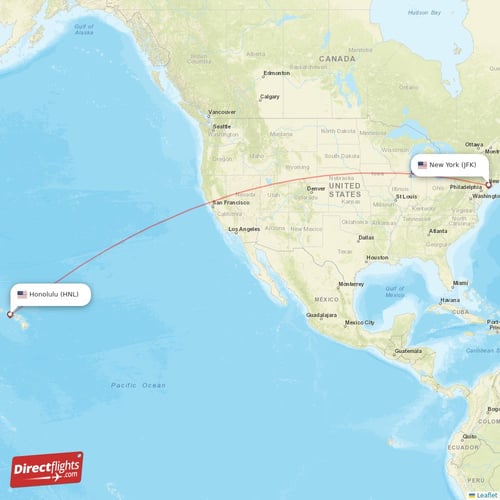
For travelers prioritizing speed and convenience, a direct flight from New York to Hawaii is the optimal choice. While fewer in number compared to routes with layovers, these non-stop services offer the quickest path to the islands, minimizing travel time and the associated hassle of transfers.
Typical Flight Durations
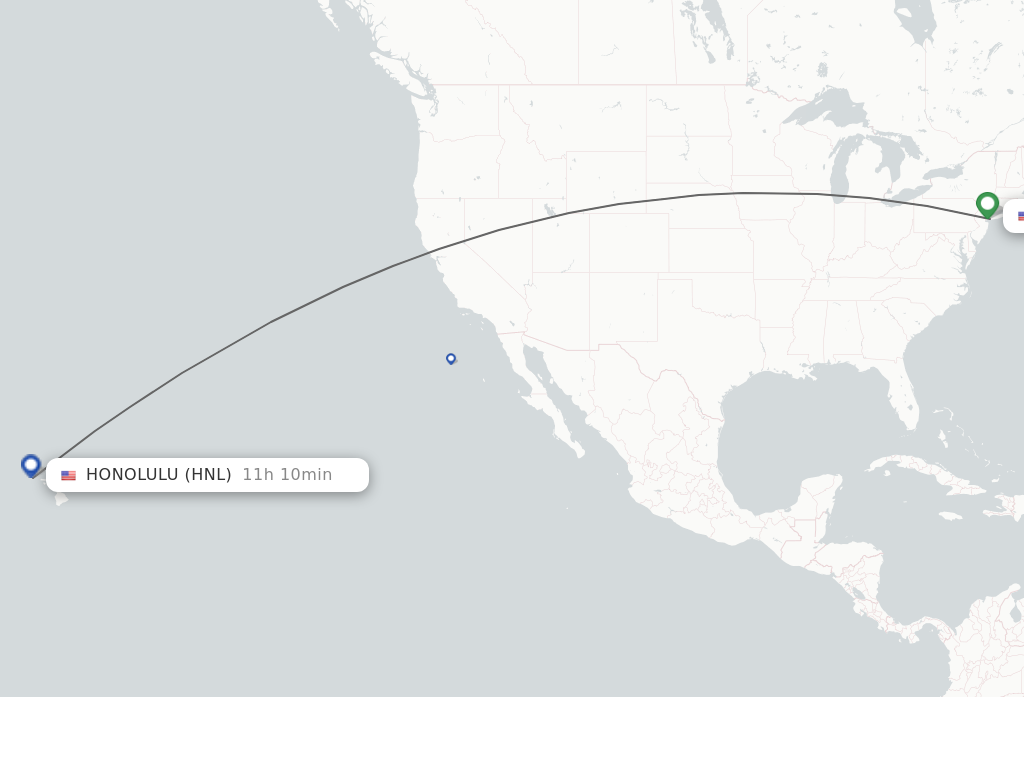
A direct flight from New York to Hawaii typically ranges from 10 to 11.5 hours. The exact duration can vary slightly based on the specific departure and arrival airports, the aircraft type, and prevailing wind conditions, particularly the powerful jet stream that often aids eastbound flights but can lengthen westbound journeys. For instance, a flight from John F. Kennedy International Airport (JFK) in New York to Daniel K. Inouye International Airport (HNL) in Honolulu, Oahu, will generally be on the longer side due to the vast distance. These flights are true long-haul experiences, crossing multiple time zones and requiring passengers to adjust their body clocks significantly upon arrival.
Key Departure and Arrival Airports
From the New York metropolitan area, direct flights to Hawaii primarily originate from two major hubs:
- John F. Kennedy International Airport (JFK): As a major international gateway, JFK offers several non-stop options to Honolulu.
- Newark Liberty International Airport (EWR): Located in New Jersey but serving the New York area, EWR also provides direct service to Hawaii, particularly to Honolulu and sometimes Maui.
Upon reaching Hawaii, the primary arrival airport for direct East Coast flights is:
- Daniel K. Inouye International Airport (HNL) in Honolulu, Oahu: HNL serves as the main entry point for most visitors to Hawaii and is the most common destination for direct flights from the mainland United States. Occasionally, direct flights may also land at Kahului Airport (OGG) on Maui, catering directly to travelers headed to that popular island.
Major Airlines Offering Non-Stop Service
Several reputable airlines operate direct routes from the New York area to Hawaii, each offering varying levels of service and amenities tailored for long-haul travel. Key carriers include:
- United Airlines: Often operates direct flights from EWR to HNL.
- Hawaiian Airlines: As the flag carrier of Hawaii, they offer an authentic Hawaiian experience from the moment you board, with direct flights often available from JFK to HNL.
- Delta Air Lines and American Airlines: These major carriers also frequently offer direct connections or premium connecting options, especially during peak travel seasons.
Choosing a direct flight means trading potentially higher costs for reduced travel time and a seamless journey, often preferred by families or those with limited vacation days.
Navigating Connecting Flights: Flexibility and Considerations
While direct flights offer unmatched speed, connecting flights represent a popular and often more economical alternative for traveling from New York to Hawaii. These routes involve at least one stop, typically on the West Coast, which extends the total travel time but provides greater flexibility in terms of departure times, airline choices, and sometimes, cost.
Why Choose a Connecting Flight?
Several factors motivate travelers to opt for a connecting itinerary:
- Cost Savings: Connecting flights are frequently less expensive than direct routes, especially when booked in advance or during off-peak seasons. This can be a significant advantage for budget-conscious travelers.
- Increased Availability: There are far more flight options with layovers, providing greater flexibility in choosing departure dates and times that align with your schedule.
- Airline Preference: If you have a preferred airline not offering direct service from New York to Hawaii, a connecting flight allows you to fly with your chosen carrier and accumulate loyalty points.
- Breaking Up the Journey: For some, a single 10-11 hour flight can be daunting. A layover allows passengers to stretch their legs, grab a fresh meal, or even briefly explore a new city, making the overall journey feel less strenuous.
Common Layover Hubs and Their Impact on Travel Time
The vast majority of connecting flights from New York to Hawaii will route through major hubs on the West Coast of the United States. Popular layover cities include:
- Los Angeles (LAX): Arguably the most common connection point, flights from LAX to Hawaii are abundant and frequent.
- San Francisco (SFO): Another major West Coast hub with numerous flights to the Hawaiian Islands.
- Seattle (SEA): Offers a slightly northern route but is a viable connection point.
- Phoenix (PHX), Dallas (DFW), and Houston (IAH): These are less common but can serve as connection points, particularly if you are flying with specific airlines like American Airlines or United Airlines.
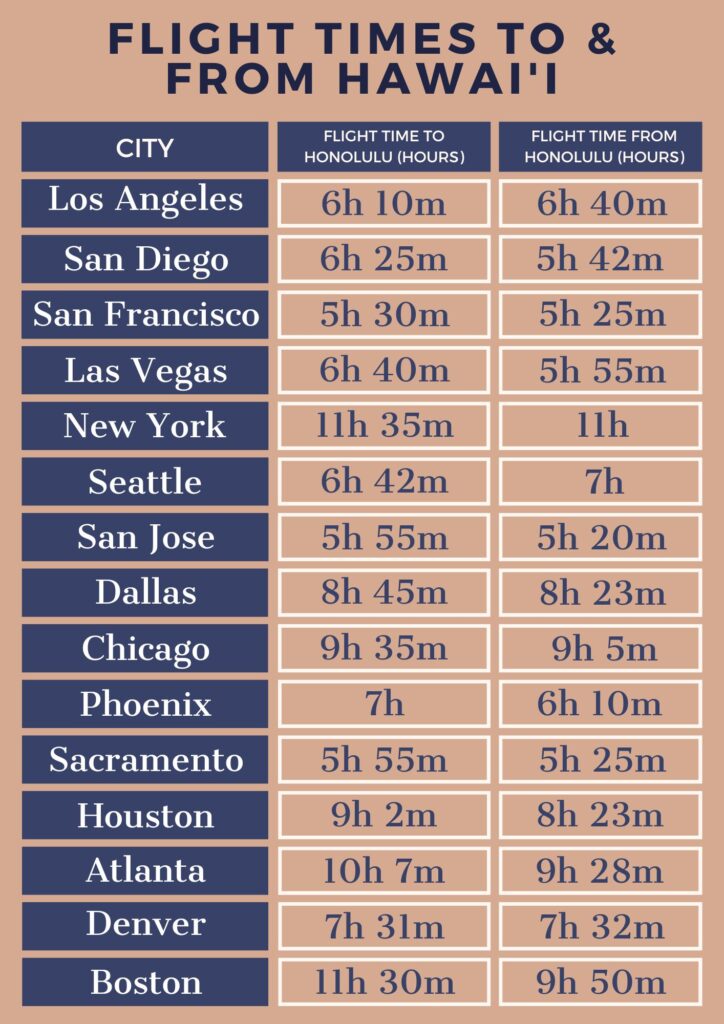
The total travel time for connecting flights typically ranges from 13 to 18 hours or more, depending heavily on the duration of your layover. A quick connection might keep you closer to the 13-hour mark, while longer layovers, especially overnight ones, can push the total travel time well beyond 20 hours. When booking, pay close attention to the layover duration to balance cost savings with your comfort and desire to reach your destination.
Strategic Planning for Multi-Leg Journeys
To make the most of a connecting flight, consider these tips:
- Optimize Layover Times: Aim for layovers between 1.5 to 3 hours. Too short, and you risk missing your connection; too long, and you’ll waste valuable vacation time.
- Check Gate Distances: If connecting in a large airport like LAX or SFO, ensure enough time to navigate between terminals, especially if your connecting flight is with a different airline.
- Baggage Transfer: Confirm with your airline that your luggage will be checked all the way through to your final Hawaiian destination to avoid the hassle of re-checking.
- Explore if Time Permits: For very long layovers, some travelers choose to leave the airport and briefly explore the layover city. Just ensure you have ample time, research transportation, and understand security re-entry procedures.
Factors Influencing Your Flight Time
Beyond the direct vs. connecting choice, several other variables can subtly, or significantly, alter the actual duration of your flight from New York to Hawaii. Being aware of these can help manage expectations and even influence your booking decisions.
Atmospheric Conditions and Aircraft Performance
- Jet Stream: This powerful, high-altitude air current flows predominantly west to east across the United States. Flights heading from New York to Hawaii (westbound) often fly against the jet stream, which can add 30-60 minutes or more to the flight time. Conversely, eastbound return flights benefit from tailwinds, making them noticeably shorter.
- Headwinds/Tailwinds: Even outside the core jet stream, prevailing winds at cruising altitude play a critical role. Strong headwinds will increase flight duration, while tailwinds will decrease it.
- Aircraft Type: Modern, fuel-efficient aircraft like the Boeing 787 Dreamliner or Airbus A330 are designed for long-haul routes and can often maintain higher cruising speeds, potentially shaving a few minutes off the journey compared to older models.
Air Traffic and Operational Efficiency
- Air Traffic Control (ATC) Delays: Busy airspace around major airports like JFK, EWR, and HNL, or even connecting hubs like LAX, can lead to ground delays, holding patterns, and longer taxi times, adding to the overall travel duration.
- Gate Availability: Upon arrival, especially at peak times, there might be delays in getting to an available gate, keeping passengers on the tarmac for an extended period.
- Route Optimization: Airlines constantly optimize flight paths to account for weather, turbulence, and air traffic, aiming for the most efficient route, which can slightly adjust the estimated flight time.
Seasonal Variations and Demand
- Peak Travel Seasons: During peak times (e.g., summer, holidays, spring break), airports are busier, potentially increasing the likelihood of delays. However, airlines may also schedule more direct flights or larger aircraft to accommodate demand, sometimes slightly altering flight dynamics.
- Weather Events: Severe weather in New York, Hawaii, or at connection points can cause significant delays or reroutes, impacting flight times dramatically. While rare for a transcontinental flight to be grounded for tropical storms in Hawaii directly, hurricane season in the Pacific can influence caution.
Mastering the Long-Haul Experience: Tips for Travelers
Regardless of whether you choose a direct or connecting flight, the journey from New York to Hawaii is a substantial commitment of time. Preparing for such a long-haul flight can significantly enhance your comfort and minimize the effects of travel fatigue.
Preparing for Comfort and Well-being
- Wear Comfortable Clothing: Opt for loose, breathable fabrics. Layers are also advisable as cabin temperatures can fluctuate.
- Hydrate: Drink plenty of water throughout your journey and avoid excessive alcohol or caffeine, which can contribute to dehydration.
- Move Around: Stand up, stretch, and walk the aisle periodically to promote circulation and prevent stiffness. Simple exercises in your seat can also help.
- Supportive Gear: A neck pillow, eye mask, and earplugs or noise-canceling headphones can be invaluable for resting and blocking out distractions.
- Snacks: While airlines offer meals, having your preferred healthy snacks on hand can be a lifesaver, especially if you have dietary restrictions or specific preferences.
Battling Jet Lag and Time Zone Shifts
Hawaii operates on Hawaii Standard Time (HST), which is typically 5-6 hours behind Eastern Standard Time (EST) in New York, depending on daylight saving time. This significant time difference can lead to noticeable jet lag.
- Adjust Before You Go: A few days before your trip, try to gradually shift your sleep schedule towards Hawaiian time.
- Set Your Watch: As soon as you board the plane, change your watch to Hawaiian time and try to adjust your activities accordingly (e.g., sleep when it’s night in Hawaii).
- Seek Sunlight: Upon arrival, expose yourself to natural light, especially in the morning. Sunlight helps regulate your circadian rhythm.
- Stay Active: Engage in light activities upon arrival rather than napping excessively, which can prolong the adjustment period.
Making the Most of Your Flight Time
A long flight presents an opportunity for various activities:
- Entertainment: Load up your devices with movies, TV shows, podcasts, audiobooks, or e-books. Most long-haul flights offer extensive in-flight entertainment systems.
- Work or Study: If you need to catch up on work or prepare for something, this uninterrupted time can be productive.
- Relaxation: Use the time to meditate, journal, or simply enjoy the quiet solitude.
- Planning: Finalize your Hawaii itinerary, research local attractions, or learn a few basic Hawaiian phrases.
Planning Your Ultimate Hawaiian Escape
Knowing the flight duration is just the first step in orchestrating a memorable trip to Hawaii. Strategic planning beyond the flight itself ensures a smooth and rewarding experience.
Best Times to Book and Travel
- Booking Flights: Aim to book your flight 3 to 6 months in advance for the best prices, especially if traveling during peak season. Flexibility with your travel dates can also yield significant savings. Tuesdays, Wednesdays, and Saturdays are often the cheapest days to fly.
- Travel Seasons:
- Peak Season (December-April & June-August): Higher prices, more crowded, but offers excellent weather and vibrant atmosphere. Flights will be fuller.
- Shoulder Season (April-May & September-November): Fewer crowds, pleasant weather, and potentially lower prices on flights and accommodation. This is often considered the sweet spot for many travelers.
Beyond the Main Flight: Inter-Island Hopping
If your Hawaiian adventure involves exploring more than just Oahu, you’ll need to factor in inter-island flights. Major airports for island hopping include HNL (Oahu), OGG (Maui), Kona International Airport (KOA) and Hilo International Airport (ITO) on the Big Island (Island of Hawaii), and Lihue Airport (LIH) on Kauai. These flights are typically short, ranging from 20 minutes to an hour, but you must account for check-in, security, and potential delays, adding 2-4 hours to each island transfer. Hawaiian Airlines, Southwest Airlines, and Mokulele Airlines are common carriers for inter-island travel.
In conclusion, a direct flight from New York to Hawaii will take approximately 10 to 11.5 hours, while connecting flights can extend your journey to 13-18 hours or more. Each option offers distinct advantages, catering to different travel preferences and budgets. By understanding these durations and implementing smart travel strategies, you can transform the long journey into an integral part of your unforgettable Hawaiian adventure, arriving refreshed and ready to immerse yourself in the beauty of the islands.
LifeOutOfTheBox is a participant in the Amazon Services LLC Associates Program, an affiliate advertising program designed to provide a means for sites to earn advertising fees by advertising and linking to Amazon.com. Amazon, the Amazon logo, AmazonSupply, and the AmazonSupply logo are trademarks of Amazon.com, Inc. or its affiliates. As an Amazon Associate we earn affiliate commissions from qualifying purchases.