
Embarking on a journey from the Great Lakes State to the Sunshine State is a popular travel choice for many, whether for a winter escape, a family vacation, or a business trip. Understanding the flight duration is a crucial part of planning your travel logistics. The length of a flight from Michigan to Florida is not a single, fixed number. It’s influenced by a variety of factors, including your departure city in Michigan, your arrival city in Florida, the specific airline, whether the flight is direct or has layovers, and prevailing wind conditions. Generally, direct flights are the most efficient, offering the shortest travel times.
Understanding Direct Flight Durations
Direct flights from Michigan to Florida offer the most streamlined travel experience, eliminating the need to disembark and re-board an aircraft. These flights are highly sought after for their convenience and time-saving benefits. The primary determinant of duration for direct flights is the distance between the two states. Given that Michigan is located in the Midwest and Florida stretches across the southeastern tip of the United States, the flight path generally covers a significant geographical expanse.
Major Departure and Arrival Hubs
The specific origin and destination airports play a significant role. For instance, departing from a major metropolitan area in Michigan like Detroit (DTW) or Grand Rapids (GRR) will generally offer more direct flight options to popular Florida destinations compared to smaller regional airports. Similarly, destinations in Florida such as Orlando (MCO), Miami (MIA), Tampa (TPA), and Fort Lauderdale (FLL) are major hubs with frequent flight schedules from Michigan.
Detroit to Orlando
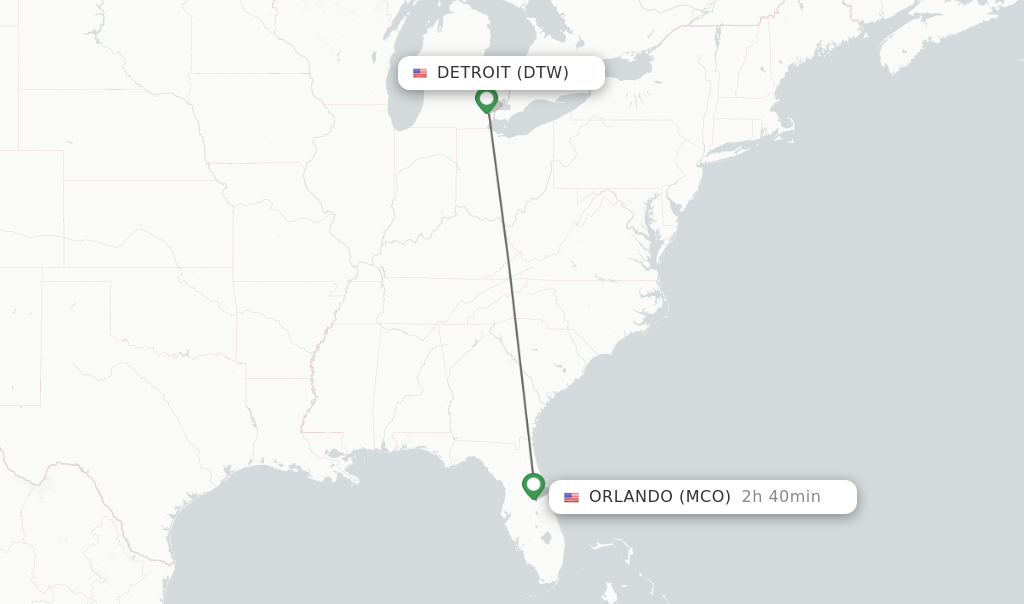
A common route is from Detroit Metropolitan Wayne County Airport (DTW) to Orlando International Airport (MCO). Direct flights on this route typically range from 2 hours and 30 minutes to 3 hours and 15 minutes. This timeframe accounts for the time spent taxiing on the runway, ascending to cruising altitude, the actual flight time in the air, and the descent and landing process. Airlines like Delta Air Lines, Spirit Airlines, and Frontier Airlines frequently operate this popular corridor.
Grand Rapids to Tampa
Another frequent path connects Gerald R. Ford International Airport (GRR) in Grand Rapids to Tampa International Airport (TPA). Direct flights on this route are generally a bit longer due to slightly different geographical positioning, often falling between 2 hours and 45 minutes and 3 hours and 30 minutes. American Airlines and United Airlines are among the carriers that may service this route, sometimes seasonally.
Impact of Aircraft Type and Air Traffic
While less of a variable for the average traveler to control, the type of aircraft used by an airline can subtly influence flight times. Larger, faster planes can cover distances more quickly. More significantly, air traffic control plays a crucial role. During peak travel seasons or in congested airspace, flights may experience delays on the tarmac or be required to fly at slightly reduced speeds to maintain safe separation from other aircraft. This can add a few minutes to the overall duration.
Navigating Flights with Layovers
Flights with layovers, also known as connecting flights, are common for travelers seeking potentially lower fares or when direct routes are unavailable. These flights significantly extend the total travel time. The duration of a connecting flight is not simply the sum of the flight segments; it includes the layover time at the connecting airport.
Factors Influencing Layover Duration
The length of a layover can vary dramatically. Short layovers might be as brief as 45 minutes, requiring a brisk walk to the next gate. Conversely, longer layovers can span several hours, offering opportunities to grab a meal or even explore a bit of the connecting city if time and visa regulations permit (though this is rare for domestic flights). The most significant factor in the total travel time for a connecting flight is the scheduled duration of the layover itself.
Example: Michigan to Fort Lauderdale via Atlanta

Consider a flight from Detroit (DTW) to Fort Lauderdale–Hollywood International Airport (FLL) with a layover in Atlanta Hartsfield-Jackson International Airport (ATL). A typical direct flight might be around 3 hours. However, a connecting flight with a 1.5-hour layover would result in a total travel time of approximately 4.5 hours, not including taxiing and boarding times for each segment. If the layover is longer, say 3 hours, the total travel time could easily reach 6 hours or more.
Choosing Between Direct and Connecting Flights
The decision between a direct and a connecting flight often comes down to a trade-off between cost and time. For many travelers, especially those with limited vacation time or who dislike the hassle of changing planes, the added cost of a direct flight is worthwhile. However, for budget-conscious travelers or those with flexible schedules, the savings offered by a connecting flight can be substantial. It’s always advisable to compare the total travel time, including the layover, with the fare when making your booking. Websites and apps dedicated to flight comparisons can be invaluable tools for this assessment.
The Influence of Meteorological Conditions
While modern aircraft are designed to operate safely in a wide range of weather conditions, severe weather can impact flight schedules and, consequently, flight times.
Tailwind and Headwinds
During flights, aircraft are subject to atmospheric currents. A tailwind pushes the aircraft from behind, increasing its ground speed and thus shortening the flight duration. Conversely, a headwind blows against the direction of travel, slowing the aircraft down and extending the flight time. The prevailing winds between Michigan and Florida are a significant factor, and their strength can vary. Pilots and air traffic control monitor these conditions closely to optimize flight paths and schedules. For instance, flights traveling south to Florida during certain seasons might benefit from prevailing tailwinds, while northbound flights could face headwinds.
Severe Weather Disruptions
More impactful than tailwinds and headwinds are major weather events. Thunderstorms, hurricanes, or winter storms can cause significant delays, diversions, or even cancellations. Flights from Michigan to Florida can be affected by severe weather in either departure or arrival regions, or even along the flight path. During hurricane season, which runs from June 1 to November 30 in the Atlantic, flights to southern Florida destinations like Miami or Fort Lauderdale may experience disruptions. Similarly, winter storms in Michigan can lead to ground stops and flight delays. Travelers are advised to stay updated on weather forecasts and airline advisories leading up to their departure.
Planning Your Travel Time Effectively
When planning your trip from Michigan to Florida, it’s essential to factor in more than just the scheduled flight duration. A comprehensive understanding of all components of the journey will lead to a more relaxed and enjoyable travel experience.
Pre-Flight Preparations
Arriving at the airport well in advance of your flight is crucial. For domestic flights, the recommended arrival time is typically two hours before departure. This buffer accounts for:
- Parking or Drop-off: Navigating airport traffic and finding parking or a drop-off point.
- Check-in and Bag Drop: If you haven’t checked in online or need to drop luggage.
- Security Screening: This can be a significant variable, with wait times fluctuating based on the time of day, day of the week, and passenger volume.
- Navigating the Terminal: Walking to your gate, which can be a considerable distance in larger airports like Detroit Metro or Orlando International.

Post-Flight Procedures
Upon arrival in Florida, your journey isn’t immediately over. Depending on your destination and onward travel plans, you will need to account for:
- Disembarking: The time it takes for the aircraft to reach the gate and for passengers to deplane.
- Baggage Claim: If you checked luggage, you’ll need to wait for it to be delivered to the carousel. This can range from 15 minutes to over an hour during busy periods.
- Ground Transportation: Arranging for a rental car, taxi, rideshare, or shuttle to your final destination. The time required for this varies greatly depending on the airport and the availability of services.
By adding these pre- and post-flight components to the scheduled flight duration, you can get a more realistic estimate of your total travel time. For a direct flight of, say, 3 hours, a realistic door-to-door travel time might be between 6 to 9 hours, depending on all the mentioned variables. This holistic view ensures you pack appropriately, manage expectations, and can fully enjoy your arrival in the vibrant landscape of Florida.
LifeOutOfTheBox is a participant in the Amazon Services LLC Associates Program, an affiliate advertising program designed to provide a means for sites to earn advertising fees by advertising and linking to Amazon.com. Amazon, the Amazon logo, AmazonSupply, and the AmazonSupply logo are trademarks of Amazon.com, Inc. or its affiliates. As an Amazon Associate we earn affiliate commissions from qualifying purchases.