
Texas, a state rich in history and a tapestry of diverse cultures, offers unique legal frameworks that can impact various aspects of life, including travel and accommodation decisions. While many travelers meticulously plan their itineraries and lodging, understanding the nuances of marital status within the state can be surprisingly relevant, especially for those considering extended stays or seeking to establish a more permanent residence. This is particularly true for understanding the implications of common law marriage, a legal status that Texas recognizes, and its duration.
Common law marriage, also known as informal marriage, in Texas does not have a specific time requirement to be established. Instead, it is defined by a set of criteria that, once met, immediately create a legally recognized marital union. This means that unlike some other jurisdictions that might require a couple to live together for a certain number of years to be considered married under common law, Texas law focuses on the intent and actions of the couple at a specific point in time. The absence of a predetermined duration is a crucial point of distinction and often a source of confusion for those unfamiliar with Texas statutes.

The core of establishing a common law marriage in Texas lies in meeting three specific elements simultaneously. These elements are not cumulative in the sense that one follows the other over time; rather, they must all be present at the same time for the marriage to be legally valid. This immediacy is a key aspect of understanding how long a common law marriage “is” in Texas – it is as soon as these conditions are met, not after a period of cohabitation.
The Three Pillars of Texas Common Law Marriage
To be recognized as married under Texas common law, a couple must satisfy three distinct yet interconnected conditions. The absence of even one of these elements means that a common law marriage has not been formed, regardless of how long the couple has lived together or how publicly they present themselves as married.
Agreement to Be Married
The first and perhaps most critical element is that the couple must have an express agreement or understanding to be married. This is not about assumptions or wishes; it requires a mutual, conscious decision to enter into a marital relationship. This agreement can be verbal or implied through actions, but it must be clear and unambiguous to both parties. For instance, a conversation where both individuals state they consider themselves married, or a mutual commitment to each other as husband and wife, would suffice.
This agreement is not a one-time declaration that can be forgotten and then revived. It must be an active, present understanding. If the couple decides to no longer be married, they must formally dissolve the marriage, just as they would a ceremonial marriage. The “how long” question again relates to the moment this agreement is cemented. If this agreement is made today, and the other elements are met, the common law marriage begins today.
Living Together in Texas
Following the agreement to be married, the couple must have lived together in Texas. This cohabitation is essential to demonstrate the couple’s intent and commitment to their marital status. It is not enough to merely agree to be married and then live separately. The physical act of residing together as a married couple solidifies the agreement. The duration of this cohabitation is not prescribed by law; even a short period of living together after agreeing to be married can be sufficient, provided all other elements are met.
The significance of “living together” in Texas cannot be overstated. Texas law requires the couple to hold themselves out as a married couple within the state’s borders. This element is crucial for proving the marriage’s existence, especially in legal disputes or when seeking benefits that require proof of marriage.
Holding Out to Others as Married
The third and final element is that the couple must represent themselves to others in Texas as being married. This is often referred to as “holding out.” This means that they present themselves to their friends, family, neighbors, and the community as husband and wife. This can be demonstrated through various actions, such as:
- Using the same last name.
- Referring to each other as “my husband” or “my wife” in public.
- Filing joint tax returns.
- Listing each other as spouses on insurance policies or other official documents.
- Introducing each other as their spouse at social or professional gatherings.
The “holding out” aspect is a public declaration of the private agreement and cohabitation. It provides external evidence that the couple considers themselves married. Again, there is no minimum duration for how long a couple must hold themselves out as married. The key is that this representation is made while the other two elements are also in effect.
Dispelling Myths About Common Law Marriage Duration
A common misconception regarding common law marriage in Texas is that it automatically becomes permanent after a certain number of years of cohabitation. This is fundamentally incorrect. The duration of a common law marriage in Texas is not determined by a ticking clock of cohabitation. Instead, the marriage exists as long as the three required elements are met. If at any point one of these elements ceases to exist, the common law marriage effectively ends, unless it is formally dissolved.
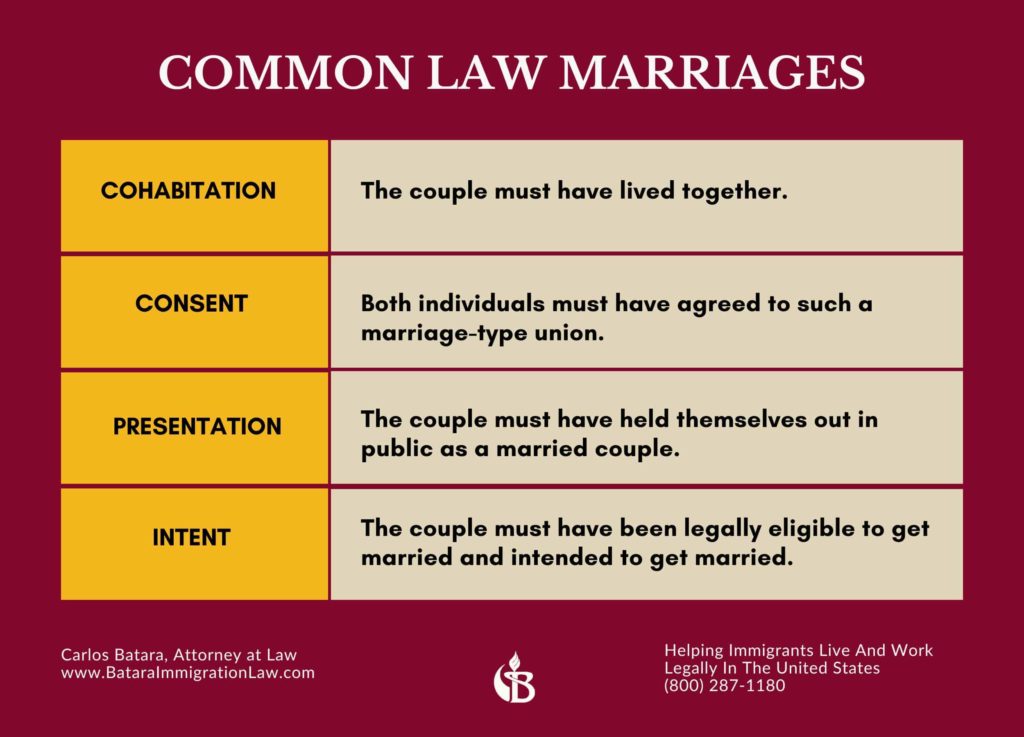
For example, if a couple agrees to be married, lives together in Texas, and holds themselves out as married for five years, they have a valid common law marriage. However, if after these five years, they stop introducing each other as husband and wife, and their intent to be married diminishes, the common law marriage may no longer be considered valid. This is why understanding the ongoing nature of these three elements is critical.
Similarly, if a couple has a valid common law marriage and then separates, but one party continues to hold themselves out as married to the other, this does not automatically extend the marriage. The holding out must be consensual and reflective of a genuine, ongoing marital intent by both parties.
The Importance of Proof
Given that common law marriages are not solemnized by a ceremony or a marriage license, proving their existence can sometimes be challenging, especially if one party denies the marriage or if there is a dispute over the fulfillment of the three elements. This is where the “how long” question can become complicated in practice. While the legal duration is tied to the presence of the elements, the practical proof of that duration can rely on documented evidence.
For travelers, this might seem like a distant legal concept. However, consider situations where a traveler might be on an extended stay in Texas, perhaps for work or personal reasons, and establishes a relationship that they believe constitutes a common law marriage. If they later decide to move to a different state or seek accommodation that requires proof of marital status, understanding the legal framework is essential. The lack of a formal document like a marriage certificate means that proof often relies on witness testimony, shared documents, and consistent behavior over a period.
Formalizing and Dissolving Common Law Marriages
Even though common law marriages in Texas are informal in their formation, they are just as legally binding as ceremonial marriages. This means that to end a common law marriage, a couple must go through a formal divorce process. They cannot simply decide to stop being married. This divorce process involves the same legal procedures, asset division, and child custody considerations as any other divorce.
How to Prove a Common Law Marriage
If a couple needs to prove their common law marriage, they can do so by providing evidence that demonstrates the fulfillment of the three elements. This evidence can include:
- Testimony: Statements from the couple themselves, and from friends, family, or colleagues who witnessed their agreement, cohabitation, and public representation as a married couple.
- Documents: Joint bank accounts, lease agreements, insurance policies listing each other as spouse, joint tax returns, and any written agreements or statements indicating an intent to be married.
- Public Records: Any official documents that might reflect their marital status, even if indirectly.
The duration of the marriage, in terms of how long these elements have been met, will be a key aspect of the evidence presented. A longer history of meeting the criteria generally makes the marriage easier to prove.
The “Informal Marriage” Declaration
Some couples who have met the requirements for a common law marriage may choose to formalize their status by filing a “Declaration and Registration of Informal Marriage” with the county clerk. This document serves as official proof of the marriage, similar to a marriage license. While not required for the marriage to be valid, it can simplify future legal and administrative processes, such as applying for benefits or updating identification. The existence of such a declaration further solidifies the timeline and proof of the marriage’s inception.

Implications for Extended Stays and Travel
For individuals planning extended stays in Texas, perhaps for a prolonged work assignment, a sabbatical, or to care for family, understanding common law marriage can be relevant. If a couple moves to Texas and intends to live there indefinitely as married individuals, they must be mindful of the three elements. If they meet them, they are legally married in Texas from that point forward, with no waiting period.
This legal status can have implications for various aspects of their stay, including:
- Accommodation: While most hotels in Texas do not inquire about marital status for standard stays, long-term rentals or apartment leases might require information on dependents or co-applicants, where marital status could be a factor. Establishing a common law marriage could impact how a couple applies for or is approved for certain long-term accommodation options.
- Legal Rights and Responsibilities: As legally married individuals, common law spouses in Texas have rights and responsibilities towards each other, such as inheritance rights, the ability to make medical decisions for each other, and joint liability for debts.
- Taxation: While less common for temporary stays, if the common law marriage is established and recognized, it could impact tax filing status if income is earned within Texas over a significant period.
- Travel to Other States: While Texas recognizes common law marriage, other states may not. If a couple from Texas with a common law marriage travels to a state that does not recognize this form of marriage, they might encounter complications regarding proof of their marital status, especially for situations where marital status is legally significant. However, under the U.S. Constitution’s Full Faith and Credit Clause, states are generally required to recognize valid marriages from other states, including common law marriages.
The question of “how long” a common law marriage is in Texas is thus a question of “how long have the elements been met.” It’s not a temporal limit but a condition of ongoing legal recognition. The immediate nature of its formation, once the three pillars are in place, is the most crucial takeaway. For travelers and those considering longer stays, awareness of this unique legal aspect of Texas ensures that personal and legal decisions are made with a comprehensive understanding of the state’s framework.
LifeOutOfTheBox is a participant in the Amazon Services LLC Associates Program, an affiliate advertising program designed to provide a means for sites to earn advertising fees by advertising and linking to Amazon.com. Amazon, the Amazon logo, AmazonSupply, and the AmazonSupply logo are trademarks of Amazon.com, Inc. or its affiliates. As an Amazon Associate we earn affiliate commissions from qualifying purchases.