
The Eisenhower Tunnel, an engineering marvel etched into the rugged fabric of the Rocky Mountains of Colorado, represents not merely a passage through rock but a monumental triumph of human ingenuity over nature’s formidable barriers. For countless travelers traversing Interstate 70 (I-70), it is a familiar and indispensable segment of their journey, a dark, cool embrace that swiftly transports them across the Continental Divide. While its presence is almost ubiquitous for those navigating the state’s central spine, the specifics of its impressive dimensions often remain a mystery, overshadowed by its sheer utility. Yet, understanding the precise length of this iconic landmark is to grasp a fraction of the immense challenge and dedication involved in its creation. It is a question that delves into the heart of its identity as one of the highest vehicular tunnels in the world and a critical artery for commerce, tourism, and daily life in the Western United States.
Answering the Core Question: Dimensions of a Mountain Passageway
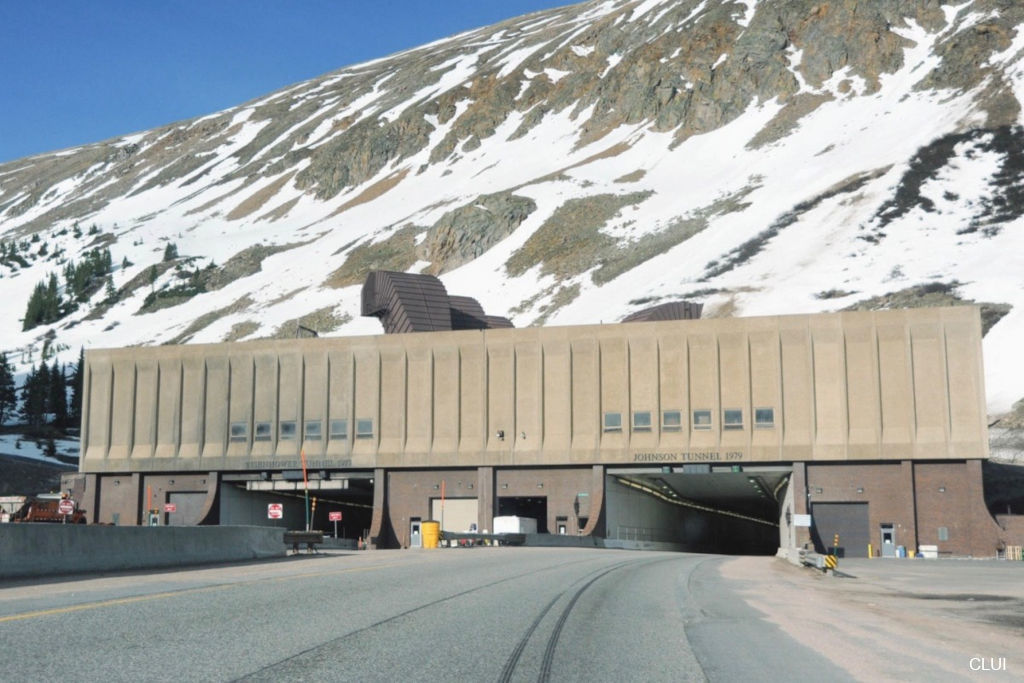
To answer the fundamental question of its length, one must consider that the Eisenhower Tunnel is not a single bore but a pair of twin tunnels, each carrying two lanes of traffic. Collectively known as the Eisenhower-Johnson Memorial Tunnel, these bores are the longest mountain tunnels in North America.
The Eisenhower Bore and Johnson Bore
The westbound bore, dedicated to former President Dwight D. Eisenhower, is officially known as the Eisenhower Memorial Bore. It measures 1.693 miles (2.724 kilometers) in length. Completed and opened to traffic in 1973, this bore was the first of the twin tunnels to facilitate easier passage through the formidable Rocky Mountains.
A decade later, in 1979, the eastbound bore was completed. This second tunnel is named the Edwin C. Johnson Memorial Bore, honoring Edwin C. Johnson, a former Colorado governor and U.S. senator who championed the tunnel’s construction. The Johnson Bore is slightly shorter than its counterpart, extending 1.697 miles (2.731 kilometers). The fractional difference in length is due to variations in the geological alignment and the precise points of entry and exit during construction.
When considering the entire complex, the combined length of these two bores effectively provides a seamless, high-speed conduit for over three miles of subterranean travel. Beyond their impressive lengths, these tunnels boast significant internal dimensions designed to accommodate heavy truck traffic and maintain safety. Each bore is approximately 48 feet wide and 28 feet high, providing ample space for two lanes of traffic, alongside necessary ventilation and emergency infrastructure. These dimensions are crucial for maintaining air quality and ensuring the structural integrity of a tunnel that daily withstands the immense pressure of a mountain overhead.
Navigating the Continental Divide
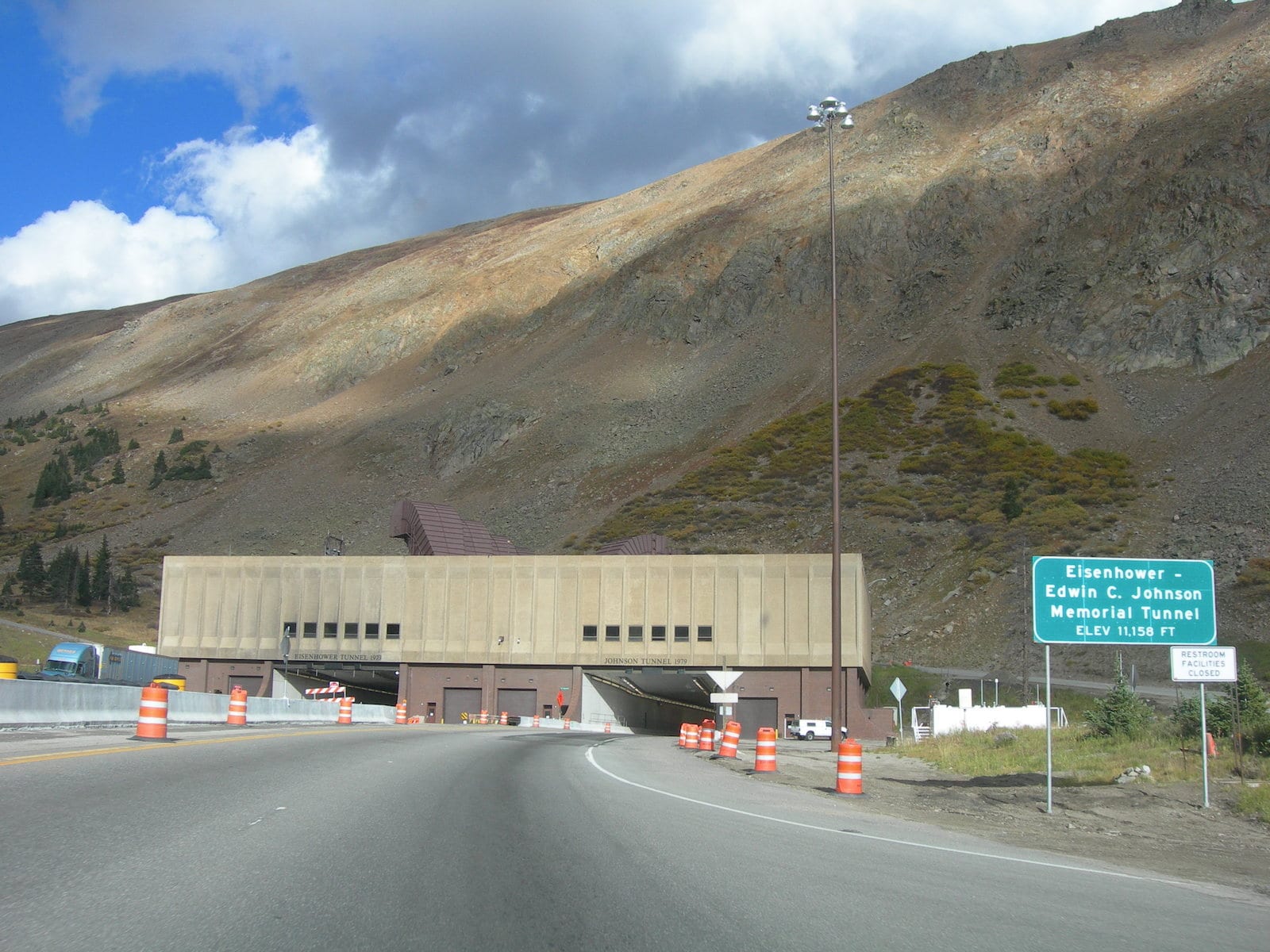
The Eisenhower-Johnson Memorial Tunnel pierces through the very heart of the Continental Divide at an astonishing elevation. The westbound entrance sits at 11,013 feet (3,357 meters) above sea level, while the eastbound entrance is slightly lower at 11,158 feet (3,401 meters). The highest point within the tunnel itself reaches 11,155 feet (3,400 meters), making it one of the highest vehicular tunnels in the world. This extreme altitude significantly complicated its construction, demanding specialized equipment and resilient workers capable of enduring thin air and harsh mountain conditions. The tunnel effectively eliminates the need to traverse the treacherous and often snow-choked Loveland Pass, a winding mountain road that climbs to 11,990 feet (3,655 meters). By offering a direct and protected route, the Eisenhower Tunnel has fundamentally reshaped travel patterns across Colorado’s High Country, making year-round access reliable and considerably safer, especially during the harsh Colorado winters.
A Feat of American Engineering: The History and Construction
The story of the Eisenhower Tunnel is a testament to human ambition and engineering prowess. It embodies the spirit of an era where monumental infrastructure projects reshaped the American landscape and facilitated unprecedented growth. Its construction was not merely about drilling through a mountain but overcoming a cascade of environmental, geological, and logistical challenges that pushed the boundaries of what was thought possible.
The Genesis of a Vision
Before the tunnel, traversing the Continental Divide via US Route 6 over Loveland Pass was a perilous and often impassable endeavor, especially during winter months. This winding, high-altitude road was prone to blizzards, avalanches, and rockslides, frequently closing and isolating Colorado’s Western Slope. As I-70 extended westward from Denver in the 1960s, a reliable, all-weather route across the Divide became an absolute necessity. The concept of a tunnel, initially dismissed as too expensive and difficult, gained traction as the only viable solution to connect the East and West halves of Colorado with a modern interstate highway. The vision was grand: a direct, safe, and efficient passage that would unlock economic potential and enhance accessibility to the state’s burgeoning ski industry and other mountain attractions.
Overcoming the Rockies: Construction Challenges
The construction of the Eisenhower Tunnel was fraught with unprecedented difficulties. The sheer altitude meant a shorter working season and reduced oxygen levels, impacting both machinery efficiency and worker health. Geologically, the Rockies proved to be an unpredictable adversary. Engineers encountered numerous fault lines, unstable rock formations, and massive water intrusions. Workers often drilled into pockets of water under immense pressure, leading to dangerous deluges and requiring innovative pumping and grouting techniques to stabilize the ground. Specialized boring machines and conventional drill-and-blast methods were employed simultaneously, often battling against persistent cold, high winds, and heavy snowfall that could isolate the worksites for days. Safety was a paramount concern, and despite meticulous planning, the challenging conditions led to several fatalities throughout the project, a stark reminder of the human cost of such ambition. The project required the continuous ingenuity of thousands of engineers, miners, and construction workers who braved these harsh conditions for nearly a decade.
Milestones and Dedications
The perseverance paid off. After five years of intensive drilling and construction, the Eisenhower Memorial Bore (westbound) opened to traffic on March 8, 1973. Its dedication marked a pivotal moment, instantly transforming travel across the Continental Divide. The success of the first bore spurred the completion of the second. The Edwin C. Johnson Memorial Bore (eastbound) followed six years later, opening on December 21, 1979. This two-phase approach allowed for continuous traffic flow in one direction while construction proceeded on the other bore, a crucial logistical decision. The naming of the bores serves as a permanent tribute: the Eisenhower Bore commemorates the president whose vision brought the interstate highway system into existence, while the Johnson Bore honors the Colorado statesman who relentlessly advocated for the tunnel’s construction. Together, they form a unified landmark, a testament to American engineering and political will.
Significance as a Vital Landmark and Lifeline
Far more than just a hole in a mountain, the Eisenhower Tunnel stands as a vital landmark, a functional monument to progress that has profoundly impacted Colorado and the broader Western United States. Its presence reshaped geography and logistics, intertwining its fate with the region’s economic and cultural development.
Transforming Trans-Mountain Travel
The most immediate and profound impact of the Eisenhower Tunnel was the revolution it brought to trans-mountain travel. The reduction in travel time and the dramatic increase in safety were unparalleled. What once was a lengthy, dangerous, and weather-dependent drive over Loveland Pass became a swift, predictable journey. This reliability has been crucial for commercial trucking, ensuring that goods can flow freely between Colorado’s Front Range and the western parts of the state and beyond, even in the harshest winter conditions. For the millions of tourists who flock to Colorado’s ski resorts and national parks annually, the tunnel is an indispensable gateway, saving hours of driving and mitigating the risks associated with high-altitude mountain passes. It effectively extended the tourist season and bolstered the economic viability of numerous mountain communities.
Architectural and Functional Design
Beyond its physical dimensions and historical narrative, the Eisenhower Tunnel is an exemplar of functional architecture and infrastructure design. Its construction incorporated advanced safety features that continue to be updated and maintained. Massive ventilation systems, housed in iconic structures at each portal, continuously cycle fresh air through the bores, expelling vehicle exhaust. Sophisticated lighting systems ensure visibility, while emergency pull-offs, fire suppression equipment, and communication systems are strategically placed to handle incidents. The very design of the tunnel, with its durable concrete lining and drainage systems, is a testament to meticulous planning aimed at resisting the relentless forces of geology and climate. As a landmark, it may not boast ornate facades, but its beauty lies in its sheer functionality and the elegant solution it provides to a daunting natural obstacle. It stands as a symbol of human capability, enduring and serving for generations.
Gateway to Colorado’s High Country
The Eisenhower Tunnel is more than just a passage; it is the definitive gateway to Colorado’s High Country. Emerging from its eastern portal, travelers are immediately immersed in the breathtaking grandeur of the Rocky Mountains, with ski resorts like Vail, Breckenridge, Copper Mountain, and Winter Park just a short drive away. It unlocks access to national forests, pristine wilderness areas, and a myriad of outdoor recreational opportunities, from hiking and camping in summer to world-class skiing in winter. Without the reliable passage offered by the tunnel, much of this accessibility would be severely curtailed, impacting not only recreation but also the livelihoods of communities built around these attractions. The tunnel is thus inextricably linked to the very identity of Colorado as a premier mountain destination.
The Eisenhower Tunnel Experience Today
Driving through the Eisenhower Tunnel is an experience in itself, a momentary passage from daylight into a man-made subterranean world, a brief interlude before re-emerging into the vast expanse of the Rocky Mountains.
Driving Through the Tunnel
As you approach the tunnel portals, often nestled amidst towering peaks and dense pine forests, there’s a distinct anticipation. Entering the bore, the sudden shift from natural light to the controlled illumination of the tunnel is palpable. The roar of tires on asphalt echoes against the concrete walls, a distinct sensory experience that signals a journey deep beneath the earth. For approximately two miles, depending on the bore, drivers are enveloped in this man-made cavern. Despite the immense pressures of the mountain above, the tunnel feels remarkably stable and well-maintained. Digital message boards provide real-time information, while the rhythmic glow of the internal lights guides the way. During peak seasons, particularly winter weekends when thousands flock to the ski resorts, traffic can slow to a crawl, turning the swift passage into a more contemplative crawl, offering a longer opportunity to reflect on the engineering marvel surrounding you. Even in congestion, the tunnel provides an unyielding, safe passage that stands in stark contrast to the dangerous alternative it replaced.
Beyond the Tunnel: The Journey Continues
Emerging from the Eisenhower Tunnel is like stepping into a different world. On the westbound side, the landscape immediately opens up to the expansive valleys that lead to ski towns and adventure hubs. The contrast between the confined tunnel and the sweeping vistas of the Rockies is striking. The sense of achievement, of having successfully traversed the formidable Continental Divide, is subtle but present. For many, the tunnel marks a symbolic crossing, signifying the start or end of their mountain adventure. It is a transition point, a brief but essential pause in the journey that defines much of Colorado’s travel experience.
In conclusion, the Eisenhower Tunnel, with its impressive individual bore lengths of approximately 1.7 miles, is far more than just a measure of distance. It is a landmark of monumental proportions, a living testament to human ingenuity and perseverance. It stands as a vital artery, a marvel of engineering, and a timeless symbol of how vision and determination can conquer even the most daunting natural barriers, forever shaping the landscape and lives of those who pass through it.
LifeOutOfTheBox is a participant in the Amazon Services LLC Associates Program, an affiliate advertising program designed to provide a means for sites to earn advertising fees by advertising and linking to Amazon.com. Amazon, the Amazon logo, AmazonSupply, and the AmazonSupply logo are trademarks of Amazon.com, Inc. or its affiliates. As an Amazon Associate we earn affiliate commissions from qualifying purchases.