
Embarking on a journey from the bustling metropolis of New York to the vibrant landscapes of Thailand is a dream for many, promising exotic experiences, rich culture, and unparalleled hospitality. However, one of the most practical considerations for any traveler planning this transcontinental adventure is the duration of the flight. Understanding the flight time is crucial for planning your itinerary, packing appropriately, and mentally preparing for the long haul.
Understanding Flight Duration Dynamics
The flight duration from New York to Thailand is not a fixed number. It is influenced by a complex interplay of factors, primarily revolving around the presence or absence of layovers, the specific routes taken by airlines, and prevailing atmospheric conditions. While direct flights are the shortest, they are a rarity for this particular route due to the immense distance.
The Impact of Layovers
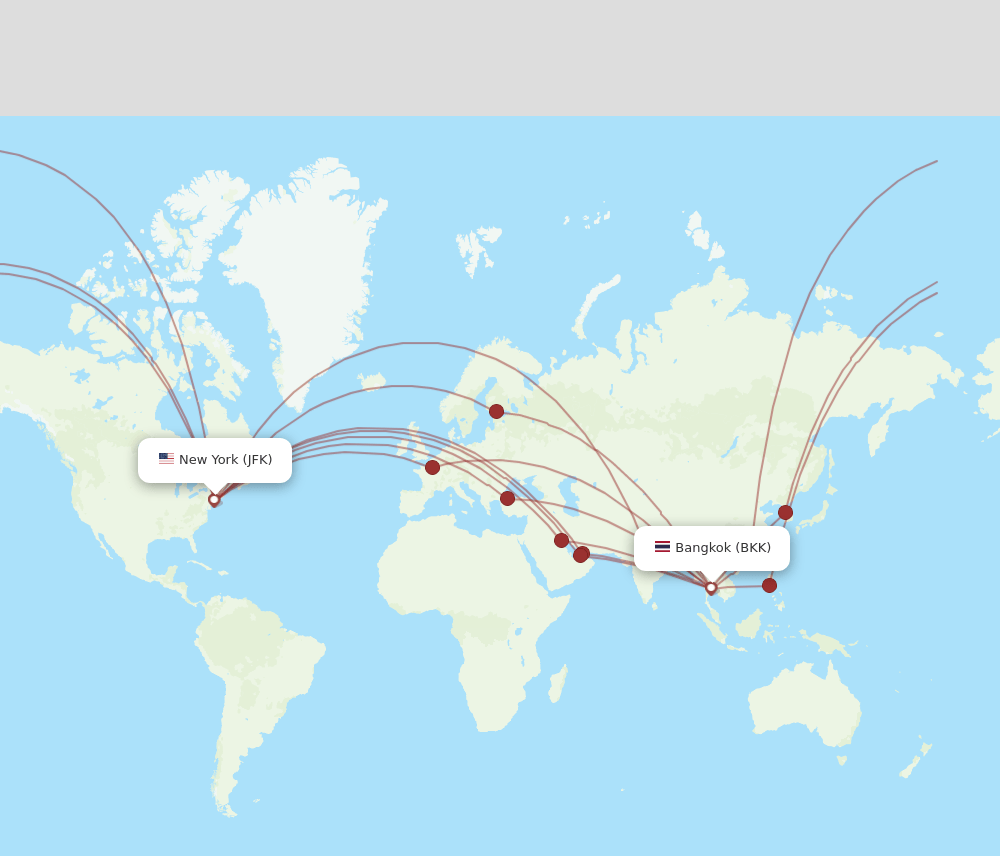
The most significant variable affecting flight time is the inclusion of layovers. Most flights from New York to Thailand involve at least one stopover, and often two. These stops are strategically placed in major international hubs that facilitate connections between North America and Southeast Asia. Common layover cities include:
- Doha: Qatar Airways frequently uses its hub at Hamad International Airport for connecting flights.
- Dubai: Emirates offers extensive connections through Dubai International Airport.
- Abu Dhabi: Etihad Airways provides another popular transit option.
- Istanbul: Turkish Airlines leverages its strategic location to connect flights across continents.
- European Cities: Some routes may involve stops in major European hubs such as Amsterdam, London, or Frankfurt, often operated by airlines like KLM, British Airways, or Lufthansa.
The duration of these layovers can vary dramatically, from a brief 1-2 hours to extended periods of 8-12 hours or even longer if you opt for a multi-city itinerary. Each stop adds to the total travel time, accumulating the hours spent on the ground in addition to the actual flight segments.
Direct vs. Indirect Flights
Direct flights from New York to Thailand are exceptionally rare, if available at all, due to the sheer distance involved (approximately 14,000-15,000 kilometers or 8,700-9,300 miles). If such a flight were to exist, it would likely be operated by a very specialized carrier with a large, long-range aircraft, and it would be a premium, often very expensive, option. The flight time for a hypothetical direct flight would hover around the 16-18 hour mark.
Indirect flights, which are the norm, are categorized by the number of layovers:
- One-Stop Flights: These are the most time-efficient indirect options. They typically involve a single stop in a major international hub. The total travel time, including a reasonable layover (e.g., 2-4 hours), can range from 20 to 24 hours.
- Two-Stop Flights: These flights are more common and can sometimes be more affordable. However, they significantly increase the total travel time. With two layovers, the journey can easily stretch to 25 to 30 hours, sometimes even exceeding 35 hours depending on the length of each stop.
Route and Airline Variations
Airlines optimize their routes based on factors such as air traffic control regulations, jet stream patterns, and operational efficiency. For instance, flying eastward from New York generally utilizes the jet stream, which can shorten flight times. However, the specific path taken by an aircraft can vary day by day.
Major airlines serving this route, such as Qatar Airways, Emirates, Etihad Airways, Turkish Airlines, Singapore Airlines, Cathay Pacific, and Korean Air, all have different network structures and fleet compositions, leading to variations in flight durations. Some may favor shorter layovers in their primary hubs, while others might have longer, more structured layovers.
Typical Flight Durations to Major Thai Cities
Thailand is a sizable country with multiple international airports, the most prominent being Suvarnabhumi Airport (BKK) in Bangkok and Phuket International Airport (HKT). The duration of your flight will ultimately depend on your final destination within Thailand, although the intercontinental flight time from New York to the region is the primary determinant.
Flights to Bangkok (BKK)
As the primary gateway to Thailand, Bangkok receives the most international flights.
- One-Stop Flights to Bangkok: Expect a total travel time ranging from 20 to 24 hours. This includes approximately 16-19 hours of actual flying time and a layover of 2-5 hours.
- Two-Stop Flights to Bangkok: These can range from 25 to 30 hours, potentially longer depending on the layover durations.

Flights to Phuket (HKT)
For travelers heading directly to the popular island destination of Phuket, the flight path often involves a layover in Bangkok or an alternative international hub followed by a domestic or regional connection to Phuket.
- Flights with a layover in Bangkok: The initial journey from New York to Bangkok will take the times mentioned above. Add to that the time for disembarking, potentially changing terminals, and the subsequent flight to Phuket (approximately 1.5 hours), plus the layover time. Total travel time can easily be 24 to 32 hours.
- Direct Flights to Phuket from International Hubs: Some airlines might offer connections through hubs like Singapore or Hong Kong with a direct flight to Phuket. The overall duration will still be comparable, in the 22-30 hour range, heavily dependent on the layover.
Factors Affecting Real-Time Flight Durations
While averages provide a good baseline, several dynamic factors can influence the actual time spent in the air and in transit:
Jet Streams and Weather
The upper-level jet streams are powerful air currents that can significantly impact flight times. Flying eastward, as is the case from New York to Thailand, often benefits from the prevailing westerly jet stream, pushing the aircraft along and reducing flight time. Conversely, unfavorable winds or severe weather systems can necessitate flight path adjustments, leading to longer durations. Airlines constantly monitor these conditions to optimize routes.
Air Traffic Control and Congestion
Busy airspace, especially around major international airports, can lead to delays. Holding patterns, taxiing times, and runway availability are all managed by air traffic control. During peak travel seasons or in areas with high air traffic density, these factors can add to the overall travel time.
Aircraft Type and Speed
While most long-haul flights utilize wide-body aircraft designed for efficiency and comfort, the specific model and its cruising speed can subtly influence flight duration. Modern aircraft are generally faster and more fuel-efficient, but the difference for a journey of this magnitude is typically marginal compared to the impact of layovers.
Time Zones and Jet Lag
It is important to remember that while your flight might take 22 hours, you will be crossing multiple time zones. New York is typically 12 hours behind Bangkok. This time difference is a crucial factor when planning your arrival and the immediate impact of jet lag, rather than the flight duration itself. For example, departing New York on a Monday evening and arriving in Bangkok on a Wednesday morning, despite a flight time of around 22 hours, is a testament to the time zone difference.
Maximizing Comfort on Long Flights
Given the extended duration of flights from New York to Thailand, prioritizing comfort is paramount for a positive travel experience.
Choosing the Right Flight
When booking, pay close attention to the layover duration and location. A layover of 2-4 hours is generally ideal for a smooth transition. Longer layovers can be an opportunity to explore an airport city briefly or to rest, but they significantly extend the total travel time. Consider the airline’s reputation for service and in-flight amenities.

In-Flight Essentials
- Comfortable Clothing: Opt for loose-fitting, breathable clothing. Layers are essential as cabin temperatures can fluctuate.
- Neck Pillow and Eye Mask: Crucial for getting some sleep.
- Entertainment: Download movies, music, or podcasts beforehand, as in-flight entertainment systems can be basic.
- Hydration: Drink plenty of water. Avoid excessive alcohol and caffeine, which can dehydrate you.
- Snacks: Bring your own non-perishable snacks, as airline meals may not always suit your preferences or dietary needs.
- Toiletries: A small kit with essentials like a toothbrush, toothpaste, face wipes, and moisturizer can make a big difference.
- Compression Socks: Highly recommended for long flights to improve circulation and reduce the risk of deep vein thrombosis.
By understanding the nuances of flight durations and preparing accordingly, your journey from New York to the captivating wonders of Thailand can be as smooth and enjoyable as the destination itself.
LifeOutOfTheBox is a participant in the Amazon Services LLC Associates Program, an affiliate advertising program designed to provide a means for sites to earn advertising fees by advertising and linking to Amazon.com. Amazon, the Amazon logo, AmazonSupply, and the AmazonSupply logo are trademarks of Amazon.com, Inc. or its affiliates. As an Amazon Associate we earn affiliate commissions from qualifying purchases.