
Embarking on a journey from the sunshine state of Florida to the pristine beaches of Hawaii is a dream for many travelers, connecting two vibrant corners of the United States. However, the vast expanse of the continent and the Pacific Ocean separating these picturesque destinations means that such a trip is a significant undertaking in terms of travel time. Understanding the intricacies of this long-haul flight is crucial for meticulous planning, ensuring a smooth and enjoyable transition from one paradise to another. This guide delves into the various factors that determine flight duration, offering insights into what travelers can expect when making the transcontinental leap to the Aloha State.

The Transcontinental Odyssey: Understanding the Geographical Divide
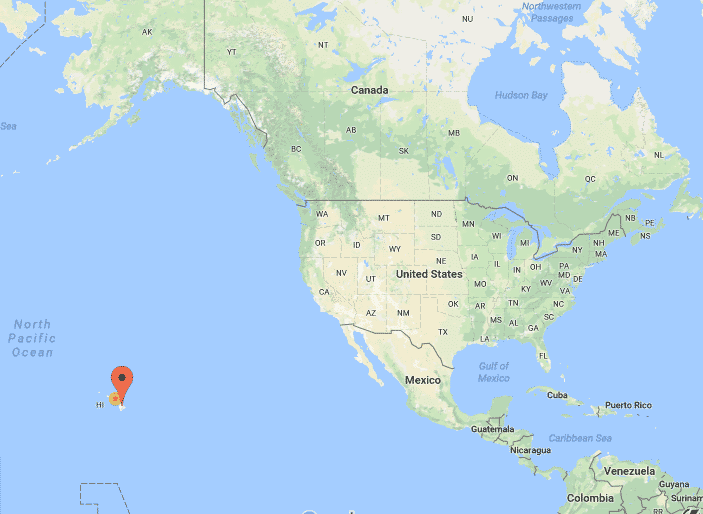
The geographical separation between Florida and Hawaii is immense, spanning thousands of miles across the North American continent and the vast Pacific Ocean. Florida, situated on the southeastern tip of the contiguous United States, is approximately 4,800 to 5,000 miles (about 7,700 to 8,000 kilometers) away from Hawaii as the crow flies, depending on the specific cities of departure and arrival. This considerable distance makes it one of the longest domestic flights within the United States, necessitating a multi-leg journey for the vast majority of travelers.
Unlike many shorter domestic routes, a direct, non-stop flight from any Florida airport to Hawaii is exceptionally rare, if it exists at all on a regular commercial schedule. The logistical challenges, fuel requirements, and economic viability typically steer airlines towards connecting flights through major hubs in the western United States. This means that any flight plan will involve at least one stop, effectively breaking the journey into two distinct segments: the cross-country flight to the West Coast, followed by the transatlantic leg to the Hawaiian islands. Consequently, understanding this fundamental travel structure is the first step in accurately estimating total travel time.
Deconstructing Flight Duration: Key Influencing Factors
Calculating the precise duration of a flight from Florida to Hawaii involves more than just geographical distance. Several variables come into play, each significantly impacting the total time spent from departure gate to arrival in paradise.
Direct vs. Connecting Flights and Layover Impact
As established, direct flights from Florida to Hawaii are virtually nonexistent. Therefore, the flight will always involve at least one connection. The number of stops, and critically, the duration of each layover, are the primary determinants of total travel time. A single, well-timed layover of 1.5 to 3 hours will add considerably less time than a longer, multi-stop itinerary or one with an extended layover of 5+ hours, or even an overnight stay.
Common connecting cities for flights to Hawaii from the East Coast include major hubs on the West Coast such as Los Angeles (LAX), San Francisco (SFO), Seattle (SEA), and Phoenix (PHX). Some flights might also connect through central United States hubs like Dallas/Fort Worth (DFW), Houston (IAH), or Denver (DEN) before heading West for the final leg. Each connection adds not only the layover time but also the time for taxiing, deplaning, re-boarding, and potential gate changes.
Aircraft Type and Route Efficiency
While less significant than layovers, the type of aircraft can subtly influence flight duration. Modern commercial jets generally cruise at similar speeds, but advancements in engine efficiency and aerodynamics can shave off small amounts of time over such vast distances. The specific flight path taken, influenced by air traffic control directives and weather systems, also plays a role. Airlines aim for the most fuel-efficient and timely routes, but deviations can occur.
The Role of Wind and Atmospheric Conditions
Cross-country and transatlantic flights are particularly susceptible to the effects of the jet stream. Traveling eastbound from Hawaii to Florida often benefits from strong tailwinds, shortening the flight time. Conversely, westbound flights from the mainland to Hawaii typically encounter headwinds, which can extend the flying duration by 30 minutes to an hour, or even more, on the longer Pacific Ocean leg. These meteorological phenomena are factored into flight planning but can still cause real-time variations.
Air Traffic Control and Operational Delays
Like any air travel, flights to Hawaii are subject to various operational delays. These can include air traffic control restrictions, gate availability, mechanical issues, or weather impacts at either the departure, connection, or arrival airports. While airlines build in buffers to their schedules, unexpected delays can always extend total travel time.
Typical Flight Times from Major Florida Cities to Hawaii
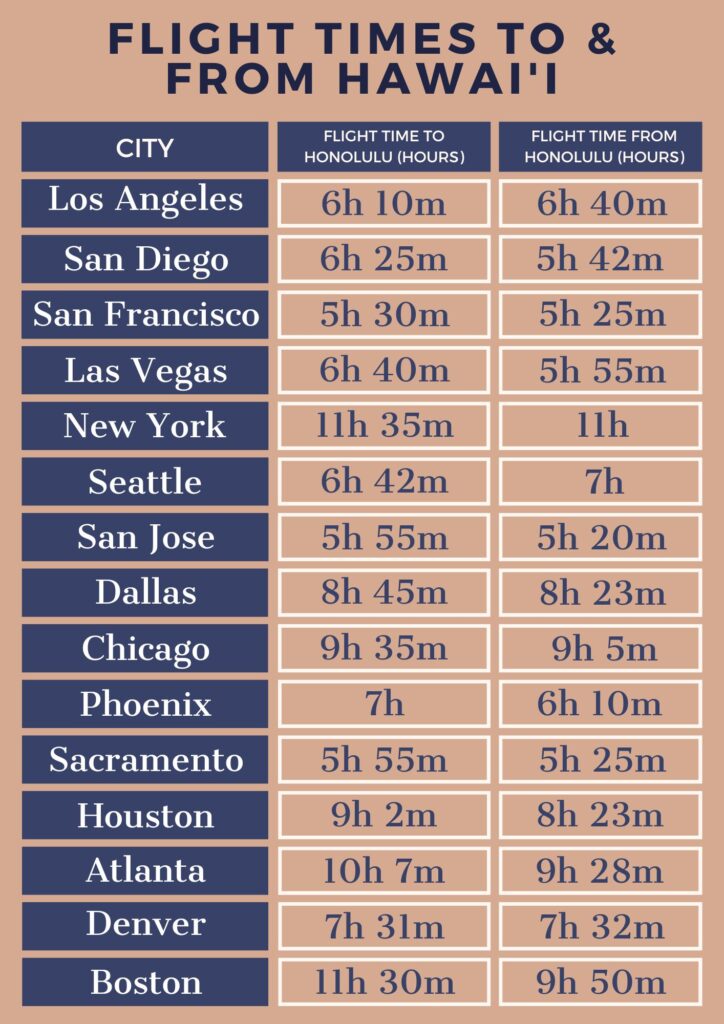
Given the connecting nature of these flights, it’s more accurate to think in terms of total travel time, encompassing both flying segments and layovers. Most flights from Florida will aim for Honolulu (Daniel K. Inouye International Airport, HNL) on Oahu, as it is the primary gateway to the Hawaiian islands. Flights to other islands like Maui (Kahului Airport, OGG), Kauai (Lihue Airport, LIH), or Big Island (Kona International Airport, KOA) may require an additional inter-island connection or have slightly different mainline connection patterns.
From South and Central Florida Hubs
Travelers departing from major Florida airports such as Orlando International Airport (MCO), Miami International Airport (MIA), or Fort Lauderdale-Hollywood International Airport (FLL) can expect the following:
- First Leg (Florida to West Coast Hub): This segment typically ranges from 4.5 to 6 hours of flying time, depending on the specific Florida city and West Coast connection point (e.g., Los Angeles, San Francisco).
- Layover: A standard layover can be anywhere from 1.5 to 4 hours.
- Second Leg (West Coast Hub to Honolulu): This segment is a significant journey over the Pacific Ocean, usually lasting between 5.5 to 6.5 hours of flying time.
Total Travel Time (1-Stop): Combining these segments, the total door-to-door travel time from Florida to Honolulu with a single, efficient connection generally falls in the range of 11 to 15 hours. This estimate includes taxiing, boarding, actual flight time, and a reasonable layover. For flights with longer layovers or more than one stop, the total travel time can easily extend to 16-20+ hours.
From North Florida Airports
For travelers starting from Tampa International Airport (TPA) or Jacksonville International Airport (JAX), the overall flight patterns and durations are very similar to those from South and Central Florida. The initial leg to a West Coast hub might be marginally longer, but the difference in total travel time is usually negligible. Therefore, the 11 to 15-hour range remains a reliable expectation for a 1-stop journey.
It’s important for travelers to scrutinize flight itineraries when booking, paying close attention to both the flying time and the layover duration, as the latter can drastically alter the overall experience. An early morning departure from Florida is often recommended to arrive in Hawaii in the late afternoon or early evening, allowing for some adjustment before the first full day.
Enhancing the Long-Haul Travel Experience
A lengthy flight from Florida to Hawaii can be taxing, but strategic planning and preparation can significantly improve comfort and enjoyment.
Strategic Flight Selection
When booking, consider more than just the lowest price. Evaluate the total travel time, looking for flights with optimal layover durations—not too short to risk missing a connection, and not so long that it becomes tedious. Some travelers prefer an overnight layover in a West Coast city to break up the journey and minimize jet lag upon arrival in Hawaii. Also, research the aircraft type and airline; some offer superior in-flight entertainment, more legroom (especially in premium economy or first class), and better service, which can make a world of difference on a 12+ hour journey.
In-Flight Comfort and Wellness
Prioritize comfort during the flight segments. Dress in loose, comfortable clothing and wear layers, as cabin temperatures can vary. Hydration is key; drink plenty of water and limit caffeine and alcohol. Regular movement, even just stretching in your seat or taking short walks up the aisle, can help prevent stiffness and improve circulation. Noise-canceling headphones, a good neck pillow, and an eye mask are invaluable for rest. Pack entertainment like books, downloaded movies, or podcasts to pass the time.
Managing Jet Lag
The time difference between Florida and Hawaii is substantial—5 hours during Eastern Standard Time and 6 hours during Eastern Daylight Time (as Hawaii does not observe daylight saving). This significant shift almost guarantees some level of jet lag. To mitigate its effects:
- Adjust Before Departure: Gradually shift your sleep schedule closer to Hawaii time in the days leading up to your trip.
- Onboard Adjustment: Set your watch to Hawaii time as soon as you board your first flight and try to sleep and eat according to the new schedule.
- Upon Arrival: Get some natural light exposure in the morning and early afternoon, and try to stay awake until a reasonable bedtime in Hawaii to reset your circadian rhythm quickly. Avoid heavy meals and excessive napping.
Packing Smart for the Journey
Your carry-on bag should be an arsenal of comfort and convenience. Include essential medications, toiletries for refreshing yourself during layovers, a portable charger for electronics, and any items that make you feel more at home. A change of clothes can be a lifesaver in case of lost luggage or a spilled drink.
The Reward: Hawaii’s Unforgettable Embrace
While the journey from Florida to [Hawaii](https://lifeoutofthebox.com/hawaii] is undeniably long, the destination more than justifies the effort. Upon arrival, travelers are greeted by the unparalleled natural beauty of the Hawaiian islands, from the vibrant surf of Waikiki Beach on Oahu to the volcanic landscapes of Maui and the dramatic cliffs of Kauai. The distinct Hawaiian culture, rich in tradition, hospitality, and a relaxed pace of life, offers a unique and enriching experience. The endless opportunities for adventure, relaxation, and cultural immersion make the lengthy flight a small price to pay for the memories that await in this truly extraordinary travel destination. With careful planning and a mindset geared for the journey, the transition from one paradise to another can be as smooth and comfortable as possible.
LifeOutOfTheBox is a participant in the Amazon Services LLC Associates Program, an affiliate advertising program designed to provide a means for sites to earn advertising fees by advertising and linking to Amazon.com. Amazon, the Amazon logo, AmazonSupply, and the AmazonSupply logo are trademarks of Amazon.com, Inc. or its affiliates. As an Amazon Associate we earn affiliate commissions from qualifying purchases.