
The San Francisco-Oakland Bay Bridge, often simply called the Bay Bridge, is one of the United States’ most iconic and vital transportation arteries. Stretching across the magnificent San Francisco Bay, it serves as a critical link between the vibrant city of San Francisco on the west and Oakland and the wider East Bay region of California to the east. More than just a pathway for vehicles, this engineering marvel is a symbol of innovation, resilience, and the relentless spirit of human endeavor. Its imposing structure, especially when illuminated at night, offers breathtaking vistas and has become an indispensable part of the Bay Area’s identity and a prime landmark for tourism.
But beyond its aesthetic appeal and functional significance, a common question often arises among visitors and residents alike: exactly how long is the San Francisco-Oakland Bay Bridge? The answer, while seemingly straightforward, is a testament to the bridge’s complex design and its fascinating history, comprising multiple distinct sections, each with its own unique engineering challenges and triumphs.
The total length of the San Francisco-Oakland Bay Bridge system, including its approaches, measures approximately 8.4 miles (13.5 kilometers). However, this impressive figure encompasses various segments, each playing a crucial role in the bridge’s overall structure and functionality. To truly appreciate its scale, one must delve into its constituent parts, understanding how the west span, the island crossing, and the east span come together to form this monumental connection across the bay. From its towering suspension cables to its modern, single-tower self-anchored suspension bridge design, the Bay Bridge is not just a bridge; it’s an intricate network of civil engineering ingenuity that has shaped the lifestyle and travel patterns of millions for decades. For anyone planning a trip to the Golden State, understanding the bridge’s magnitude adds another layer to the appreciation of its grandeur.

The Engineering Marvel: Deconstructing the San Francisco-Oakland Bay Bridge’s Dimensions
The true measure of the Bay Bridge’s length lies in understanding its bifurcated nature, bisected by Yerba Buena Island. This island acts as a natural midpoint, separating the bridge into two primary sections: the West Span, which connects San Francisco to the island, and the East Span, which extends from the island to Oakland. Each span presented unique engineering challenges and features distinct structural designs, making the Bay Bridge a living museum of bridge-building history and modern architecture.
A Tale of Two Spans: West Span to Yerba Buena Island
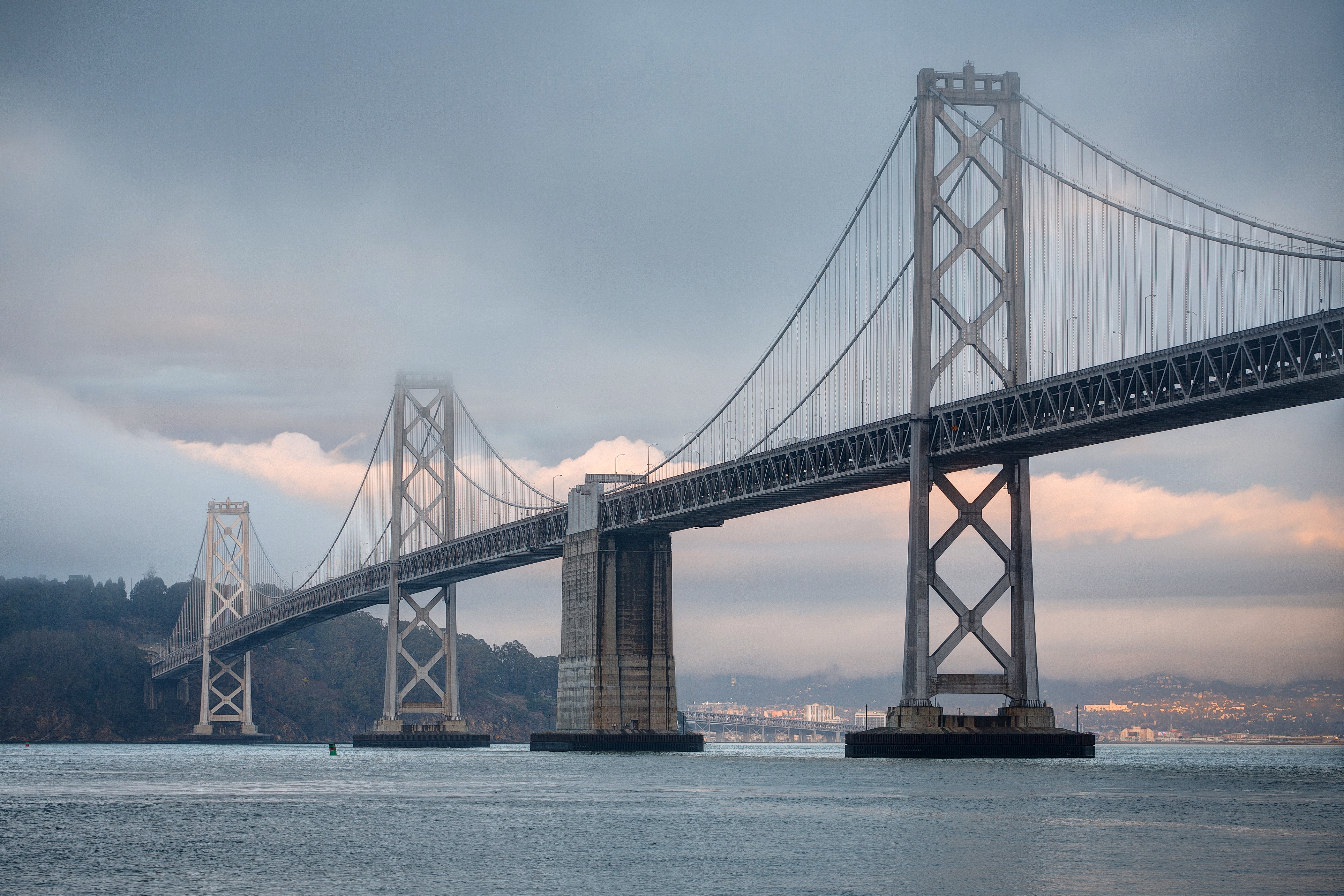
The West Span of the San Francisco-Oakland Bay Bridge is the section most commonly associated with classic suspension bridge aesthetics, connecting downtown San Francisco with Yerba Buena Island. This segment is remarkable for its twin suspension bridge design, a rarity in bridge architecture. Instead of one long suspension bridge, the West Span consists of two complete suspension bridges connected end-to-end by a massive central anchorage. This design was necessitated by the deep waters and challenging geological conditions of the San Francisco Bay in this area.
- Total Length of West Span: Approximately 1.8 miles (2.9 kilometers)
- Main Span Length (each suspension section): Each of the two suspension spans measures 2,310 feet (704 meters) between their towers.
- Total Span between Anchorages: The entire double suspension section spans 9,260 feet (2,822 meters).
- Traffic Decks: The West Span features two decks, with westbound traffic (towards San Francisco) on the upper deck and eastbound traffic (towards Oakland) on the lower deck. This design was initially implemented in 1936 to separate trucks and heavier vehicles, a practice that continued until the new East Span opened.
Connecting these two suspension bridges is the impressive Yerba Buena Tunnel, which bores directly through Yerba Buena Island. This tunnel is one of the widest diameter bore tunnels in the world, accommodating five lanes of traffic on each of its two levels. Its construction was an engineering feat in itself, integrating seamlessly with the bridge’s design and allowing for the continuous flow of vehicles through the island. The tunnel’s length is about 540 feet (165 meters). Beyond Yerba Buena Island lies Treasure Island, an artificial island built for the 1939 Golden Gate International Exposition, which is also accessible via the Bay Bridge.
The New East Span: A Cantilever-Free Masterpiece
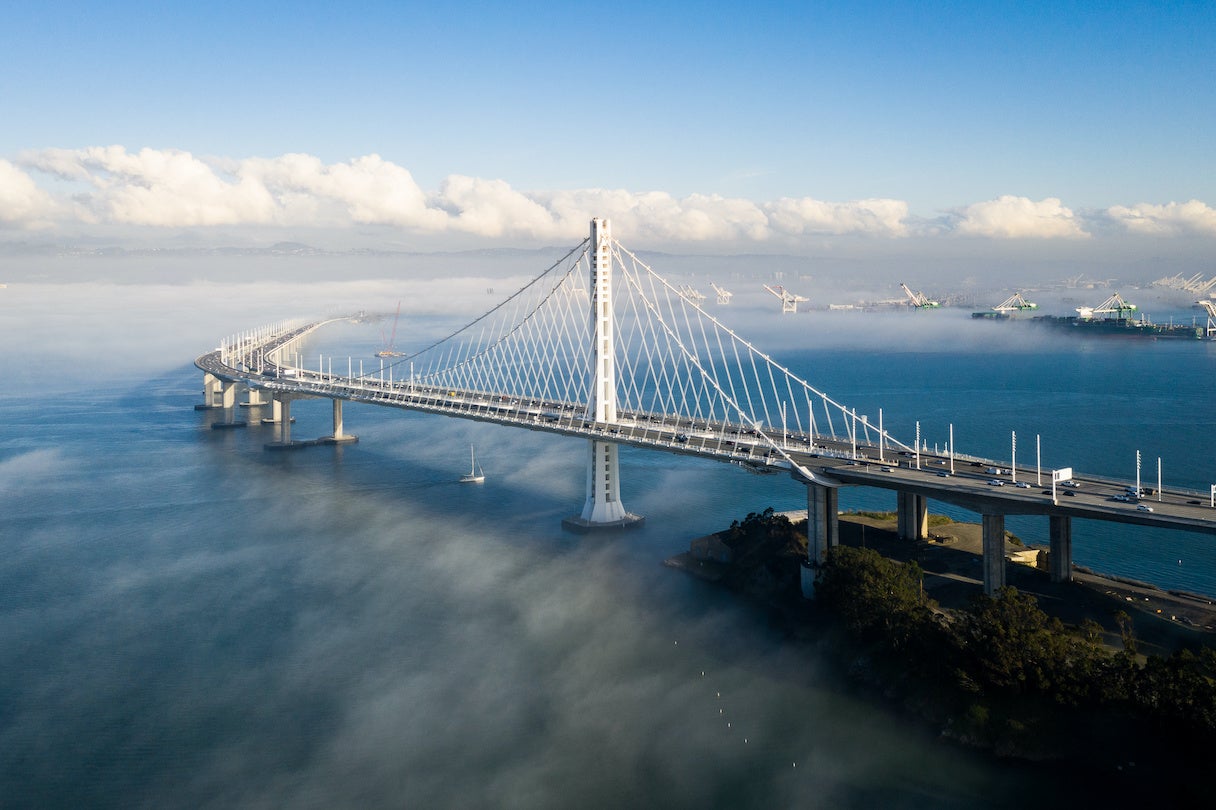
The East Span of the Bay Bridge has a more recent and dramatic history. The original East Span, a cantilever bridge structure, was severely damaged during the 1989 Loma Prieta Earthquake. This event catalyzed one of the largest public works projects in California’s history: the construction of an entirely new East Span. Completed and opened to traffic in 2013, the new East Span is a marvel of modern engineering and seismic design, representing a significant leap forward in bridge architecture.
- Total Length of New East Span: Approximately 2.2 miles (3.5 kilometers) from Yerba Buena Island to Oakland.
- Main Span Design: The centerpiece of the new East Span is its Self-Anchored Suspension (SAS) bridge section, the largest of its kind in the world. This section features a single towering pylon from which cables radiate, supporting the main deck.
- Main SAS Span Length: The main span of the SAS bridge is 1,263 feet (385 meters) long.
- Approach Structure: The majority of the East Span’s length is comprised of a continuous concrete skyway, known as the Skyway, which extends from the SAS section to the Oakland shore. This elevated structure is designed to be highly earthquake-resistant, supported by single-column piers that allow for movement during seismic events.
- Traffic Decks: Unlike the original East Span, the new design features side-by-side decks, providing separate eastbound and westbound traffic flows. This separation enhances safety and offers drivers expansive views of the bay.
- Bicycle and Pedestrian Path: A notable addition to the new East Span is the dedicated bicycle and pedestrian path, extending from Oakland across to Yerba Buena Island. This path offers unparalleled opportunities for cycling and walking, providing unique vantage points of the bridge and the bay – an excellent example of enhancing tourism and lifestyle for locals and visitors alike.
When factoring in the long eastern approaches that lead into Oakland, the entire system truly reaches its impressive 8.4-mile (13.5 km) length. This comprehensive structure, encompassing a range of architectural styles and engineering solutions, makes the Bay Bridge not just a means of crossing the bay but a destination in itself.
A Lifeline of Connection: Historical Significance and Architectural Evolution
The construction of the San Francisco-Oakland Bay Bridge in the 1930s was an audacious undertaking, reflecting an era of grand ambition and technological prowess. Conceived during the Great Depression, its creation served a dual purpose: to provide much-needed jobs and to forge a permanent link between the burgeoning metropolises of San Francisco and Oakland, facilitating commerce, travel, and regional integration. Its history is intertwined with the development of the entire Bay Area, marking a pivotal moment in California’s growth.
From Vision to Reality: The Bridge’s Genesis and Early Challenges
Before the Bay Bridge, crossing the San Francisco Bay was primarily done by ferry – a time-consuming and often weather-dependent endeavor. The idea of a bridge had been discussed for decades, but the sheer scale of the project, the deep waters, strong currents, and challenging seismic conditions made it a formidable challenge. Construction began in 1933, amidst considerable economic hardship, and involved thousands of workers. It was a race against time and nature, utilizing innovative techniques for underwater foundation work and steel fabrication on an unprecedented scale.
The original bridge opened on November 12, 1936, just six months before its more famous counterpart, the Golden Gate Bridge. Initially, it carried not only automobile traffic but also interurban electric trains on its lower deck, connecting downtown San Francisco directly to the East Bay. This dual functionality underscores its importance as a multimodal transportation hub from its inception. The bridge immediately transformed the regional lifestyle and economy, shortening commutes, facilitating trade, and making the entire Bay Area more accessible. It quickly became a symbol of California’s resilience and pioneering spirit during a challenging period in American history.
The Role of Innovation: Seismic Retrofitting and Modernization
The inherent seismic activity of California has always posed a unique challenge to architecture and engineering in the region. The original Bay Bridge was built to the best seismic standards of its time, but the 1989 Loma Prieta Earthquake revealed vulnerabilities, particularly in the East Span. A section of the upper deck of the original East Span collapsed, highlighting the urgent need for modernization.
This catastrophic event led to the decision to replace the East Span entirely rather than attempting extensive retrofitting. The new East Span, which opened in 2013, is a testament to cutting-edge seismic engineering. Its design incorporates advanced technologies like sheer link beams, hinge pipe fuses, and a foundation system that allows the bridge to absorb and dissipate seismic energy. The massive single tower of the self-anchored suspension bridge is built to withstand extreme shaking, ensuring the bridge remains operational even after a major earthquake. This commitment to safety and resilience not only protects the millions who travel across it but also secures the vital economic link it provides.
The West Span also underwent significant seismic retrofitting, reinforcing its foundations and superstructure. Today, the entire Bay Bridge system stands as a beacon of modern civil engineering, capable of withstanding the powerful forces of nature. Its evolution from a Depression-era marvel to a 21st-century icon of seismic safety underscores the continuous innovation that defines the Bay Area’s approach to infrastructure.
Beyond the Asphalt: The Bay Bridge as a Tourism and Lifestyle Hub
While its primary function is transportation, the San Francisco-Oakland Bay Bridge has transcended its utilitarian purpose to become a significant tourist attraction and an integral part of the local lifestyle. Its sheer size and striking architecture offer incredible visual appeal, drawing photographers, sightseers, and urban explorers. The bridge provides unique perspectives of the San Francisco Bay, San Francisco skyline, and the East Bay hills, making it an essential part of any comprehensive travel itinerary for the region.
Iconic Views and Photography: Capturing the Bay Bridge’s Splendor
The Bay Bridge offers a myriad of opportunities for stunning photography and breathtaking views. From the dynamic interplay of light on its structure to the dramatic backdrop of the city and the bay, it presents a constantly changing canvas.
- From the Embarcadero: The Embarcadero waterfront in San Francisco offers excellent frontal views of the West Span, particularly around the Ferry Building Marketplace. The bridge lights up spectacularly at night, creating a dazzling display known as “The Bay Lights,” an art installation that transforms the West Span into a dynamic, illuminated sculpture. This nightly spectacle alone is a significant draw for tourism.
- From Treasure Island and Yerba Buena Island: Driving or walking onto Treasure Island provides panoramic views of the entire San Francisco skyline with the West Span of the Bay Bridge in the foreground. It’s a popular spot for both professional and amateur photographers to capture the iconic skyline, especially at sunset. The views from Yerba Buena Island also offer unique perspectives of both the old West Span and the new East Span.
- From the East Bay Shoreline: Parks along the Oakland and Berkeley shoreline, such as the Bay Bridge Trail (part of the longer San Francisco Bay Trail), provide close-up views of the new East Span’s impressive single-tower design. Walking or cycling on the pedestrian path offers an immersive experience, placing you directly within the bridge’s architecture and providing uninterrupted views across the bay.
- Boat Tours: For a truly unique perspective, various boat tours operate in the San Francisco Bay, sailing directly under the Bay Bridge and its cousin, the Golden Gate Bridge. These experiences provide unparalleled photo opportunities and an intimate appreciation for the scale of these magnificent structures.
Exploring the Surroundings: San Francisco’s East and West Bay Attractions
The Bay Bridge isn’t just a conduit; it’s a gateway to a wealth of attractions on both sides of the bay. Incorporating a drive across the bridge into your travel plans allows for easy access to diverse experiences.
On the San Francisco Side (West Bay):
- The Ferry Building Marketplace: Located at the foot of the Bay Bridge on the Embarcadero, this historic building is a foodie paradise, offering gourmet local food, artisan goods, and stunning views. It’s an ideal starting point for exploring the city.
- Union Square: A bustling shopping and entertainment district, Union Square is home to luxury boutiques, flagship stores, theaters, and a variety of hotels, from boutique hotels to grand establishments like the Fairmont Hotel San Francisco and the Hilton San Francisco Union Square.
- Fisherman’s Wharf & Pier 39: Iconic waterfront attractions known for fresh seafood, street performers, and the famous sea lions at Pier 39. From here, visitors can also catch a ferry to Alcatraz Island.
- Alcatraz Island: The infamous former prison offers a chilling glimpse into American history and unparalleled views of the Golden Gate Bridge and the San Francisco skyline.
- Golden Gate Bridge: No visit to San Francisco is complete without experiencing its most famous landmark. Rent a bike and ride across to Sausalito for a picturesque adventure.
On the East Bay Side (Oakland & Beyond):
- Oakland’s Jack London Square: A vibrant waterfront area with restaurants, shops, and entertainment. It’s a great place to experience Oakland’s unique local culture.
- Berkeley: Home to the prestigious University of California, Berkeley, this city offers a bohemian charm with its historic People’s Park, eclectic shops, and diverse culinary scene.
- Wine Country Day Trips: The Bay Bridge provides a direct route to explore California’s world-renowned Napa Valley and Sonoma County wine regions, perfect for a day trip for wine enthusiasts.
- Regional Parks: The East Bay boasts numerous regional parks offering hiking, biking, and stunning panoramic views of the bay and both bridges.
- Silicon Valley: While a bit further south, the Bay Bridge also connects to the freeway network leading to Silicon Valley, offering insights into the tech world.
The Bay Bridge truly links more than just landmasses; it links diverse cultural experiences, bustling urban centers, and tranquil natural escapes, making it an indispensable part of any Bay Area travel plan.
Planning Your Bay Area Adventure: Accommodation and Experiences
A visit to the San Francisco Bay Area offers a wealth of experiences, from iconic landmarks like the Bay Bridge to world-class dining and vibrant local culture. To make the most of your trip, careful planning for accommodation and activities is key. Whether you’re seeking luxury travel, a budget-friendly stay, or a family-friendly trip, the region offers a diverse range of options.
Choosing Your Stay: Top Hotels and Unique Accommodation Options
The Bay Area provides an extensive selection of hotels and alternative accommodation to suit every preference and budget. Deciding where to stay often depends on your primary areas of interest and desired lifestyle during your visit.
San Francisco Hotels:
- Luxury & Boutique: For those seeking luxury travel and refined experiences, San Francisco offers an array of high-end hotels. The Ritz-Carlton, San Francisco in Nob Hill provides opulent suites and impeccable service. Along the Embarcadero, the Hotel Vitale offers stunning Bay Bridge views and a chic, modern atmosphere. The Hyatt Regency San Francisco, also on the Embarcadero, is known for its impressive atrium lobby and convenient access to the Ferry Building. Many of these properties offer fantastic amenities like spas and fine dining.
- Mid-Range & Budget-Friendly: Areas around Union Square and near Fisherman’s Wharf feature numerous mid-range hotels that balance comfort and cost. For budget travel, consider hostels or apartments booked through reputable accommodation platforms, especially for long-term stays.
- Unique Stays: Look for historic boutique hotels in neighborhoods like North Beach or Haight-Ashbury for a taste of San Francisco’s distinct character.
East Bay Hotels & Resorts:
- Oakland & Berkeley: Staying in the East Bay can offer a different perspective and often more competitive pricing. Oakland has a growing number of stylish hotels downtown and near Jack London Square. In Berkeley, the historic Claremont Club & Spa, a Fairmont Hotel, is a renowned resort offering stunning bay views and extensive amenities.
- Vacation Rentals: For family trips or those desiring more space and a local feel, vacation rentals and apartments in charming East Bay neighborhoods can be an excellent choice. Platforms for booking accommodation allow for easy comparison and access to reviews.
Maximizing Your Visit: Essential Travel Tips and Activities
To ensure a memorable Bay Area adventure, here are some travel tips and activities that integrate the essence of the region, including the magnificent Bay Bridge.
- Public Transportation: Utilize the Bay Area Rapid Transit (BART) system. The Transbay Tube runs beneath the bay, connecting San Francisco and Oakland parallel to the Bay Bridge, offering a quick and efficient way to travel between cities without dealing with bridge traffic. Muni (San Francisco’s public transit) is excellent for exploring within San Francisco.
- Walk or Bike the East Span Path: For an unforgettable experience, spend a few hours walking or cycling the pedestrian path on the new East Span of the Bay Bridge. It’s a fantastic way to enjoy the fresh bay air, take incredible photos, and truly appreciate the scale of the bridge architecture and nature.
- Sunset Views: Position yourself for sunset views of the Bay Bridge. Whether from Treasure Island, the Embarcadero, or a bay cruise, watching the lights come alive as the sun dips below the Pacific Ocean is a magical experience.
- Explore Local Cuisine: Both San Francisco and Oakland are renowned for their diverse and innovative food scenes. From Michelin-starred restaurants to casual food trucks and vibrant farmers’ markets like the Ferry Building Marketplace, culinary experiences are a highlight of any visit.
- Day Trips: Consider a day trip to nearby destinations such as Sausalito, the redwood forests of Marin County, or the world-famous Napa Valley wine region. The Bay Bridge provides easy access to the highway networks leading to these attractions.
- Check Event Calendars: The Bay Area is constantly hosting festivals, concerts, and cultural events. Check local guides to see what’s happening during your stay to enrich your experiences.
The San Francisco-Oakland Bay Bridge is far more than its impressive length. It is a conduit for culture, a testament to human ingenuity, and a central character in the narrative of the Bay Area. Planning your travel to include its appreciation, alongside the countless attractions it connects, promises an unforgettable journey filled with stunning views, rich history, and vibrant lifestyle experiences. Whether you’re crossing it by car, BART, bike, or on foot, the Bay Bridge stands as a majestic gateway to discovery.