
The journey through the Florida Keys is often described as a pilgrimage for those who love the sea, but for enthusiasts of architecture and history, the highlight of the trip is undoubtedly the engineering marvels that connect these limestone islands. While many travelers ask, “How long is the bridge in Key West?” they are usually referring to the iconic Seven Mile Bridge. This colossal structure is more than just a roadway; it is a landmark of international renown, a testament to human ingenuity, and a gateway to the southernmost point of the United States.

Spanning the gap between the Middle Keys and the Lower Keys, the bridge serves as the literal and metaphorical centerpiece of the Overseas Highway. To understand its length is to understand a history of survival, ambition, and the relentless pursuit of connecting isolated paradise to the mainland of Florida.
The Engineering Evolution of the Seven Mile Bridge
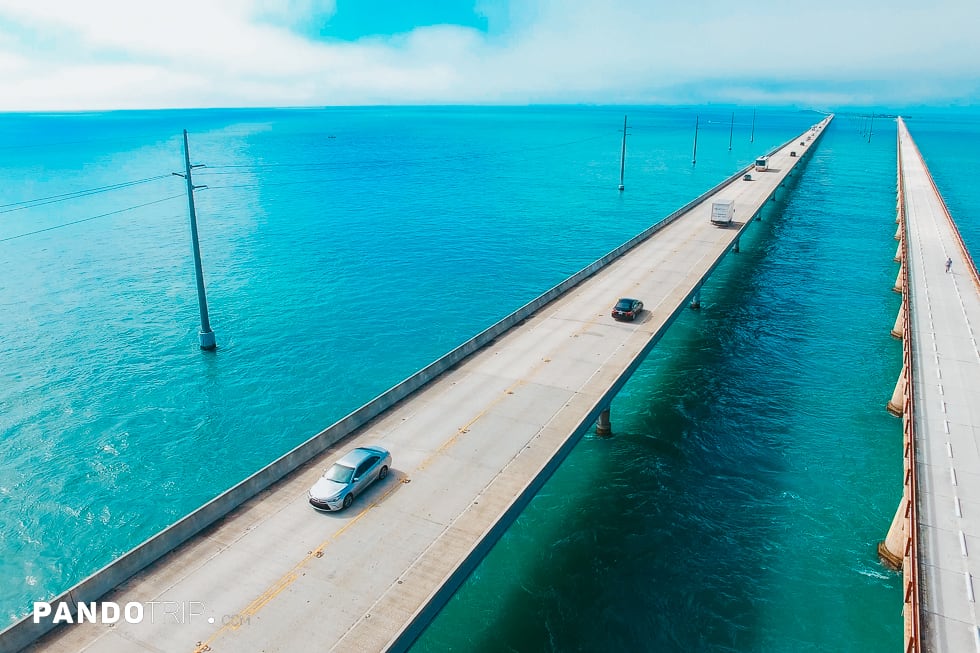
When discussing the length of the bridge, it is essential to distinguish between the two distinct structures that run side-by-side. The modern Seven Mile Bridge, completed in 1982, is actually 6.79 miles (10.93 kilometers) long. While the name rounds up for the sake of poetic simplicity, the physical reality of the span is an intimidating stretch of concrete and steel that rises 65 feet above the turquoise waters of the Moser Channel.
A Feat of Modern Architecture
The current bridge was constructed to replace the aging original structure, which had become too narrow and fragile for modern vehicular traffic. Built using a precast segmental concrete design, the new bridge consists of 440 sections. This architectural method was revolutionary at the time, allowing for a faster construction period and a more durable finish against the corrosive salt air of the Gulf of Mexico and the Atlantic Ocean.
The bridge’s design is not merely functional but aesthetic. Its sweeping curve allows drivers a panoramic view of the horizon, where the sky meets the water in a seamless blue blur. Unlike many traditional bridges, the Seven Mile Bridge does not use a drawbridge mechanism. Instead, its high clearance at the Moser Channel allows for the passage of large vessels, ensuring that the flow of traffic between Marathon and Little Duck Key remains uninterrupted.
Resilience Against the Elements
Designing a bridge of this length in a hurricane-prone region required specific engineering foresight. The pillars are anchored deep into the coral bedrock of the Florida Keys, and the expansion joints are designed to handle significant thermal movement and high-wind stress. The landmark stands as a sentinel against the frequent tropical storms that pass through the Caribbean and the Straits of Florida. Its survival through major hurricanes like Hurricane Andrew and Hurricane Irma has solidified its reputation as one of the most robust landmarks in the Southern United States.
The Historical Legacy of the Old Seven Mile Bridge
To understand why this bridge is so famous, one must look at the “Old Seven” standing parallel to the modern road. This original structure was part of the Florida East Coast Railway, a project spearheaded by the industrialist Henry Flagler. Known as the “Eighth Wonder of the World” upon its completion in 1912, the railway bridge was a monumental achievement in early 20th-century architecture.
Henry Flagler and the Overseas Railroad
Henry Flagler envisioned a railway that would connect Miami all the way to Key West, facilitating trade with Cuba and the Panama Canal. The construction of the original bridge was fraught with challenges, including three major hurricanes that killed hundreds of workers. Despite these setbacks, the bridge was finished, utilizing a combination of steel girders and concrete arches.
The architectural significance of the old bridge lies in its repurposing. After the devastating 1935 Labor Day Hurricane destroyed sections of the track, the Florida East Coast Railway sold the remains to the state. The railway bridge was then converted into a vehicular highway, which served as the primary route to Key West until the new bridge opened in the 1980s.
Pigeon Key: The Heart of the Span
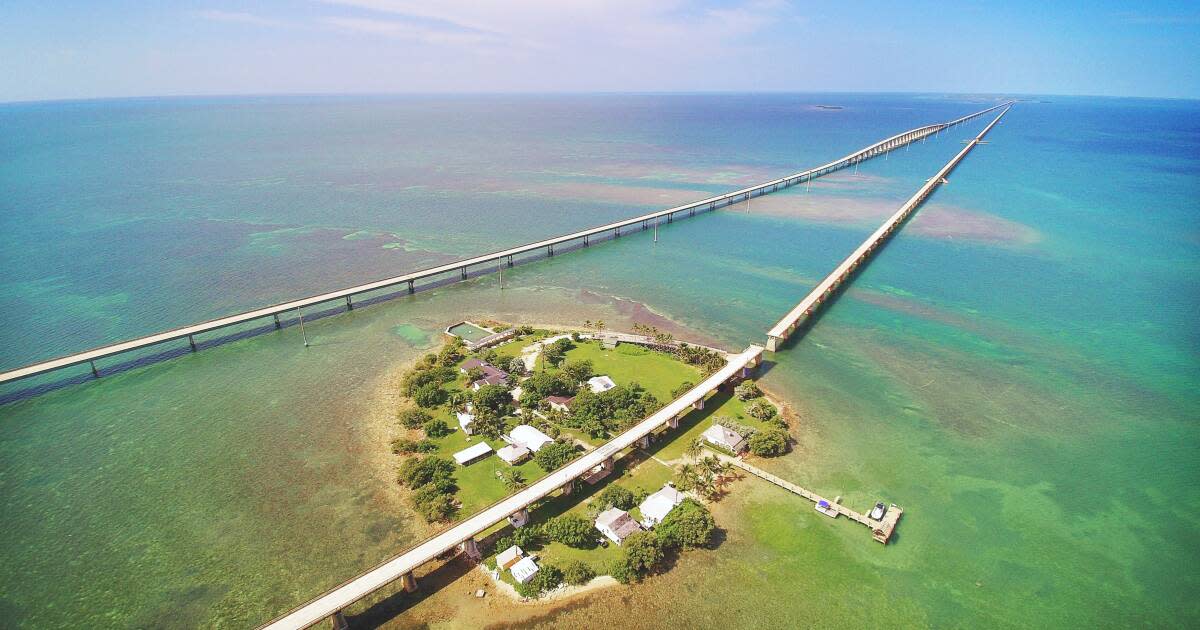
Directly beneath the old bridge lies Pigeon Key, a tiny five-acre island that served as a base camp for the thousands of workers who built the railroad. Today, Pigeon Key is a historic landmark in its own right, home to a museum that chronicles the “Railroad that went to Sea.” The bridge’s proximity to this island highlights the human cost and the logistical genius required to span seven miles of open ocean over a century ago. A recently restored section of the old bridge now serves as a pedestrian walkway and bike path, allowing visitors to reach Pigeon Key without the need for a ferry from Marathon.
Iconic Landmarks and Vistas Along the Overseas Highway
While the Seven Mile Bridge is the most famous, it is part of a larger network of 42 bridges that make up the Overseas Highway. Each bridge offers a unique architectural perspective and connects various landmarks that define the culture of the Florida Keys.
Transitioning Through the Keys
Starting from the north in Key Largo, the highway passes through Islamorada before reaching the Middle Keys. The Seven Mile Bridge begins at Knight’s Key (part of the city of Marathon) and ends at Little Duck Key. This transition point marks a change in the landscape; the Lower Keys feel more remote and natural compared to the bustling fishing hubs of the upper islands.
Just beyond the western end of the bridge lies Bahia Honda State Park. This park features another famous bridge landmark: the Bahia Honda Bridge. Unlike the Seven Mile Bridge, the Bahia Honda Bridge was built as a truss bridge, and a large gap was later cut into it to allow for boat traffic, creating a striking visual contrast against the sunset.
Natural Landmarks and Marine Life
The length of the bridge also provides an unparalleled vantage point for observing the natural landmarks of the Florida Keys National Marine Sanctuary. From the height of the span, it is common to see eagle rays, sea turtles, and even sharks patrolling the clear waters below. The bridge acts as a permanent observer of the Great Florida Reef, the only living coral barrier reef in the continental United States.
Cultural Significance and Cinematic Presence
The Seven Mile Bridge is not just an architectural landmark; it is a cultural icon. Its sheer length and dramatic setting have made it a favorite for filmmakers and athletes alike, cementing its place in the American zeitgeist.
Hollywood on the High Seas
The bridge has played a “starring role” in several major motion pictures. Its most famous appearance is likely in the film True Lies, where a climactic explosion takes place on the span. It has also been featured in the James Bond film License to Kill, as well as 2 Fast 2 Furious. The sight of a car speeding across a bridge that seems to lead into the middle of the ocean is a powerful cinematic image that has drawn millions of tourists to Florida.
The Seven Mile Bridge Run
Every year, the bridge is the site of the Seven Mile Bridge Run. This event involves closing the bridge to vehicular traffic for a few hours on a Saturday morning in April. Runners from all over the world compete in this 6.8-mile race, which is considered one of the most scenic and challenging runs due to the lack of shade and the potential for high winds. It is a rare moment when the landmark can be experienced on foot, away from the hum of engines.
Conclusion: A Landmark of Endurance
In the context of Key West and the surrounding islands, the bridge is much more than a measurement of distance. Whether you are looking at the historical echoes of the Old Seven Mile Bridge or the sleek lines of the modern span, the structure represents a century of architectural evolution.
At approximately seven miles long, it remains one of the longest bridges in the world when it was built and continues to be one of the most photographed landmarks in North America. For those traveling from Miami to Key West, crossing this bridge is the definitive moment of arrival—a signal that you have left the mainland behind for a world defined by the sea. It stands as a monument to Henry Flagler, a tribute to the resilience of Florida, and a breathtaking piece of architecture that bridges the gap between the past and the present.
LifeOutOfTheBox is a participant in the Amazon Services LLC Associates Program, an affiliate advertising program designed to provide a means for sites to earn advertising fees by advertising and linking to Amazon.com. Amazon, the Amazon logo, AmazonSupply, and the AmazonSupply logo are trademarks of Amazon.com, Inc. or its affiliates. As an Amazon Associate we earn affiliate commissions from qualifying purchases.