
Embarking on a journey from the sun-drenched shores of Florida to the tropical paradise of Hawaii is a dream for many. The allure of swaying palm trees, volcanic landscapes, and the warm embrace of the Pacific Ocean beckons travelers seeking an escape from the everyday. However, before you can feel the sand between your toes and witness a breathtaking Hawaiian sunset, you’ll likely be pondering a crucial logistical detail: “How long is the flight from Florida to Hawaii?” This extensive travel itinerary will delve into the specifics of this transcontinental voyage, covering flight durations, factors influencing travel time, and tips to make your journey as smooth as possible, all within the broad scope of travel, accommodation, and lifestyle experiences.

Understanding the Flight Duration: The Core Question
The most direct answer to “How long is the flight from Florida to Hawaii?” is that there isn’t a single, definitive answer. This is due to a multitude of variables, primarily the origin city in Florida, the specific island in Hawaii you’re flying into, and whether your flight is direct or requires layovers.
Direct Flights: The Fastest Route
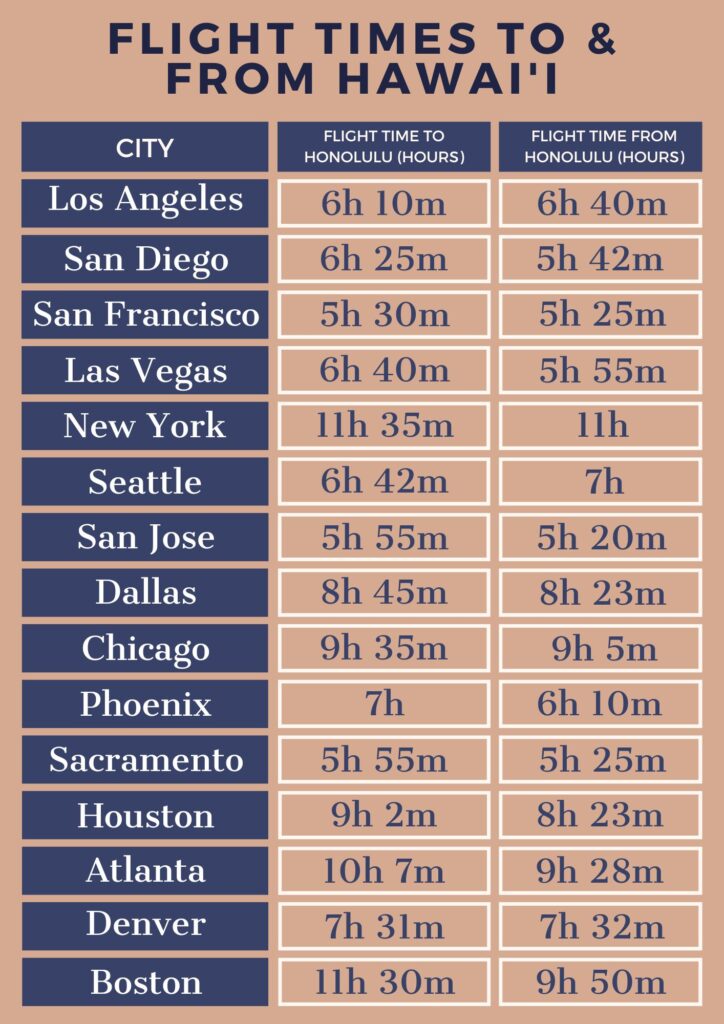
Direct flights from Florida to Hawaii are rare, and when they do exist, they are typically offered by major airlines during peak travel seasons or as charter services. These flights eliminate the need to disembark and re-board a different aircraft, significantly reducing overall travel time. If you manage to secure a direct flight, expect a journey of approximately 9 to 11 hours. This duration can vary slightly depending on the specific route and aircraft. For instance, a flight from Miami International Airport (MIA) to Honolulu International Airport (HNL) on Oahu might be at the shorter end of this spectrum, while a flight from Orlando International Airport (MCO) to Kahului Airport (OGG) on Maui could lean towards the longer end. The sheer distance between the southeastern tip of the continental United States and the central Pacific Ocean necessitates a substantial flight time, even with the most efficient routing.
Flights with Layovers: The More Common Scenario
The vast majority of travelers flying from Florida to Hawaii will experience flights with at least one, and sometimes two, layovers. These layovers are essential for airlines to optimize their routes, manage fuel stops, and connect passengers from various departure points. The most common layover cities include major West Coast hubs such as Los Angeles International Airport (LAX), San Francisco International Airport (SFO), or sometimes even cities like Dallas/Fort Worth International Airport (DFW) or Denver International Airport (DEN).
When layovers are involved, the total travel time can extend considerably. A typical flight with one layover could range from 12 to 18 hours, including the time spent on the ground at the layover airport. This can sometimes stretch to 20 hours or more for flights with longer layovers or multiple connections. The duration of the layover itself is a significant factor. A quick 1-hour layover will contribute much less to your total travel time than a 4-hour layover where you might have time to grab a meal and stretch your legs.
Factors Influencing Flight Time
Several key factors contribute to the overall duration of your flight from Florida to Hawaii, making precise estimations challenging without specific flight details. Understanding these elements can help you better plan your travel and manage expectations.
Origin City in Florida
Florida is a large state with several major international airports. The specific departure city will influence the initial leg of your journey. Flights originating from South Florida like Miami or Fort Lauderdale might have slightly different routing and layover possibilities compared to those departing from Central Florida like Orlando or Tampa, or even North Florida like Jacksonville. Generally, the farther west your departure point in Florida, the shorter the initial flight to a West Coast layover city, but this is a minor factor compared to the intercontinental leg.
Destination Island in Hawaii
Hawaii is an archipelago, and your final destination island will also play a role. The most common entry points are Honolulu International Airport (HNL) on Oahu, Kahului Airport (OGG) on Maui, Kona International Airport (KOA) on the Big Island, and Lihue Airport (LIH) on Kauai. Flights from the mainland United States often connect to Oahu first, and then inter-island flights are taken to other islands. If your final destination is not Oahu, you’ll need to factor in the time for this inter-island transfer, which typically adds an additional hour or two to your journey.
Type of Flight (Direct vs. Connecting)
As discussed, direct flights are the quickest but least common. Connecting flights, while longer, offer more flexibility in terms of scheduling and can sometimes be more budget-friendly. The number of connections is a critical determinant of total travel time. Two layovers will almost certainly result in a longer journey than a single layover.
Airline and Aircraft Type
Different airlines operate on different flight paths and utilize various aircraft. Some airlines might have more optimized routes that shave off precious minutes, while others might use aircraft that are slower or require more fuel stops. The specific aircraft’s cruising speed can also have a minor impact on flight time.
Wind Conditions and Air Traffic Control
Like any long-haul flight, flights from Florida to Hawaii are subject to prevailing wind patterns. Tailwinds can shorten flight times, while headwinds can lengthen them. Air traffic control also plays a role, especially in busy airspace over the mainland United States and around major airports. Congestion can lead to delays or slower flight paths.
Planning Your Journey: Beyond the Flight Time
While understanding the flight duration is paramount, a successful trip from Florida to Hawaii involves more than just the time spent in the air. It encompasses meticulous planning across various aspects of travel, accommodation, and the overall lifestyle experience you wish to cultivate.
Choosing Your Hawaiian Island: A World of Experiences
Hawaii is not a monolithic destination; each island offers a unique character and set of attractions. Your choice of island will significantly influence your Hawaiian experience and might even subtly affect flight routes and layover preferences.
Oahu: The Heart of Hawaii
Oahu is often the primary gateway for travelers to Hawaii, boasting the busiest airport, Honolulu International Airport (HNL). Here, you’ll find the iconic Waikiki Beach, the historic Pearl Harbor, and the vibrant city life of Honolulu. If you’re interested in a blend of city amenities, world-class surfing at the North Shore, and historical significance, Oahu is your destination.
Maui: Romance and Natural Wonders
Known for its stunning beaches, the scenic Road to Hana, and the majestic Haleakala National Park, Maui is a popular choice for honeymooners and nature enthusiasts. Flights often arrive at Kahului Airport (OGG). The island offers a more relaxed pace than Oahu, with luxurious resorts and opportunities for whale watching during the winter months.
Kauai: The Garden Isle
For those seeking dramatic cliffs, lush rainforests, and a more adventurous escape, Kauai is the perfect fit. Lihue Airport (LIH) serves the island. Here, you can explore the breathtaking Na Pali Coast, hike through the Waimea Canyon (often called the “Grand Canyon of the Pacific”), and immerse yourself in a less developed, more natural environment.
The Big Island (Hawaii Island): Volcanic Majesty and Diverse Landscapes
The Big Island is geographically the youngest and largest of the Hawaiian Islands. It’s a place of dramatic contrasts, from the active volcanoes in Hawaii Volcanoes National Park to the black sand beaches and verdant coffee plantations. Kona International Airport (KOA) and Hilo International Airport (ITO) are the main gateways. This island offers unparalleled opportunities to witness volcanic activity and explore diverse ecosystems.
Accommodation Options: From Luxury Resorts to Cozy Apartments
Once you’ve chosen your island, selecting the right accommodation is crucial to enhancing your Hawaiian experience. Whether you’re seeking the opulence of a five-star resort, the privacy of a villa, or the convenience of an apartment, Hawaii offers a wide range of options to suit every budget and travel style.
Luxury Resorts and Suites
Hawaii is renowned for its world-class resorts, offering impeccable service, stunning ocean views, and a plethora of amenities. From the Four Seasons Resort Maui at Wailea to the Grand Hyatt Kauai Resort & Spa, these establishments provide an indulgent escape. Many feature expansive suites, private lanais, multiple swimming pools, fine dining restaurants, and on-site spas, ensuring a truly luxurious stay.
Villas and Apartments for Extended Stays
For families or groups, or for those planning a longer sojourn, renting a private villa or an apartment can offer more space, privacy, and a home-away-from-home feel. Websites specializing in vacation rentals often list charming properties in prime locations, allowing you to cook your own meals and enjoy a more independent Hawaiian lifestyle. This is particularly appealing for longer-term stays where the cost of traditional hotel accommodations can become prohibitive.
Budget-Friendly Hotels and Guesthouses
Hawaii also caters to budget-conscious travelers. You can find a variety of smaller hotels, charming guesthouses, and even hostels, particularly in areas like Waikiki or on islands like Kauai. These options provide comfortable and clean lodging without the premium price tag of larger resorts, allowing you to allocate more of your travel budget to experiences and activities.
Making the Most of Your Hawaiian Adventure: Travel Tips and Experiences
Beyond the practicalities of flights and accommodation, immersing yourself in Hawaiian culture and embracing its unique offerings will transform your trip into an unforgettable experience.
Embracing Local Culture and Cuisine
Hawaii boasts a rich cultural heritage influenced by its native Polynesian roots and subsequent immigrant populations. Engaging with local traditions is a rewarding aspect of any visit. Attend a traditional luau to enjoy Hawaiian music, hula dancing, and local delicacies like kalua pig and poi. Explore local markets to sample fresh tropical fruits like papayas, mangoes, and pineapples. Don’t miss the chance to try poke, a staple of Hawaiian cuisine. Visiting historical sites like Iolani Palace in Honolulu, the only royal palace in the United States, offers a deeper understanding of the islands’ past.
Planning Your Activities and Attractions
The allure of Hawaii lies in its diverse range of activities. Whether you’re an adrenaline junkie or seeking relaxation, there’s something for everyone.
- Water Sports: Hawaii is a world-renowned destination for surfing, snorkeling, diving, and paddleboarding. Explore the vibrant coral reefs, swim with sea turtles, or catch a wave at legendary surf spots.
- Hiking and Nature Exploration: Embark on scenic hikes through lush rainforests, discover cascading waterfalls, and witness breathtaking volcanic landscapes. The trails in Hawaii Volcanoes National Park and the Na Pali Coast are particularly spectacular.
- Scenic Drives: Rent a car and embark on iconic scenic drives like the Road to Hana on Maui or the drives along the North Shore of Oahu, stopping at picturesque viewpoints and hidden beaches along the way.
- Relaxation: Simply unwind on the pristine beaches, soak up the sun, and enjoy the tranquil atmosphere that Hawaii is famous for.
Traveling with Family or on a Budget
For families, Hawaii offers numerous kid-friendly attractions, including safe swimming beaches, marine life encounters, and interactive cultural experiences. Many resorts cater to families with children’s programs and activities. Budget travelers can find more affordable accommodation options, enjoy local eateries rather than fine dining, and prioritize free activities like beach hopping and hiking. Luxury travel in Hawaii can mean indulging in private yacht tours, spa treatments at world-class resorts, and exclusive island excursions.
Ultimately, the flight from Florida to Hawaii is the first step in an extraordinary adventure. By understanding the flight dynamics, planning your island of choice, selecting suitable accommodation, and immersing yourself in the local culture and activities, you can ensure a seamless and deeply enriching Hawaiian experience, a true escape into paradise.
LifeOutOfTheBox is a participant in the Amazon Services LLC Associates Program, an affiliate advertising program designed to provide a means for sites to earn advertising fees by advertising and linking to Amazon.com. Amazon, the Amazon logo, AmazonSupply, and the AmazonSupply logo are trademarks of Amazon.com, Inc. or its affiliates. As an Amazon Associate we earn affiliate commissions from qualifying purchases.