
Embarking on a journey from the sun-drenched shores of Miami, Florida, to the historic streets of London, United Kingdom, is a popular transatlantic voyage for both leisure and business travelers. This significant distance, spanning thousands of miles across the Atlantic Ocean, necessitates careful planning, with the primary concern often being the duration of the flight. Understanding how long you’ll spend in the air, the factors that influence this timing, and how to best prepare for such a journey can significantly enhance your travel experience.
The Direct Answer: Unveiling the Flight Duration
For travelers seeking efficiency, direct flights offer the quickest path from Miami to London. These non-stop services are the preferred option for minimizing travel time and avoiding the complexities of layovers.
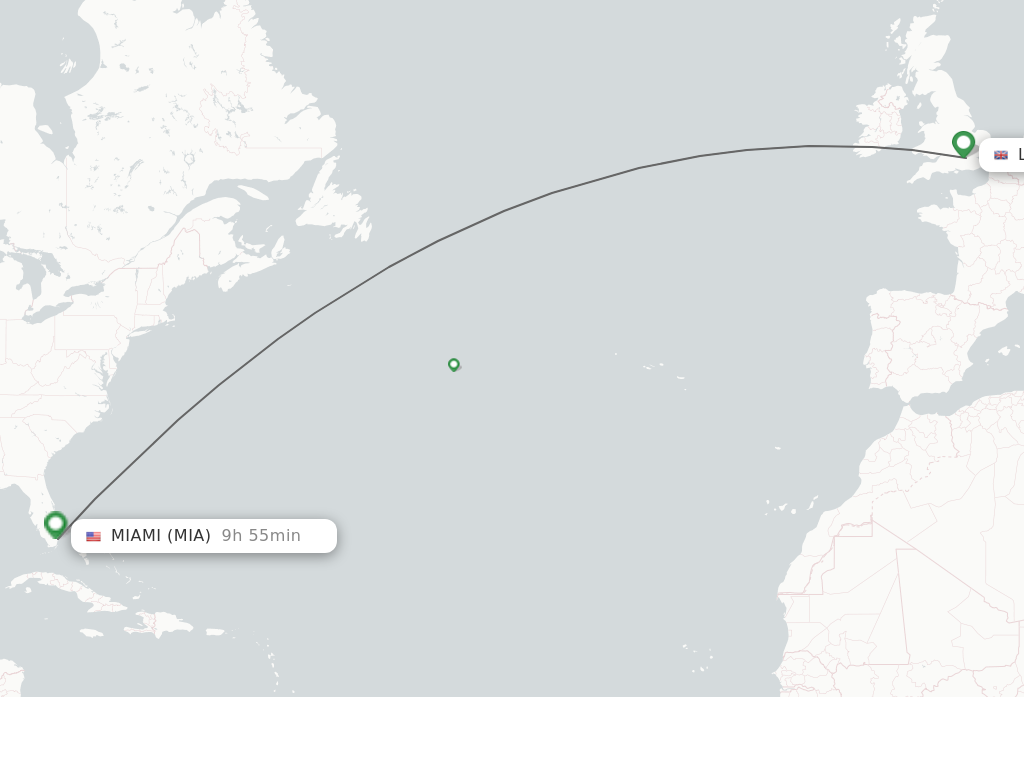
Non-Stop Flight Times
The typical non-stop flight duration from Miami International Airport (MIA) to London’s major international airports, such as Heathrow Airport (LHR) or Gatwick Airport (LGW), generally ranges between 8 hours and 30 minutes to 9 hours and 30 minutes.
This duration can fluctuate slightly depending on various operational factors, including the specific airline, the type of aircraft used, and prevailing weather conditions, particularly strong tailwinds or headwainds. Flights heading east (towards London) tend to be slightly shorter than those heading west (towards Miami) due to the influence of the jet stream. Therefore, while you can expect to be airborne for around nine hours, it’s always wise to check the precise flight time provided by your chosen airline.
Understanding the Time Difference
Beyond the pure flight duration, it’s crucial for travelers to account for the significant time difference between Miami and London. [Miami](https://lifeoutofthebox.com/miami operates on Eastern Time Zone (ET), which is typically UTC-5. London, on the other hand, observes Greenwich Mean Time (GMT) during winter (UTC+0) and British Summer Time (BST) during summer (UTC+1).
This means there is a 5-hour difference during winter and a 6-hour difference during summer when Daylight Saving Time is in effect in both regions. For instance, if you depart Miami at 8:00 PM ET and your flight is 9 hours long, you would theoretically arrive at 5:00 AM ET. However, adjusting for the time difference, you would land in London at either 10:00 AM GMT or 11:00 AM BST on the following day. This significant time shift is a primary contributor to jet lag and is an important consideration for planning your activities upon arrival.
Factors Influencing Your Journey Across the Atlantic
While the stated flight time provides a good estimate, several dynamic factors can influence the actual duration of your flight from Miami to London. Understanding these variables can offer insight into why departure and arrival times might occasionally differ from initial expectations.
The Role of Aircraft and Airspace
Modern aircraft, particularly wide-body jets like the Boeing 777, 787 Dreamliner, or Airbus A330/A350, are designed for long-haul transatlantic journeys. These planes can cruise at higher altitudes and speeds, optimizing fuel efficiency and reducing flight times. Older models, while still capable, might have slightly different performance characteristics that can marginally affect duration. Additionally, air traffic control congestion, particularly during peak travel seasons or around major hubs like London Airports, can lead to minor delays in departure, in-air holding patterns, or altered flight paths, which may add a few minutes to the total travel time. The route taken by the aircraft is also carefully chosen by pilots and air traffic controllers to optimize for fuel efficiency, passenger comfort, and safety, factoring in prevailing winds and potential turbulence areas.
Weather and Wind Patterns: The Jet Stream Effect
One of the most significant natural influences on transatlantic flight times is the jet stream. This fast-moving, narrow current of air flows from west to east across the upper troposphere. When flying from Miami to London, aircraft can take advantage of the jet stream as a “tailwind,” effectively pushing the plane forward and reducing flight duration. This phenomenon is why eastbound flights are generally shorter than westbound flights. Conversely, if a flight encounters a weaker jet stream or even an unusual headwind, the journey could be extended. Turbulence, caused by changes in air pressure or weather systems, can also lead to minor rerouting by pilots to ensure passenger comfort and safety, potentially adding a few minutes to the overall flight time.
Airline Efficiency and Route Optimization
Airlines constantly strive to optimize their operations for punctuality and efficiency. This includes meticulous flight planning, which takes into account forecasted weather, air traffic, and preferred flight paths. Different airlines might have slightly varied standard operating procedures or preferred routes, leading to minor discrepancies in their advertised flight times for the same route. Furthermore, factors such as the time required for de-icing in colder conditions (though less common departing Miami), the speed of ground operations at the departure airport, and the efficiency of boarding and baggage handling can all play a role in the actual gate-to-gate travel time.
Navigating Connecting Flights: Adding Time and Experience
While direct flights are the fastest, they are not always the most economical or convenient option, depending on your travel plans. Connecting flights can significantly extend your overall travel time but can also offer flexibility in scheduling and pricing.
Common Layover Hubs and Their Impact
If a direct flight from MIA to LHR or LGW isn’t available or suitable, travelers often connect through major international hubs. In the United States, popular connection points for flights to London include cities like New York (JFK/EWR), Atlanta (ATL), Washington D.C. (IAD), and Boston (BOS). On the European side, although less common for a Miami to London journey due to the direct options, some routes might involve layovers in major European airports such as Frankfurt (Germany), Amsterdam (Netherlands), or Dublin (Ireland) or even Paris (France).
The impact on total travel time from these connections can vary dramatically. A layover could range from a tight 1-2 hours (risky for delays) to a comfortable 3-5 hours, or even an extended stop of 8+ hours. Factor in the flight time to the layover hub, the waiting time at the airport, and the subsequent flight to London. For example, a flight from Miami to New York (approx. 3 hours) followed by a 3-hour layover and a New York to London flight (approx. 7 hours) would result in a total travel time of around 13 hours, excluding any unforeseen delays.
Choosing Wisely: Minimizing Connection Time vs. Exploring
When selecting a connecting flight, a key decision involves balancing the desire for the shortest possible overall journey with the potential benefits of a longer layover. If your priority is simply to reach London as quickly as possible, look for connections with minimum viable transfer times. However, be aware that tight connections increase the risk of missing your second flight if the first one is delayed, potentially leading to significant travel disruptions.
Alternatively, some travelers intentionally choose longer layovers, transforming them into mini-explorations of the connecting city. For example, a 6-8 hour layover in New York might allow for a quick trip into Manhattan, while an overnight layover in Canada could provide a glimpse of a new destination. This approach turns a necessary stop into an added travel experience, but it requires careful planning to ensure you have enough time to clear customs (if necessary), travel to and from the city, and return to the airport for your next flight. Always factor in potential delays and immigration/security processing times when planning a layover excursion.
Preparing for the Long Haul: Essential Tips for the Miami-London Route
A journey of nearly 9 hours across the Atlantic Ocean demands some preparation to ensure a comfortable and smooth experience. From mitigating jet lag to packing smart, these tips can make a significant difference.
Beating Jet Lag: Strategies for Seamless Transition
The 5-6 hour time difference between Miami and London makes jet lag a near certainty for most travelers. Jet lag occurs when your body’s internal clock (circadian rhythm) is out of sync with the new time zone. To minimize its effects:
- Adjust Before You Go: A few days before your flight, gradually shift your sleep schedule by going to bed an hour or two earlier each night.
- Hydrate: Drink plenty of water before, during, and after your flight. Avoid excessive alcohol and caffeine, which can exacerbate dehydration and disrupt sleep.
- Move Around: During the flight, get up and walk around the cabin periodically to promote circulation. Perform simple stretches in your seat.
- Sleep on the Plane: Try to sleep during the portion of the flight that aligns with nighttime at your destination. Use an eye mask and earplugs to block out light and noise.
- Embrace the New Time Zone: Upon arrival, immediately adjust your watch to London time. Try to stay awake until the local bedtime and expose yourself to natural light during the day to help reset your body clock.
Comfort and Convenience: In-Flight Essentials
Making your long-haul flight as comfortable as possible is key. Pack a small carry-on bag with essentials:
- Comfortable Clothing: Wear loose-fitting, layered clothing to adapt to fluctuating cabin temperatures.
- Neck Pillow, Eye Mask, Earplugs: These are indispensable for quality rest on the plane.
- Entertainment: Load your tablet or phone with movies, TV shows, music, podcasts, or e-books. While most airlines offer in-flight entertainment, having your own backup is always a good idea.
- Snacks: Pack some healthy snacks to avoid reliance on airline food or to tide you over between meals.
- Toiletries: A small toothbrush, toothpaste, moisturizer, and lip balm can help you feel refreshed.
- Medications: Keep any essential prescription medications in your carry-on, along with basic pain relievers or motion sickness remedies.
Arrival in London: From Airport to Destination
Upon landing at LHR or LGW, you’ll proceed through immigration and customs. Have your passport and any necessary visa documentation ready. The time taken for this process can vary, but generally expect 30-90 minutes, especially at Heathrow.
Once through, you’ll need to make your way to your final destination in London. Both Heathrow and Gatwick offer excellent transport links:
- From Heathrow: The Heathrow Express offers a fast 15-minute journey to London Paddington Station. The Piccadilly Line of the London Underground (the “Tube”) provides a more economical, though longer (around 50-60 minutes), direct connection to central London.
- From Gatwick: The Gatwick Express takes approximately 30 minutes to reach London Victoria Station. Other train services, like Southern and Thameslink, also connect Gatwick to various London stations at a lower cost.
Having your onward travel pre-booked or researched will reduce stress after a long flight.
Major Airlines and Airports Serving the Route
The popularity of the Miami to London route means it is well-served by several world-class airlines, offering a range of services and cabin classes to suit different budgets and preferences.
Key Departure Points: Miami International Airport
Miami International Airport (MIA) serves as the primary gateway for international departures from South Florida. It’s a large, bustling airport with extensive facilities, including numerous dining options, retail stores, lounges, and duty-free shopping. Travelers should aim to arrive at least 3 hours before their scheduled international flight to allow ample time for check-in, baggage drop, and security screening, especially during peak travel times. The airport’s three main terminals (North, Central, and South) are well-connected, ensuring a relatively smooth experience for departing passengers.
London’s Main Gateways: Heathrow and Gatwick
London is served by several international airports, but for transatlantic flights from Miami, the vast majority arrive at either Heathrow Airport (LHR) or Gatwick Airport (LGW).
- Heathrow Airport (LHR): Located west of central London, Heathrow is the largest and busiest airport in the United Kingdom and a major global hub. It has four operational terminals (2, 3, 4, and 5) and offers unparalleled connectivity to London city center via the Heathrow Express, London Underground, and bus services.
- Gatwick Airport (LGW): Situated south of London, Gatwick is the second-largest airport in the UK. It has two terminals (North and South) and provides excellent rail links to London Victoria Station and other parts of the UK via the Gatwick Express and other train operators.
When booking your flight, consider which London airport is more convenient for your final destination within the city or beyond.
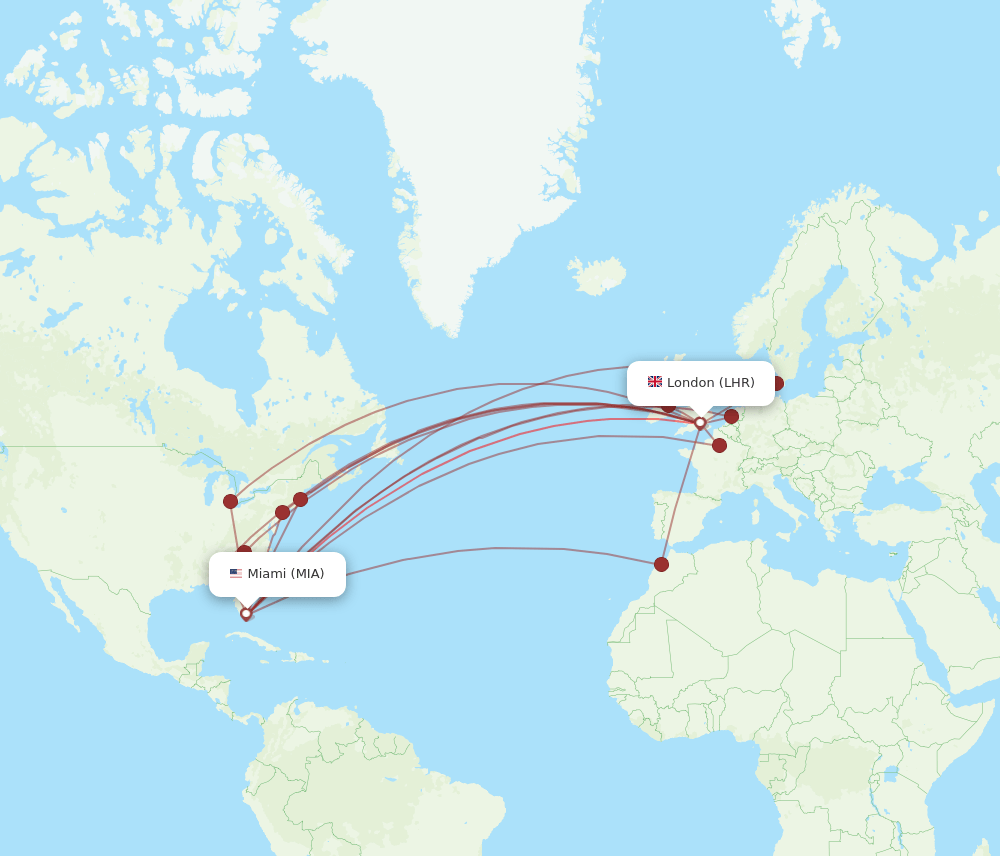
Airlines Connecting Miami and London
Several reputable airlines operate direct services between Miami and London, ensuring competitive pricing and a choice of amenities. The primary carriers on this route include:
- British Airways: As the flag carrier of the United Kingdom, British Airways typically offers multiple daily direct flights from MIA to LHR, providing a full-service experience across various cabin classes.
- Virgin Atlantic: Known for its vibrant service and comfortable cabins, Virgin Atlantic also operates direct flights from MIA to LHR, often emphasizing customer experience.
- American Airlines: A major United States carrier, American Airlines provides direct service from MIA to LHR, often as part of its extensive transatlantic network.
These airlines typically utilize modern wide-body aircraft for this long-haul route, equipped with personal entertainment systems, meal services, and a range of seating options from economy to first class. Checking current flight schedules and comparing prices and services across these carriers is recommended for finding the best option for your travel needs.
In conclusion, a direct flight from Miami to London will have you in the air for approximately 8.5 to 9.5 hours. While this provides a clear answer to “How long is the flight?”, successful transatlantic travel involves much more than just the time spent airborne. From understanding time zones and combating jet lag to choosing the right connections and preparing for a comfortable journey, a well-informed traveler is a happy traveler, ready to explore the vibrant city of London upon arrival.
LifeOutOfTheBox is a participant in the Amazon Services LLC Associates Program, an affiliate advertising program designed to provide a means for sites to earn advertising fees by advertising and linking to Amazon.com. Amazon, the Amazon logo, AmazonSupply, and the AmazonSupply logo are trademarks of Amazon.com, Inc. or its affiliates. As an Amazon Associate we earn affiliate commissions from qualifying purchases.