
Embarking on a journey from the vibrant Pacific Northwest city of Seattle to the architectural marvel that is Chicago involves traversing a significant portion of the United States. Understanding the duration of this flight is crucial for meticulous travel planning, ensuring a smooth and enjoyable experience whether you’re traveling for business or leisure. This guide delves into the typical flight times, factors influencing duration, and essential tips for navigating this popular cross-country route.
Understanding Flight Durations Between Major Hubs
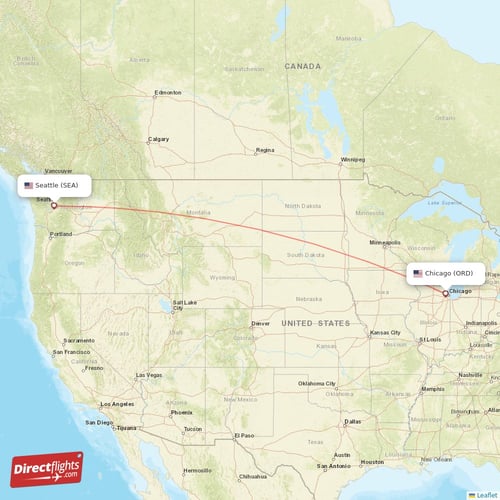
The aerial distance between Seattle and Chicago is substantial, spanning approximately 1,737 miles (2,795 kilometers) as the crow flies. This considerable distance directly dictates the minimum flight time. However, the actual duration passengers experience can vary significantly based on several factors, including the type of flight, specific airports, and even weather conditions.
Direct vs. Connecting Flights
The most straightforward way to travel between Seattle and Chicago is via a non-stop flight. These flights offer the shortest travel time, as they involve no layovers or plane changes. Several major airlines operate direct routes, connecting Seattle-Tacoma International Airport (SEA) with Chicago’s primary international gateway, O’Hare International Airport (ORD).
Conversely, connecting flights, while often more budget-friendly, inherently extend the total travel time. These routes involve at least one stop, typically in another major hub city, adding several hours to the journey due to layover times and the additional take-off and landing sequences. Common layover cities for this route might include Denver, Minneapolis, or Salt Lake City, depending on the airline and specific routing. The duration of the layover itself is a critical factor, ranging from a quick 45-minute sprint to a connecting gate to a leisurely several-hour stop.
Factors Influencing Flight Time
Beyond the direct vs. connecting distinction, several other elements can subtly, or sometimes dramatically, impact the total flight duration:
- Tailwinds and Headwinds: Jet streams, which are strong, fast-moving air currents, play a significant role. Flights traveling eastbound from Seattle to Chicago often benefit from tailwinds, which can reduce flight time. Conversely, westbound flights ( Chicago to Seattle) frequently encounter headwinds, adding to the journey’s length. This meteorological phenomenon can account for variations of 15-30 minutes, or even more, on cross-country flights.
- Air Traffic Control (ATC) Delays: Both Seattle-Tacoma International Airport and O’Hare International Airport are among the busiest airports globally. High volumes of air traffic can lead to holding patterns, ground delays before take-off, or slow taxiing, all of which extend the overall travel time.
- Airline and Aircraft Type: Different airlines might assign slightly different block times for the same route based on their operational procedures and the specific aircraft type used. Newer, more fuel-efficient planes might fly at slightly different speeds or altitudes, influencing optimal flight paths.
- Route Optimization: Airlines continuously optimize their flight paths to conserve fuel and time. This involves considering current weather, air traffic, and restricted airspace, which can lead to minor variations in the exact flight path and, consequently, the duration.
Typical Flight Times Between Seattle-Tacoma (SEA) and O’Hare (ORD)
For travelers eyeing the Seattle to Chicago route, understanding the expected flight durations for both non-stop and connecting options is key to planning.
Non-stop Journeys
A direct flight from Seattle (SEA) to Chicago (ORD) typically ranges from 3 hours and 30 minutes to 4 hours and 15 minutes. This timeframe accounts for the variables like headwinds, tailwinds, and minor air traffic considerations.
For instance:
- An eastbound flight (SEA to ORD) with favorable tailwinds might clock in closer to 3 hours and 30 minutes to 3 hours and 45 minutes.
- A flight encountering some headwinds or slight ATC delays could extend towards 4 hours to 4 hours and 15 minutes.
It’s important to note that the time displayed on your ticket is the “block time,” which includes taxiing, take-off, actual flight, and landing to the gate. The actual “in-air” time is usually a bit shorter.
Common Layover Scenarios
When choosing a connecting flight, the total travel time can range widely. A well-optimized connecting flight might add 2 to 4 hours to the non-stop duration, while less efficient connections could add 5 hours or more.

- Short Layovers (1-2 hours): If you find a flight with a brief layover, say in Denver International Airport (DEN) or Minneapolis-Saint Paul International Airport (MSP), your total travel time could be around 6 to 8 hours. This would include the initial flight segment, the layover, and the final leg to Chicago.
- Medium Layovers (2-4 hours): Many connecting flights feature layovers in this range, pushing the total travel time to 8 to 10 hours. While longer, these allow for more relaxed transfers, perhaps grabbing a meal or stretching your legs.
- Longer Layovers (4+ hours): These can extend the total journey to 10+ hours, sometimes even an entire day if the layover is overnight. While often the most affordable, they require a significant time commitment and can be tiring. Travelers often factor in airport amenities or nearby attractions if considering a very long layover.
Always check the total travel time listed by the airline when booking, as this figure will account for all segments and layovers.
Preparing for Your Journey: Tips for a Smooth Flight
Regardless of whether you choose a direct or connecting flight, a bit of preparation can significantly enhance your travel experience from Seattle to Chicago.
Best Time to Book
Flight prices and availability often fluctuate. Generally, booking 1-3 months in advance for domestic flights offers a good balance between price and flexibility. Tuesdays, Wednesdays, and Saturdays are often cited as the cheapest days to fly. Using flight comparison websites and setting price alerts can help you secure the best deal. Flexibility with your travel dates, even by a day or two, can also yield substantial savings.
What to Pack
For a flight of this duration, smart packing focuses on comfort and convenience.
- Essentials in Carry-On: Keep critical items like medications, important documents, chargers, and a change of clothes in your carry-on, especially if you have a connecting flight.
- Entertainment: Load up your devices with movies, podcasts, or e-books. Many airlines offer in-flight entertainment, but having your own backup is always a good idea.
- Comfort Items: A neck pillow, eye mask, and noise-canceling headphones can make a world of difference for relaxation. Dress in layers, as cabin temperatures can vary.
- Snacks and Hydration: While in-flight service is available on many routes, bringing your own snacks can save money and cater to specific dietary needs. Stay hydrated by drinking plenty of water, as cabin air can be dry.
In-Flight Comfort
Maximizing comfort on a cross-country flight is key to arriving refreshed.
- Stretch and Move: Periodically stand up, walk the aisle, or do simple stretches in your seat to promote circulation, especially on longer flights.
- Recline Mindfully: If your seat reclines, do so respectfully, especially during meal services or when passengers behind you are using tray tables.
- Utilize Amenities: Take advantage of any in-flight Wi-Fi, charging ports, or entertainment systems provided by your airline.
- Adjust to Time Zones: Seattle is in the Pacific Time Zone (PT), while Chicago is in the Central Time Zone (CT), meaning a two-hour difference. Try to adjust your watch to Chicago time shortly after take-off to begin adapting to the new schedule.
Beyond the Flight: Arriving in Chicago
Upon landing at O’Hare International Airport, one of the world’s busiest air hubs, travelers are presented with numerous options for reaching their final destination within Chicago and its surrounding areas. Understanding these options is a vital part of the overall travel experience.
Transportation from O’Hare
O’Hare is exceptionally well-connected to downtown Chicago and various neighborhoods.
- CTA Blue Line: The most economical and often the most efficient way to get from O’Hare to downtown Chicago is via the Chicago Transit Authority (CTA) Blue Line train. The station is located directly within the airport, beneath Terminal 2, and accessible from all terminals via pedestrian tunnels or the Airport Transit System (ATS). The journey to the Loop takes approximately 45-60 minutes, depending on the specific stop.
- Taxi/Rideshare: Taxis and rideshare services (Uber, Lyft) are readily available from designated pick-up zones at all terminals. This option offers door-to-door service but can be more expensive and subject to traffic delays, especially during peak hours. Travel time to downtown typically ranges from 30 minutes to over an hour.
- Shuttle Services: Various shared-ride and private shuttle services offer transportation to hotels and specific areas. These can be pre-booked or arranged upon arrival.
- Rental Cars: For those planning to explore beyond the city center, rental car agencies are located within the Multi-Modal Facility (MMF), accessible via the ATS from the terminals.

Navigating Chicago
Once in Chicago, the city’s extensive public transportation network makes getting around straightforward. The CTA operates both train (the ‘L’ system) and bus services, covering virtually every neighborhood and major attraction, from the Art Institute of Chicago to the Magnificent Mile. Purchasing a Ventra card or using contactless payment on your phone provides easy access to these services. For those staying downtown, walking is often a pleasant way to explore the compact Loop area and River North neighborhoods.
In conclusion, a flight from Seattle to Chicago is a cross-country journey that is typically manageable within a standard travel day. By understanding the typical durations, factors influencing flight times, and preparing adequately, travelers can ensure a comfortable and efficient trip to the heart of the Midwest.
LifeOutOfTheBox is a participant in the Amazon Services LLC Associates Program, an affiliate advertising program designed to provide a means for sites to earn advertising fees by advertising and linking to Amazon.com. Amazon, the Amazon logo, AmazonSupply, and the AmazonSupply logo are trademarks of Amazon.com, Inc. or its affiliates. As an Amazon Associate we earn affiliate commissions from qualifying purchases.