
For countless travelers, the journey from the bustling metropolis of New York to the sunny shores of Florida is a highly anticipated escape. Whether it’s for a family vacation to theme parks, a relaxing beach retreat, or a business trip, understanding the flight duration is crucial for planning. The good news is that Florida is a relatively short hop from the United States‘s Eastern Seaboard, making it an accessible destination for a quick getaway or an extended stay. While a definitive single answer is elusive due to various factors, this guide will provide a comprehensive overview of what to expect when flying from New York to the Sunshine State.
Understanding the Typical Flight Duration
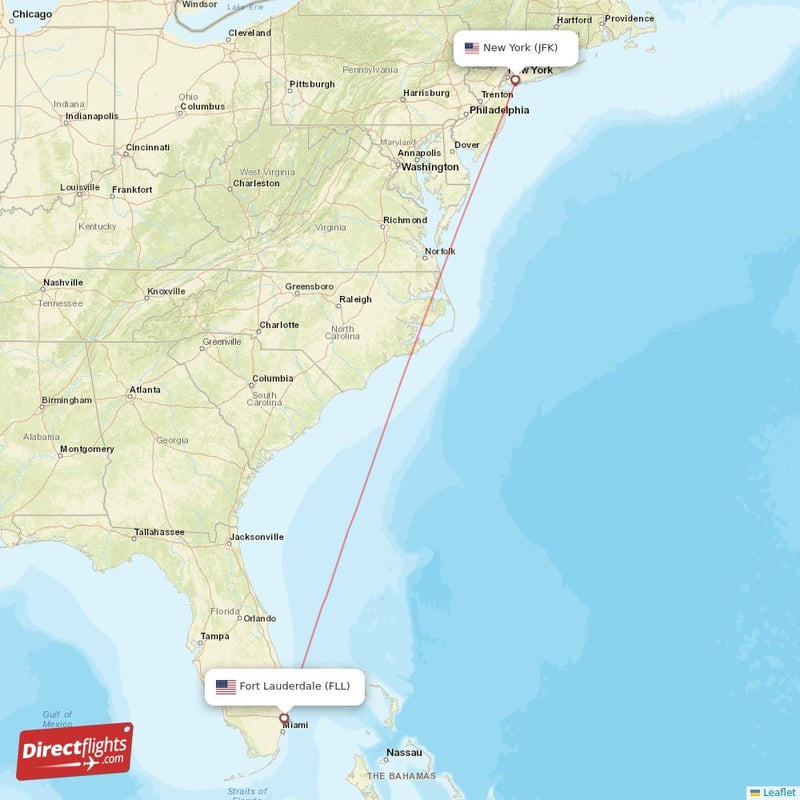
The direct flight time from New York to Florida can range significantly depending on your exact departure and arrival points. On average, a non-stop flight typically falls within a window of 2 hours and 30 minutes to 3 hours and 30 minutes. This range accounts for the varying distances between different airports within both states.
Non-stop vs. Connecting Flights
The quickest way to reach Florida is, undoubtedly, via a non-stop flight. These direct services eliminate the need for layovers, which can easily add several hours, if not a full day, to your travel time. Connecting flights, while sometimes more affordable or offering more flexible scheduling, extend the total journey considerably. A layover could be anywhere from 1 to 2 hours for a tight connection to 4-6 hours or more for a relaxed transfer, not including the time spent on the connecting flight itself. When considering a connecting flight, always factor in potential delays at the connecting airport, which could further impact your arrival time.
Key Departure and Arrival Cities
New York is served by three major international airports, offering a wide array of flights to Florida:
- John F. Kennedy International Airport (JFK): Often handles a mix of domestic and international carriers, providing numerous options.
- Newark Liberty International Airport (EWR): A major hub, especially for United Airlines, offering extensive routes.
- LaGuardia Airport (LGA): Primarily handles domestic flights, including a strong presence of airlines serving Florida.
In Florida, the most popular arrival airports that receive the bulk of direct flights from New York include:
- Miami International Airport (MIA): A gateway to South Florida and the Caribbean, with flight times typically around 2 hours 50 minutes to 3 hours 15 minutes.
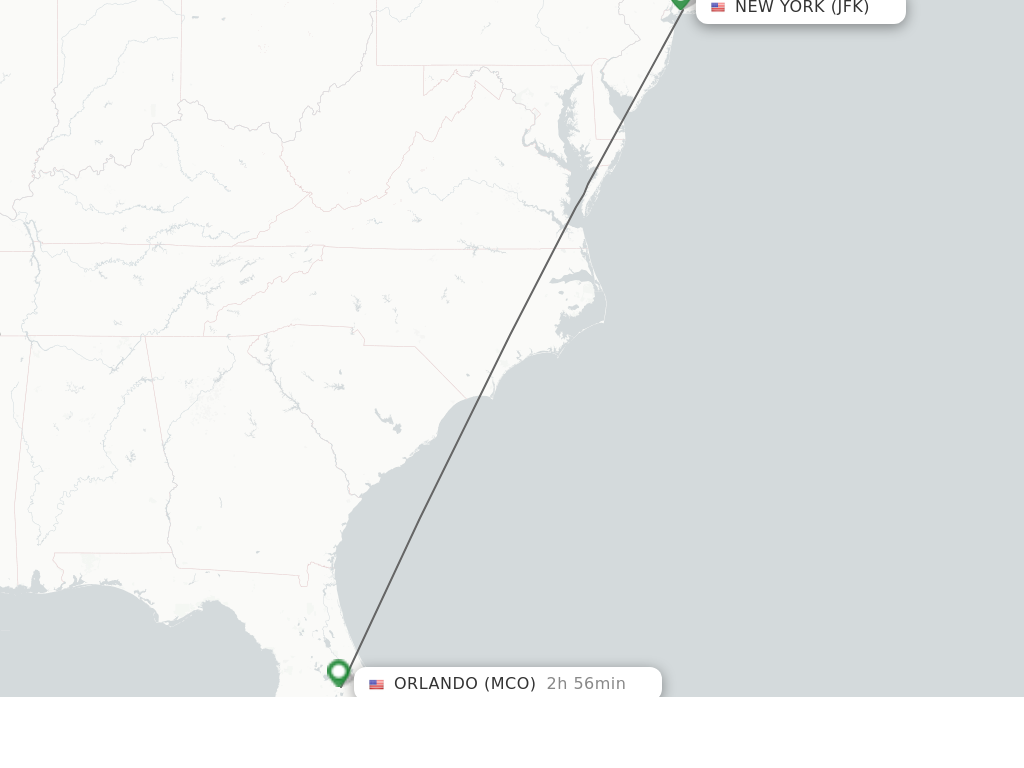
- Orlando International Airport (MCO): The primary airport for theme park visitors, with flights often ranging from 2 hours 30 minutes to 2 hours 45 minutes.
- Fort Lauderdale-Hollywood International Airport (FLL): Another major hub in South Florida, offering competitive flight times similar to MIA.
- Tampa International Airport (TPA): Serving the Gulf Coast of Florida, direct flights are usually around 2 hours 40 minutes to 3 hours.
Factors Influencing Flight Times
While the average flight duration provides a good baseline, several variables can affect the actual time spent in the air. Understanding these can help set realistic expectations and potentially influence your booking decisions.
Specific Departure and Arrival Airports
As mentioned, the precise origin and destination airports play a significant role. A flight from LGA to MCO will likely be slightly shorter than one from JFK to Southwest Florida International Airport (RSW) near Fort Myers, simply due to the differing distances involved. Even within Florida, flying to a northern city like Jacksonville International Airport (JAX) will naturally be a quicker journey than flying to Key West International Airport (EYW) at the state’s southernmost tip.
Aircraft Type and Speed
The type of aircraft used for your flight can also influence the speed and thus the duration. Modern commercial airliners, such as the Boeing 737 or Airbus A320 series, which are commonly used on this route, fly at similar cruising speeds. However, slight variations in aircraft performance, along with the airline’s specific flight plan and operational parameters, can lead to minor differences in scheduled flight times.
Weather Conditions and Air Traffic Control
Weather is a significant, unpredictable factor. Headwinds (winds blowing against the aircraft) can slow down a plane, adding 15-30 minutes or more to a flight. Conversely, tailwinds (winds blowing from behind) can shorten the flight time. Severe weather conditions, such as thunderstorms in either New York or Florida, can also lead to air traffic control (ATC) reroutes or holding patterns, causing delays both on the ground and in the air. ATC congestion, particularly around busy airspace corridors or major airports, can necessitate slower speeds or detours, extending the journey.
Route Optimization and Headwinds/Tailwinds
Airlines constantly optimize their flight paths for efficiency, considering factors like wind patterns, restricted airspace, and air traffic. While the direct distance is a straight line, aircraft rarely fly in one due to these considerations. The prevailing wind currents over the Atlantic Ocean can notably impact eastbound versus westbound flights, and similarly, north-south routes like New York to Florida can experience these effects.
Popular Routes and Airlines
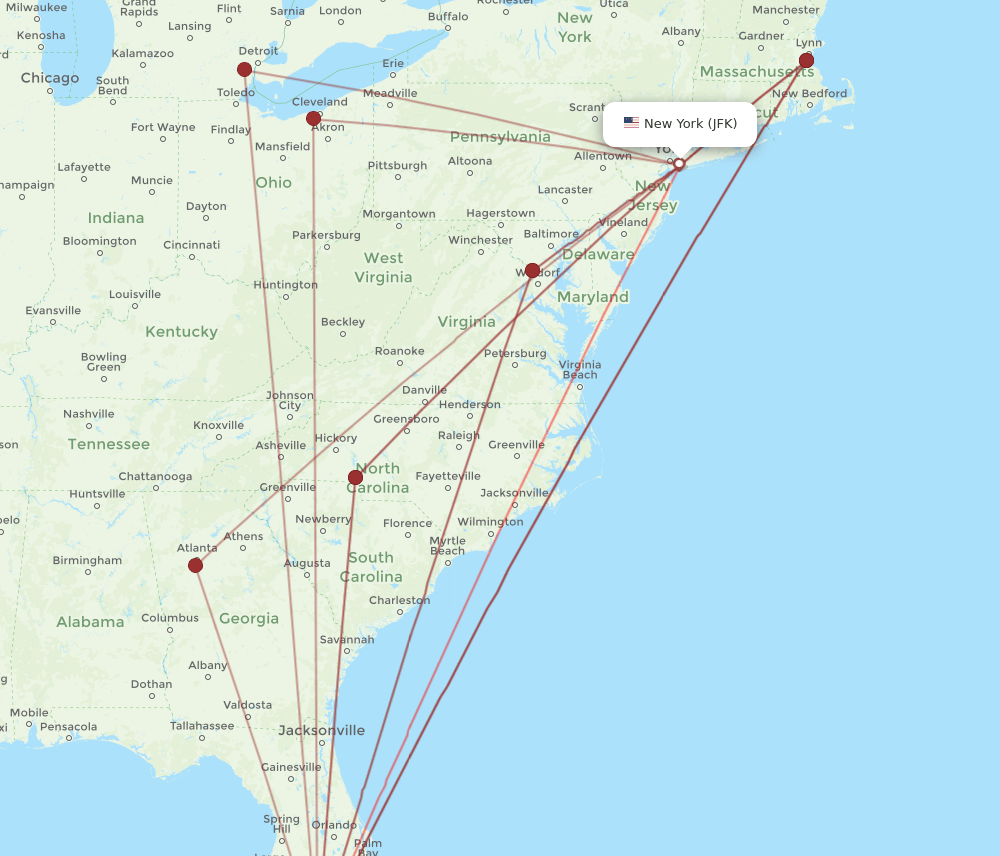
The corridor between New York and Florida is one of the busiest in the United States, serviced by a multitude of carriers and offering numerous daily flights.
Direct Flights to Major Florida Hubs
Travelers have ample choices for direct flights to Florida’s most popular destinations:
- Orlando: Extremely popular for leisure travelers heading to theme parks. Flights from JFK, LGA, and EWR to MCO are frequent.
- Miami: A major international gateway and cultural hub, with robust direct service from all three New York airports to MIA.
- Fort Lauderdale: Often a cost-effective alternative to Miami, with strong direct connections to FLL.
- Tampa: Serving the Gulf Coast region, TPA receives numerous direct flights.
- Other Florida airports with direct New York connections include Palm Beach International Airport (PBI), Southwest Florida International Airport (RSW) ( Fort Myers), Jacksonville International Airport (JAX), Sarasota-Bradenton International Airport (SRQ), St. Pete–Clearwater International Airport (PIE), and Daytona Beach International Airport (DAB).
Common Airlines Serving the Route
A wide array of airlines competes on the New York-Florida routes, offering options across different price points and service levels. Some of the most frequently used carriers include:
- Delta Air Lines (Delta): Known for its extensive network and service.
- JetBlue Airways (JetBlue): A popular choice, especially from JFK and LGA, offering more legroom and in-flight entertainment.
- American Airlines: A major player with numerous daily flights.
- United Airlines: Strong presence, especially from its Newark hub.
- Southwest Airlines: Favored for its flexible booking policies and two free checked bags, serving many Florida airports.
- Spirit Airlines and Frontier Airlines: Budget carriers offering competitive fares, though often with additional fees for extras.
- Allegiant Air: Connects smaller airports in Florida to regional airports in the New York area, typically operating on specific days of the week.
Beyond the Flight: Travel Time Considerations
While the “flight time” itself is a key metric, the total time spent traveling from your starting point in New York to your final destination in Florida encompasses much more. A truly insightful travel plan considers the entire journey.
Airport Arrival and Security Checkpoints
It is generally recommended to arrive at the airport at least 2 hours before a domestic flight. This allows ample time for check-in (if you haven’t done so online), baggage drop-off, and navigating security checkpoints. Depending on the airport, time of day, and season, security lines at JFK, LGA, or EWR can vary from a swift 15 minutes to over an hour. Programs like TSA PreCheck or Clear can significantly reduce this wait.
Ground Transportation at Both Ends
The time it takes to get to and from the airports is often underestimated. In New York, travel to the airports can involve significant traffic, subway rides, or express trains. Similarly, upon arrival in Florida, you’ll need to factor in time for baggage claim, car rental pickup, ride-share services, or hotel shuttles. A 3-hour flight might be sandwiched between an hour or two of ground transport on each side, bringing your total door-to-door travel time closer to 7-8 hours or more.
Potential Delays and Contingency Planning
Despite best-laid plans, delays can occur. Mechanical issues, crew availability, and cascading delays from other flights can all impact your schedule. It’s always wise to build a buffer into your plans, especially if you have connecting appointments or events immediately upon arrival. Tracking your flight’s status via airline apps or flight tracking websites can help you stay informed.
Tips for a Smoother Journey
Maximizing comfort and minimizing stress are key to an enjoyable travel experience, even on a relatively short flight.
Best Time to Book and Fly
For the best fares and potentially less crowded airports, consider flying during off-peak seasons (e.g., late January, September, October, early December). Mid-week flights (Tuesday, Wednesday) are often cheaper and less busy than weekend travel. Booking in advance, typically 1-3 months out, can also secure better prices. Early morning flights are often less prone to delays caused by accumulating air traffic throughout the day.
In-flight Comfort and Entertainment
Even for a 2.5 to 3.5-hour flight, preparation for in-flight comfort is beneficial. Bring a neck pillow, eye mask, and noise-canceling headphones for relaxation. Download movies, TV shows, podcasts, or e-books beforehand, as not all airlines on these routes offer extensive in-flight entertainment or reliable Wi-Fi. Staying hydrated is also important; bring a reusable water bottle to fill after security.
Navigating Airport Logistics
Familiarize yourself with your departure terminal and gate ahead of time. Use airport apps for real-time updates on gate changes, security wait times, and baggage claim information. If possible, complete online check-in and consider carrying only a carry-on bag to bypass baggage drop-off and retrieval, saving valuable time.
In conclusion, a direct flight from New York to Florida is a quick and convenient journey, typically lasting between 2.5 and 3.5 hours. However, by factoring in airport procedures, ground transportation, and potential variables like weather, travelers can gain a more realistic understanding of their total travel time and plan for a seamless transition from the urban dynamism of New York to the vibrant allure of Florida.
LifeOutOfTheBox is a participant in the Amazon Services LLC Associates Program, an affiliate advertising program designed to provide a means for sites to earn advertising fees by advertising and linking to Amazon.com. Amazon, the Amazon logo, AmazonSupply, and the AmazonSupply logo are trademarks of Amazon.com, Inc. or its affiliates. As an Amazon Associate we earn affiliate commissions from qualifying purchases.