
California stands as a beacon for progressive worker protections, and when it comes to new parents welcoming a child, the state offers some of the most comprehensive benefits in the nation. Understanding the nuances of maternity leave in California is crucial for expecting parents, employers, and anyone navigating the landscape of parental well-being. This guide delves into the various facets of maternity leave available in the Golden State, distinguishing between state-mandated programs and employer-specific policies, ensuring clarity and empowering individuals with knowledge.
Understanding California’s Paid Family Leave (PFL) Program
At the heart of California’s support for new parents is the State Disability Insurance (SDI) program, which includes Paid Family Leave (PFL). This program, funded through employee payroll deductions, provides partial wage replacement for eligible workers who need to take time off to bond with a new child.
Eligibility for PFL
To qualify for PFL benefits in California, an individual must meet several criteria:
- Covered Employer: The individual must work for an employer who pays into the SDI program. Most California employers participate in this program.
- Wages Paid: The individual must have earned at least $300 in wages during the 5- to 14-month base period prior to the claim start date.
- Identification: The individual must have a Social Security number or an assigned Individual Taxpayer Identification Number (ITIN).
- Disability: For pregnancy-related disability leave (which often precedes bonding leave), the individual must be unable to perform their regular job duties due to pregnancy, childbirth, or a related medical condition. This is typically covered under the disability insurance portion of SDI.
- Bonding: For bonding with a new child (biological, adopted, or foster), the leave must be taken within 12 months of the child’s birth or placement.
Duration and Benefits of PFL
The PFL program allows eligible individuals to take up to eight weeks of paid leave within a 12-month period. The benefit amount is calculated as a percentage of the individual’s highest-earning quarter during their base period. This translates to a weekly payment ranging from 7% to 70% of the state’s average weekly wage, depending on the individual’s earnings. While PFL provides wage replacement, it’s important to note that it does not guarantee job protection. Job protection is typically covered by other laws, such as the Family and Medical Leave Act (FMLA) and the California Family Rights Act (CFRA).
Navigating Job Protection: FMLA and CFRA
While PFL provides financial support, it’s the federal Family and Medical Leave Act (FMLA) and its California counterpart, the California Family Rights Act (CFRA), that offer crucial job protection during maternity leave. These laws allow eligible employees to take unpaid, job-protected leave for specified family and medical reasons, including the birth or adoption of a child.
Federal Family and Medical Leave Act (FMLA)
The FMLA entitles eligible employees of covered employers to take up to 12 workweeks of unpaid leave in a 12-month period for specific family and medical reasons. For new parents, these reasons include:
- The birth of a son or daughter and to care for the newborn child.
- The placement of a son or daughter with the employee for adoption or foster care.
To be eligible for FMLA leave, an employee must have worked for a covered employer for at least 12 months, have at least 1,250 hours of service during the 12 months before the start of the leave, and work at a location where the employer has at least 50 employees within a 75-mile radius.
California Family Rights Act (CFRA)
The CFRA mirrors many aspects of the FMLA but has key distinctions and often broader coverage. CFRA provides up to 12 workweeks of unpaid, job-protected leave in a 12-month period for the same family reasons: birth, adoption, or foster care placement of a child.
A significant difference is that CFRA applies to employers with 5 or more employees, making it accessible to a wider range of workplaces than FMLA. Additionally, CFRA allows employees to take leave for the serious health condition of a registered domestic partner, which FMLA does not cover.
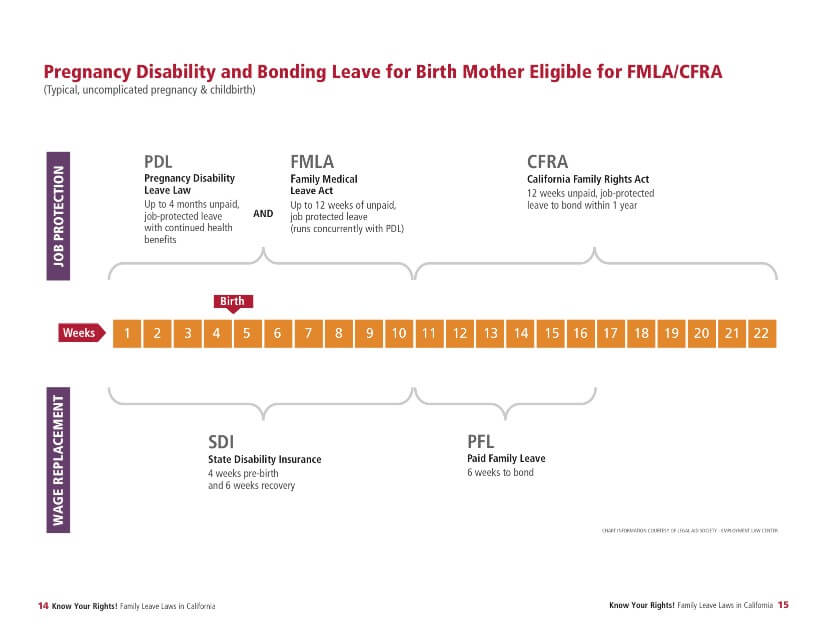
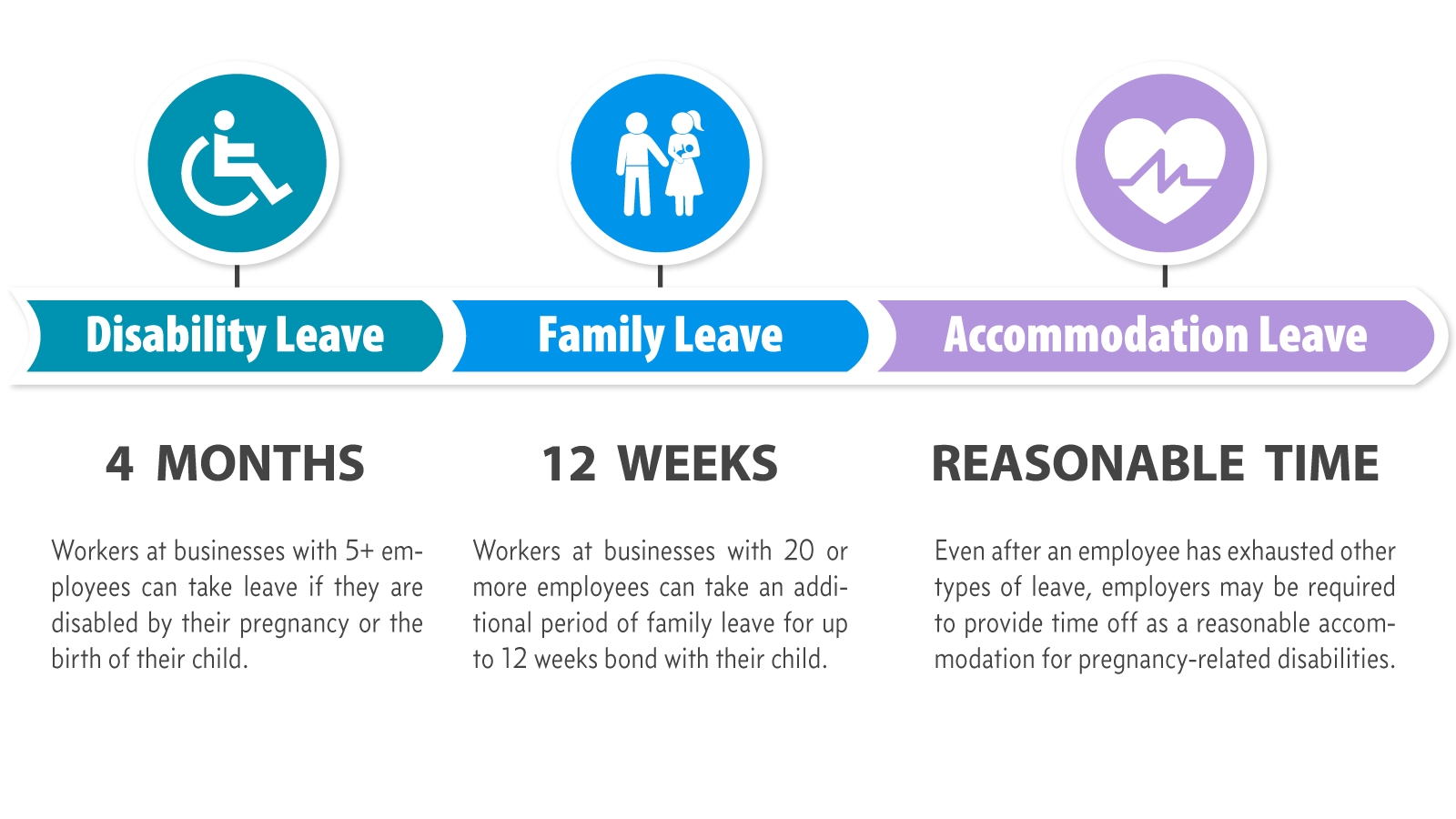
Crucially, CFRA has historically allowed employees to take leave for their own pregnancy-related disability, often in conjunction with bonding leave, for a total of up to 17.3 weeks of leave in some circumstances. However, recent changes in California law (effective January 1, 2021) have separated pregnancy disability leave from family bonding leave under CFRA, creating distinct entitlements. This means an employee might be eligible for up to 4 weeks of pregnancy disability leave and then an additional 12 weeks of family bonding leave under CFRA.
Interplay Between FMLA and CFRA
In California, FMLA and CFRA often run concurrently. This means that if an employee is eligible for both, their leave will count against both federal and state entitlements simultaneously. However, because CFRA has broader employer coverage and sometimes more inclusive definitions of family members, it’s often the primary law considered for job protection related to family leave in California.
Employer-Specific Policies and Additional Benefits
Beyond state and federal mandates, many California employers offer enhanced maternity leave benefits to attract and retain talent. These can include longer periods of paid leave, higher wage replacement rates, or other perks that support new parents.
Paid Parental Leave Programs
While PFL provides partial wage replacement, some companies supplement these benefits to offer full or near-full pay during the leave period. These employer-provided programs are a significant differentiator and can greatly ease the financial burden on new parents. It’s essential for employees to consult their employer’s human resources department or employee handbook to understand the specifics of any company-sponsored parental leave policies.
Short-Term Disability and Sick Leave
California’s State Disability Insurance also covers short-term disabilities, which can include the period of recovery following childbirth. This is distinct from PFL, which is for bonding. Many employers also offer paid sick leave, which can sometimes be used to supplement maternity leave or cover appointments related to pregnancy and recovery. Understanding how these different types of leave can be combined or utilized is key to maximizing time off and financial support.
Flexible Work Arrangements
In addition to formal leave policies, many California employers are increasingly offering flexible work arrangements to support parents returning to work. This can include options for remote work, reduced hours, or compressed workweeks. These arrangements can help ease the transition back to employment and provide a better work-life balance for new parents.
Planning and Applying for Maternity Leave in California
Successfully navigating maternity leave in California requires proactive planning and understanding the application processes for both wage replacement and job protection.
Steps for Employees
- Review Employer Policies: Understand your employer’s specific maternity leave benefits, including any supplemental pay, duration of leave, and procedures for requesting time off.
- Notify Your Employer: Provide timely notice to your employer as required by company policy and relevant laws (typically 30 days for foreseeable leave).
- Apply for Paid Family Leave (PFL): File a claim with the California Employment Development Department (EDD) for PFL benefits. You will need to provide information about your employer, your employment history, and the reason for your leave. For pregnancy disability, you will also need medical certification.
- Coordinate with Employer for Job Protection: Ensure your leave is properly documented and approved by your employer to secure job protection under FMLA and/or CFRA. This often involves filling out specific leave request forms.
- Understand Your Return-to-Work Rights: Be aware of your rights regarding returning to your position or an equivalent position upon completion of your leave.
Key Considerations for Employers
Employers in California play a vital role in facilitating maternity leave for their employees. This includes:
- Understanding Legal Obligations: Staying informed about FMLA, CFRA, and PFL requirements is paramount to avoid legal complications.
- Developing Clear Policies: Establishing comprehensive and transparent maternity leave policies that comply with all applicable laws and offer competitive benefits.
- Facilitating Communication: Maintaining open communication with employees regarding their leave requests, eligibility, and return-to-work plans.
- Supporting Employees: Providing necessary forms, information, and resources to help employees navigate the application processes for state benefits and employer-specific programs.
- Ensuring Job Protection: Strictly adhering to FMLA and CFRA provisions to guarantee job protection for employees on approved leave.
California’s commitment to supporting new families is evident in its robust legal framework and the increasing adoption of progressive employer policies. By understanding the interplay of PFL, FMLA, CFRA, and employer-specific benefits, individuals can make informed decisions about their maternity leave, ensuring both financial security and continued career progression.
LifeOutOfTheBox is a participant in the Amazon Services LLC Associates Program, an affiliate advertising program designed to provide a means for sites to earn advertising fees by advertising and linking to Amazon.com. Amazon, the Amazon logo, AmazonSupply, and the AmazonSupply logo are trademarks of Amazon.com, Inc. or its affiliates. As an Amazon Associate we earn affiliate commissions from qualifying purchases.