
Embarking on a journey to the enchanting islands of Hawaii is a dream for many, conjuring images of pristine beaches, lush landscapes, and vibrant culture. However, before you can don your lei and dip your toes in the warm Pacific Ocean waters, there’s the question of the journey itself: “How long of a flight is it to Hawaii?” While the answer isn’t a single number, it generally entails a significant commitment of time, ranging from a few hours for those on the United States West Coast to a full day or more for travelers from further afield. Understanding the typical flight durations, the factors that influence them, and how to best prepare for your long-haul adventure is key to making your Hawaiian vacation truly seamless.
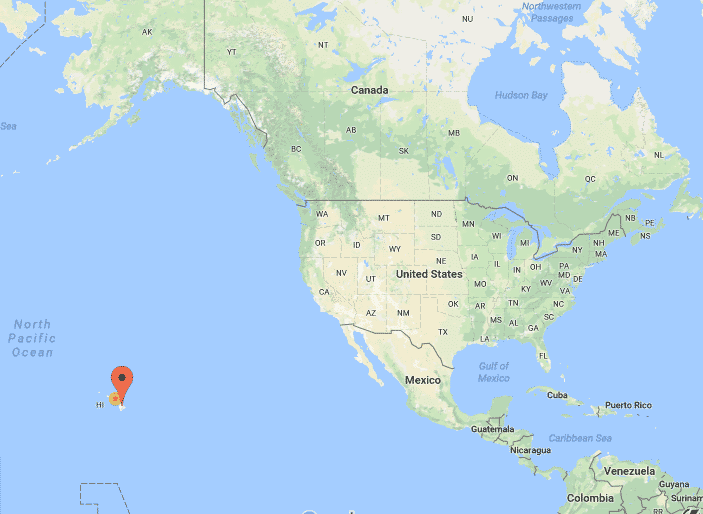
Hawaii is geographically isolated, located thousands of miles from any major landmass. This isolation is precisely what has preserved its unique ecosystems and cultural heritage, but it also means that reaching this paradise requires a substantial flight. Most travelers to Hawaii arrive at Daniel K. Inouye International Airport (HNL) in Honolulu, Oahu, or direct to other major island airports like Kahului Airport (OGG) on Maui, Kona International Airport (KOA) on the Big Island, or Lihue Airport (LIH) on Kauai. The exact duration of your flight will largely depend on your departure city, whether you have direct or connecting flights, and even elements like prevailing winds. This comprehensive guide will break down what you can expect in terms of flight times and offer insights into optimizing your travel experience to this dream destination.
Understanding Flight Durations to Hawaii
The vast expanse of the Pacific Ocean separates Hawaii from the continental United States and other global origins, making it a destination that demands patience and preparation for the journey. Flight times can vary significantly depending on where your adventure begins.
Flights from the West Coast
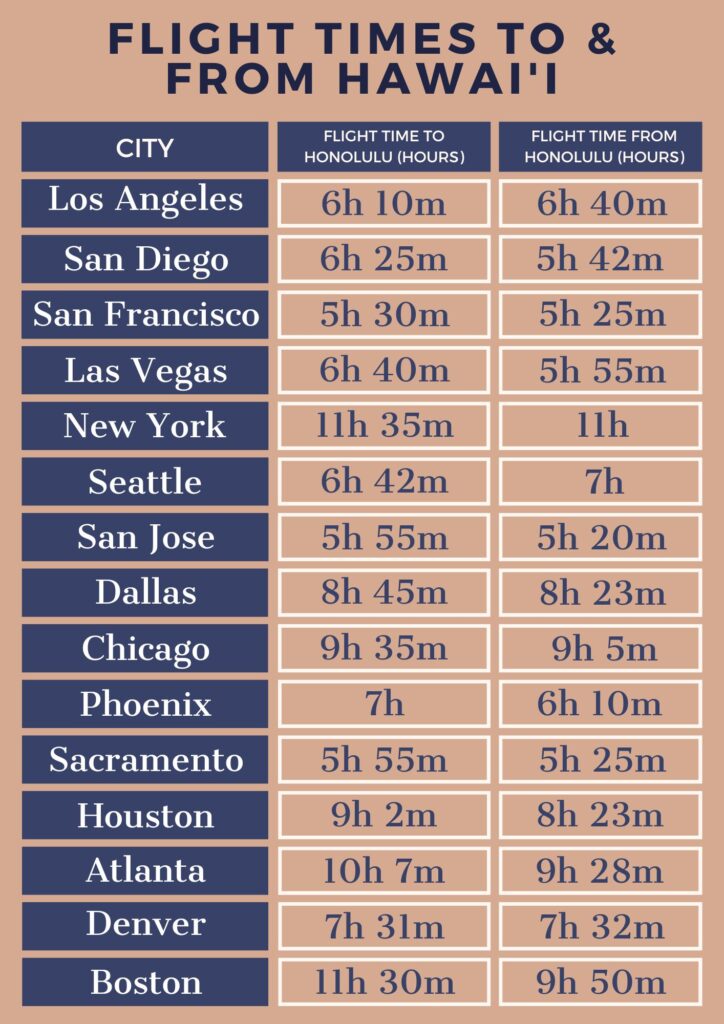
For travelers departing from major cities along the United States West Coast, Hawaii is the most accessible. These are typically the shortest flight durations.
- From Los Angeles (LAX) or San Francisco (SFO): A direct flight to Honolulu typically takes around 5 hours and 30 minutes to 6 hours. Flights to Maui or the Big Island might be slightly longer, perhaps 6 to 6.5 hours.
- From Seattle (SEA) or Portland (PDX): Expect direct flights to be in the range of 6 hours to 6 hours and 30 minutes.
- From Phoenix (PHX): Flights generally run about 6 hours and 30 minutes to 7 hours.
These relatively shorter flight times make Hawaii a popular escape for West Coasters, offering a quick transition from urban life to island serenity. The convenience of numerous daily direct flights from these hubs provides flexibility for planning your trip.
Flights from the Midwest
Moving further inland, the flight times naturally increase. Travelers from the Midwest will experience a longer journey, often necessitating early morning departures to arrive in Hawaii at a reasonable local time.
- From Chicago (ORD) or Dallas (DFW) / Houston (IAH): Direct flights can range from 8 hours to 9 hours. Some routes might involve a stop on the West Coast, extending the total travel time significantly.
- From Denver (DEN): A direct flight to Honolulu is typically around 7 hours and 30 minutes to 8 hours.
These flights are a significant commitment, emphasizing the importance of comfort and in-flight entertainment. Choosing the right airline and class of service can make a considerable difference in your travel experience when flying from the Midwest.
Flights from the East Coast
For those originating on the East Coast of the United States, the journey to Hawaii is one of the longest domestic flights possible.
- From New York (JFK/EWR), Boston (BOS), Atlanta (ATL), or Miami (MIA): Direct flights are rare but do exist, typically clocking in at 10 to 11 hours or more. Most travelers from the East Coast will take a connecting flight, usually with a layover on the West Coast. This means total travel time, including layovers, can easily stretch to 12 to 16 hours, or even longer, making it an epic travel day.
Careful planning is essential for East Coast travelers, including selecting flight times that minimize layover duration and considering overnight stays in a West Coast city if the total travel time becomes too arduous.
International Flights
For international visitors, particularly from Canada or Asia and Oceania, flight durations also vary.
- From Vancouver (YVR) or Toronto (YYZ): Direct flights from Vancouver average around 5 hours and 30 minutes to 6 hours. From Toronto, expect 9 to 10 hours for a direct flight, or significantly longer with connections.
- From Tokyo (NRT/HND), Japan: Direct flights are typically 7 to 8 hours.
- From Sydney, Australia: Expect a journey of approximately 9 to 10 hours.
These international routes highlight Hawaii’s role as a popular destination across the Pacific Ocean and emphasize the importance of flight planning for global travelers.
Factors Influencing Your Hawaii Flight Time
While the departure city is the primary determinant, several other factors can subtly or significantly influence the actual flight duration and your overall travel experience to Hawaii.
Departure City and Route Efficiency
The most direct route isn’t always available, especially if you’re flying from a smaller regional airport. Often, travelers will need to connect through a major hub like Los Angeles, San Francisco, or Chicago. These connections add not only flight time but also layover time, which can vary from a brisk 60 minutes to several hours. When booking, it’s worth comparing the total travel time, not just the flight legs, to find the most efficient route for your schedule and comfort. Sometimes, paying a little extra for a more direct option can save valuable vacation time and reduce travel fatigue.
Direct vs. Connecting Flights
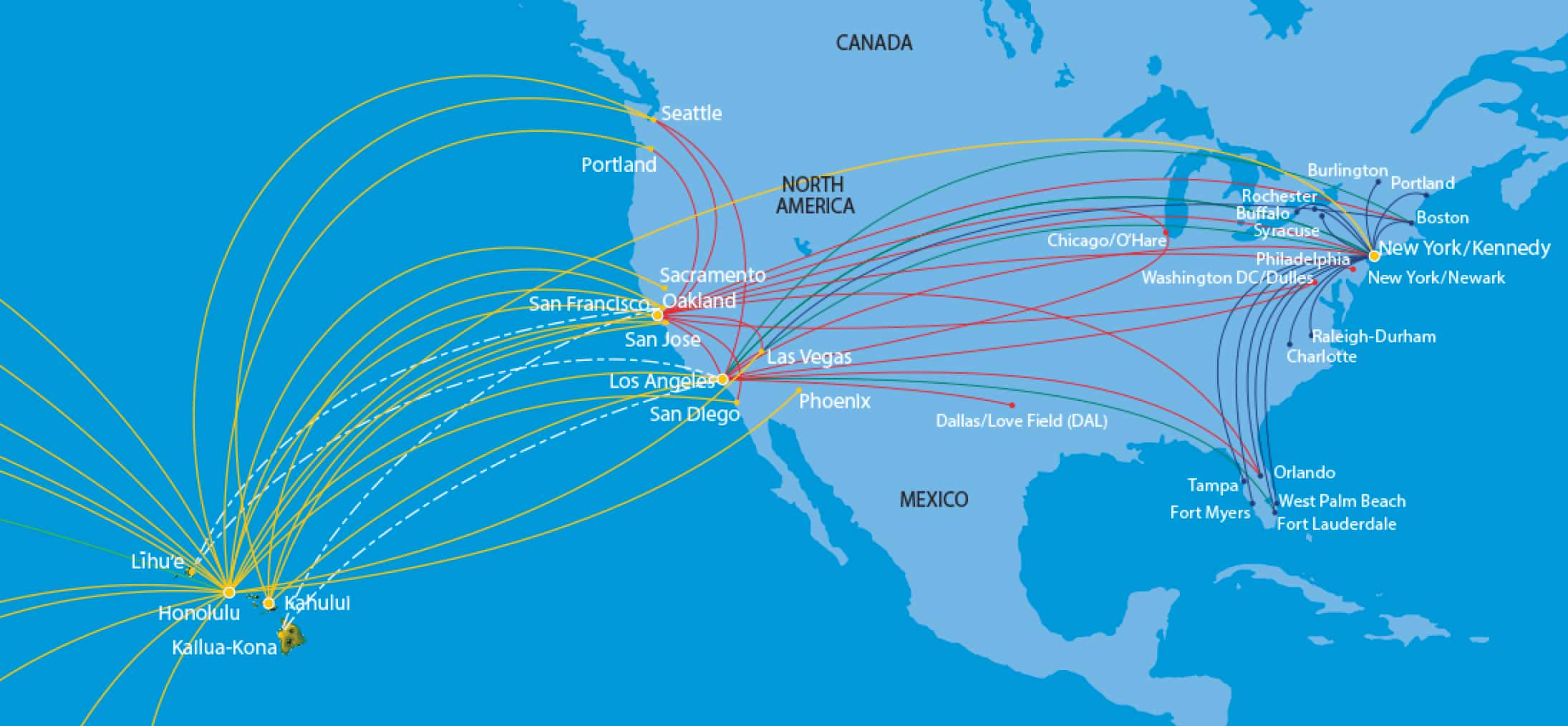
As highlighted, a direct flight is almost always faster than a connecting flight. While direct flights are common from West Coast cities, they become less frequent and often more expensive from the Midwest and East Coast. For some, a connecting flight might be unavoidable or more budget-friendly. When choosing connecting flights, consider the duration of the layover. A short layover (less than 90 minutes) carries a higher risk of missing your connection due to delays, while an overly long layover can be exhausting. An ideal layover for long-haul travel often sits in the 2-3 hour sweet spot, allowing enough time to stretch, eat, and transfer gates without feeling rushed or waiting indefinitely.
Aircraft Type and Tailwinds/Headwinds
The type of aircraft can also play a minor role. Newer, more fuel-efficient planes like the Boeing 787 Dreamliner or Airbus A350 might offer slightly faster cruising speeds than older models. More significantly, prevailing winds across the Pacific Ocean can impact flight times. Flights heading westbound (to Hawaii) often encounter headwinds, which can add 30 minutes to an hour to the journey. Conversely, eastbound flights (returning from Hawaii) typically benefit from tailwinds, making the return journey noticeably shorter, sometimes by as much as an hour or more. These natural phenomena are out of a traveler’s control but contribute to the variability in published flight schedules.
Preparing for Your Long-Haul Journey to Paradise
A long flight to Hawaii is an integral part of the adventure. Preparing adequately can transform a potentially tiresome journey into a comfortable prelude to your island escape. From managing comfort in the cabin to mitigating the effects of jet lag, a few thoughtful considerations can make all the difference.
Comfort and Entertainment on Board
Being prepared for a multi-hour flight is crucial for an enjoyable experience.
- Seating: If your budget allows, consider upgrading to a premium economy, business class, or first-class seat. The extra legroom, recline, and enhanced service can significantly improve comfort on flights lasting 8 hours or more. Even in economy, selecting an aisle seat for easy movement or a window seat for leaning against can make a difference.
- Essentials Kit: Pack a small carry-on with essentials: a neck pillow, eye mask, noise-canceling headphones, and warm socks or slippers. Layers of clothing are advisable as cabin temperatures can fluctuate. Don’t forget personal toiletries like a toothbrush, travel-sized moisturizer, and lip balm to combat dry cabin air.
- Hydration and Snacks: Airplane air can be dehydrating. Drink plenty of water throughout the flight and avoid excessive alcohol or caffeine. Pack healthy snacks to supplement airline meals, especially if you have dietary restrictions or prefer lighter options.
- Entertainment: While most major airlines offer in-flight entertainment systems, having your own loaded tablet, e-reader, or book ensures you have options even if the system malfunctions or doesn’t cater to your preferences. Download movies, podcasts, or music before you depart.
Minimizing Jet Lag
Crossing multiple time zones to reach Hawaii means jet lag is almost inevitable for many travelers. Hawaii operates on Hawaii Standard Time (HST), which does not observe daylight saving. This can mean a 2 to 6-hour time difference from the West Coast and an even larger difference (5 to 7 hours) from the East Coast.
- Pre-Adjust: A few days before your flight, try to gradually shift your sleep schedule closer to Hawaii time. Go to bed a little earlier or later, depending on your origin.
- Hydrate and Avoid Stimulants: As mentioned, staying hydrated helps combat jet lag. Avoid alcohol and caffeine, which can disrupt sleep patterns.
- Sleep on the Plane (Strategically): If it’s nighttime at your destination, try to sleep on the plane. If it’s daytime, try to stay awake and engage in activities.
- Sunlight Exposure: Upon arrival, expose yourself to natural sunlight, especially in the morning. This helps reset your circadian rhythm. Spend time outdoors and resist the urge to nap for too long during the day.
- Adjust to Local Time Immediately: Start eating meals and going to bed according to local Hawaii time. Consistency is key to adapting quickly.
Beyond the Flight: Maximizing Your Hawaii Experience
Once you’ve successfully navigated the flight to Hawaii, a world of unparalleled beauty and cultural richness awaits. To truly maximize your experience, it’s essential to consider which island best suits your travel style, where you’ll stay, and how you plan to engage with the local attractions and lifestyle.
Choosing Your Island Paradise
Hawaii is an archipelago of diverse islands, each offering a unique charm and array of experiences.
- Oahu: Known as “The Gathering Place,” Oahu is home to the capital city of Honolulu and iconic Waikiki Beach. It’s perfect for first-time visitors seeking a blend of city life, historical sites like Pearl Harbor, and natural wonders such as Diamond Head. It offers a vibrant nightlife, extensive shopping, and a wide range of dining options.
- Maui: Often called “The Valley Isle,” Maui is celebrated for its stunning beaches, the scenic Road to Hana, and the majestic sunrise views from Haleakala National Park. It caters to honeymooners, families, and adventure seekers alike, offering excellent snorkeling, surfing, and whale watching (in season).
- Kauai: “The Garden Isle” lives up to its name with lush rainforests, dramatic cliffs, and cascading waterfalls. It’s ideal for nature lovers and adventurers, offering hiking along the Na Pali Coast, kayaking, and a more laid-back atmosphere.
- Big Island (or Hawaii Island): This island is continually growing, thanks to its active volcanoes within Hawaii Volcanoes National Park. It boasts diverse microclimates, from black sand beaches to snow-capped mountains. It’s a fantastic choice for those interested in geology, stargazing, and exploring various landscapes.
- Molokai and Lanai: These smaller, less developed islands offer a retreat for those seeking ultimate tranquility, luxury, or an authentic cultural experience away from the bustling crowds.
Considering the type of experience you desire—be it bustling tourism, serene relaxation, or thrilling adventure—will guide your island choice.
Accommodation Options in Hawaii
Hawaii offers a spectrum of accommodation options to suit every budget and lifestyle.
- Luxury Resorts: For those indulging in luxury travel, renowned brands like Four Seasons, Ritz-Carlton, and Grand Hyatt offer opulent suites, world-class amenities, and exquisite dining, often on prime beachfront locations. These resorts provide everything you need for a pampered vacation.
- Family-Friendly Hotels: Many Hilton and Marriott properties, alongside local chains like Aston Hotels & Resorts, cater specifically to families, with kids’ clubs, multiple pools, and spacious rooms or villas.
- Budget-Friendly Stays: For budget travel, look for boutique hotels, vacation rentals (apartments or condos, especially for longer stays), or hostels in areas like Honolulu or near smaller towns. Booking well in advance and considering off-peak seasons can also yield better deals.
- Unique Experiences: From charming bed-and-breakfasts to secluded eco-lodges, Hawaii provides unique accommodation experiences for those looking beyond conventional hotels.
When booking, always check reviews, compare prices, and consider the amenities that are most important for your trip, such as kitchenettes for self-catering or proximity to attractions.
Exploring Hawaii’s Culture and Attractions
Beyond its natural beauty, Hawaii is rich in local culture, history, and unique activities. Engaging with these aspects elevates your travel experience from a mere vacation to a deep immersion.
- Local Culture and Food: Explore local markets, attend a traditional luau, and try authentic Hawaiian cuisine like poke, kalua pig, and fresh seafood. Engaging with local communities, respecting customs, and learning a few Hawaiian phrases can enhance your cultural experience.
- Activities: Hawaii is an adventurer’s paradise. Snorkeling, surfing lessons, paddleboarding, hiking volcanic trails, zip-lining through rainforests, or helicopter tours offer thrilling ways to see the islands. For a more relaxed pace, enjoy catamaran cruises, visit botanical gardens, or simply unwind on a beautiful beach.
- Landmarks and Nature: Discover historical landmarks like the USS Arizona Memorial at Pearl Harbor, explore the breathtaking vistas of the Waimea Canyon on Kauai, or witness the power of creation at Hawaii Volcanoes National Park. Each island offers incredible natural wonders waiting to be explored.
Making the Most of Your Stay
Regardless of your travel style – whether it’s a family trip, a business stay with leisure, or a romantic getaway – a few tips can help ensure a memorable visit. Plan your itinerary but leave room for spontaneity. Embrace “island time,” a more relaxed pace of life. Support local businesses, practice responsible tourism by respecting the environment and cultural sites, and always be mindful of ocean safety.
Final Thoughts on Your Hawaiian Adventure
While the thought of a long flight might seem daunting, the allure of Hawaii undeniably makes the journey worthwhile. Whether you’re flying 5 hours from the West Coast or enduring a 15-hour odyssey from the East Coast, the moment you step off the plane into the warm, fragrant air, you’ll know you’ve arrived in paradise. The key to a successful Hawaiian vacation begins long before you reach the airport: it starts with understanding the commitment of the journey, preparing thoughtfully for the flight, and envisioning the incredible experiences that await you on these magical islands. With careful planning and an open mind, your flight to Hawaii will be but a small prelude to an unforgettable adventure in one of the world’s most cherished travel destinations. Enjoy the ride, and welcome to Aloha Country!
LifeOutOfTheBox is a participant in the Amazon Services LLC Associates Program, an affiliate advertising program designed to provide a means for sites to earn advertising fees by advertising and linking to Amazon.com. Amazon, the Amazon logo, AmazonSupply, and the AmazonSupply logo are trademarks of Amazon.com, Inc. or its affiliates. As an Amazon Associate we earn affiliate commissions from qualifying purchases.