
The allure of the open ocean, the steady rhythm of waves against a hull, and the promise of tropical paradise draw countless adventurers to dream of sailing across the Pacific Ocean. For those on the western shores of the United States, specifically the rugged coast of Oregon, the ultimate destination often glimmers on the horizon: Hawaii. This monumental journey isn’t just a trip; it’s an expedition, a test of endurance, skill, and preparation, culminating in the unparalleled beauty and warm embrace of the Hawaiian Islands. But before one can bask in the sun-drenched beaches of Oahu or Maui, a crucial question demands an answer: How long does it actually take to sail from Oregon to Hawaii?

The simple answer is that there’s no single, definitive timeframe. The duration of this epic voyage is a complex interplay of various factors, from the vessel itself to the prevailing weather patterns and the expertise of the crew. Typically, sailors can expect to spend anywhere from 18 to 30 days at sea for a non-stop passage, though this window can expand significantly depending on circumstances. This guide will delve into the critical elements that dictate the length of this incredible journey, offering insights for anyone contemplating this ultimate seafaring adventure.
The Journey’s Blueprint: Understanding the Variables
Embarking on a journey of thousands of nautical miles across the Pacific requires a deep understanding of the forces at play. The time it takes is less about a fixed schedule and more about adapting to the dynamic environment of the open ocean.
Boat Type and Performance
The vessel you choose is arguably the most significant factor influencing your passage time.
- Size and Design: Larger sailboats, especially modern cruising yachts and multihulls (catamarans), tend to be faster than smaller, older monohulls. Catamarans, with their inherent stability and wider beam, often offer higher average speeds. A well-designed 40-foot monohull might average 5-6 knots, while a 50-foot catamaran could comfortably maintain 7-8 knots, significantly cutting down travel time.
- Hull Speed: Every boat has a theoretical “hull speed” based on its waterline length. While it’s possible to exceed this with surfing waves or strong winds, it gives a baseline for maximum efficient speed.
- Condition and Equipment: A well-maintained vessel with efficient sails, a reliable engine (for calms or emergencies), and modern navigation equipment will inherently be faster and safer. Efficient autopilot systems reduce crew fatigue, allowing for more consistent progress. Older, less optimized vessels might struggle to maintain consistent speeds, adding days to the voyage.
Weather and Ocean Conditions
Nature dictates much of the pace for ocean crossings. Understanding and leveraging weather patterns is critical.
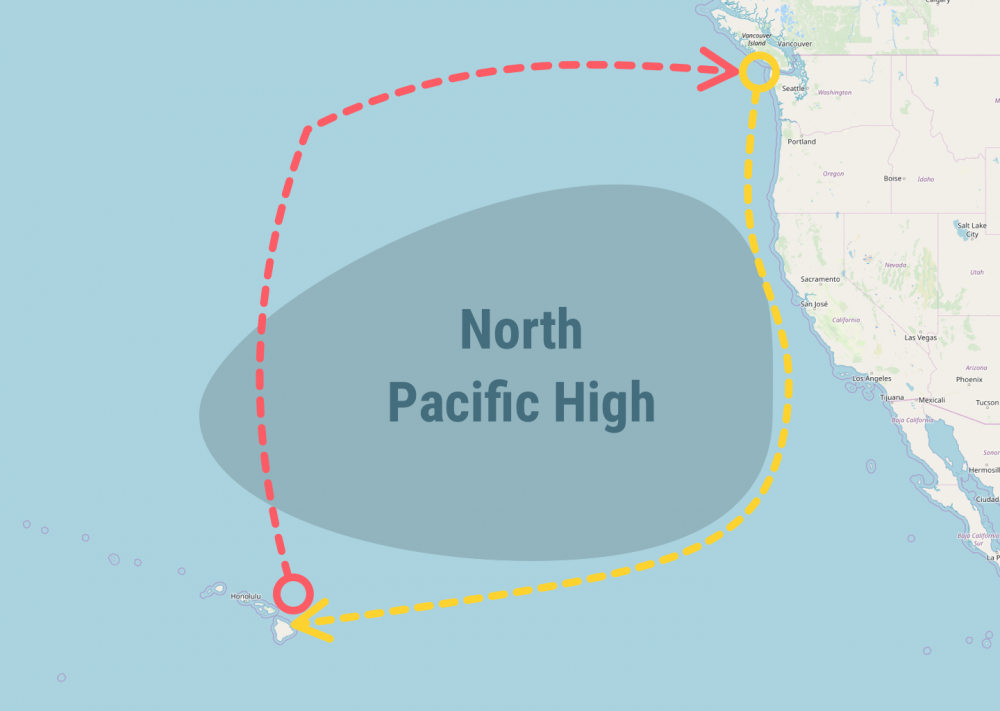
- Wind Patterns: The ideal window for sailing from the US West Coast to Hawaii typically runs from late spring through early fall. During this period, the North Pacific High-pressure system is well-established, pushing the easterly trade winds further north. This allows sailors to sail south-southwest from Oregon to catch these consistent, favorable winds, making for a downwind or broad-reach passage. Attempting the journey outside this window can mean battling headwinds, unpredictable storms, or frustrating calms, drastically extending the trip.
- Ocean Currents: While less impactful than wind, ocean currents can add or subtract a few miles per day. The North Pacific Current and the California Current might play a role in the initial leg, but generally, the route seeks to align with favorable wind patterns more than current.
- Storm Avoidance: Modern weather routing services and satellite communications allow sailors to monitor conditions and adjust their course to avoid major weather systems like hurricanes or severe squalls, which could otherwise force them to heave-to (stop and ride out the storm) for days, or even turn back.
Crew Experience and Sailing Style
The human element is just as crucial as the mechanical and natural.
- Experience Level: A seasoned crew with extensive offshore experience will be more adept at optimizing sail trim, navigating efficiently, and handling minor issues quickly, leading to more consistent progress. Novice crews might take a more cautious approach, which can sometimes mean slower speeds.
- Sailing Style: Some crews prioritize speed, pushing the boat hard day and night, even hand-steering when needed to maintain optimal performance. Others prefer a more relaxed pace, focusing on comfort and safety, which naturally adds to the duration. The decision to sail non-stop versus making potential, though rare, stops also influences the overall time. Given the vast distance from Oregon to Hawaii, a direct passage is almost always the chosen strategy for a cruising sailboat.
Typical Sailing Durations and Distances
With the variables in mind, let’s nail down what a typical crossing entails in terms of distance and time. The journey from Oregon to Hawaii is a serious undertaking, demanding respect for the vastness of the Pacific.
The Direct Route from Oregon
The approximate distance from coastal Oregon ports such as Astoria, Newport, or Coos Bay to the main islands of Hawaii (like Oahu or Maui) ranges from 2,200 to 2,500 nautical miles. The exact mileage depends on your departure point and chosen destination island, as well as the specific routing taken to optimize for winds.
- Average Speed Calculation: For a typical cruising sailboat, an average speed of 5-7 knots is considered good for an offshore passage. Let’s use an average of 6 knots for a calculation:
- 2,350 nautical miles (mid-range distance) / 6 knots = 391.67 hours
- 391.67 hours / 24 hours/day = approximately 16.3 days
However, this is a theoretical ideal. In reality, sustained average speeds are often lower due to variable winds, sail changes, dodging weather, or simply wanting to slow down for comfort. This is why the generally accepted range is wider.
- Realistic Duration Range: Most cruising sailors should anticipate a journey lasting 18 to 30 days.
- Faster Passages (12-18 days): This range is typically achieved by high-performance racing yachts, very well-equipped and expertly crewed cruising boats that catch ideal weather windows, or those pushing their vessel to its limits. These boats might average 8-10+ knots.
- Typical Passages (18-25 days): This is the most common timeframe for well-prepared cruising sailboats and their crews, averaging 5-7 knots with a reasonable balance of pushing hard and conserving energy.
- Slower Passages (25-40+ days): This can happen due to encountering prolonged periods of light winds (calms), adverse weather requiring significant detours, equipment failures necessitating slower speeds, or a crew’s deliberate choice for a more relaxed pace. It underscores the importance of carrying ample provisions.
Factors Influencing the Range
Several specific scenarios can shift your voyage’s duration within or even beyond these ranges:
- Prolonged Calms: The “doldrums” or areas of very light wind can bring a boat to a crawl, forcing reliance on the engine (if fuel allows) or patiently waiting for wind, adding days to the trip.
- Headwinds or Beam Winds: While the goal is a downwind run, unexpected shifts can mean sailing into headwinds or on a beam reach, which is often slower and less comfortable.
- Equipment Failures: An autopilot malfunction could require constant hand-steering, leading to crew fatigue and slower progress. A damaged sail might necessitate repairs at sea or sailing under reduced canvas.
- Crew Health/Fatigue: A sick or injured crew member, or general exhaustion, can impact the crew’s ability to maintain watch schedules and optimize the boat’s performance.
Preparation is Paramount: Before You Set Sail
A successful and enjoyable voyage across the Pacific hinges almost entirely on meticulous preparation. This isn’t a trip to be undertaken lightly; every detail, from the boat’s condition to the crew’s training, must be thoroughly addressed.
Vessel Preparation and Outfitting
Your sailboat must be in peak condition for such a demanding journey.
- Structural Integrity: A comprehensive survey of the hull, keel, rudder, and rigging is essential. Look for any signs of fatigue, corrosion, or wear.
- Engine and Systems: The engine, fuel system, electrical system, and plumbing must be in perfect working order. Carry spare parts for critical components like alternators, fuel filters, and pumps. A reliable desalination system for fresh water is highly recommended.
- Sails and Rigging: Inspect all sails for tears, chafe, and UV damage. Ensure standing and running rigging is sound. Carry repair kits for sails and rigging.
- Safety Equipment: This is non-negotiable. Essential items include an Emergency Position Indicating Radio Beacon (EPIRB), a liferaft, redundant communication systems (satellite phone, SSB radio), flares, a well-stocked offshore first aid kit, and personal flotation devices (PFDs) for every crew member.
- Navigation and Communication: Modern GPS, chartplotters, radar, and an AIS (Automatic Identification System) transceiver are vital. Have backup paper charts and a sextant for celestial navigation in case of electronics failure. Reliable long-range communication is crucial for weather updates and emergency contact.
- Provisions: Calculate food and water needs for the estimated duration plus at least an extra week or two, accounting for unexpected delays. Non-perishable items, canned goods, and freeze-dried meals are staples.
Crew Training and Planning
The crew’s capabilities are as important as the boat’s.
- Offshore Sailing Skills: All crew members should have a basic understanding of sailing, navigation, and emergency procedures. Consider taking offshore sailing courses or participating in shorter shakedown cruises.
- Emergency Drills: Practice man overboard recovery, fire fighting, damage control, and abandoning ship procedures.
- Watch Schedules: Establish clear watch schedules to ensure everyone gets adequate rest and the boat is always monitored.
- Medical Preparedness: At least one crew member should have advanced first aid or wilderness medicine training. Consult a doctor for a comprehensive medical kit and advice on managing common offshore ailments.
- Customs and Immigration: While sailing from Oregon (a U.S. state) to Hawaii (another U.S. state) is a domestic journey for U.S. citizens, international vessels or those with foreign crew should check specific entry requirements for Hawaii.
Pre-Departure Logistics & Accommodation
The final days before casting off are critical for last-minute checks and relaxation.
- Pre-Departure Stays: Before setting sail from Oregon, you might want to stay in comfortable accommodations to rest and finalize preparations. Coastal towns offer various options. For example, in Astoria, the Cannery Pier Hotel & Spa offers luxury with river views, while in Lincoln City, The Coho Oceanfront Lodge provides a perfect coastal retreat. These places offer a chance to relax before the intensity of the voyage.
- Stocking Up: Major cities like Portland or larger coastal towns provide comprehensive shopping opportunities for provisions, spare parts, and any last-minute items.
- Final Checks: Use the last days at the marina for a final walk-through of the entire vessel, topping off fuel and water tanks, and securing everything on deck and below for sea.
Arriving in Paradise: The Hawaiian Experience
The moment your vessel cuts through the turquoise waters and the verdant peaks of Hawaii appear on the horizon is an emotional one – the culmination of weeks of relentless sailing. It’s a transition from the solitude of the sea to the vibrant energy of island life.
First Landfall and Marina Options
Once you’ve safely navigated the open Pacific, you’ll need a place to drop anchor or tie up. Hawaii offers several welcoming ports of entry.
- Popular Arrival Ports:
- Oahu: Often the first choice due to its international airport and comprehensive marine services. Honolulu boasts the Ala Wai Yacht Harbor, one of the largest small boat harbors in the state, and Kewalo Basin Harbor, offering transient slips.
- Maui: Lahaina Harbor on Maui is another popular choice, steeped in whaling history and offering a lively atmosphere.
- Big Island: Kailua-Kona offers convenient access to the Big Island’s unique volcanic landscapes and vibrant marine life.
- Post-Arrival Procedures: Even for domestic arrivals from the mainland U.S., it’s customary to contact port authorities upon arrival. Be prepared for potential inspections by agricultural quarantine officials, as Hawaii has strict rules to protect its unique ecosystem from invasive species.
Post-Voyage Relaxation and Exploration
After weeks at sea, your body and mind will crave solid ground, hot showers, and fresh food.
- Accommodation and Relaxation: Hawaii offers a spectrum of accommodations to suit every preference, from luxurious resorts to cozy apartments. On Oahu, you might treat yourself to the exquisite comforts of the Four Seasons Resort Oahu at Ko Olina, unwinding by an infinity pool. On Maui, the iconic Grand Wailea, A Waldorf Astoria Resort offers an expansive sanctuary. These resorts provide the perfect setting to decompress, enjoy gourmet meals, and perhaps indulge in a spa treatment.
- Embracing Local Culture and Activities: Hawaii is a treasure trove of experiences.
- Oahu: Explore the historical significance of Pearl Harbor, hike to the summit of Diamond Head for panoramic views, or snorkel in the pristine waters of Hanauma Bay.
- Maui: Drive the scenic Road to Hana, witness a sunrise from Haleakala Crater, or try your hand at surfing lessons.
- Big Island: Marvel at the active volcanoes within Volcanoes National Park or explore the black sand beaches.
- Culinary Delights: Indulge in fresh, local Hawaiian cuisine. Enjoy a traditional luau, sample poke bowls, fresh seafood, and tropical fruits.
- Lifestyle: Whether you arrived on a luxury yacht or a modest sailboat, Hawaii embraces all types of travelers. From high-end dining and exclusive resort experiences to exploring local markets and hiking trails, the islands offer a diverse lifestyle to complement any post-voyage desire. Many sailors choose to stay for an extended period, living aboard their boats in a marina and immersing themselves in the local community.
Sailing from Oregon to Hawaii is more than just a passage; it’s a transformative life experience. The journey’s length, while variable, typically falls within a window of 2 to 4 weeks, demanding rigorous preparation, skilled seamanship, and a resilient spirit. The reward for enduring the vastness of the Pacific is the unparalleled beauty, vibrant culture, and serene embrace of the Hawaiian Islands – a destination truly worth every nautical mile. For those with the dream and the dedication, this voyage promises memories that will last a lifetime, an adventure that truly exemplifies life out of the box.
LifeOutOfTheBox is a participant in the Amazon Services LLC Associates Program, an affiliate advertising program designed to provide a means for sites to earn advertising fees by advertising and linking to Amazon.com. Amazon, the Amazon logo, AmazonSupply, and the AmazonSupply logo are trademarks of Amazon.com, Inc. or its affiliates. As an Amazon Associate we earn affiliate commissions from qualifying purchases.