
The Montgomery Bus Boycott, a seminal event in the United States Civil Rights Movement, lasted for an astonishing 381 days. From December 5, 1955, until December 20, 1956, the Black citizens of Montgomery, Alabama, collectively refused to ride the city’s segregated public buses, waging an unprecedented campaign of nonviolent resistance that captured the attention of the nation and the world. This extraordinary act of unity and perseverance ultimately led to a landmark Supreme Court decision that outlawed segregation on public transportation, forever changing the landscape of American society and inspiring future generations to fight for justice.
For travelers seeking to understand the deep historical currents that shaped modern America, a visit to Montgomery offers an unparalleled opportunity to walk in the footsteps of heroes. Beyond the historical narrative, this city has evolved into a destination where culture, accommodation, and the echoes of transformative events converge, offering a profound experience for any visitor.
The Spark of a Movement: A Turning Point in Civil Rights
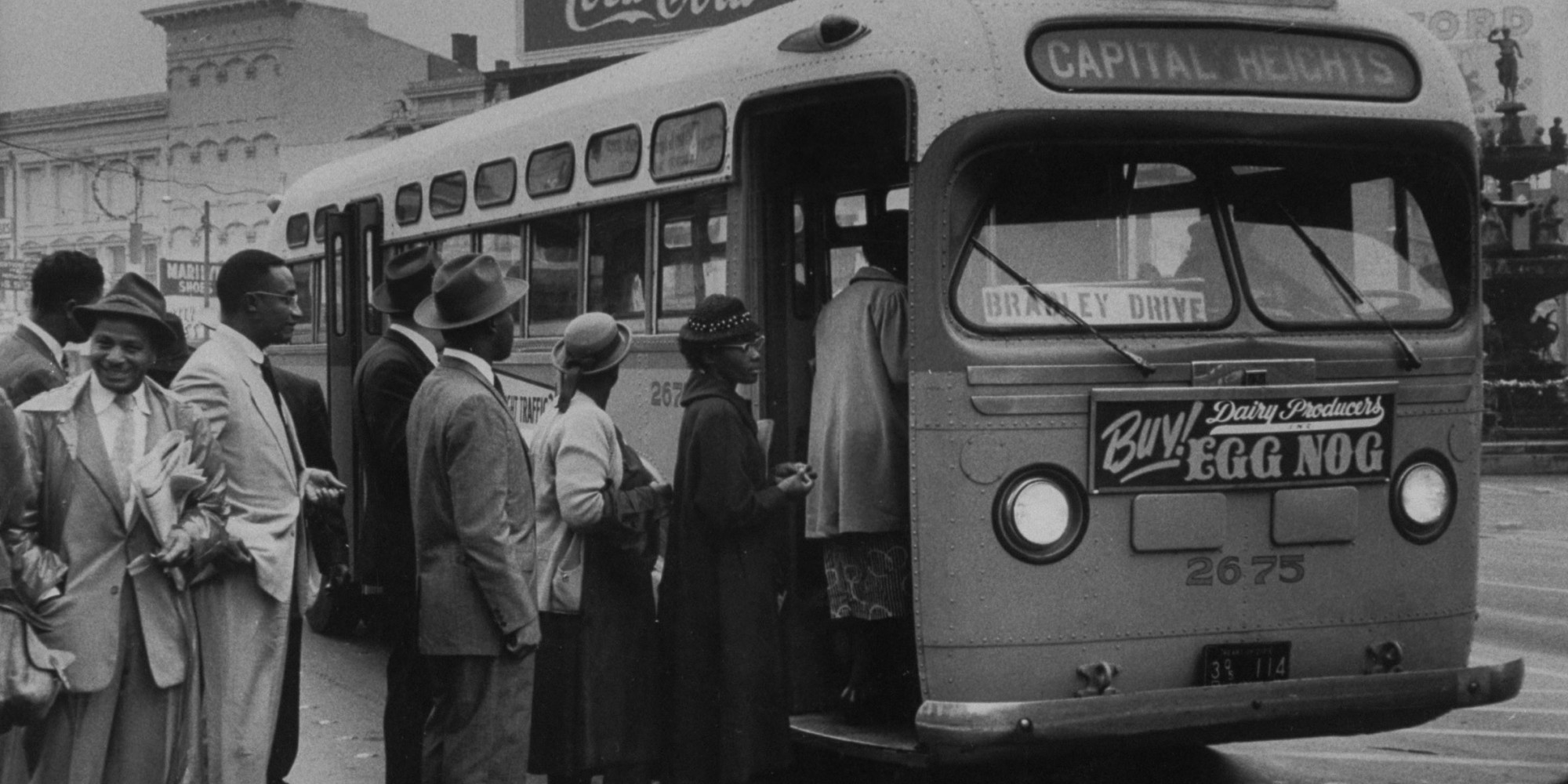
To fully grasp the magnitude of the Montgomery Bus Boycott’s duration, one must first understand the oppressive conditions that necessitated such an extreme measure. In the mid-20th century Montgomery, like much of the American South, operated under the brutal system of Jim Crow laws. These laws enforced racial segregation in every aspect of public life, including transportation. On city buses, Black passengers were forced to pay their fare at the front, then exit and re-enter through the back door. They were relegated to seats in the back of the bus, and if the “white” section filled up, they were expected to give up their seats to white passengers.
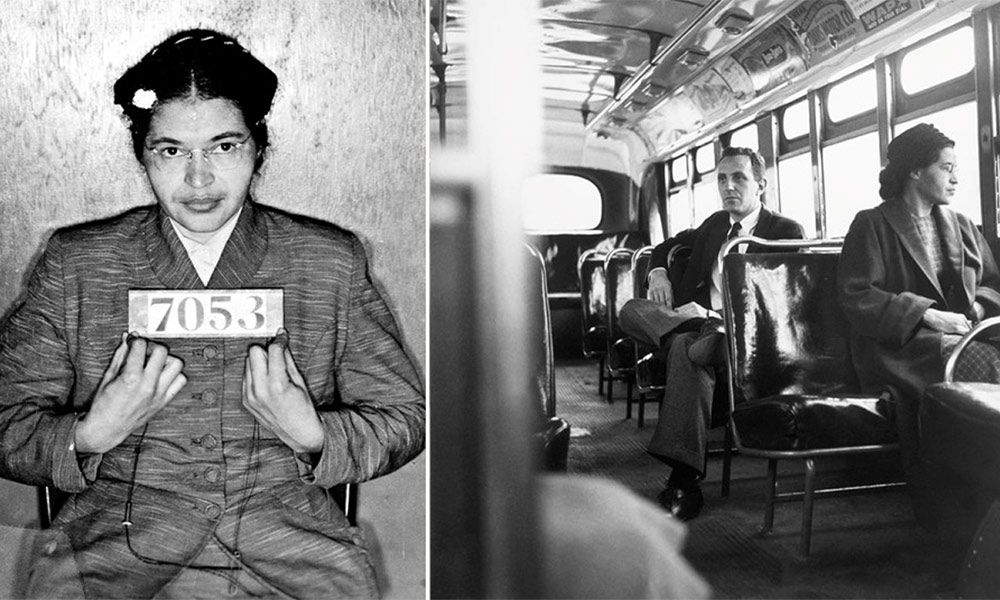
This daily humiliation was a constant reminder of their second-class status. Several incidents of Black passengers being arrested or mistreated for defying these rules had occurred, laying a volatile groundwork for change. The spark that ignited the boycott came on Thursday, December 1, 1955, when Rosa Parks, a seamstress and active member of the NAACP (National Association for the Advancement of Colored People), refused to give up her seat to a white passenger on a Montgomery city bus. Her arrest for civil disobedience was not an impulsive act but a deliberate challenge to an unjust system, meticulously planned by local civil rights leaders.
The immediate aftermath of Rosa Parks’ arrest saw swift action from the Black community. The Women’s Political Council (WPC), led by Jo Ann Robinson, and the NAACP, including veteran activist E.D. Nixon, called for a one-day boycott of the city buses on Monday, December 5, 1955 – the day of Parks’ trial. The goal was to demonstrate the collective power and indignation of the Black community. The success of this initial one-day boycott was staggering; an estimated 90% of Black bus riders stayed off the buses, walking, carpooling, or taking taxis instead.
This overwhelming show of solidarity immediately signaled that a longer, more sustained protest was possible. On the evening of December 5, at a mass meeting held at the Holt Street Baptist Church, the Montgomery Improvement Association (MIA) was formed to organize and sustain the boycott. Its charismatic and eloquent president, a then relatively unknown 26-year-old minister named Martin Luther King Jr., was elected, thrusting him into the national spotlight and setting the stage for his emergence as a towering figure of the Civil Rights Movement. What began as a one-day protest rapidly escalated into a full-scale economic and social struggle, with demands for courtesy, hiring of Black bus drivers, and a seating system where passengers could sit anywhere in the unreserved sections on a first-come, first-served basis.
The Enduring Journey: 381 Days of Resilience and Resolve
The decision to continue the boycott beyond the initial day marked a profound commitment by Montgomery’s Black citizens. For 381 grueling days, they maintained their resolve, demonstrating extraordinary endurance in the face of immense pressure and hardship. This period was a testament to community organization, spiritual conviction, and the unwavering belief in the righteousness of their cause.
Sustaining the Boycott: Community, Logistics, and Sacrifice
Maintaining a boycott of this scale for over a year required an intricate logistical network and immense personal sacrifice from every participant. The MIA, under King’s leadership, developed a sophisticated carpool system involving hundreds of private vehicles. Volunteer drivers crisscrossed the city, picking up thousands of boycotters daily and ferrying them to work, school, and essential appointments. Churches served as dispatch centers, pooling resources and coordinating routes. This massive undertaking was funded by donations from within the Montgomery community, as well as sympathetic supporters across the nation and internationally.
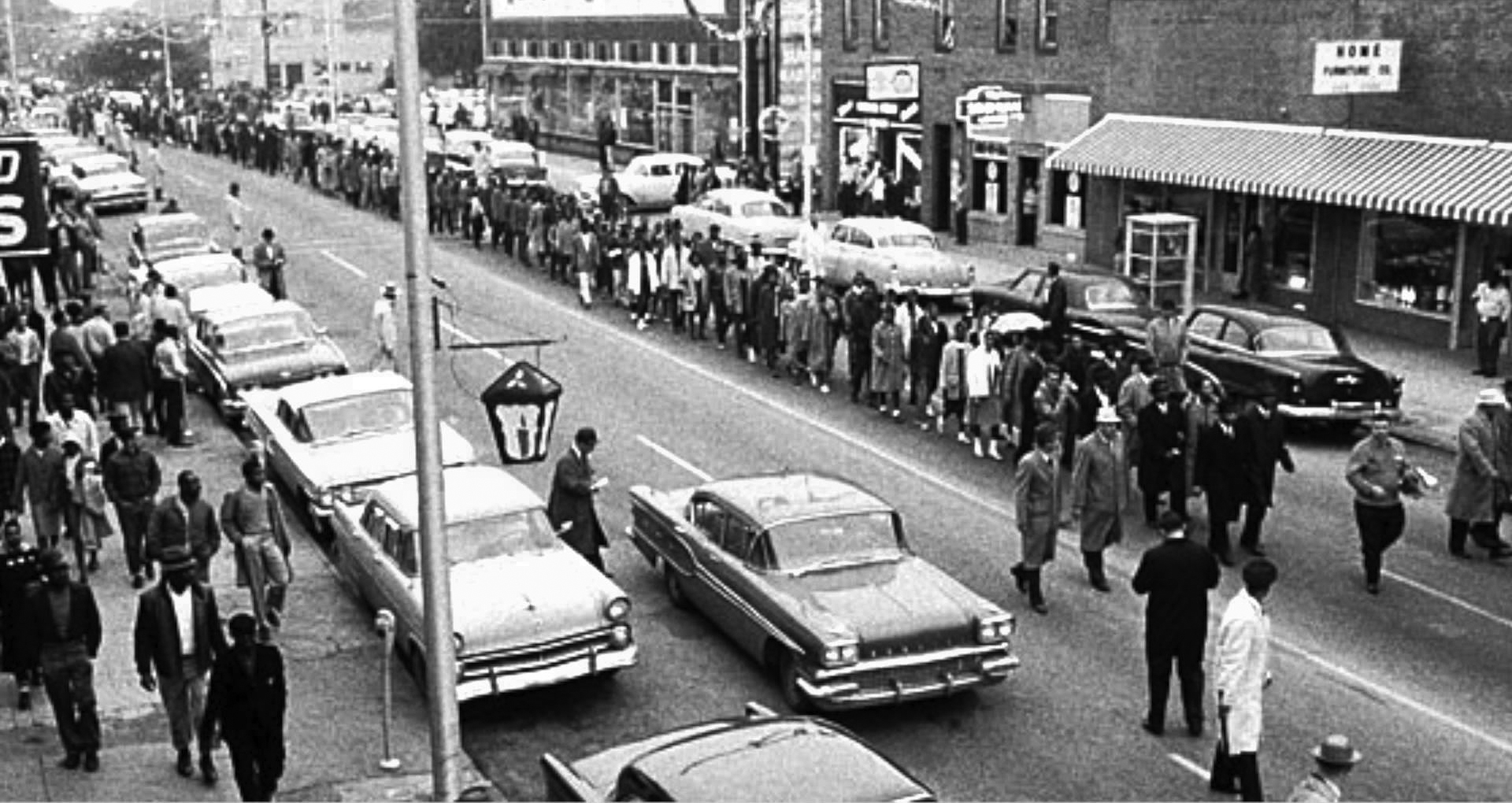
However, the carpool system could only accommodate a fraction of the former bus riders. Thousands chose to walk, sometimes for miles, in all weather conditions, rather than concede to segregation. Elderly women, domestic workers, students—all walked, sometimes with swollen feet and aching bodies, embodying the spirit of nonviolent resistance. The image of determined individuals walking past empty buses became a powerful symbol of their collective will. The sacrifices were not just physical; many boycotters faced economic repercussions, losing jobs or suffering reduced wages. Their courage in enduring these hardships highlighted the profound injustice they sought to dismantle.
The city’s white authorities, infuriated by the boycott’s success and the significant financial losses incurred by the bus company, responded with intimidation and legal harassment. MIA leaders, including Martin Luther King Jr., were arrested on trumped-up charges, such as violating an obscure 1921 anti-boycott law. The homes of King and E.D. Nixon, along with four Black churches, were bombed. These acts of violence and legal persecution, far from breaking the boycott, only solidified the resolve of the participants and garnered increased national sympathy for their cause. The steadfastness of the Black community in the face of such adversity was a testament to their deep-seated commitment to human dignity.
Legal Battles and Supreme Court Intervention
While the logistical efforts and community resilience were crucial on the ground, the boycott’s ultimate success hinged on a parallel legal struggle. In February 1956, civil rights lawyers filed a federal lawsuit, Browder v. Gayle, challenging the constitutionality of Montgomery’s bus segregation laws. The case argued that these ordinances violated the Fourteenth Amendment’s Equal Protection Clause, which guarantees equal protection under the law for all citizens.
After a three-judge panel in a U.S. District Court ruled that bus segregation was unconstitutional in June 1956, the city of Montgomery appealed the decision directly to the United States Supreme Court. This legal maneuver bought the city more time, forcing the boycotters to continue their daily struggle for several more months. The suspense was palpable as the nation awaited the highest court’s ruling.
Finally, on November 13, 1956, the Supreme Court affirmed the lower court’s decision in Browder v. Gayle, declaring that laws requiring racial segregation on buses were unconstitutional. This monumental ruling was the legal victory the boycotters had tirelessly sought. The official court order reached Montgomery on December 20, 1956, marking the formal end of the 381-day boycott.
A Victory Hard-Won: The Legacy and Impact
The Montgomery Bus Boycott concluded on December 20, 1956, after 381 days of unwavering protest. The following morning, December 21, Martin Luther King Jr., Rosa Parks, E.D. Nixon, and other MIA leaders were among the first to ride the newly integrated buses, sitting wherever they pleased. The scene was symbolic and triumphant, yet the struggle for equality was far from over. Although bus segregation was legally dismantled, acts of violence and resistance from white supremacists, including sniper attacks on buses and bombings, continued for some time. The MIA responded by organizing nonviolent training sessions, teaching riders how to respond peacefully to harassment.
The 381 days of the boycott solidified its place as a pivotal moment in American history. It demonstrated the efficacy of nonviolent direct action and the power of organized collective resistance. The boycott also propelled Martin Luther King Jr. onto the national and international stage as a leading voice for civil rights, laying the groundwork for the Southern Christian Leadership Conference (SCLC), which he co-founded shortly after. The success in Montgomery inspired similar protests and boycotts across the South, breathing new life into the broader Civil Rights Movement and ultimately contributing to the passage of landmark legislation like the Civil Rights Act of 1964 and the Voting Rights Act of 1965.
The Montgomery Bus Boycott was more than just an end to segregated buses; it was a profound declaration of human dignity and a testament to the idea that ordinary people, united in a common cause, can challenge and overcome deeply entrenched systems of injustice.
Experiencing the History: Montgomery Today for Travelers
For visitors interested in the rich tapestry of American history and the ongoing journey toward justice, Montgomery stands as an essential destination. The city has meticulously preserved the sites and stories of the Civil Rights Movement, transforming them into powerful educational landmarks that offer profound insights into this pivotal era.
Civil Rights Landmarks and Attractions
When planning a trip to Montgomery, several key attractions should be at the top of any itinerary:
- Rosa Parks Museum: Located at the site of her arrest, this museum offers an immersive experience, recreating the fateful bus ride and providing extensive exhibits on Parks’ life and the boycott’s origins. It’s an essential starting point for understanding the context and courage of the movement.
- Dexter Avenue King Memorial Baptist Church: Here, visitors can explore the pulpit from which Martin Luther King Jr. preached his message of nonviolence and organized the boycott. The church’s basement office, where many strategy meetings took place, is also preserved, offering a tangible connection to history.
- Freedom Rides Museum: Housed in the historic Greyhound Bus Station where the 1961 Freedom Riders were met with violence, this museum tells the story of the brave individuals who challenged interstate bus segregation.
- Civil Rights Memorial Center: Designed by Maya Lin, this powerful memorial honors the martyrs of the Civil Rights Movement. The accompanying interpretive center provides a deeper dive into the fight for equality and challenges visitors to commit to justice today.
- The National Memorial for Peace and Justice: A solemn and moving tribute to the victims of racial terror lynchings, this memorial is a profound experience that contextualizes the long history of racial violence in the United States.
- The Legacy Museum: From Enslavement to Mass Incarceration: An immersive and thought-provoking museum that chronicles the history of racial inequality in America, from the transatlantic slave trade to mass incarceration, located on the site of a former slave warehouse.
These landmarks, situated throughout Montgomery, form a “Civil Rights Trail” that offers visitors a comprehensive understanding of the sacrifices made and victories won.
Planning Your Visit: Accommodation and Lifestyle in Montgomery
Montgomery today is a vibrant city that respectfully acknowledges its past while looking towards the future. For travelers, it offers a range of accommodation options, from modern hotels in the revitalized downtown area to charming historic inns. Many of these provide easy access to the city’s landmarks and cultural attractions. Whether you’re seeking luxury amenities, a boutique experience, or budget-friendly stays, Montgomery caters to various lifestyle preferences.
Beyond its historical significance, Montgomery boasts a burgeoning culinary scene, reflecting diverse Southern flavors, and a growing arts and culture community. Engaging with local tourism can involve exploring the Alabama State Capitol, enjoying its beautiful parks, or attending local events. Traveling to Montgomery is not just a trip; it’s an educational journey, an opportunity for reflection, and a chance to witness the enduring legacy of human courage and the fight for freedom. The 381 days of the Montgomery Bus Boycott serve as a powerful reminder of the impact that ordinary people can have on the course of history, making it a compelling destination for anyone seeking meaningful travel experiences.
LifeOutOfTheBox is a participant in the Amazon Services LLC Associates Program, an affiliate advertising program designed to provide a means for sites to earn advertising fees by advertising and linking to Amazon.com. Amazon, the Amazon logo, AmazonSupply, and the AmazonSupply logo are trademarks of Amazon.com, Inc. or its affiliates. As an Amazon Associate we earn affiliate commissions from qualifying purchases.