
The allure of Florida is undeniable. Known as the “Sunshine State,” it beckons with its sun-drenched beaches, vibrant theme parks, diverse ecosystems, and a rich tapestry of culture. For many across the United States, a road trip to Florida is a rite of passage, a quintessential American adventure. But as you begin to plan your escape to this southern paradise, a crucial question arises: “How long would it take to drive to Florida?” The answer, as with many travel queries, is not a simple one-size-fits-all figure. It’s a dynamic calculation influenced by a multitude of factors, from your starting point to your travel style, and even the time of year you choose to embark on your journey.
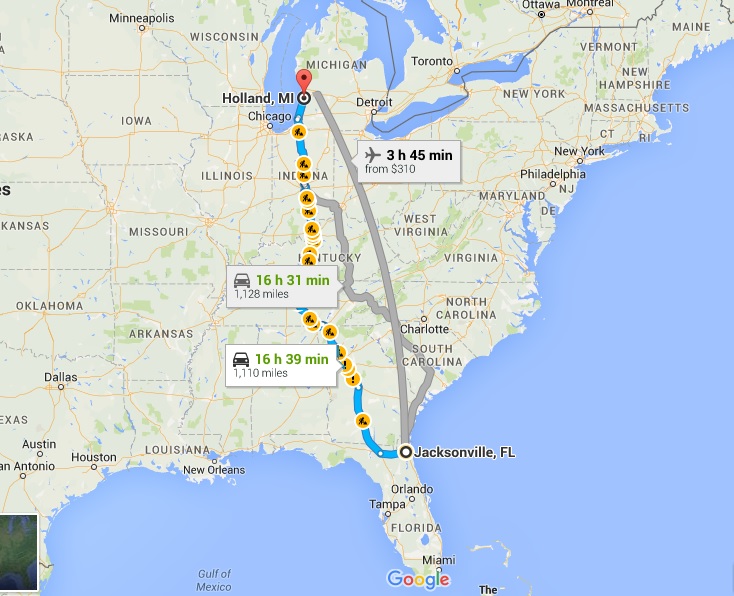
This article aims to demystify the driving time to Florida, providing you with the knowledge to accurately estimate your travel duration and plan a memorable road trip. We’ll delve into the primary determinants of travel time, explore common departure points and their estimated driving durations, and offer tips to optimize your journey, ensuring a smooth and enjoyable experience. Whether you’re dreaming of the theme parks of Orlando, the pristine beaches of the Florida Keys, the cultural heart of Miami, or the historical charm of St. Augustine, understanding your travel time is the first step in making that dream a reality.
Factors Influencing Your Drive to Florida
The journey to Florida is a personal one, shaped by a variety of elements that can significantly alter your estimated travel time. Before you even consult a map, consider these key factors that will dictate how long you spend on the road.
Distance and Starting Location: The Primary Determinant
The most obvious factor influencing your driving time is the sheer distance from your starting point to your chosen destination within Florida. Florida is a large state, spanning over 500 miles from its northern border to its southernmost tip. Therefore, a drive from a neighboring state like Georgia will be considerably shorter than a drive from as far north as Maine or as far west as California.
For instance, if you’re starting your journey in Atlanta, Georgia, a popular gateway to Florida, you can anticipate a drive of approximately 6 to 7 hours to reach northern Florida destinations like Jacksonville. However, if your sights are set on the southern tip of Florida, such as Miami, that same drive from Atlanta can extend to 9 to 10 hours.
As you move further away, the hours rapidly accumulate. A departure from New York City could mean a 17- to 19-hour drive to reach central Florida, necessitating an overnight stop. From the Midwest, cities like Chicago, Illinois, would present a journey of around 15 to 17 hours to reach the heart of Florida. And for those on the West Coast, a drive from Los Angeles, California, to Florida is a true epic road trip, easily requiring 40 to 45 hours of pure driving time, spread across several days.
The specific destination within Florida also plays a role. Are you heading to the theme park mecca of Orlando, the vibrant arts scene of Tampa, the historic streets of St. Augustine, or the bustling metropolis of Miami? Each of these locations has its own driving time from your starting point, so pinpointing your exact destination is crucial for an accurate estimate.
Driving Habits and Pace: Your Personal Rhythms
Beyond the geographical distance, your personal driving habits and pace will significantly impact your travel time. Are you a driver who prefers to cover as much ground as possible in a single day, pushing for 10-12 hours of driving? Or do you favor a more relaxed approach, opting for shorter driving days of 6-8 hours, interspersed with leisurely stops?
The average speed you maintain on highways, accounting for varying speed limits and traffic conditions, will also be a factor. A driver who consistently averages 70 mph will naturally cover more distance than someone who cruises at 60 mph. Consider also the number of drivers in your party. If you have multiple licensed drivers, you can share the driving responsibilities, potentially allowing for longer stretches of continuous travel without excessive fatigue.
Stops and Breaks: The Essential Pauses
No one can (or should) drive for hours on end without breaks. The frequency and duration of your stops will add to your overall travel time. These stops are not just for refueling your vehicle; they are essential for human rest and refreshment. Bathroom breaks, meal stops, stretching your legs, and even brief sightseeing detours all contribute to the elapsed time of your journey.
A well-planned road trip will incorporate strategic breaks. For longer drives, planning for overnight stays is crucial not only for safety but also for managing fatigue. The type of accommodation you choose for these overnight stops can also influence your travel time. A quick stay at a roadside motel might be faster than checking into a resort.
Traffic and Time of Year: The Unpredictable Elements
Traffic is an unavoidable reality of modern driving, and it can significantly prolong your journey, especially in and around major cities. Congestion can be particularly severe during peak hours, on weekends, and around holidays. For example, driving through or near cities like Charlotte, North Carolina, or Atlanta, Georgia, during rush hour can add substantial time to your trip.
The time of year you choose to drive to Florida can also play a role. During peak tourist seasons, such as spring break, summer vacation, and the winter months when snowbirds flock south, you can expect increased traffic volume on Florida‘s highways. Conversely, traveling during the shoulder seasons or off-peak times might offer a smoother and faster drive. Additionally, weather conditions can impact travel. Severe weather events, such as hurricanes, snowstorms, or heavy rain, can lead to road closures, significant delays, and even necessitate cancellations or reroutes.
Estimating Drive Times to Florida: Common Scenarios
To provide a more concrete understanding, let’s explore estimated driving times from various popular starting points to different regions within Florida. These figures are approximate and assume moderate traffic conditions and efficient driving.
Northeastern Departures: From the Big Apple to the Sunshine State
For those embarking on a road trip from the Northeast, the journey to Florida is a substantial undertaking, often requiring at least one overnight stop.
- New York City, New York, to Orlando, Florida: This journey typically takes around 17 to 19 hours of pure driving time. Most travelers break this trip into two days, with an overnight stop somewhere in the Carolinas, such as Raleigh, North Carolina, or Columbia, South Carolina.
- Boston, Massachusetts, to Miami, Florida: Expect this drive to be in the range of 20 to 22 hours. Similar to the New York City route, a two-day trip with an overnight stop in the mid-Atlantic region is standard.
- Philadelphia, Pennsylvania, to St. Augustine, Florida: This route is slightly shorter, clocking in at approximately 13 to 15 hours. While it’s theoretically possible to do in one very long day, most would opt for a more comfortable two-day journey with a stop in Richmond, Virginia, or similar.

These northeastern drives primarily utilize major interstates like I-95 South, which runs along the East Coast. While convenient, I-95 can also experience heavy traffic, especially through populous areas.
Midwestern Journeys: Heading South from the Heartland
Travelers from the Midwest face a considerable distance, often necessitating two to three days of driving to reach their Florida destination comfortably.
- Chicago, Illinois, to Tampa, Florida: This drive is approximately 15 to 17 hours. Many opt for an overnight stop in states like Kentucky or Tennessee, perhaps in cities like Nashville, Tennessee.
- Detroit, Michigan, to Fort Lauderdale, Florida: This journey can take between 17 and 19 hours. A common stopping point would be in Ohio or West Virginia.
- St. Louis, Missouri, to Key West, Florida: This route is a longer haul, estimated at 22 to 25 hours. Travelers might break this into three days, potentially stopping in Memphis, Tennessee, and then somewhere in Georgia or northern Florida.
These Midwestern routes often involve a combination of interstates, such as I-65 South or I-75 South, depending on the specific starting point and destination.
Southern and Southwestern Adventures: Closer to the Sun
For those starting in the South or Southwest, the drive to Florida is generally shorter, often achievable in one or two days.
- Atlanta, Georgia, to Orlando, Florida: As mentioned, this is a popular route taking around 6 to 7 hours. It can be done in a single day, especially if starting early.
- New Orleans, Louisiana, to Pensacola, Florida: This is a relatively short drive, approximately 3 to 4 hours, making it an easy day trip for many.
- Dallas, Texas, to Miami, Florida: This is a more significant drive, estimated at 16 to 18 hours. Travelers often choose to stop overnight in Louisiana or Alabama.
These routes typically utilize highways like I-10 East and I-75 South.
Western Expeditions: The Long Haul Across the Continent
Driving from the West Coast to Florida is a true cross-country adventure, requiring multiple days of dedicated travel.
- Los Angeles, California, to Miami, Florida: This is one of the longest possible road trips to Florida, with a driving time of approximately 40 to 45 hours. This necessitates at least three, and more comfortably four, days of driving, with overnight stops in states like Arizona, Texas, Louisiana, and Alabama or Georgia.
- Denver, Colorado, to Orlando, Florida: This journey spans roughly 28 to 30 hours of driving. Most would plan for three days of travel, with overnight stays in states like Oklahoma, Arkansas, and Mississippi.
These western routes often involve a combination of major transcontinental highways such as I-40 East or I-70 East, eventually connecting to southern routes like I-20 East and I-10 East.
Planning Your Drive: Tips for a Smooth Florida Road Trip
Maximizing your enjoyment and minimizing stress on your drive to Florida involves strategic planning. Here are some essential tips to ensure a smooth and memorable road trip.
Optimize Your Itinerary and Accommodation
The first step in planning is to accurately estimate your driving time using online mapping tools, factoring in your starting point and chosen Florida destination. Once you have a general idea, decide whether you will undertake the drive in a single push (only feasible for shorter distances) or if you will require overnight stops.
If overnight stops are necessary, book your accommodations in advance, especially if you are traveling during peak season. Consider the location of your hotels – are they conveniently located near major highways for a quick departure the next morning? Are they close to attractions you might want to visit during your stopover? Websites like Booking.com or Expedia can be invaluable for comparing prices and reading reviews for hotels, resorts, and even apartments. For those seeking unique experiences, exploring options for villas or long-term stay apartments could also be a consideration depending on the length of your trip.
Think about the type of travel lifestyle you desire. If you’re on a budget travel plan, consider well-rated motels or budget-friendly hotel chains. For a more luxury travel experience, look for upscale hotels or resorts with premium amenities. For family trips, ensure your accommodation is family-friendly, perhaps with amenities like swimming pools or kitchenettes.
Prepare Your Vehicle and Pack Smart
Before you embark on your journey, ensure your vehicle is in top condition. Perform a thorough check-up, including oil changes, tire pressure, brake checks, and fluid levels. A breakdown on the road can cause significant delays and unexpected expenses.
When packing, prioritize essentials and consider the Florida climate. Pack comfortable clothing, swimwear, sunscreen, hats, and sunglasses. For the drive itself, create an entertainment playlist, download podcasts or audiobooks, and ensure you have chargers for all your electronic devices. A cooler stocked with snacks and drinks can save you time and money on the road, minimizing the need for frequent stops at convenience stores. For longer trips, consider packing a small first-aid kit and any necessary medications.

Stay Informed and Be Flexible
Traffic conditions can change rapidly. Utilize real-time traffic apps and GPS navigation systems to monitor for delays, accidents, or construction. Be prepared to adjust your route if necessary to avoid congestion.
The weather in Florida can also be unpredictable. Stay informed about weather forecasts along your route and for your destination. If severe weather is predicted, be prepared to alter your travel plans, potentially delaying your departure or seeking shelter. Flexibility is key to a successful road trip. Sometimes the best experiences come from unexpected detours or spontaneous stops. Embrace the journey, and remember that the drive itself is part of the adventure of experiencing the wonders of Florida, from its famous landmarks like Walt Disney World to its pristine natural landscapes.
LifeOutOfTheBox is a participant in the Amazon Services LLC Associates Program, an affiliate advertising program designed to provide a means for sites to earn advertising fees by advertising and linking to Amazon.com. Amazon, the Amazon logo, AmazonSupply, and the AmazonSupply logo are trademarks of Amazon.com, Inc. or its affiliates. As an Amazon Associate we earn affiliate commissions from qualifying purchases.