
Florida, often lauded as the “Sunshine State,” possesses a unique and significant military presence, particularly within the United States Air Force. This presence is not merely historical; it plays a vital role in national defense, technological advancement, and even the local economies of the communities that host these installations. The sheer number and strategic importance of Air Force bases in Florida underscore the state’s critical position in the nation’s aerial capabilities. Understanding these bases provides a deeper appreciation for the state’s contribution to national security and its dynamic landscape.
Major Air Force Installations in Florida
Florida is home to a substantial network of active Air Force bases, each with its own distinct mission, history, and impact. These installations are not just training grounds or operational hubs; they are often sprawling complexes that contribute significantly to regional development and offer unique insights into the advanced technologies and rigorous training involved in modern aerial warfare. From fighter jet operations to specialized reconnaissance and cyber warfare, the bases in Florida cover a broad spectrum of the Air Force’s capabilities.
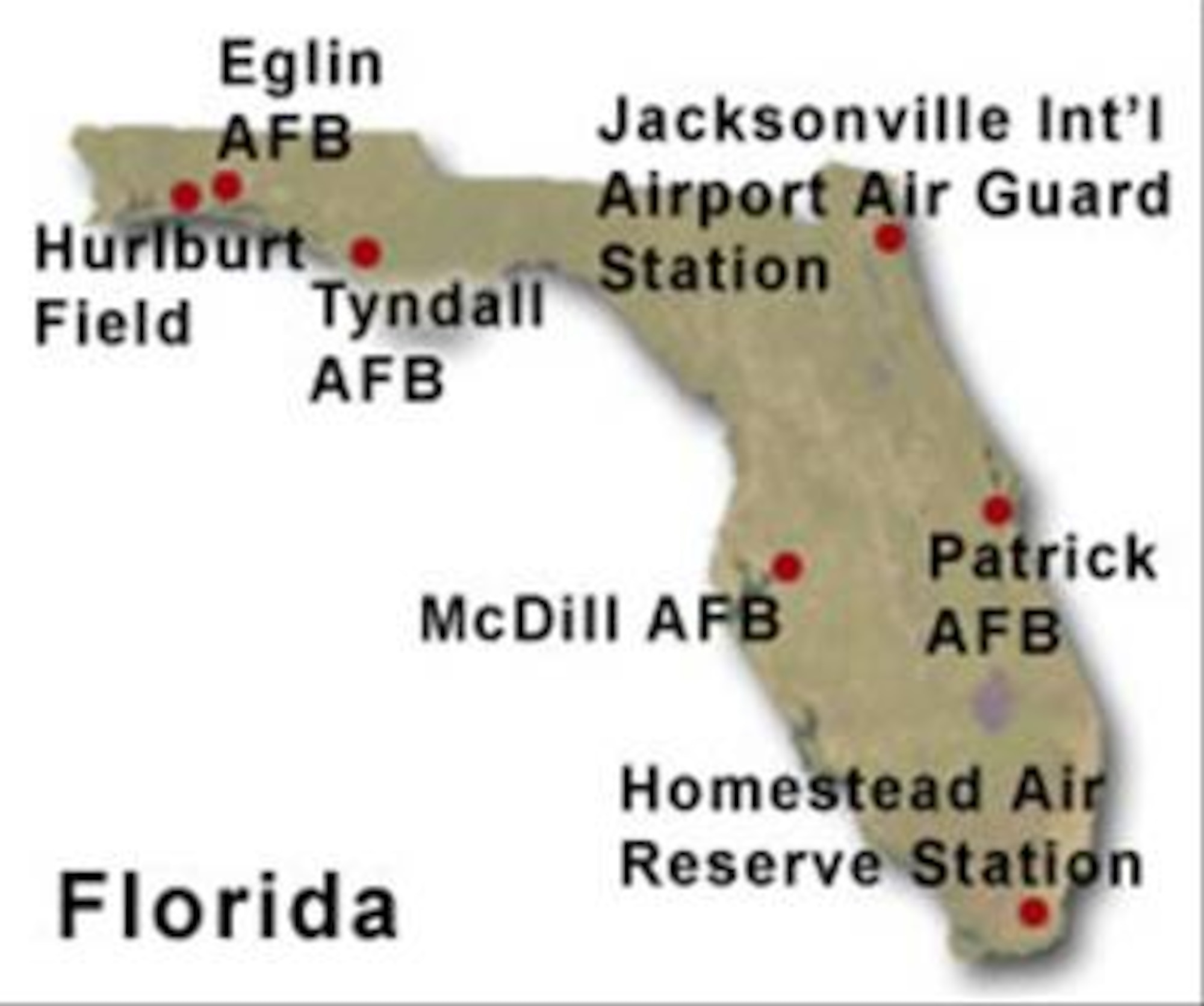
Eglin Air Force Base
Perhaps the most prominent and expansive Air Force installation in Florida, and indeed the world, is Eglin Air Force Base. Located in the northwest panhandle of the state, near Valparaiso and Fort Walton Beach, Eglin is a testament to the Air Force’s commitment to research, development, testing, and evaluation (RDT&E).
- Mission and Scope: Eglin Air Force Base is the premier location for the development and testing of virtually every type of conventional air-to-ground munitions, including missiles, bombs, and electronic warfare systems. Its vast airspace and specialized ranges, including the world’s largest aerial military test range, allow for the safe and effective evaluation of cutting-edge aerospace technology. The base is home to numerous tenant organizations, including the Air Force Test Center, the 96th Test Wing, and elements of the United States Navy and United States Marine Corps.
- Economic Impact: The sheer size of Eglin makes it a significant economic engine for the Emerald Coast region. It employs tens of thousands of military personnel, civilian employees, and contractors, creating substantial ripple effects in local businesses, housing markets, and services.
- Community Integration: Despite its military focus, Eglin Air Force Base has strong ties with its surrounding communities. There are ongoing efforts to foster positive relationships through outreach programs, educational partnerships, and support for local events, ensuring a mutually beneficial coexistence.
Hurlburt Field
Adjacent to Eglin Air Force Base, Hurlburt Field is another critical installation in the Florida panhandle, serving as the home of the Air Force Special Operations Command (AFSOC). This base is synonymous with high-stakes missions and elite aircrews.
- Special Operations Hub: Hurlburt Field is the nerve center for Air Force Special Operations, housing units that conduct missions requiring precision, stealth, and global reach. Its aircraft, such as the AC-130 gunship, MC-130 Combat Talon, and CV-22 Osprey, are among the most advanced and specialized in the world, designed for infiltration, exfiltration, and direct action missions in contested environments.
- Training and Readiness: The personnel at Hurlburt undergo some of the most demanding training in the U.S. military, preparing them for the unique challenges of special operations warfare. The base’s infrastructure is optimized for continuous training and rapid deployment.
- Technological Edge: Hurlburt Field is at the forefront of integrating new technologies into special operations, ensuring American forces maintain a critical advantage. This includes advancements in intelligence, surveillance, reconnaissance (ISR), and electronic warfare tailored for unconventional operations.
Patrick Space Force Base and Cape Canaveral Space Force Station
While technically belonging to the United States Space Force, Patrick Space Force Base and its adjacent Cape Canaveral Space Force Station are inextricably linked to the broader military aviation and space endeavors that have historically been associated with the Air Force and its pioneering spirit in Florida. These facilities are central to the nation’s space launch capabilities and missile testing.
- Launch and Test Operations: Situated on the “Space Coast,” these installations are pivotal for launching satellites, conducting intercontinental ballistic missile (ICBM) tests, and supporting various space-related research and development activities. The history of space exploration from this region is legendary, dating back to the early days of the Space Race.
- Guard and Reserve Integration: Patrick Space Force Base also hosts units from the Florida Air National Guard and the Air Force Reserve, emphasizing its multi-faceted role in national defense and space operations.
- Economic and Scientific Hub: The presence of these facilities has fostered a vibrant ecosystem of aerospace and technology companies, making the Florida Space Coast a global leader in spaceflight and related industries.
Tyndall Air Force Base
Located near Panama City, Tyndall Air Force Base has historically been a cornerstone of the Air Force fighter training mission. While it has undergone significant rebuilding and modernization following Hurricane Michael, its role remains critical.
- Fighter Training Legacy: For decades, Tyndall was the primary training base for pilots of advanced fighter aircraft, including the F-22 Raptor. Its extensive airspace and specialized training facilities were instrumental in producing some of the Air Force’s most skilled aviators.
- Modernization and Future Role: Following the devastating impact of Hurricane Michael in 2018, Tyndall Air Force Base is undergoing a comprehensive reconstruction. The vision is to create a “city of the future” for the Air Force, incorporating advanced technologies and sustainable infrastructure to support new aircraft and evolving mission requirements, potentially focusing on next-generation fighter training and advanced combat capabilities.
- Economic Contribution: Despite the challenges of rebuilding, Tyndall remains a significant employer and economic contributor to the Florida Panhandle.
The Strategic Significance of Air Force Bases in Florida
The concentration of Air Force bases in Florida is not accidental; it is a deliberate strategic decision driven by a confluence of geographical, logistical, and historical factors. These bases are crucial components of the United States’ overall defense posture, projecting power and readiness across the globe.
Geographical Advantages
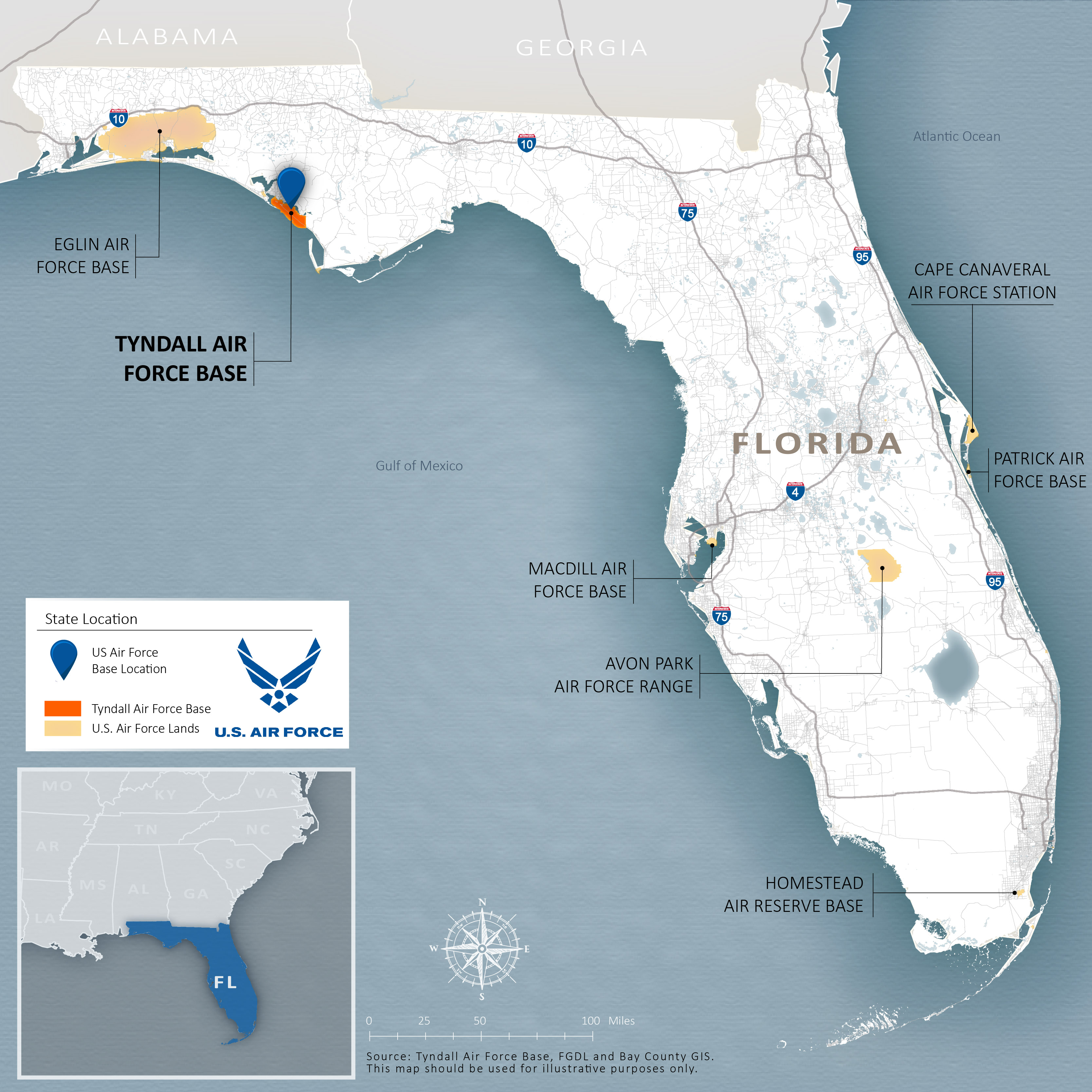
Florida’s unique geography offers several advantages for military operations.
- Vast Airspace: The state boasts large, relatively unpopulated areas, particularly in the panhandle, which are ideal for aerial training, testing, and unrestricted flight operations. This allows for complex combat simulations and the testing of new technologies without significant civilian interference.
- Proximity to the Gulf of Mexico and Atlantic Ocean: These bodies of water provide extensive training areas for maritime interdiction, search and rescue, and aerial refueling operations, essential components of modern air warfare. The proximity also facilitates rapid deployment to the Caribbean, Latin America, and the broader Atlantic region.
- Favorable Climate: The generally warm and stable climate of Florida allows for year-round training and operations, minimizing weather-related disruptions that can plague bases in more northerly regions.
Logistical and Infrastructure Support
The established infrastructure of these bases provides essential logistical support for a wide range of Air Force activities.
- Advanced Training Facilities: From state-of-the-art simulators to sprawling testing ranges, Florida hosts some of the most advanced training facilities in the world. This includes specialized ranges for weapons testing, electronic warfare simulations, and personnel recovery exercises.
- Transportation Networks: The bases are well-connected to regional and national transportation networks, including major highways, ports, and airports, facilitating the movement of personnel, equipment, and supplies.
Historical Context and Evolution
The presence of Air Force bases in Florida has deep historical roots, tracing back to the early days of aviation and the expansion of military air power.
- World War II Origins: Many of the initial installations were established during World War II as training bases for pilots and aircrews, leveraging the favorable climate and open spaces.
- Cold War Importance: During the Cold War, Florida became a critical staging ground for strategic bomber wings and early warning systems, solidifying its role in national defense.
- Post-Cold War Adaptations: In the post-Cold War era, the bases have adapted to evolving threats and technological advancements, with a growing emphasis on special operations, advanced weapons development, and space-related activities. The transition of installations like Patrick and Cape Canaveral to the Space Force reflects this ongoing evolution.
Beyond the Bases: Economic and Community Impact
The influence of Air Force bases extends far beyond their operational boundaries, deeply embedding themselves into the economic and social fabric of Florida. These installations are not just military assets; they are significant community partners and economic powerhouses.
Economic Engines
The economic footprint of Air Force bases in Florida is substantial, providing employment, supporting local businesses, and contributing to tax revenues.
- Direct Employment: The bases employ tens of thousands of active-duty military personnel, National Guard members, reservists, and civilian employees. This creates a consistent demand for goods and services within the local economy.
- Indirect Economic Benefits: The military community, including families of service members, also contributes significantly to local economies through consumer spending. Furthermore, the contracting and procurement activities associated with base operations create numerous jobs in supporting industries, from construction and maintenance to technology and logistics.
- Innovation and Technology Transfer: Bases like Eglin are hubs for cutting-edge research and development. This fosters an environment of innovation that can lead to technology transfer and the growth of private sector industries, particularly in the aerospace and defense sectors.
Community Engagement and Support
Air Force bases often strive to be integral parts of their surrounding communities, fostering strong relationships through various engagement initiatives.
- Partnerships with Local Schools and Organizations: Many bases actively partner with local school districts to support STEM education, offer mentorship programs, and provide resources. They also engage with local charities and community organizations, contributing volunteer hours and financial support.
- Cultural Exchange and Understanding: The presence of military personnel and their families from diverse backgrounds enriches the cultural landscape of Florida. Community events, open house days, and military appreciation ceremonies help foster mutual understanding and build bridges between the military and civilian populations.
- Quality of Life for Service Members and Families: The well-being of service members and their families is paramount. Bases often collaborate with local governments and organizations to ensure access to quality housing, healthcare, education, and recreational opportunities, enhancing the overall quality of life for those stationed in Florida.
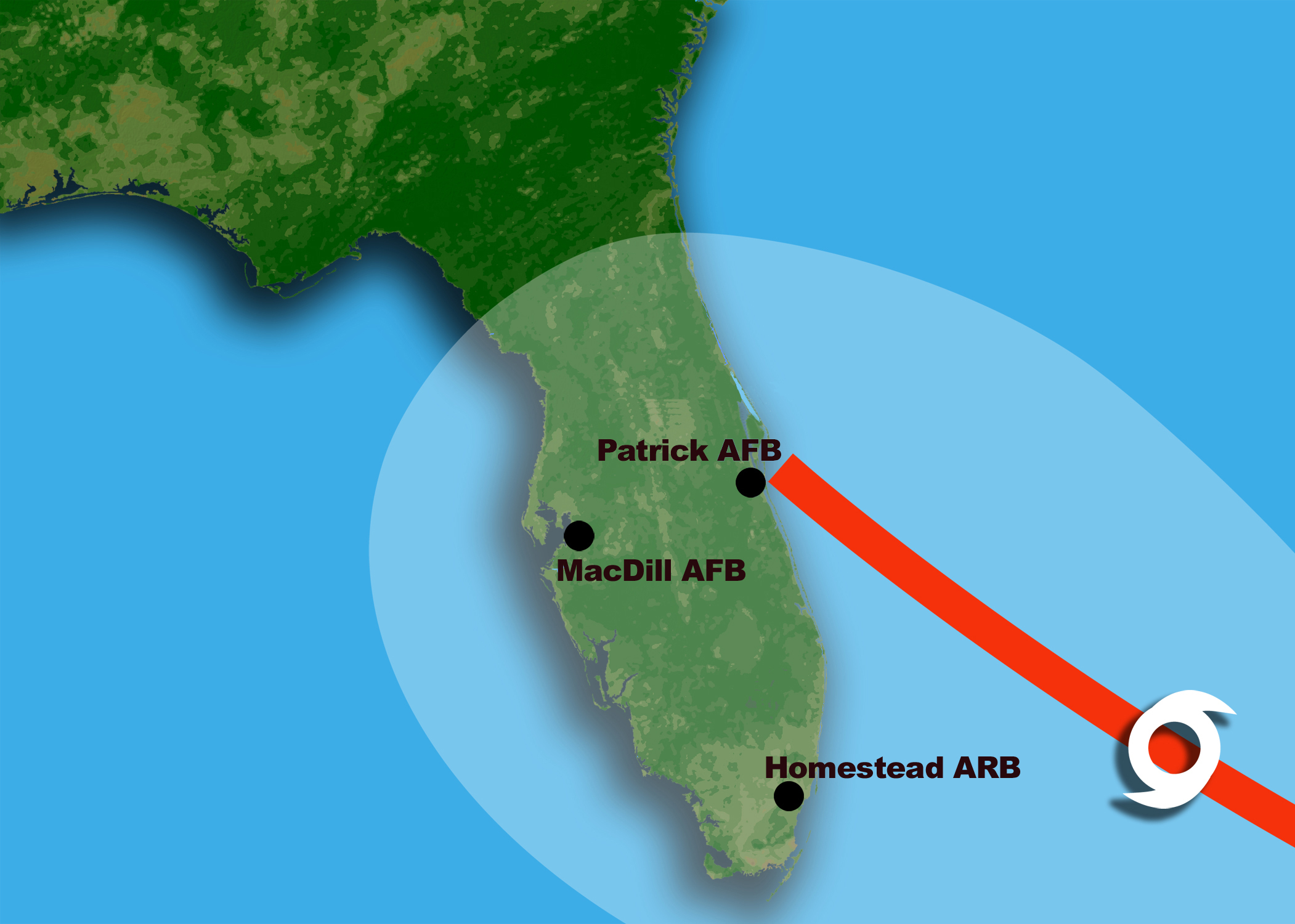
The Future of Air Force Presence in Florida
The role of Florida in the United States Air Force is dynamic and evolving. As global security landscapes shift and technological advancements accelerate, the strategic importance of these installations is likely to endure, though their specific missions and infrastructures may change.
- Adaptation to New Threats: The Air Force is continuously adapting to emerging threats, including cyber warfare, advanced missile systems, and the challenges of operating in contested airspace. Florida’s bases, with their focus on RDT&E and specialized training, are well-positioned to support these adaptations.
- Technological Advancement: The ongoing modernization of military hardware, including the development of next-generation fighter jets, unmanned aerial vehicles (UAVs), and advanced sensor systems, will necessitate continued investment in testing and training infrastructure. Eglin and Tyndall are at the forefront of this evolution.
- Synergy with Space Operations: The growing integration of space capabilities into military operations means that the synergy between traditional air power and space power, as exemplified by the Space Force installations on the Space Coast, will become increasingly vital.
In conclusion, Florida hosts a significant and strategically vital network of Air Force bases. These installations are not only critical for national defense and technological innovation but also deeply interwoven with the state’s economy and communities. Their continued presence and evolution underscore Florida’s enduring importance in safeguarding American interests in the air and beyond.
LifeOutOfTheBox is a participant in the Amazon Services LLC Associates Program, an affiliate advertising program designed to provide a means for sites to earn advertising fees by advertising and linking to Amazon.com. Amazon, the Amazon logo, AmazonSupply, and the AmazonSupply logo are trademarks of Amazon.com, Inc. or its affiliates. As an Amazon Associate we earn affiliate commissions from qualifying purchases.