
Texas, a state renowned for its vast landscapes, rich history, and independent spirit, is also a significant hub for the United States Army. Home to a substantial military presence, the Lone Star State plays a crucial role in national defense and provides extensive training and operational facilities for our armed forces. Understanding the number and nature of these bases offers insight into their impact on local communities, the state’s economy, and the broader defense infrastructure. This exploration delves into the primary Army installations within Texas, highlighting their strategic importance and the diverse roles they fulfill.
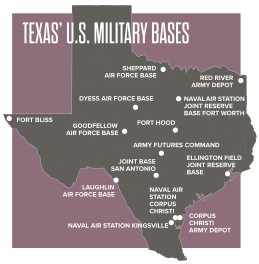
Key Army Installations in Texas
Texas hosts several major Army installations, each with unique missions and operational scopes. These bases are not merely geographical locations; they are vital components of the military’s readiness and capability, contributing to national security through training, deployment, and technological advancement.
Fort Bliss, El Paso
Perhaps the most prominent and expansive Army installation in Texas, Fort Bliss in El Paso is a cornerstone of the U.S. Army’s presence in the southwestern United States. Spanning over 1.12 million acres, it is one of the largest Army installations in the world. Its strategic location near the U.S.-Mexico border underscores its importance in border security operations and regional stability.
Mission and Capabilities
Fort Bliss is home to the 1st Armored Division, a highly mobile and versatile combat force. The base also houses numerous other units, including air defense artillery, medical commands, and sustainment brigades. Its training areas are vast, allowing for large-scale maneuver exercises critical for preparing soldiers for diverse operational environments. The post boasts extensive infrastructure, including advanced training facilities, sophisticated firing ranges, and modern barracks, catering to the needs of a large and diverse military population. The presence of the William Beaumont Army Medical Center on post ensures comprehensive medical care for soldiers and their families, as well as serving as a critical medical research and training facility.
Community and Economic Impact
The economic impact of Fort Bliss on the El Paso region is profound. It is one of the largest employers in the area, driving significant economic activity through payroll, procurement, and military family spending. The base fosters a strong sense of community, with numerous programs and initiatives designed to integrate military personnel and their families into the civilian population.
Fort Hood (Now Fort Cavazos), Killeen
Located in Central Texas near Killeen, Fort Hood (recently renamed Fort Cavazos in honor of General Richard E. Cavazos) is another massive Army installation and a vital training and power projection platform. It is one of the Army’s most critical operational posts, renowned for its ability to deploy and sustain combat-ready forces worldwide.
Role as a Power Projection Platform
Fort Cavazos is home to the III Armored Corps, a significant force structure capable of rapid deployment and sustained combat operations. The base hosts multiple combat divisions, including armored, Stryker, and air assault formations, making it a versatile force multiplier. Its extensive training grounds, including the Great Plains Training Area, allow for realistic simulations of battlefield conditions. The ability to mobilize and deploy large numbers of troops and equipment quickly is a hallmark of Fort Cavazos, emphasizing its role in national defense strategy.
Infrastructure and Support Services
The installation features a wide array of support services for its soldiers and their families, including extensive housing, educational facilities, recreational areas, and a comprehensive healthcare system. The Carl R. Darnall Army Medical Center provides advanced medical care. The sheer scale of Fort Cavazos necessitates a robust infrastructure, encompassing roads, utilities, and communication networks to support its vast operations.
Other Significant Army Installations and Facilities
Beyond these two primary installations, Texas hosts several other important Army facilities, ranging from training centers to specialized commands, contributing to the state’s extensive military footprint.
Camp Mabry, Austin
Located in the heart of Austin, Camp Mabry is a unique installation primarily serving as the headquarters for the Texas Military Department, which includes the Texas Army National Guard and the Texas Air National Guard. It also houses the Texas Military Forces Museum, offering a historical perspective on military service in the state.
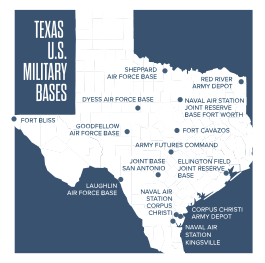
Ellington Field Joint Reserve Base, Houston
While primarily a joint reserve base with significant Air Force and Navy components, Ellington Field Joint Reserve Base in Houston also supports Army Reserve and National Guard units, providing essential logistical and operational support for aerial and ground forces.
Lackland Air Force Base, Joint Base San Antonio (Supporting Army Personnel)
Although Lackland Air Force Base is an Air Force installation, it is part of the larger Joint Base San Antonio complex, which hosts a considerable number of Army personnel and units. This includes various Army support commands, training detachments, and medical facilities. The integration within JBSA allows for shared resources and coordinated operations among different branches of the military.
The Strategic Importance of Texas Army Bases
The concentration of Army bases in Texas is not accidental. The state’s strategic geographic location, vast open spaces suitable for large-scale training, and robust infrastructure make it an ideal location for military operations and development. These bases are critical for projecting U.S. military power, maintaining readiness, and responding to domestic and international crises.
Training and Readiness
Texas offers unparalleled training environments for Army units. The sheer size of installations like Fort Cavazos and Fort Bliss allows for complex, multi-domain exercises that are essential for developing and maintaining combat effectiveness. The diverse terrain, ranging from desert landscapes to rolling plains, provides realistic scenarios for various types of military operations. The ability to conduct live-fire exercises and large-unit maneuvers without significant civilian interference is a crucial advantage.
Economic Contribution
The economic impact of Army bases on Texas is substantial. They are major employers, providing jobs not only for military personnel but also for a significant number of civilian contractors and support staff. The substantial payrolls, procurement of goods and services, and the spending by military families inject billions of dollars into the Texas economy annually. This economic activity supports local businesses, drives infrastructure development, and contributes to the overall prosperity of the communities surrounding these installations.
National Defense and Security
Texas Army bases play a pivotal role in national defense. They serve as staging grounds for deployments, house critical equipment and personnel, and are integral to the nation’s strategic deterrence capabilities. The presence of forces capable of rapid deployment from Texas enhances the U.S.’s ability to respond to threats across the globe, particularly in the Western Hemisphere. Furthermore, their role in border security, especially at Fort Bliss, is vital for national sovereignty and security.
The Future of Army Operations in Texas
The landscape of military operations is constantly evolving, and Texas Army bases are adapting to meet new challenges and embrace technological advancements. Future developments are likely to focus on modernizing training facilities, incorporating advanced technologies into operations, and ensuring the well-being and readiness of service members.
Modernization and Technology Integration
There is a continuous effort to modernize infrastructure and integrate new technologies within Texas Army bases. This includes the development of advanced simulation and training capabilities, the use of unmanned aerial systems, and the implementation of sophisticated communication and cyber defense systems. The goal is to ensure that soldiers are trained with the most up-to-date equipment and tactics, preparing them for the complexities of modern warfare.
Soldier and Family Support
The well-being of soldiers and their families remains a top priority. Investments are continually made in housing, healthcare, education, and childcare services. Initiatives aimed at improving quality of life, fostering community engagement, and providing robust transition assistance programs are crucial for maintaining a high-quality all-volunteer force. The long-term sustainability of these bases is intrinsically linked to the support provided to the personnel who serve there.

Conclusion
Texas stands as a cornerstone of U.S. Army operations, hosting a formidable array of installations that contribute significantly to national security, economic prosperity, and military readiness. From the vast expanse of Fort Bliss in the west to the strategic capabilities of Fort Cavazos in the heart of the state, these bases represent a powerful commitment to defense. Their continued evolution and modernization ensure that Texas will remain a vital locus for Army activities for years to come.
LifeOutOfTheBox is a participant in the Amazon Services LLC Associates Program, an affiliate advertising program designed to provide a means for sites to earn advertising fees by advertising and linking to Amazon.com. Amazon, the Amazon logo, AmazonSupply, and the AmazonSupply logo are trademarks of Amazon.com, Inc. or its affiliates. As an Amazon Associate we earn affiliate commissions from qualifying purchases.