
The question of “How many Burmese pythons in Florida?” is less about a precise numerical answer and more about understanding the scale of an invasive species crisis and its profound implications for the state’s unique ecosystems. While definitive population counts remain elusive, scientific consensus points to a substantial and growing presence of these large constrictors, transforming the ecological landscape of the Everglades National Park and surrounding areas. The impact extends far beyond mere numbers, touching upon wildlife, conservation efforts, and even the very definition of Florida’s natural heritage.
The Elusive Population: Estimating an Invasive Threat
Challenges in Counting
Determining the exact number of Burmese pythons in Florida is an extraordinarily complex undertaking. Unlike native species whose populations might be monitored through established surveys and tagging programs, invasive populations present unique challenges. Pythons are elusive, nocturnal, and adept at camouflage, making them difficult to spot. Their sheer size and predatory nature also mean they are not susceptible to many standard trapping methods used for smaller animals.

Furthermore, the vast and often inaccessible terrain of the Everglades provides ideal habitat for these reptiles, creating a sprawling and diffuse population. The snakes can reproduce rapidly, and their offspring are also adept at survival, contributing to a continuously increasing number.
Scientific Estimates and Trends
Despite the difficulties, scientists employ various methodologies to estimate population sizes and trends. These include:
- Capture-Recapture Data: Researchers track the number of pythons captured, marked, and released, then recaptured over time. This data helps extrapolate population density in specific areas.
- Genetic Analysis: Analyzing DNA from captured snakes can provide insights into population structure, gene flow, and overall size.
- Observer Reports and Citizen Science: While not as scientifically rigorous as direct sampling, reports from park rangers, researchers, and the public can help map distribution and identify hotspots.
- Modeling and Extrapolation: Statistical models are used to project population numbers based on available data, habitat suitability, and reproductive rates.
While a precise figure in the hundreds of thousands or millions is speculative, studies consistently indicate that the python population is in the tens of thousands, if not significantly higher, particularly within the Everglades and its adjacent ecosystems. The trend is overwhelmingly one of growth, posing an escalating threat.
The Ecological Impact: A Devastating Chain Reaction
The presence of Burmese pythons in Florida represents one of the most significant ecological disruptions caused by an invasive species in North America. Their introduction, believed to be through the exotic pet trade, has unleashed a cascade of negative effects on native wildlife populations.
Predation and Prey Depletion
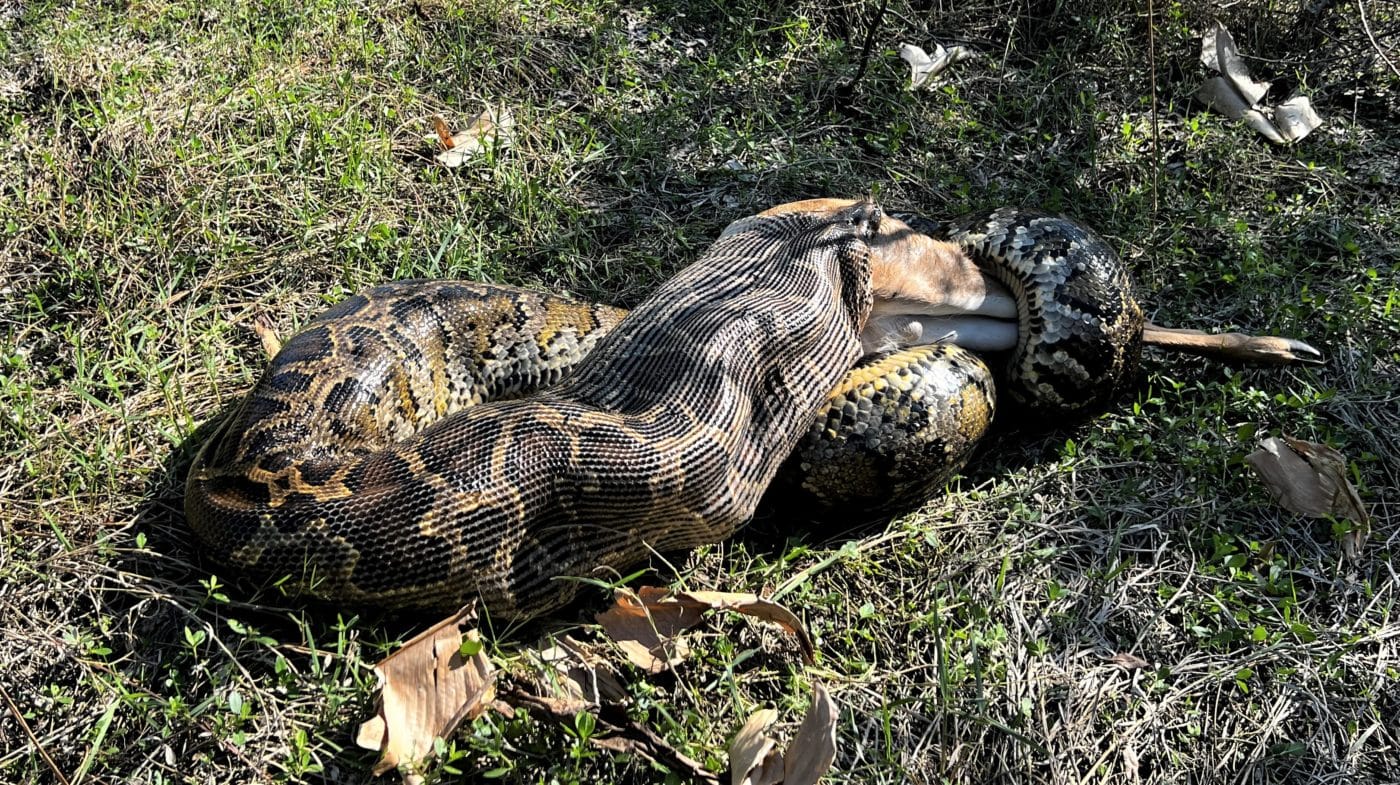
As apex predators, Burmese pythons are voracious eaters, consuming a wide range of prey. In their native range, their populations are kept in check by natural predators and environmental factors. In Florida, however, they face few natural enemies. This unchecked predatory pressure has led to alarming declines in populations of many native species.
- Mammals: Studies have documented dramatic reductions in raccoon, opossum, bobcat, and deer populations in areas with high python densities. For example, observations of mammals in Everglades National Park have shown decreases of over 90% in some cases.
- Birds: While birds are generally more mobile, nesting birds and their eggs are also preyed upon by pythons, impacting avian populations.
- Reptiles and Amphibians: Native snakes, lizards, and amphibians, which often share similar habitats with pythons, are also targeted, further disrupting the food web.
Ecosystem Disruption
The depletion of native prey species has far-reaching consequences for the entire ecosystem. Birds that rely on certain mammals for food may decline, and the absence of key herbivores can alter plant communities. The intricate balance of the Everglades, a delicate wetland ecosystem, is being fundamentally altered. The loss of small mammals, for instance, can lead to increased populations of insects that these mammals would otherwise consume, creating new imbalances.
Competition with Native Predators
Burmese pythons not only prey on native species but also compete with native predators for resources. This added pressure can further stress already vulnerable native carnivores, hindering their ability to thrive and reproduce.
Conservation and Management Efforts: A Battle for the Biosphere
The escalating python problem has spurred significant conservation and management efforts by various governmental agencies, research institutions, and non-profit organizations. The goal is not eradication, which is considered logistically impossible, but containment and reduction of the population to mitigate further ecological damage.
Research and Monitoring
Continued research into python biology, behavior, and population dynamics is crucial. This includes:
- Tracking and Tagging: Using radio transmitters and GPS devices to understand python movements, habitat use, and hunting patterns.
- Genetic Studies: Identifying breeding populations and understanding the origins of the invasion.
- Development of Detection Technologies: Exploring the use of drones, thermal imaging, and even trained dogs to locate pythons in the wild.
Removal Programs
Active removal of pythons is a cornerstone of management. These programs take several forms:
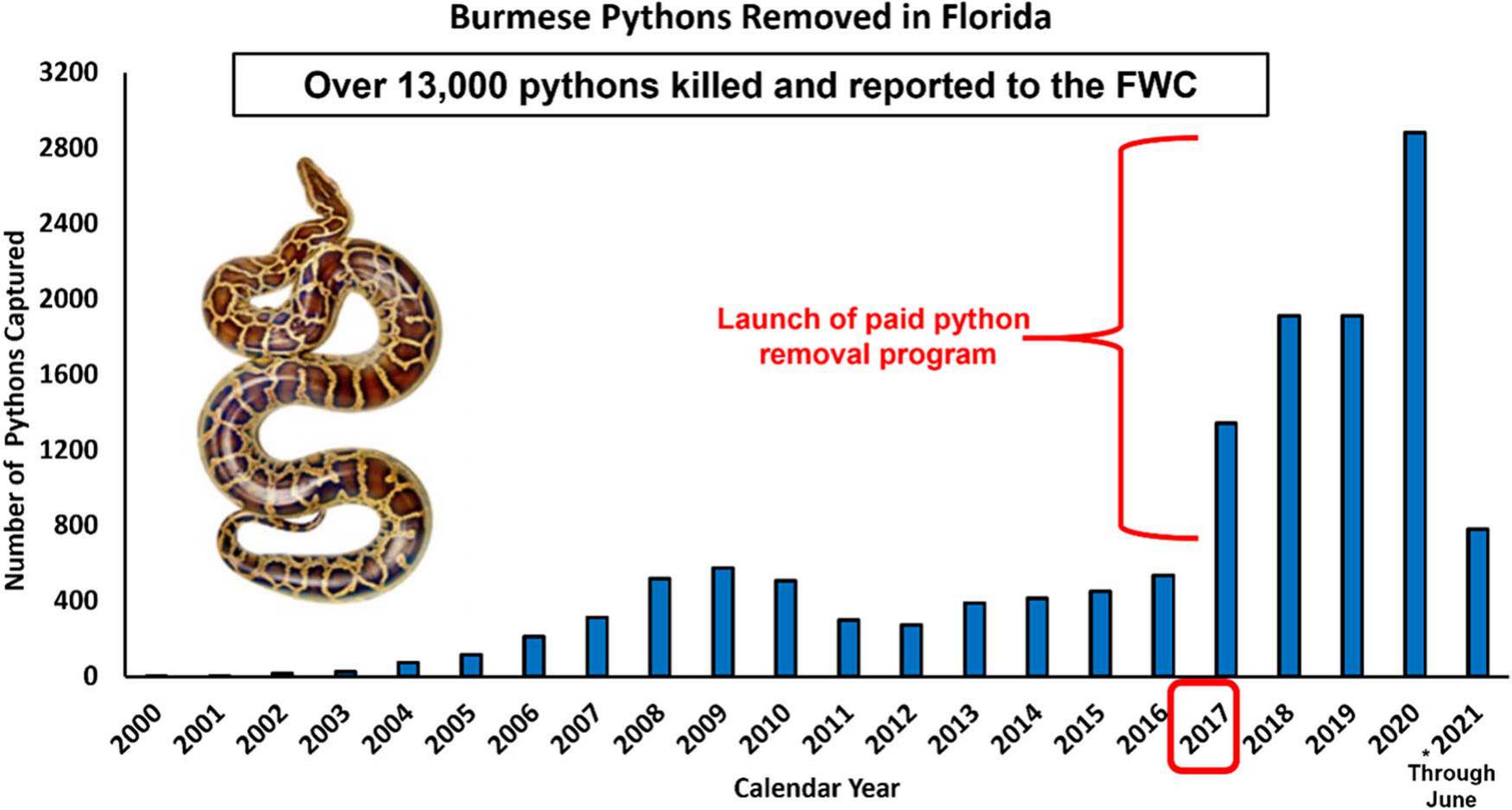
- Permitted Hunters: The state of Florida authorizes licensed hunters to capture and humanely euthanize pythons. This program allows for public participation and contributes to data collection.
- Professional Removal Teams: Dedicated teams of experienced snake catchers work systematically to remove pythons from critical habitats, often employing specialized techniques.
- Trapping Initiatives: While challenging, various trapping methods are being explored and refined to capture snakes in strategic locations.
Public Engagement and Education
Public awareness and engagement are vital. Educating residents and visitors about the dangers of releasing exotic pets and encouraging reporting of python sightings are critical components of controlling the spread. The Florida Fish and Wildlife Conservation Commission plays a key role in disseminating information and managing these efforts.
Prevention of Further Introduction
Preventing the introduction of new invasive species, including pythons, is paramount. Stricter regulations on the exotic pet trade and public education campaigns are essential to avoid future invasions that could further strain Florida’s delicate natural balance.
The Future of Florida’s Wilds: Coexistence or Crisis?
The question of “How many Burmese pythons in Florida?” ultimately points to a continuing ecological crisis. Without sustained and intensified management efforts, the python population is likely to continue to grow and expand its range, further decimating native wildlife and altering the unique biodiversity of the Everglades and beyond.
The long-term outlook depends on a multi-faceted approach that combines robust scientific research, effective removal strategies, strong regulatory measures, and widespread public cooperation. The battle to protect Florida’s natural heritage from the onslaught of invasive Burmese pythons is an ongoing testament to the fragility of ecosystems and the critical importance of conservation in the face of human-induced environmental challenges. The success of these efforts will determine whether Florida can reclaim a semblance of its former ecological glory or become a cautionary tale of invasive species unchecked.
LifeOutOfTheBox is a participant in the Amazon Services LLC Associates Program, an affiliate advertising program designed to provide a means for sites to earn advertising fees by advertising and linking to Amazon.com. Amazon, the Amazon logo, AmazonSupply, and the AmazonSupply logo are trademarks of Amazon.com, Inc. or its affiliates. As an Amazon Associate we earn affiliate commissions from qualifying purchases.