
California, a state synonymous with innovation, sun-kissed beaches, and a vibrant cultural tapestry, is also a titan in the realm of higher education. For prospective students, academic researchers, or simply curious travelers exploring the Golden State, understanding the sheer scale and diversity of its educational institutions can be a fascinating journey. When considering how many colleges are in California, it’s not merely a number but an invitation to discover a sprawling network of learning environments, each nestled within unique communities and offering distinct experiences that blend seamlessly with the state’s iconic travel and lifestyle offerings.

The Golden State boasts one of the most extensive and diverse systems of higher education in the world, encompassing everything from world-renowned public research universities to specialized private institutions and accessible community colleges. While the exact figure can fluctuate slightly due to new accreditations or mergers, the answer hovers around over 400 institutions. This impressive count includes universities, colleges, and community colleges, each contributing to California’s intellectual prowess and societal development. This vast educational landscape not only attracts millions of students but also transforms countless towns and cities into dynamic college hubs, rich with local culture, unique dining, and a youthful energy that makes them prime destinations for exploration and extended stays.
Unpacking California’s Educational Landscape: A Numbers Game
Delving deeper into California’s higher education system reveals a carefully structured and immensely impactful network designed to serve a broad spectrum of academic and vocational needs. From the iconic red-tiled roofs of its missions-style campuses to the cutting-edge facilities of its tech-focused universities, the sheer variety is a testament to the state’s commitment to education.
The Big Picture: Public vs. Private Institutions
The 400+ institutions in California are broadly categorized into public and private sectors, each with its own mission, funding structure, and student experience. The public system is particularly notable for its tripartite structure: the University of California (UC) system, the California State University (CSU) system, and the California Community Colleges. Together, these public systems educate millions of students annually, making them pivotal to the state’s economic and social fabric.
The private sector, while smaller in student population, offers an incredible array of specialized programs, unique campus cultures, and often more intimate learning environments. These institutions range from small liberal arts colleges to large research universities, attracting students from across the globe seeking distinct academic pathways.
The University of California System: Premier Research Institutions
The University of California (UC) system stands as a global beacon of academic excellence and research innovation. Comprising ten campuses, each a powerhouse in its own right, the UC system consistently ranks among the top universities worldwide. These campuses are primarily research-oriented, offering a comprehensive range of undergraduate and graduate programs, attracting top-tier faculty and students.
Key UC campuses include:
- UC Berkeley: Located in the vibrant city of Berkeley, it’s often considered one of the top public universities in the world, known for its progressive spirit and groundbreaking research. Visiting Berkeley means immersing oneself in a city rich with cultural landmarks, diverse culinary experiences, and a historic connection to social movements.
- UCLA: Situated in the bustling Westside of Los Angeles, UCLA is a cultural and academic hub, famous for its arts programs, medical research, and athletic prowess. A visit here can easily be combined with exploring Hollywood, Santa Monica Pier, and the myriad attractions of Los Angeles.
- UC San Diego: Nestled in the coastal community of La Jolla in San Diego, this institution is renowned for its strong programs in science, engineering, and oceanography. San Diego itself is a major tourist destination, offering beautiful beaches, a vibrant downtown, and attractions like Balboa Park.
- Other distinguished campuses include UC Davis, UC Irvine, UC Santa Barbara, UC Santa Cruz, UC Riverside, UC Merced, and UC San Francisco (a graduate-level health sciences campus). Each offers unique geographic and academic flavors, making them compelling destinations for both education and leisure.
The California State University System: Practical Education and Regional Impact
With 23 campuses spread across the state, the California State University (CSU) system is the largest four-year public university system in the United States. Its primary mission is to provide high-quality, accessible higher education to California’s diverse student population, focusing on workforce development and practical application of knowledge. CSU graduates are the backbone of California’s economy, filling essential roles in teaching, engineering, business, and many other fields.
Notable CSU campuses include:
- San Jose State University: A historic campus in the heart of Silicon Valley, it’s a major feeder for tech companies and known for its engineering and computer science programs. Visiting San Jose provides a glimpse into the innovative spirit of Northern California.
- San Diego State University: A vibrant campus near downtown San Diego, popular for its business, hospitality, and communication programs, offering students a quintessential Southern California experience with proximity to beaches and a lively urban scene.
- Cal Poly San Luis Obispo: Known for its “learn by doing” philosophy, especially strong in engineering, agriculture, and architecture. The campus is located in the charming city of San Luis Obispo, a gateway to the Central Coast’s wineries and scenic drives along Highway 1.
- Other significant campuses include Cal State Fullerton in Orange County, CSU Long Beach, CSU Sacramento, and San Francisco State University, each deeply integrated into its regional community and offering distinct opportunities for students and visitors alike.
California Community Colleges: Pathways to Opportunity
The California Community Colleges system is the largest higher education system in the nation, with 116 colleges serving over two million students. These institutions are foundational, providing affordable access to higher education, workforce training, and pathways to four-year universities. They are strategically located across the state, making education accessible to a vast and diverse population. For many, community colleges are the starting point of their academic journey, offering associate degrees, vocational certificates, and robust transfer programs to UC and CSU campuses. Their presence in virtually every significant city and region ensures that educational opportunities are always within reach, often serving as cultural and community hubs.
Independent Private Colleges and Universities: Niche Programs and Distinct Cultures
Beyond the extensive public systems, California is home to a rich assortment of independent private institutions, each with its unique character, academic focus, and campus environment. These range from highly selective research universities to specialized arts colleges and faith-based institutions.
Examples include:
- Stanford University: A global leader in research and innovation, located in Palo Alto in the San Francisco Bay Area. Its stunning campus, often considered a landmark itself, offers impressive architecture and a vibrant intellectual atmosphere, easily accessible from San Francisco or San Jose.
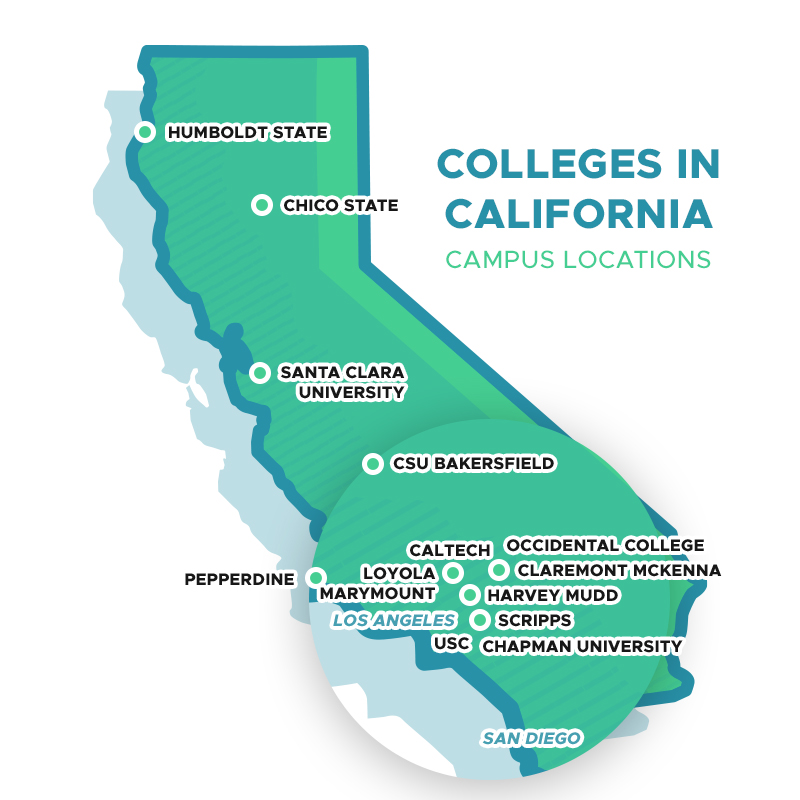
- University of Southern California (USC): A prominent private research university in Los Angeles, known for its strong programs in film, business, engineering, and medicine. USC’s location provides students with unparalleled access to the entertainment industry and diverse cultural experiences.
- Pepperdine University: Overlooking the Pacific Ocean in Malibu, Pepperdine offers breathtaking views and a strong emphasis on Christian values and liberal arts education. A visit to Pepperdine combines academic exploration with the iconic coastal beauty of Southern California.
- Other notable private institutions include the California Institute of Technology (Caltech) in Pasadena, known for its intense science and engineering programs, and institutions like the University of San Francisco, Loyola Marymount University, and various art and design schools, each contributing to the rich tapestry of educational opportunities.
Exploring California’s College Towns: Beyond the Campus Gates
The presence of so many colleges transforms their host cities and towns into dynamic hubs, offering a unique blend of academic rigor, youthful energy, and local charm. For travelers, exploring these college towns can provide a more authentic glimpse into California life, beyond the typical tourist traps. They offer diverse accommodation options, from boutique hotels to budget-friendly stays, and a vibrant culinary scene.
Northern California: Innovation and Natural Beauty
Northern California is home to some of the most prestigious universities, embedded in areas known for innovation and stunning natural landscapes.
- Berkeley & Oakland: Beyond UC Berkeley’s academic allure, Berkeley is famous for its culinary scene, with Chez Panisse leading the farm-to-table movement. Nearby Oakland offers a vibrant arts scene and diverse neighborhoods. Visitors can find charming boutique hotels or apartments for longer stays. Exploring the San Francisco Bay Area from these cities means easy access to the Golden Gate Bridge, Alcatraz Island, and the vineyards of Napa Valley or Sonoma County.
- Palo Alto & Stanford: Home to Stanford University and a nexus of Silicon Valley tech, Palo Alto blends academic prestige with entrepreneurial spirit. The town offers upscale dining and luxury accommodation, making it an excellent base for business travelers or those exploring tech history. Landmarks like the Stanford University campus itself, with its iconic Hoover Tower and Cantor Arts Center, are must-sees.
Central Coast & Inland Empire: Scenic Drives and Emerging Hubs
The Central Coast offers picturesque landscapes and a laid-back vibe, while the Inland Empire presents a more metropolitan, yet often overlooked, experience.
- San Luis Obispo & Santa Barbara: These coastal cities, hosting Cal Poly San Luis Obispo and UC Santa Barbara respectively, are renowned for their natural beauty, wine regions, and charming downtowns. San Luis Obispo boasts the historic Mission San Luis Obispo de Tolosa and proximity to scenic spots like Pismo Beach and Morro Bay. Santa Barbara, with its Spanish colonial architecture, “American Riviera” feel, and beautiful beaches, offers a luxurious travel experience. Both cities provide excellent options for resorts and high-end hotels, perfect for a leisurely college visit.
- Riverside: Home to UC Riverside, this city in the Inland Empire offers a blend of historical charm and modern development. The iconic Mission Inn Hotel & Spa is a designated National Historic Landmark and a testament to the city’s rich past, making it a unique destination for accommodation and tourism.
Southern California: Beaches, Entertainment, and Urban Vibrancy
Southern California’s college towns are intertwined with its glamorous reputation, offering access to world-class entertainment, diverse culinary scenes, and iconic landmarks.
- Los Angeles: With institutions like UCLA, USC, and numerous other colleges, LA is a massive educational hub. A college visit here becomes an adventure, allowing exploration of Hollywood, Griffith Observatory, The Getty Center, and its famous beaches like Santa Monica and Venice. Accommodation ranges from luxury resorts in Beverly Hills to family-friendly hotels near Disneyland Resort in Anaheim.
- San Diego: Home to UC San Diego, San Diego State University, and several others, San Diego offers a relaxed, coastal atmosphere with a vibrant city life. The Gaslamp Quarter, Coronado Island, and world-class attractions like the San Diego Zoo make it an ideal destination for combining college visits with a memorable vacation. Its diverse hotel scene caters to all budgets and styles.
- Orange County: With institutions like UC Irvine and Cal State Fullerton, Orange County offers a quintessential Southern California experience. Beyond academic pursuits, visitors can enjoy the pristine beaches of Laguna Beach, the theme park excitement of Disneyland Resort, and upscale shopping. Accommodation often features resorts with extensive amenities suitable for family trips.
Planning Your California College Visit: Travel, Accommodation, and Experiences
Visiting colleges in California is more than just campus tours; it’s an opportunity to experience the diverse cultures, landscapes, and lifestyles that the state offers. Whether you’re a prospective student, a parent, or simply an interested traveler, planning your trip carefully can enhance the experience immensely.
Navigating California: Transportation and Logistics
Given California’s vast size, efficient transportation is key. Most major college towns are well-served by airports, including major international hubs like Los Angeles International Airport (LAX), San Francisco International Airport (SFO), and San Diego International Airport. Renting a car is often the most convenient way to explore multiple campuses and nearby attractions, especially for those venturing beyond major metropolitan areas. California’s scenic drives, such as the Pacific Coast Highway, can turn college travel into an unforgettable road trip. Public transportation, including Amtrak and regional rail lines, also connects many urban centers, offering a more eco-friendly travel option.
Finding the Perfect Stay: Hotels and Accommodation Options
California’s college towns offer a wide range of accommodation options to suit every preference and budget.
- Luxury & Resorts: Near prestigious universities and popular tourist areas, you’ll find an abundance of luxury hotels and resorts from renowned chains like Hyatt, Marriott, and Hilton. These often come with amenities like pools, spas, and fine dining, making a college visit feel like a pampered getaway.
- Boutique Hotels & Unique Stays: Many college towns, especially those with historic downtowns, boast charming boutique hotels and bed-and-breakfasts, offering a more personalized and local experience.
- Budget-Friendly Options: For those on a budget travel plan, numerous motels, economy hotels, and vacation rentals (apartments or villas) are available, especially outside the immediate vicinity of major attractions.
- Vacation Rentals: Platforms offering vacation rentals can be an excellent choice for family trips or longer stays, providing more space and the convenience of a kitchen.
It’s highly recommended to book accommodation in advance, especially during peak college visit seasons (spring break, summer, fall application deadlines) or major university events like graduation or homecoming.
Beyond the Campus Tour: Tourist Attractions and Local Culture
A college visit to California is an ideal opportunity to immerse yourself in the state’s diverse tourist attractions and rich local culture.
- Nature & Outdoors: Many campuses are near incredible natural landmarks. For example, UC Santa Cruz offers access to ancient redwood forests, while UC Davis is close to the Napa Valley wine region. Further afield, a trip to Yosemite National Park or Lake Tahoe can complement a Northern California college tour.
- Arts & Museums: Major cities like Los Angeles and San Francisco offer world-class museums such as the Getty Center and the California Academy of Sciences. Even smaller college towns often have vibrant local art scenes and historical museums.
- Food & Drink: California’s culinary scene is globally renowned. Explore diverse eateries, from Michelin-starred restaurants to food trucks, and sample local produce at farmers’ markets. Every college town has its own unique gastronomic identity, reflecting the local culture.
- Events & Festivals: Check local calendars for festivals, concerts, and sporting events. Attending a college football game or a local music festival can provide an authentic slice of California life.

Lifestyle Considerations: Budget to Luxury Travel
California caters to all travel styles. Whether you’re planning a budget-conscious family trip to see several CSUs or a luxury travel experience combining elite university visits with spa resorts and gourmet dining, the state has options. Consider travel passes for attractions, look for hotel deals, and explore local eateries to manage costs. Conversely, if luxury is your preference, California offers some of the world’s most opulent resorts and exclusive experiences. The key is to integrate your educational objectives with your preferred travel lifestyle to create a seamless and memorable itinerary.
In conclusion, the question “How many colleges are in California?” opens the door to a sprawling narrative of academic excellence, cultural diversity, and unparalleled travel opportunities. With over 400 institutions ranging from global research powerhouses to community-focused colleges, California’s educational landscape is as rich and varied as its geography. Each campus is a gateway to a unique California experience, inviting visitors to explore charming college towns, iconic landmarks, vibrant local cultures, and an array of accommodation choices, making any college visit an integral part of an unforgettable California adventure.
LifeOutOfTheBox is a participant in the Amazon Services LLC Associates Program, an affiliate advertising program designed to provide a means for sites to earn advertising fees by advertising and linking to Amazon.com. Amazon, the Amazon logo, AmazonSupply, and the AmazonSupply logo are trademarks of Amazon.com, Inc. or its affiliates. As an Amazon Associate we earn affiliate commissions from qualifying purchases.