
Embarking on a journey to Alaska often brings visions of majestic mountains, vast wilderness, and unique wildlife. However, for those accustomed to the typical administrative subdivisions of the Lower 48, a fundamental question might arise during travel planning: “How many counties are in Alaska?” The answer, surprisingly, is none. Alaska stands alone among U.S. states in its complete absence of counties. This distinct organizational structure is not merely a bureaucratic detail; it profoundly shapes the state’s governance, infrastructure, and ultimately, the experience of exploring its breathtaking landscapes. Understanding Alaska’s unique system of boroughs and census areas is crucial for any traveler seeking to truly grasp the lay of the land and navigate its diverse regions.

Understanding Alaska’s Unique Administrative Divisions
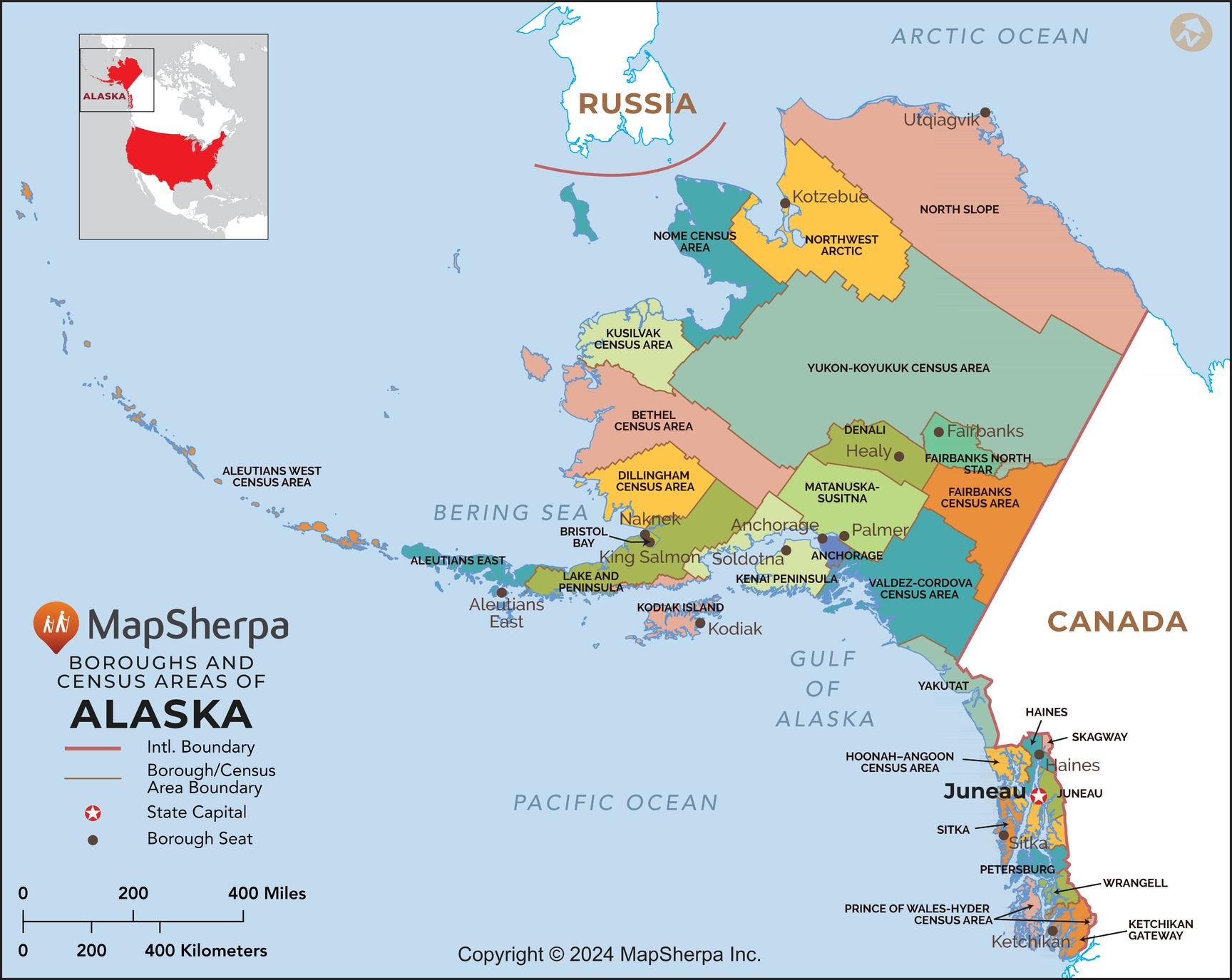
Instead of counties, Alaska is divided into 19 organized boroughs and one vast unorganized borough. These boroughs are, in essence, the functional equivalent of counties, but they possess a greater degree of local autonomy and vary significantly in size, population, and the services they provide. The concept of an “unorganized borough” further distinguishes Alaska, encompassing an immense area with no local borough government.
Boroughs: Alaska’s Equivalent to Counties
The 19 organized boroughs in Alaska function much like counties elsewhere, providing municipal services such as education, public safety, and road maintenance. However, their structure and powers are more varied than a typical county system. These boroughs can be categorized into a few types:
- Home Rule Boroughs: These boroughs have the greatest flexibility in organizing their government and providing services. They can adopt their own charters and are not limited to the specific powers granted by state law, as long as their actions do not conflict with state statutes. Examples include the Municipality of Anchorage and the Fairbanks North Star Borough, which serve as economic and cultural hubs.
- General Law Boroughs: These boroughs operate under the general laws of Alaska and have powers specifically granted to them by the state legislature. While less flexible than home rule boroughs, they still manage local services pertinent to their communities. The Matanuska-Susitna Borough is a prominent example, known for its agricultural roots and as a gateway to interior Alaska’s wilderness.
- Unified Home Rule Municipalities (City and Boroughs): A unique aspect of Alaska’s system is the existence of unified city and borough governments, where the city and borough governments have merged into a single entity. The City and Borough of Juneau, Sitka, and Yakutat are prime examples. This consolidation aims to streamline administration and service delivery in areas where urban and surrounding rural populations are closely intertwined.
Census Areas: For the Unorganized
Approximately 57% of Alaska’s land area falls within the “unorganized borough.” This vast region, which includes some of the most remote and sparsely populated parts of the state, lacks any form of local borough government. For statistical purposes, and to delineate geographic areas for data collection, the U.S. Census Bureau has divided this unorganized borough into 11 census areas.
These census areas are not governmental entities; they have no elected officials, no power to levy taxes, and no municipal services. Instead, services like education, public safety, and road maintenance in these areas are often provided directly by the state of Alaska or through smaller, localized village or city governments within the census areas. For travelers, understanding that vast swathes of land fall under this “unorganized” designation highlights the self-reliance and preparedness required when venturing into Alaska’s most pristine wilderness, where infrastructure and services are minimal to non-existent.
Why This Matters for Travelers to Alaska
The absence of a traditional county system and the presence of boroughs and census areas have significant implications for anyone planning to visit Alaska. It affects everything from understanding local regulations to navigating vast distances and accessing services.
Navigating Vast Landscapes
Alaska’s sheer scale is challenging to comprehend. The largest organized borough, the North Slope Borough, is larger than many U.S. states. The unorganized borough, even more so. This means that when you travel between designated “regions” in Alaska, you’re often covering distances that would span multiple states in the Lower 48. The administrative divisions, particularly the large census areas, reinforce this sense of scale. Travelers must prepare for significant travel times, often relying on air travel, the Alaska Marine Highway system, or the Alaska Railroad to traverse these expansive territories, as traditional road networks are limited. Understanding these divisions helps in setting realistic expectations for travel logistics and journey durations.
Local Regulations and Services
Because boroughs have a high degree of autonomy, local laws and available services can vary significantly from one to another. For instance, regulations regarding fishing licenses, hunting permits, alcohol sales, or even noise ordinances might differ depending on whether you are in the Kenai Peninsula Borough versus the Municipality of Anchorage. In the unorganized areas, services are scarce, and visitors must be entirely self-sufficient, carrying their own supplies, emergency equipment, and relying on state or federal resources (like National Park Service rangers) for assistance. This decentralized approach to governance means travelers should research specific local rules for each borough or area they plan to visit.
Planning Your Itinerary
When planning an Alaska itinerary, it’s more helpful to think in terms of broader geographic regions or the specific boroughs and census areas you intend to explore, rather than trying to map out county-by-county. These divisions often correlate with distinct natural environments, cultural experiences, and types of available activities. For example, the Fairbanks North Star Borough is the gateway to the Arctic and known for the Northern Lights, while the Kenai Peninsula Borough offers world-class fishing and marine wildlife viewing. Grouping destinations by borough or census area can help organize a logical and efficient travel plan, allowing for a deeper immersion in the unique character of each region.
Key Regions and What They Offer
Understanding Alaska’s administrative divisions helps frame the incredible diversity of experiences available across the state. Each borough and many census areas offer distinct attractions and adventures.
Anchorage and Southcentral Alaska
The Municipality of Anchorage is Alaska’s largest city and primary transportation hub, serving as a vital entry point for many visitors. Here, urban amenities meet wilderness, with access to incredible hiking in the Chugach Mountains and cultural attractions like the Alaska Native Heritage Center. Nearby, the Matanuska-Susitna Borough, or “Mat-Su Valley,” offers expansive farmlands, access to Denali National Park and Preserve via Talkeetna, and opportunities for glacier viewing near Palmer. Further south, the Kenai Peninsula Borough is a haven for outdoor enthusiasts, featuring prime fishing in Soldotna, marine excursions from Seward and Homer, and encounters with diverse wildlife.
Fairbanks and the Interior
North of the Alaska Range, the Fairbanks North Star Borough is the heart of Alaska’s Interior. Fairbanks is known as the “Golden Heart City” and is a prime location for viewing the Northern Lights during winter. It serves as a base for exploring gold rush history, experiencing the midnight sun, and venturing into the remote Arctic via the Dalton Highway. The vastness of the interior means that travel to destinations like Gates of the Arctic National Park and Preserve typically requires bush planes, highlighting the extreme remoteness of the unorganized borough’s census areas.
Juneau and Southeast Alaska (The Inside Passage)
The City and Borough of Juneau, the state capital, is uniquely accessible only by air or sea due to the rugged terrain of Southeast Alaska. This region, often referred to as the Inside Passage, is characterized by thousands of islands, glaciers, and temperate rainforests. Unified boroughs like Juneau, Sitka, and Ketchikan are cultural rich port cities offering a blend of Tlingit history, Russian heritage, and abundant wildlife viewing opportunities, including whales and bears. Cruising the Inside Passage is a popular way to experience these distinct communities, each with its own charm and administrative nuances.
The Unorganized Borough’s Remote Charms
For the truly adventurous, the extensive unorganized borough presents unparalleled opportunities for wilderness exploration. While lacking local government, these areas are often home to stunning national parks and preserves, such as Denali National Park and Preserve (partially within the unorganized borough’s Denali Borough, but much of the surrounding remote wilderness is unorganized), Kobuk Valley National Park, and Wrangell-St. Elias National Park and Preserve. Visiting these remote destinations often means relying on air taxis to small, isolated communities like Nome or villages in the Aleutian Islands, emphasizing the need for meticulous planning, respect for local customs, and self-sufficiency.
Tips for Exploring Alaska’s Distinct Regions
Navigating Alaska’s unique administrative framework as a traveler requires a thoughtful approach.
Understanding Distances and Logistics
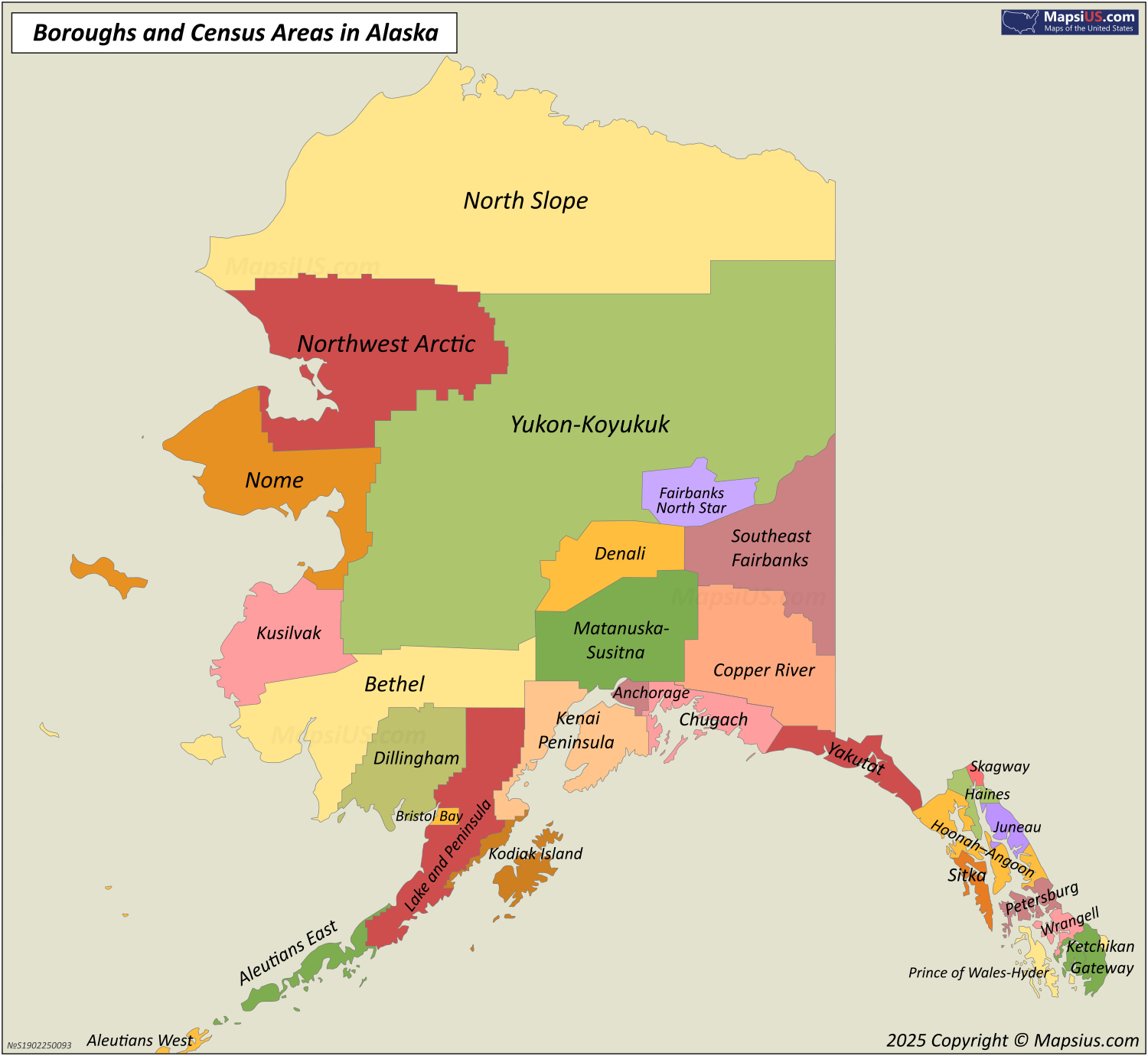
Forget measuring distances by county lines; think in terms of hundreds or thousands of miles. Road travel is primarily limited to a few major highways, necessitating flights or ferry travel for many destinations. When planning, consult detailed maps that show borough and census area boundaries, but more importantly, focus on the logistical realities of reaching each destination. Air taxis, the Alaska Marine Highway (ferry system), and the Alaska Railroad are not just modes of transport; they are integral parts of the Alaska travel experience.
Respecting Local Governance and Culture
Each borough, and even individual communities within census areas, has its own character and often unique cultural norms, especially concerning Alaska Native communities. Being aware of the local governance structure, or lack thereof, fosters a deeper understanding and respect for the communities you visit. In organized boroughs, this might mean adhering to specific local ordinances. In the unorganized borough, it means understanding that you are often a guest in very remote and self-reliant communities, and preparedness is paramount.
Leveraging Resources for Planning
Utilize official state tourism websites, borough government sites, and reputable travel guides that acknowledge Alaska’s distinct administrative divisions. These resources often provide insights into local attractions, services, and regulations specific to each region. Engaging with local tourism boards in major cities like Anchorage or Fairbanks can also provide invaluable on-the-ground advice for exploring beyond the usual tourist paths and truly experiencing the vastness and diversity that Alaska has to offer.
In conclusion, while Alaska may not have counties, its system of boroughs and census areas offers a fascinating framework for understanding its geography, governance, and the incredible diversity of experiences it provides. For the intrepid traveler, embracing this unique structure is key to unlocking an unforgettable adventure in America’s Last Frontier.
LifeOutOfTheBox is a participant in the Amazon Services LLC Associates Program, an affiliate advertising program designed to provide a means for sites to earn advertising fees by advertising and linking to Amazon.com. Amazon, the Amazon logo, AmazonSupply, and the AmazonSupply logo are trademarks of Amazon.com, Inc. or its affiliates. As an Amazon Associate we earn affiliate commissions from qualifying purchases.