
The landscape of Walt Disney World Resort in Orlando, Florida, is one of the most complex and expansive hospitality environments in the world. When travelers ask how many hotels are in Disney World, the answer depends heavily on how one defines “on-property.” Within the roughly 27,000 acres of land, there are more than 25 official Disney-owned and operated resorts, but when you factor in third-party hotels, Disney Vacation Club properties, and official partner hotels located on Disney land, the number swells to over 40 distinct accommodation options. This vast collection of lodging caters to every demographic, from budget-conscious families to those seeking high-end luxury suites and private villas.
The Official Disney Resort Collection: Value, Moderate, and Deluxe
The cornerstone of the accommodation infrastructure is the collection of resorts owned and operated directly by Disney Parks, Experiences and Products. These are categorized into tiers based on price point, amenities, and room size.
Value Resorts
The Value category is designed for guests who prioritize theme and park access over expansive room square footage. There are five main resorts in this tier. Disney’s All-Star Movies Resort, Disney’s All-Star Music Resort, and Disney’s All-Star Sports Resort comprise the “All-Star” complex. These hotels feature oversized icons representing films, music, and sports, offering standard guest rooms that typically measure around 260 square feet.
Moving slightly up the Value scale, Disney’s Pop Century Resort pays homage to 20th-century pop culture and is highly favored for its connection to the Disney Skyliner transportation system. Lastly, Disney’s Art of Animation Resort bridges the gap between Value and Moderate, offering standard rooms alongside heavily themed “Family Suites” that can accommodate up to six guests, featuring themes from The Lion King, Cars, and Finding Nemo.
Moderate Resorts
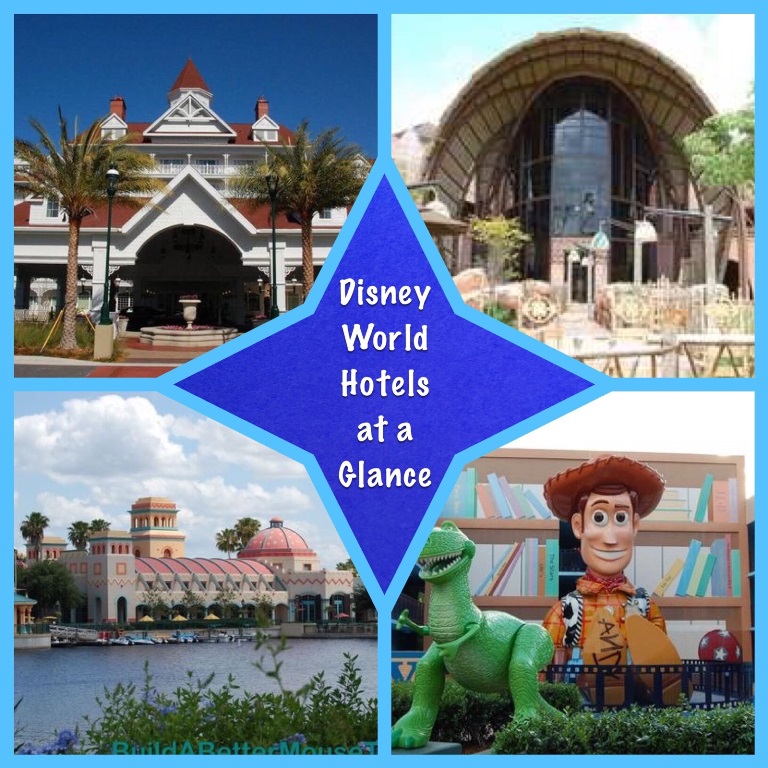
Moderate resorts offer a balance of enhanced landscaping, larger room sizes (typically 314 square feet), and more diverse dining options, including table-service restaurants. There are five primary locations in this category. Disney’s Caribbean Beach Resort serves as a tropical hub for the Skyliner, while Disney’s Coronado Springs Resort offers a blend of Spanish, Mexican, and Southwest American cultures. The latter recently added the Gran Destino Tower, which provides a more sophisticated, business-class atmosphere.
The Disney’s Port Orleans Resort – French Quarter and Disney’s Port Orleans Resort – Riverside provide a charming Louisiana experience along the Sassagoula River. Additionally, The Cabins at Disney’s Fort Wilderness Resort provide a rustic experience, recently undergoing a transition to modern, standalone units that offer a more private, home-like feel amidst 750 acres of pine forest.
Deluxe Resorts
The Deluxe tier represents the pinnacle of Disney hospitality, often located within walking or monorail distance of the major theme parks. Disney’s Grand Floridian Resort & Spa is the flagship property, characterized by Victorian elegance and world-class fine dining. Nearby, Disney’s Contemporary Resort is famous for the Walt Disney World Monorail passing directly through its A-frame tower. Disney’s Polynesian Village Resort rounds out the monorail loop with a lush, South Pacific aesthetic.
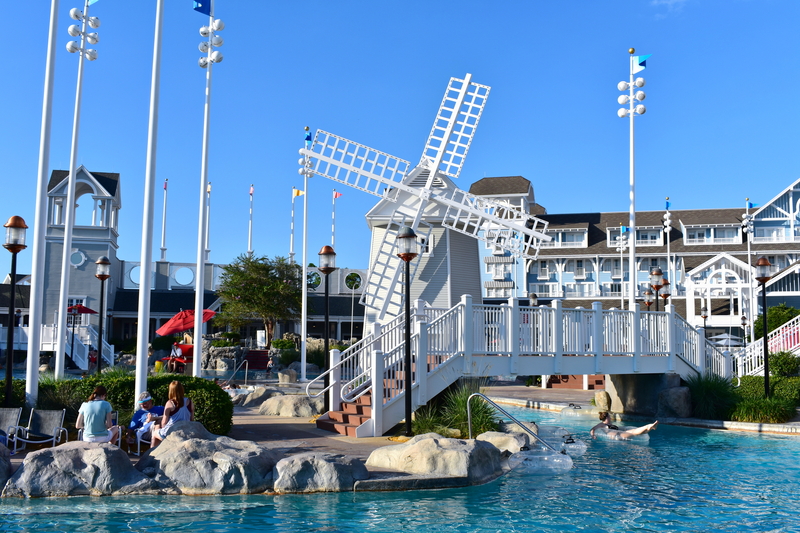
In the Epcot resort area, Disney’s Yacht Club Resort and Disney’s Beach Club Resort offer a sophisticated New England seaside vibe, sharing the famous Stormalong Bay pool complex. Disney’s BoardWalk Inn captures the energy of turn-of-the-century Atlantic City. Away from the central hubs, Disney’s Animal Kingdom Lodge offers a unique experience where guest balconies overlook a private savanna with exotic animals, and Disney’s Wilderness Lodge draws inspiration from the great American Northwest.
The Expansion of Luxury: Disney Vacation Club and Deluxe Villas
Beyond the standard hotel rooms, Disney World contains an extensive network of “Deluxe Villas.” While these are part of the Disney Vacation Club timeshare program, they are available for booking by the general public. These properties typically offer studios, one-bedroom, two-bedroom, and three-bedroom Grand Villas, equipped with full kitchens and laundry facilities.
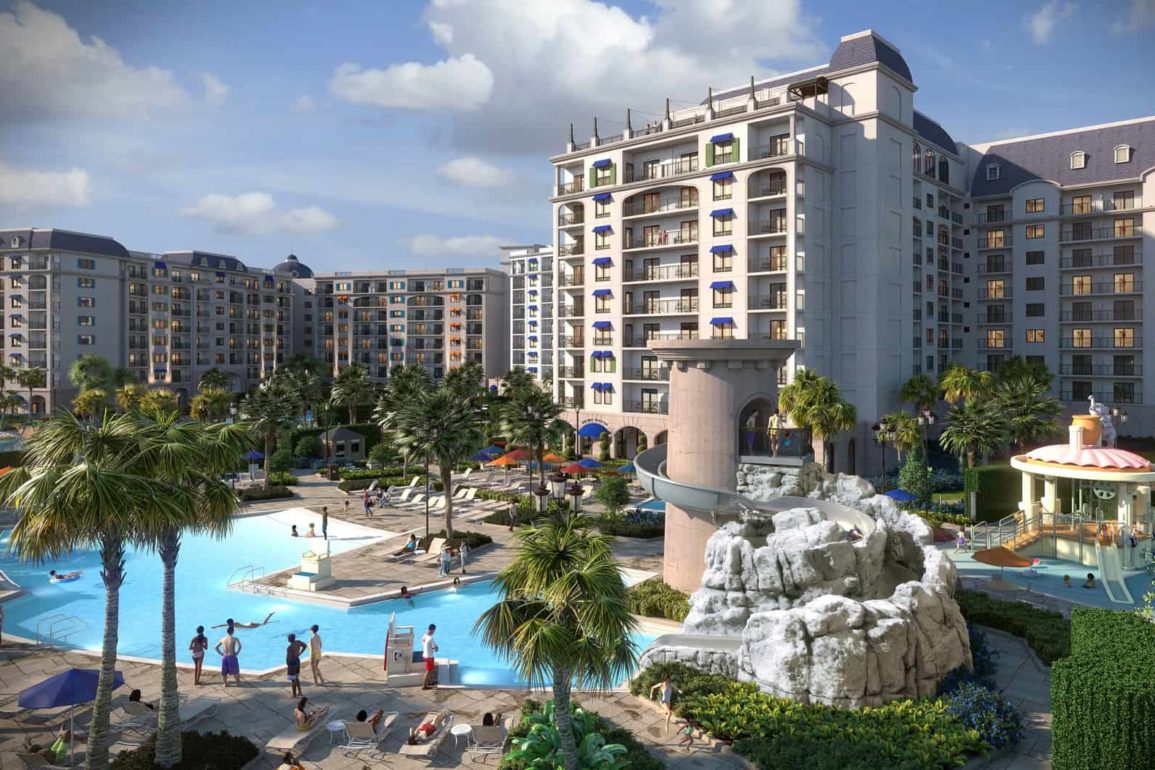
Many of these are attached to existing Deluxe resorts, such as Bay Lake Tower at Disney’s Contemporary Resort, The Villas at Disney’s Grand Floridian Resort & Spa, and Boulder Ridge Villas at Disney’s Wilderness Lodge. However, there are standalone villa properties that add to the total hotel count. Disney’s Old Key West Resort was the original DVC property, featuring sprawling residential-style buildings. Disney’s Saratoga Springs Resort & Spa is inspired by the historic horse-racing culture of New York. The newest addition to this portfolio is Disney’s Riviera Resort, which celebrates the European Riviera and offers some of the most refined finishes on the property.
Third-Party and Partner Hotels on Disney Property
While Disney owns most of the land, several other major hospitality brands operate hotels within the resort boundaries. These properties offer many of the same perks as Disney-owned hotels, such as early theme park entry and proximity to the Magic Kingdom or Epcot.
The Walt Disney World Swan and Walt Disney World Dolphin resorts are iconic landmarks designed by architect Michael Graves. Managed by Marriott International, these hotels sit right in the heart of the Epcot resort area. They were recently joined by the Walt Disney World Swan Reserve, a boutique-style luxury tower nearby.
Another significant cluster of hotels is the Disney Springs Resort Area Hotels. This group includes seven hotels located within walking distance of the Disney Springs shopping and dining district. These are the B Resort & Spa, DoubleTree Suites by Hilton Orlando, Hilton Orlando Buena Vista Palace, Hilton Orlando Lake Buena Vista, Holiday Inn Orlando, Wyndham Garden Lake Buena Vista, and the Drury Plaza Hotel Orlando.
Furthermore, the secluded Bonnet Creek area, which is technically surrounded by Disney land, hosts luxury options like the Four Seasons Resort Orlando, the Waldorf Astoria Orlando, and Signia by Hilton Orlando Bonnet Creek. Lastly, Shades of Green is a specialized resort located near the Magic Kingdom dedicated exclusively to members of the military and their families.
Amenities and Room Configurations Across the Resort
With such a high volume of hotels, Walt Disney World Resort has diversified its room types to accommodate various group sizes and needs. Standard rooms typically feature two queen beds or one king bed. However, the suites and specialized accommodations are what set the property apart.
Themed Suites and Immersive Living
At Disney’s Art of Animation Resort, family suites include a master bedroom, a living area with a pull-out sofa, and a “Inovabed” that transforms from a dining table into a bed. This maximizes space for families of six. Similarly, Disney’s Animal Kingdom Lodge offers “Royal Guest Rooms” that feature intricate detailing related to The Princess and the Frog.
For those seeking the ultimate luxury, the Grand Villas at properties like Disney’s Riviera Resort offer multiple bathrooms, large dining tables, and wraparound balconies with views of the evening fireworks at Disney’s Hollywood Studios. The amenities at these resorts also vary greatly; for example, Disney’s Yacht Club Resort provides a more formal, convention-style atmosphere with refined wood finishes, while Disney’s Pop Century Resort is vibrant and high-energy with massive outdoor sculptures.
Recreation and Infrastructure
The hospitality experience extends beyond the walls of the rooms. Most hotels feature at least one “feature pool” with a slide and several “quiet pools” for a more relaxed environment. The Stormalong Bay complex, shared by the Beach Club and Yacht Club, is essentially a mini-water park with a sand-bottom pool and a lazy river.
Transportation is another key amenity integrated into the hotel infrastructure. Depending on the hotel’s location, guests may have access to the Walt Disney World Monorail, the Disney Skyliner aerial gondolas, or water taxis that navigate the Seven Seas Lagoon or Crescent Lake. All resorts, regardless of tier, offer complimentary bus service to the four main theme parks: Magic Kingdom, Epcot, Disney’s Hollywood Studios, and Disney’s Animal Kingdom.
The Logistics of On-Site Stays: Infrastructure and Connectivity
Managing over 30,000 hotel rooms across dozens of properties requires a massive logistical effort. Disney uses integrated technology like the My Disney Experience app to allow guests to check in remotely and use their smartphones or MagicBands as room keys. This seamless connectivity is a hallmark of the Disney World hotel experience.
The variety of hotels also allows Disney to host large-scale events and conventions. Properties like Disney’s Coronado Springs Resort and Disney’s Yacht Club Resort feature massive convention centers that host thousands of professional attendees annually. These business-focused amenities coexist with family-centric features, such as the Disney’s Fort Wilderness Resort campgrounds, where guests can bring their own RVs or stay in tents, adding another layer to the “how many hotels” question by including non-traditional lodging.
Ultimately, the sheer volume of hotels within Walt Disney World Resort ensures that the destination can accommodate hundreds of thousands of guests simultaneously. Whether it is a luxury suite at the Four Seasons Resort Orlando or a themed room at Disney’s All-Star Movies Resort, the variety of accommodations is a fundamental part of what makes the resort a global leader in the hospitality industry. By providing a range of price points and styles, Disney maintains a self-contained ecosystem that encourages visitors to remain on-property for the duration of their stay, supported by a world-class network of resorts, villas, and partner hotels.
LifeOutOfTheBox is a participant in the Amazon Services LLC Associates Program, an affiliate advertising program designed to provide a means for sites to earn advertising fees by advertising and linking to Amazon.com. Amazon, the Amazon logo, AmazonSupply, and the AmazonSupply logo are trademarks of Amazon.com, Inc. or its affiliates. As an Amazon Associate we earn affiliate commissions from qualifying purchases.