
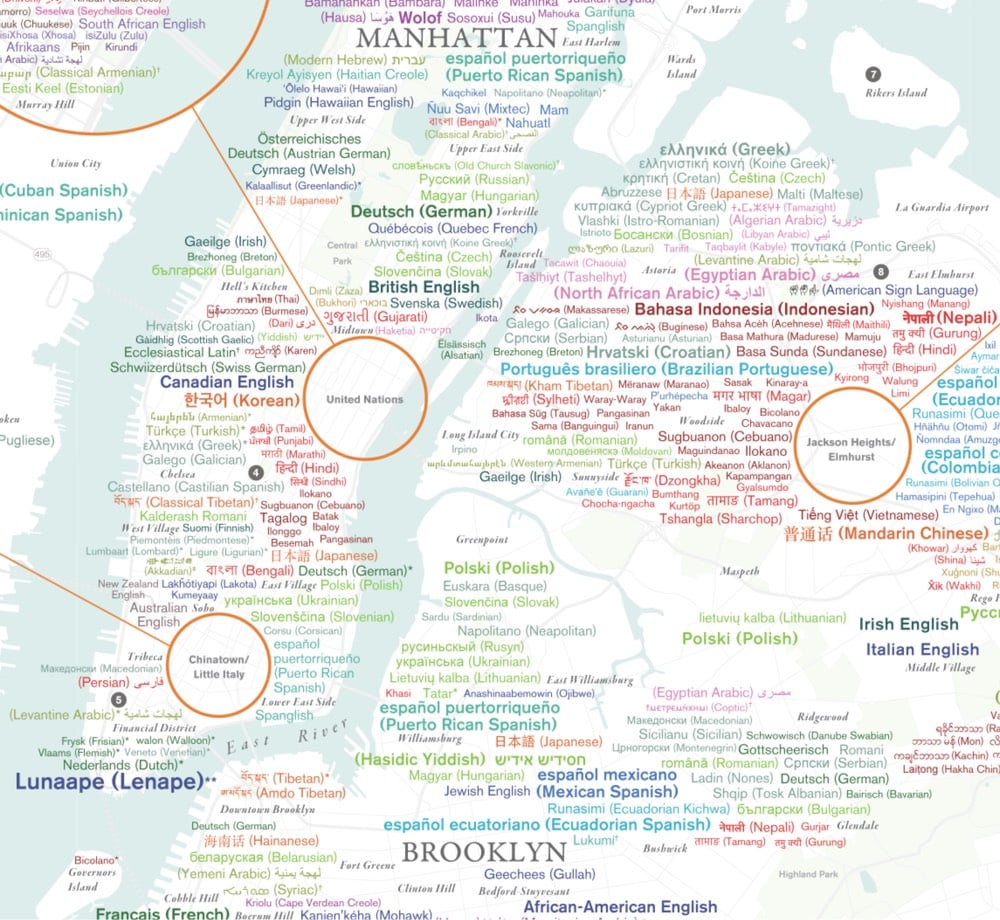
New York has long been heralded as the ultimate melting pot, a place where the world’s cultures converge within the confines of five distinct boroughs. While many international metropolises boast a diverse population, the linguistic landscape of this city is unparalleled. If you were to walk through the streets of Queens or Brooklyn, your ears would be greeted by a symphony of global dialects, ranging from major world languages to rare, endangered tongues spoken by only a handful of families. Estimates from linguists and urban researchers suggest that over 800 distinct languages are spoken throughout the city, making it arguably the most linguistically diverse urban area in human history.

The Geography of Tongues: Mapping Global Diversity
The distribution of languages across New York City is not random; it reflects a centuries-old history of migration, trade, and economic opportunity. By examining the neighborhood level, one can trace the migratory patterns of global citizens who have made this concrete jungle their home.
The Linguistic Heartland of Queens
Queens is frequently cited by sociologists as the most ethnically and linguistically diverse county in the United States. In neighborhoods like Jackson Heights and Flushing, the sheer density of native speakers from South Asia, East Asia, and Latin America is staggering. Walking down Roosevelt Avenue, a visitor might hear Spanish, Mandarin, Bengali, Tibetan, and Quechua all within the span of a single block. This diversity is not merely a byproduct of tourism; it is the living, breathing reality of a community that maintains its cultural identity through the preservation of its native language.
Enclaves of History and Heritage
While Manhattan serves as the primary business and cultural hub, its history is marked by solidified ethnic enclaves. Chinatown remains a bastion of Cantonese and Fujianese speakers, while pockets of Little Italy still echo with regional dialects of Italian. Even as globalization shifts the demographics of these areas, the linguistic footprint remains, often integrated into the signage, local media, and social services that cater to immigrant populations.
Language as a Tool for Urban Survival
For many who arrive in New York, their native language is a lifeline. It provides access to social networks, job opportunities, and a sense of belonging in a fast-paced environment that can otherwise feel isolating.
Multilingual Services and Governance
The city’s infrastructure is designed to accommodate this vast linguistic spectrum. Under the New York City Local Law 30, city agencies are required to provide documents and interpretation services in at least the top ten languages spoken by Limited English Proficient (LEP) individuals. This list typically includes Spanish, Chinese, Russian, Haitian Creole, Korean, Bengali, Arabic, Urdu, French, and Polish. By ensuring that public services are accessible to all, the city reinforces its commitment to being a global gateway.

The Role of Niche Media
Beyond government support, the private sector thrives on linguistic diversity. Local newspapers, radio stations, and cable channels in New York broadcast in dozens of languages. From Yiddish publications in Borough Park to West African radio programs, these outlets ensure that cultural heritage is preserved across generations, allowing the city to function as a collection of vibrant, self-sustaining micro-societies.
The Challenges of Language Preservation and Loss
Despite the immense linguistic variety found in New York City, the city is also a primary site for language endangerment. As younger generations become fully assimilated into American culture and English becomes the dominant language for education and commerce, many ancestral languages face the threat of extinction.
The Endangered Languages Project
Collaborations between organizations like the Endangered Language Alliance have highlighted the precarious position of many speakers who have migrated to the United States. These researchers often find that languages spoken by indigenous groups from Mexico, Guatemala, or Central Asia are rarely documented elsewhere. New York serves as a unique laboratory where these languages can be recorded and studied, providing linguists with a chance to document languages that are disappearing in their countries of origin due to political instability or social pressure.
Generational Shifts and Language Evolution
Language in New York is rarely static. It is constantly evolving through contact with other languages and the influence of the local New York English dialect. This has led to the creation of hybrid languages—often referred to as “code-switching” or “Spanglish”—which allow residents to navigate the complexities of life in both their traditional cultural circles and the wider American society. This linguistic agility is a hallmark of the New Yorker identity.
Why Linguistic Diversity Matters for Tourism
For the average traveler or visitor, the linguistic mosaic of New York is one of its greatest attractions. It transforms a simple walk down Broadway or a visit to Central Park into an immersive global experience.
Culinary Tourism and Linguistic Immersion
Many of the city’s most authentic dining experiences are found in places where the language spoken by the staff and patrons is not English. To find the best Dim Sum or the most authentic Tacos, one often has to venture into neighborhoods where the culinary tradition is rooted in the native language of the chefs. Engaging with these businesses offers a deeper insight into the local culture, encouraging a more respectful and nuanced understanding of the diverse groups that make up the city’s population.
Fostering Cross-Cultural Dialogue
The linguistic richness of New York encourages empathy and curiosity. When visitors hear languages they cannot identify, they are prompted to ask questions, learn about distant lands, and realize that the world is much larger and more connected than they previously imagined. By embracing this diversity, New York proves that language is not just a tool for communication, but a bridge that connects the experiences of people from vastly different backgrounds. Whether you are navigating the Subway or ordering a coffee in Astoria, you are participating in a global conversation that has been centuries in the making. In this city, every word spoken is a testament to the resilience of human culture and the power of living together in harmony.
LifeOutOfTheBox is a participant in the Amazon Services LLC Associates Program, an affiliate advertising program designed to provide a means for sites to earn advertising fees by advertising and linking to Amazon.com. Amazon, the Amazon logo, AmazonSupply, and the AmazonSupply logo are trademarks of Amazon.com, Inc. or its affiliates. As an Amazon Associate we earn affiliate commissions from qualifying purchases.