
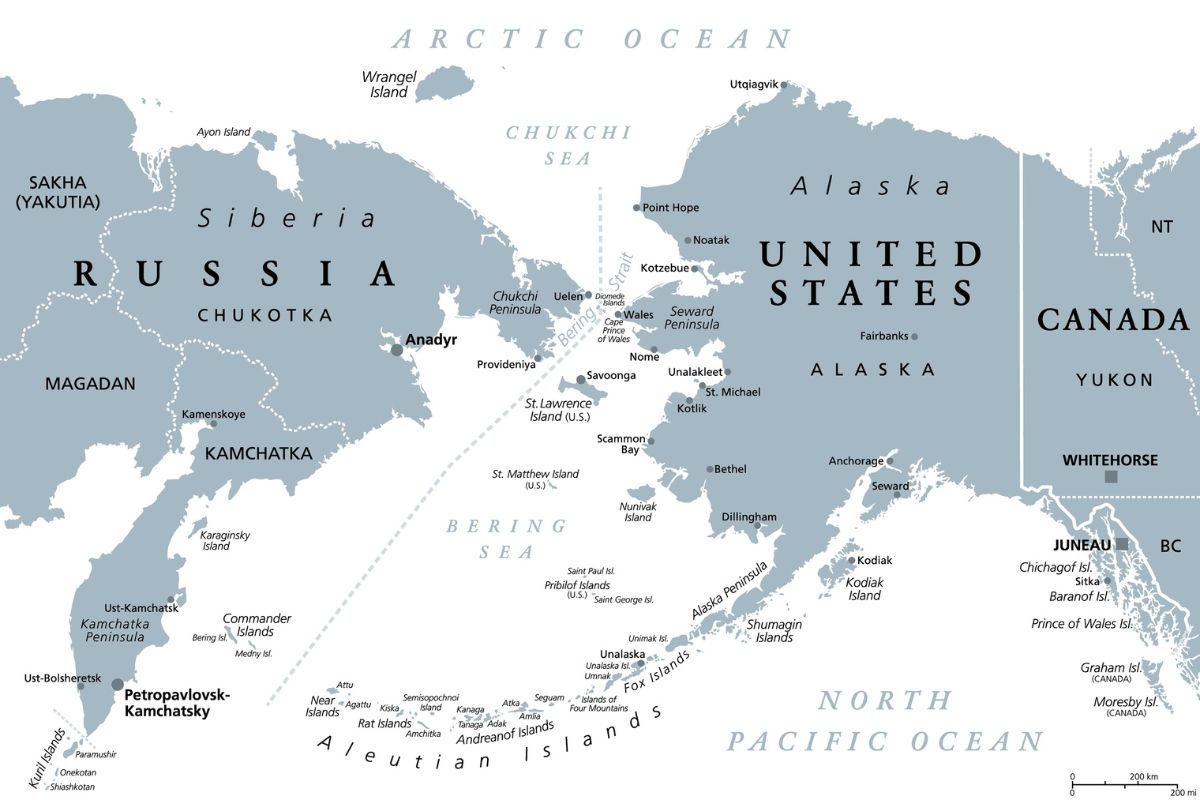
The question of how far Alaska is from Russia sparks curiosity, conjuring images of remote frontiers, icy waters, and a proximity that feels both distant and remarkably close. For travelers, geographers, and history enthusiasts alike, the answer is often surprising, revealing a fascinating sliver of our planet where two vast continents almost touch. At its narrowest point, the distance between the mainland of Alaska, United States, and Russia is a mere 55 miles (88 kilometers) across the Bering Strait. However, this figure becomes even more astonishing when considering the Diomede Islands, two small rocky outcrops that stand as sentinels in the middle of this strait. These islands are separated by just 2.4 miles (3.8 kilometers), making them the closest landmasses between the two nations. This unique geographical arrangement means that, on a clear day, one can literally see Russia from Alaska – an experience that encapsulates the spirit of extreme travel and the allure of the world’s most untouched destinations.

The Bering Strait is not just a geographical curiosity; it’s a profound historical and cultural corridor. It’s believed to be the path through which early humans migrated from Asia to the Americas thousands of years ago, crossing the now-submerged Bering Land Bridge. Today, it represents a frontier for adventure seekers, a strategic geopolitical point, and a vital ecosystem. Understanding this unique region involves delving into its geography, exploring the challenges and rewards of travel and tourism in such remote climes, and appreciating the distinct lifestyle of its indigenous inhabitants.
The Bering Strait: A Geographic and Temporal Divide
The Bering Strait is an oceanic strait that connects the Pacific Ocean and the Arctic Ocean, separating the Chukotka Peninsula of Russia’s Far East from the Seward Peninsula of Alaska. While the mainland distance is significant, it’s the Diomede Islands that truly shrink the gap.
The Diomede Islands: Bridging Continents and Time
The Diomede Islands consist of two primary landmasses: Little Diomede Island, belonging to the United States (part of Alaska), and Big Diomede Island, which is Russian territory. These two islands are separated by a mere 2.4 miles, a distance so small that in winter, when the strait freezes, it’s theoretically possible to walk from one country to another – though doing so is strictly forbidden due to border regulations and dangerous ice conditions.
What makes these islands even more extraordinary is that they are bisected by the International Date Line. This means that Little Diomede Island (USA) is almost a full day behind Big Diomede Island (Russia). Locals refer to Big Diomede as “Tomorrow Island” and Little Diomede as “Yesterday Island.” Standing on Little Diomede, one can look across the short expanse of water and gaze at tomorrow. This temporal quirk adds another layer of mystique to this already captivating geographical landmark.
The history of this region is rich with the migrations of indigenous communities, primarily Inupiaq and Yupik on the Alaskan side and Chukchi on the Russian side. These groups share ancestral ties and traditions, a testament to a time when the “border” was a fluid concept and the sea was a highway, not a barrier. During the Cold War, however, the Bering Strait became known as the “Ice Curtain,” a heavily militarized and impassable boundary between the United States and the Soviet Union, effectively severing centuries-old cultural connections. While the strictures have eased somewhat, crossing remains a complex process.
Exploring the Extremes: Travel and Tourism in the High North
For adventurous travelers, the regions flanking the Bering Strait offer unparalleled opportunities for exploration, wildlife viewing, and cultural immersion. However, venturing into these remote destinations requires careful planning and a spirit of resilience.
Traveling to the Alaskan Side
The most accessible major town on the Alaskan side of the Bering Strait is Nome, famous as the finish line for the Iditarod Trail Sled Dog Race. Nome itself is a vibrant hub of Inupiaq culture and gold rush history, offering insights into the harsh yet beautiful lifestyle of the Arctic. From Nome, it is possible to arrange flights or charter boats (weather permitting) to Little Diomede Island for a truly unique experience. However, visitors to Little Diomede must be self-sufficient as amenities are extremely limited.
Other significant Alaskan towns in the vicinity, though further removed from the strait, include Kotzebue and other villages along the coast. Travel here is primarily by air, with bush planes serving as the lifeline for these isolated communities.
For those looking to explore broader Alaska, major cities like Anchorage and Fairbanks serve as gateways to incredible natural attractions such as Denali National Park and the chance to witness the spectacular Aurora Borealis. These areas offer a range of accommodation options, from modern hotels and resorts to cozy cabins and wilderness lodges, catering to various lifestyle preferences and budget travel considerations.
A trip to this part of the world is often considered a luxury travel experience due to the high costs associated with remote travel and specialized guides. Expedition cruises are a popular way to explore the Bering Sea and Arctic Ocean, offering comfortable accommodations, expert naturalists, and access to pristine wilderness for wildlife viewing (polar bears, walruses, whales, seabirds) and visits to remote coastal villages.
Venturing into the Russian Far East
Accessing the Russian Far East, particularly the Chukotka Autonomous Okrug which borders the Bering Strait, is significantly more challenging due to strict visa regulations and permits required for travel to this closed border region. Chukotka is one of the most sparsely populated and least visited regions on Earth, offering a truly wild and untamed experience for the intrepid traveler. Its capital, Anadyr, is a gateway to indigenous Chukchi and Yupik cultures, vast tundra landscapes, and incredible marine wildlife.
Further afield, but still within the Russian Far East, lie Magadan Oblast and the Kamchatka Peninsula. Kamchatka is a popular destination for its dramatic volcanic landscapes, abundant brown bears, and world-class salmon fishing. These regions are not for the faint of heart; tourism infrastructure is minimal, and travel often involves helicopters, robust off-road vehicles, and basic accommodation like guesthouses or tents. Engaging local guides is essential for safety and to navigate the complexities of permits and logistics.
Accommodation and Lifestyle in the Arctic Frontiers
When planning a trip to these extreme latitudes, understanding the available accommodation and embracing the local lifestyle is crucial. Unlike mainstream travel destinations, choices are often limited but offer unique experiences.
Unique Accommodation Experiences
In remote Alaskan villages or across the Bering Strait in Chukotka, don’t expect five-star hotels or lavish resorts. Instead, options might include:
- Local Guesthouses: Often family-run, providing a glimpse into local culture and community life.
- Wilderness Lodges: Rustic yet comfortable, typically found in more scenic or wildlife-rich areas, offering access to hiking, fishing, and wildlife viewing.
- Expedition Cruise Cabins: For those exploring the coastlines, cruise ships offer well-appointed cabins, dining amenities, and structured itineraries.
- Tented Camps: Especially for deep wilderness treks or scientific expeditions, offering a true immersion in nature.
Booking accommodation in these areas often requires advance planning, as options are scarce. Online reviews and comparison sites might be less comprehensive than for urban centers, making recommendations from specialized travel agencies invaluable. For longer stays, some communities might offer basic apartments or homestays, providing a more authentic and immersive experience.

The Lifestyle of the Arctic Frontiers
The lifestyle in these regions is profoundly shaped by the extreme environment and the rich heritage of their indigenous peoples. It’s a lifestyle of resilience, community, and deep connection to the land and sea.
- Subsistence Living: Many communities still rely on hunting, fishing, and foraging. This provides a fascinating insight into traditional food sources and practices.
- Cultural Immersion: Visitors have the chance to witness traditional dances, storytelling, and artisan crafts. The Inupiaq and Chukchi peoples have rich histories and vibrant contemporary cultures that are incredibly welcoming to respectful visitors.
- Adventure Activities: Beyond wildlife watching, activities include dog sledding, snowmobiling, ice fishing, sea kayaking, and hiking across vast, untamed landscapes. These aren’t just recreational pursuits; they are often integral to daily life.
- Challenges and Rewards: Travel in these regions presents challenges, from unpredictable weather and limited infrastructure to navigating cultural nuances. However, the rewards are immense: breathtaking natural beauty, encounters with unique wildlife, and profound cultural experiences that leave a lasting impression. Whether opting for a luxury travel expedition cruise or a more budget travel independent adventure, the Arctic frontiers promise an unforgettable journey.
The idea of a physical connection, such as a bridge or tunnel across the Bering Strait, has been a topic of discussion for over a century. Proponents envision a “Intercontinental Railway” that would link the world’s major landmasses, offering unprecedented global travel and trade opportunities. While technically feasible, the immense engineering challenges, astronomical costs, and complex geopolitical landscape make such a project a distant dream for now.
In conclusion, the distance from Alaska to Russia is incredibly short, particularly at the Diomede Islands where just 2.4 miles and a day separate these two giants. This geographical marvel is a testament to the world’s interconnectedness, inspiring dreams of adventure and deep cultural exploration. For those willing to brave the Arctic’s extreme conditions, the Bering Strait region offers a truly unique set of experiences – a chance to stand on the edge of two worlds, to witness untamed nature, and to connect with cultures that have thrived in one of the planet’s most remote and beautiful corners. Whether seeking raw adventure, cultural insight, or simply the thrill of seeing Russia from Alaska, this fascinating frontier is an ultimate destination for the discerning traveler.
LifeOutOfTheBox is a participant in the Amazon Services LLC Associates Program, an affiliate advertising program designed to provide a means for sites to earn advertising fees by advertising and linking to Amazon.com. Amazon, the Amazon logo, AmazonSupply, and the AmazonSupply logo are trademarks of Amazon.com, Inc. or its affiliates. As an Amazon Associate we earn affiliate commissions from qualifying purchases.