
The vast expanse of the United States offers an incredible diversity of landscapes, cultures, and experiences, all within its continental borders. For many, the quintessential American journey involves traversing the country from coast to coast, a dream often symbolized by the drive or flight from the sun-drenched shores of Los Angeles to the bustling metropolis of New York City. But just how far is this iconic distance? The answer, like many things related to travel, is not a single, definitive number, but rather a range that depends on the mode of transport and the specific route taken.

The generally accepted direct driving distance between Los Angeles, California, and New York City, New York, is approximately 2,800 miles. This figure is a useful benchmark for planning a road trip, but it’s essential to understand that this is the most direct, albeit not always the most scenic or practical, route. This mileage assumes you’re adhering to major interstate highways, such as Interstate 40 or Interstate 80, which are the workhorses of cross-country trucking and long-haul travel.
The Driving Odyssey: Routes and Distances
Embarking on a road trip from Los Angeles to New York City is more than just covering miles; it’s an immersion into the American tapestry. The chosen route significantly impacts the total distance and the experiences you’ll encounter along the way. Each path offers a unique glimpse into the country’s diverse geography, from the stark beauty of the desert Southwest to the rolling hills of the Midwest and the historic charm of the Northeast.
Southern Route (Primarily via I-40)
One of the most popular and often considered the most direct driving routes utilizes Interstate 40 (I-40) for a significant portion of the journey. This route takes you through states like Arizona, New Mexico, Texas, Oklahoma, Arkansas, Tennessee, North Carolina, Virginia, and Maryland before reaching New York.
- Approximate Driving Distance: Around 2,800 miles.
This southern path offers a chance to explore iconic landmarks such as the Grand Canyon (a slight detour from I-40 but a must-see for many), the unique landscapes of Meteor Crater, the vibrant music scene of Memphis, and the historic battlefields of the Civil War. You’ll experience the warmth of the Southwest, the heartland of America, and the beginnings of the East Coast’s historic corridors. The weather on this route can be more temperate for much of the year, making it a good option outside of the extreme summer heat of the desert or the harsh winter conditions further north.
Central Route (Primarily via I-80)
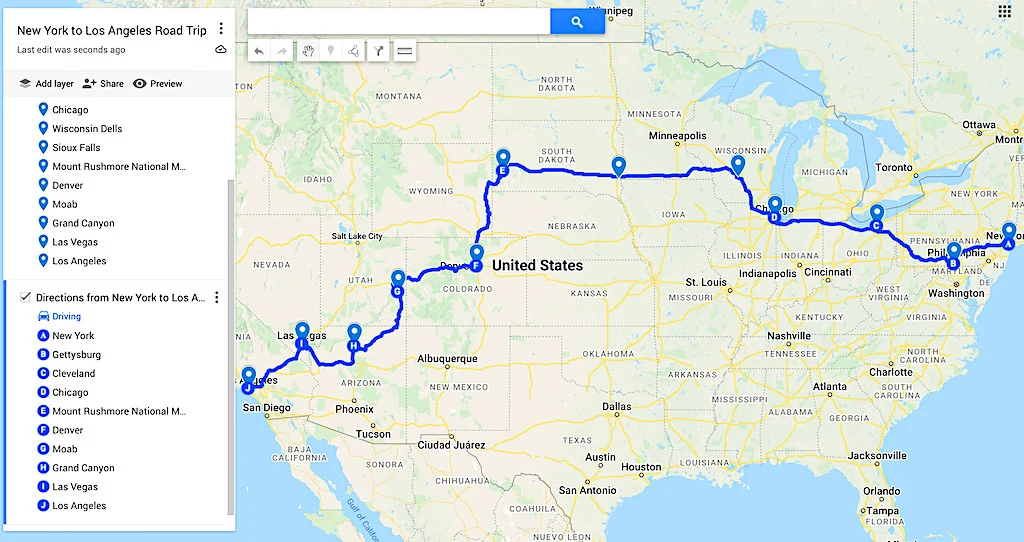
The central route, largely following Interstate 80 (I-80), presents another compelling option for your cross-country adventure. This path cuts through the heart of the nation, offering a different perspective on American landscapes and culture.
- Approximate Driving Distance: Around 2,900 miles.
This route will typically take you through states such as Nevada, Utah, Wyoming, Nebraska, Iowa, Illinois, Indiana, Ohio, Pennsylvania, and New Jersey before arriving in New York. Along the way, you might encounter the majestic Rocky Mountains in Utah and Wyoming, the vast plains of Nebraska, the architectural marvels of Chicago, and the historic sites of Pennsylvania. This route can experience more extreme weather conditions, particularly in the winter months, with snow and ice impacting travel in the mountain states and the Midwest. However, in the spring and fall, it offers breathtaking scenery and a deep dive into the American heartland.
Northern Route (Primarily via I-90)
For those seeking a route that skims the northern tier of the country, Interstate 90 (I-90) offers a different set of attractions and a distinct geographical experience.
- Approximate Driving Distance: Around 3,000 miles.
This extended journey would traverse states like California, Nevada, Utah, Wyoming, South Dakota, Minnesota, Wisconsin, Illinois, Indiana, Ohio, Pennsylvania, New York, and Massachusetts (depending on the exact start and end points within the vastness of New York City). This route provides opportunities to visit places like Mount Rushmore National Memorial, the Badlands National Park, the vibrant city of Chicago, and the scenic shores of the Great Lakes. Similar to the I-80 route, the I-90 corridor is susceptible to significant winter weather, which can lead to road closures and delays.
The Aerial View: Flights and Time
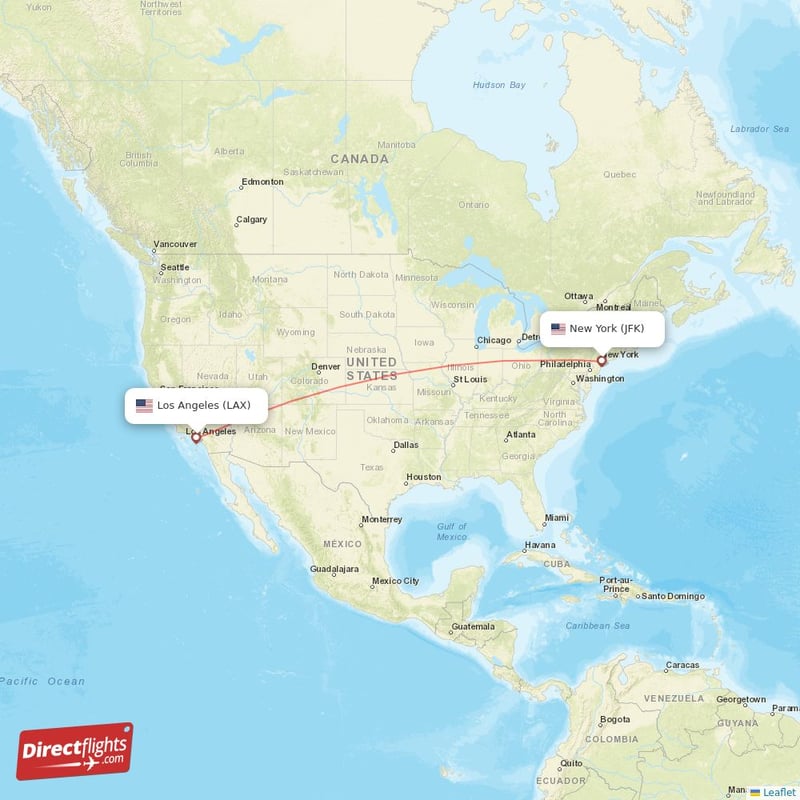
For travelers prioritizing speed and efficiency, flying is the undisputed champion. The distance as the crow flies, also known as the great-circle distance, between Los Angeles and New York City is considerably shorter than any driving route.
- Great-Circle Distance: Approximately 2,450 miles.
Direct flights from Los Angeles International Airport (LAX) to New York John F. Kennedy International Airport (JFK), or other New York City area airports like LaGuardia Airport (LGA) or Newark Liberty International Airport (EWR), typically take around 5 to 6 hours of actual flight time. When you factor in travel to and from airports, security checks, boarding, and deplaning, the total travel time can easily extend to 8-10 hours or more. However, this is still a fraction of the time required for a cross-country road trip.
Airlines such as Delta Air Lines, American Airlines, United Airlines, and JetBlue Airways operate numerous daily flights on this popular route, connecting the two major hubs of American commerce and culture. For those seeking a more luxurious travel experience, premium classes offer enhanced seating, dining, and amenities, transforming the flight into a more comfortable and exclusive journey.
Beyond the Mileage: The Journey and the Destination
Understanding the raw mileage from Los Angeles to New York City is merely the starting point for planning such a monumental trip. Whether you choose the open road or the skies, the experience is about more than just covering ground. It’s about the adventures you’ll have, the people you’ll meet, and the memories you’ll create.
A road trip offers unparalleled flexibility. You can tailor your itinerary to include stops at national parks like Zion National Park or Yellowstone National Park, explore quirky roadside attractions, sample regional cuisines, and delve into local history at places like Independence Hall in Philadelphia. This type of travel allows for spontaneous detours and a deeper connection with the varied landscapes and communities of America. You might consider a stay at a charming bed and breakfast in a small town or a modern suite in a bustling city, depending on your preferred travel style.
Conversely, flying provides more time at your destination. If your primary goal is to experience the iconic sights and sounds of New York City – from the grandeur of the Empire State Building and the serene beauty of Central Park to the vibrant energy of Times Square and the artistic treasures within the Metropolitan Museum of Art – then a quicker flight allows you to maximize your time exploring these world-renowned landmarks and experiencing the local tourism.
For those interested in luxury travel, even the road trip can be elevated with stays in boutique hotels or resorts, fine dining experiences in various cities, and carefully curated stops at upscale attractions. Budget travelers can also find their way across the country by utilizing budget airlines, staying in hostels or affordable motels, and focusing on free attractions and scenic drives.
Ultimately, the “how many miles” question is a practical consideration for logistics, but the real essence of traveling from Los Angeles to New York City lies in the diverse possibilities that unfold with every mile traveled and every choice made in planning your unique adventure across the vast and varied landscape of the United States.
LifeOutOfTheBox is a participant in the Amazon Services LLC Associates Program, an affiliate advertising program designed to provide a means for sites to earn advertising fees by advertising and linking to Amazon.com. Amazon, the Amazon logo, AmazonSupply, and the AmazonSupply logo are trademarks of Amazon.com, Inc. or its affiliates. As an Amazon Associate we earn affiliate commissions from qualifying purchases.