
Embarking on an international journey between two iconic global hubs like New York City and London ignites a sense of adventure and logistical planning. While the question of “how many miles” might seem straightforward, it opens up a broader discussion about the nature of travel between these transatlantic metropolises, encompassing the different ways one can traverse this distance and the considerations involved. The direct, great-circle distance is a scientific measurement, but the actual travel experience involves more variables than a simple mileage count.
The Great-Circle Distance: A Straight Line Through the Sky
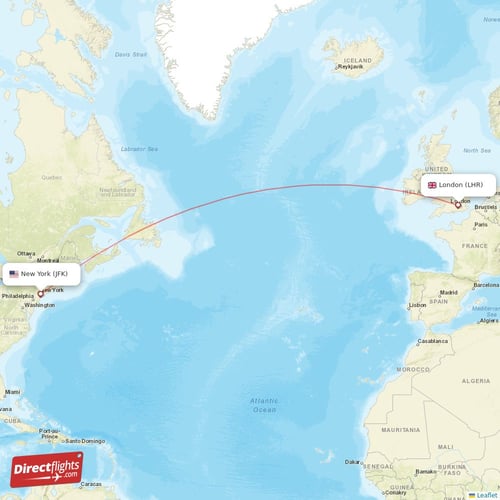
The most fundamental answer to “How Many Miles From New York City To London?” lies in the concept of the great-circle distance. This refers to the shortest distance between two points on the surface of a sphere, measured along the surface of the sphere. For New York City and London, this distance is approximately 3,459 miles (5,567 kilometers). This figure is derived from geographical coordinates and represents the theoretical shortest path an aircraft would take if it could fly in a perfectly straight line, unaffected by air traffic control, weather patterns, or geopolitical airspace restrictions.
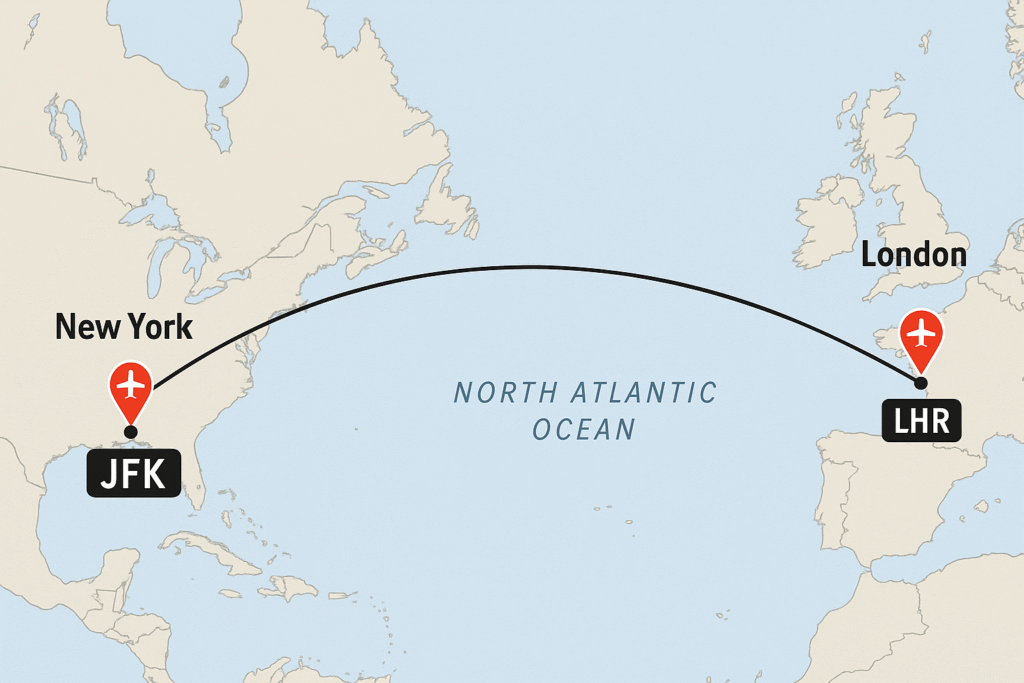
Understanding Great-Circle Routes
A great-circle route is crucial for aviation planning. Aircraft do not fly in straight lines on a flat map projection; instead, they follow the curvature of the Earth. This means that a flight path between New York City and London will appear curved on a typical Mercator projection map, even though it represents the shortest possible airborne journey. Airlines optimize their flight paths to adhere as closely as possible to these great-circle routes to conserve fuel and minimize flight time.
Measuring the Journey: Beyond the Miles
While the great-circle distance provides a baseline, the actual miles traveled on a flight can vary due to several factors. These include:
Air Traffic Control and Airspace Management
The skies are a complex network of designated airways and air traffic control zones. Flights are not free to roam; they must follow established routes that ensure safety and efficient management of air traffic. These routes can sometimes be indirect, deviating from the absolute shortest path to avoid congested areas or military airspace.
Weather Conditions
Severe weather, such as storms or strong headwinds, can force pilots to alter their flight paths. A significant headwind, for instance, can necessitate a longer route to find more favorable wind currents, or even a different altitude to bypass turbulent conditions. Conversely, tailwinds can shorten the effective distance traveled by increasing ground speed.
Jet Streams and Wind Currents
The upper atmosphere is characterized by powerful wind currents known as jet streams. Pilots strategically utilize or avoid these currents. Flying with a tailwind from a jet stream can significantly reduce flight time and, in effect, the distance covered relative to the ground. Conversely, flying against a jet stream can lengthen the journey.
Aircraft Performance and Altitude
The type of aircraft and its operational altitude also play a role. Different aircraft have optimal altitudes for fuel efficiency and speed. Air traffic control may direct aircraft to specific altitudes based on traffic flow, which can influence the route taken.
Travel Time: A More Relevant Metric for Transatlantic Journeys
For most travelers, the number of miles is less critical than the estimated travel time. The flight duration from New York City to London is remarkably consistent, generally ranging from approximately 6.5 to 8 hours. This duration is influenced by the factors mentioned above.
Eastbound Flights: The Advantage of Tailwinds
Flights traveling eastbound from New York City to London often benefit from the prevailing westerly winds, including the powerful jet stream. This means that flight times for the eastbound journey are typically shorter than for the westbound journey, often falling within the 6.5 to 7-hour range.
Westbound Flights: Battling the Winds
Flights traveling westbound from London to New York City must contend with these same prevailing westerly winds, which now act as headwinds. Consequently, these flights tend to take longer, usually in the 7.5 to 8-hour range.
Planning Your Transatlantic Adventure
When planning a trip between these two global capitals, considering the distance and travel time is an integral part of the preparation.
Choosing Your Departure and Arrival Airports
New York City is served by several major airports, including John F. Kennedy International Airport (JFK), Newark Liberty International Airport (EWR), and LaGuardia Airport (LGA). In London, the primary international gateways are Heathrow Airport (LHR), Gatwick Airport (LGW), and London Stansted Airport (STN), among others. The specific airports chosen can subtly influence the actual flight path and, therefore, the distance and time.
Booking Your Flight
When booking flights, airlines will display estimated flight durations. It’s prudent to compare these estimates, especially when looking at different carriers or times of day, as they may account for different prevailing wind conditions and routing strategies. For instance, some flights might route further north to take advantage of specific jet stream patterns.

Considering Different Travel Options
While air travel is the dominant mode of transport for this distance, it’s worth noting that in theory, one could circumnavigate the globe by sea, making this journey a part of a much larger, epic voyage. However, for practical purposes, the 3,459-mile aerial route is the standard.
The question of “how many miles” from New York City to London serves as a gateway to understanding the intricate logistics of modern air travel. It’s a reminder that even seemingly simple questions can lead to a deeper appreciation of the planning, technology, and natural forces that shape our journeys across the globe. The ~3,459 miles is the foundation, but the actual experience is a dynamic interplay of geography, meteorology, and aviation science.
LifeOutOfTheBox is a participant in the Amazon Services LLC Associates Program, an affiliate advertising program designed to provide a means for sites to earn advertising fees by advertising and linking to Amazon.com. Amazon, the Amazon logo, AmazonSupply, and the AmazonSupply logo are trademarks of Amazon.com, Inc. or its affiliates. As an Amazon Associate we earn affiliate commissions from qualifying purchases.